Support WBUR
Boston's Weekly Health Newsletter
What's meaty — and what's not — in the new U.S. food pyramid and nutrition guidance
Editor's Note: This is an excerpt from WBUR's weekly health newsletter, CommonHealth. If you like what you read and want it in your inbox, sign up here.
Dear CommonHealth reader,
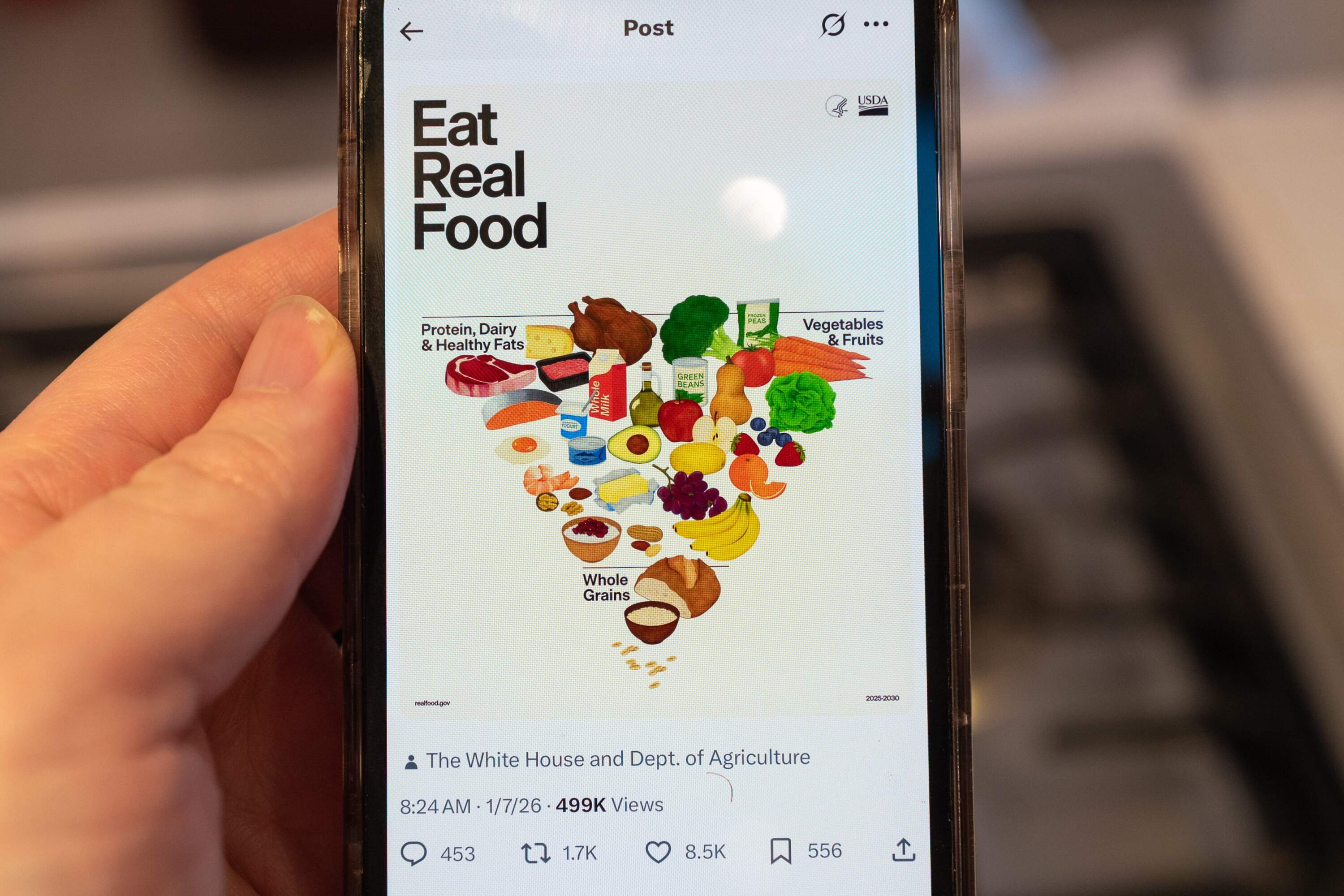
The food pyramid is upside down — literally.
Federal health officials unveiled new dietary guidelines last week that encourage people to consume more protein and healthy fat while cutting back on sugar and carbs.
“We must return to the basics,” the guidelines state. “American households must prioritize diets built on whole, nutrient-dense foods.”
What does this mean, and do the recommendations match the prevailing research on nutrition?
To understand the new advice, I called Dr. Dariush Mozaffarian, cardiologist and director of the Food is Medicine Institute at Tufts University’s Friedman School of Nutrition Science and Policy.
Mozaffarian says they’re not perfect, but there’s a lot to like about the federal guidelines.
What the guidelines got right
One key message of the new nutrition guidelines is consistent with science, Mozaffarian says: avoid or significantly cut back on highly processed and packaged foods, especially refined grains, added sugars, artificial sweeteners and other additives.
This includes white bread, sugary cereals and sweetened low-fat yogurts.
“A reduction in processed and packaged foods is an enormous advance that hasn't ever been in any prior guideline,” Mozaffarian said.
The recommendations also specify that Americans should avoid sugar-sweetened beverages like sodas and energy drinks.
What’s missing: Not all proteins are equal
Instead of refined carbohydrates, federal officials urged diets that focus on fats and proteins.
Mozaffarian says meat and dairy are part of a healthy diet. But some meat and dairy products are healthier than others.
“We should be eating seafood and plants first,” he said. “And then dairy is also good and healthy. And then chicken and other poultry and eggs are OK. Unprocessed meat is OK in moderation.” Processed meat, such as bacon and cold cuts, he said, should be avoided.
Excess saturated fat, which often comes from animal products, can increase risk of heart disease. The guidelines keep a previous recommendation to limit saturated fat to 10% of calories per day.
And while protein is having a moment, Mozaffarian warns that too much protein for a person who is not doing strength training becomes fat.
(It’s also worth noting that plant-based proteins, such as beans, as well as poultry are gentler on the planet than red meat.)
How many drinks is too many?
The federal guidelines recommend “less alcohol” for better health, but there’s no specific definition of what that means. At a press conference, Medicare and Medicaid Director Dr. Mehmet Oz said alcohol “is a social lubricant that brings people together.”
Growing research, however, suggests even one drink per day can increase health risks. Last year, then-U.S. Surgeon General Vivek Murthy proposed labeling alcoholic beverages to warn that drinking alcohol can cause cancer.
“Alcohol is not safe at any level of consumption,” Mozaffarian said.
What happens next?
Most Americans don’t think about federal government guidelines when they sit down for dinner. But the guidelines are important for federal food programs, and they help determine what meals are served in public schools.
The new recommendations say children 10 and younger should consume no added sugar — which experts including Mozaffarian say is unrealistic. But he hopes kids will eat less sugar.
“Many schools have ultra-processed packaged foods that are allowed to be served because they ostensibly meet nutrient targets, even though they're obviously Frankenfoods that we shouldn't be feeding children,” Mozaffarian said. “If these guidelines are now translated into agency policy, it's a massive change.”
Many public health experts have been dismayed by Trump administration policies that deviate from established science. Administration officials have reduced the number of vaccines recommended for children, for example — despite evidence that those vaccines are safe and effective. But Mozaffarian said the nutrition guidelines deserve some recognition, even if they don’t get everything right.