Support WBUR
Review
Two intriguing novels to add to your winter reading list
New novels this month by two Boston-based authors are poised to add a little heat to this frosty winter. Karen Winn’s multilayered “The Society” goes behind the ornate doors of a fictional secret society in Boston. Jenna Blum’s darkly witty “Murder Your Darlings,” also set in Boston, delves into another kind of exclusive club: that of bestselling authors.
With the allure of a small elite group wielding outsized power, secret societies have long captured writers’ imagination. Arthur Conan Doyle’s Sherlock Holmes solved multiple mysteries involving secret societies, and Agatha Christie wrote about a covert political club in her 1929 “The Seven Dials Mystery” (now a new Netflix limited series). Karen Winn’s novel “The Society” centers on the Knox, a fictional society housed in Boston’s Beacon Hill, reputed to have influenced politics and business for centuries.
In the novel, the Knox serves as both backdrop and catalyst for profound changes in the lives of two women: 40-something Vivian is old-money Brahmin, whose family tree may contain some surprising branches, and 20-something Taylor, who’s come to Boston for a bigger life and to solve a family mystery of her own.
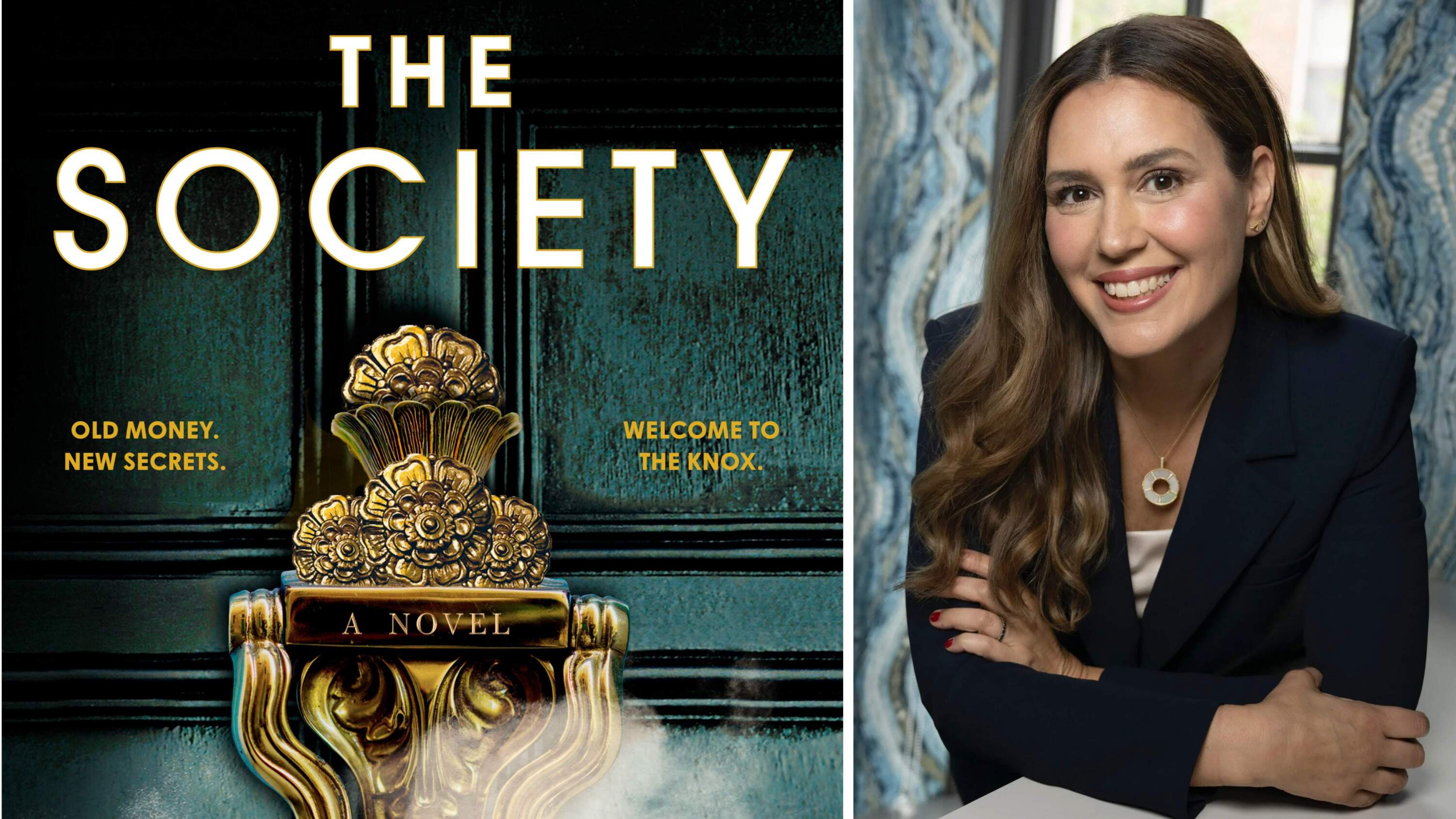
Much of “The Society” is about power: who has access to it and how they wield it.
The novel is told in rotating chapters by the main characters. One of these is the stately Knox building itself, who (which?) acts as an omniscient narrator and commentator, underscoring the durability of a society almost as old as the country in which it resides.
Although Vivian is not a Knox member, the society is the biggest client for her Beacon Hill antiques store. She initially steps inside the building only when she begins dating a society member, the charming but enigmatic Peter.
Vivian is more than simply curious about the Knox. She has recently learned that her parents depleted most of the family’s remaining generational wealth. Sorting through household papers, Vivian had also discovered centuries-old letters that indicate a distant grandmother is directly related to a founder of the Knox. If Vivian can prove the connection, via documents only stored at the Knox, she would be entitled to some of the society’s huge largesse.
Her sleuthing plans are soon derailed when she takes a tumble down the club’s grand marble staircase, ending up at Massachusetts General Hospital in a coma, cared for by Taylor. When Vivian is abruptly removed from the hospital, Taylor sets out to find out where she has gone. Her path leads her to the Knox, where she manages to get a job.
Winn, also the author of “Our Little World,” resides on Beacon Hill and is a former nurse at Mass. General. Her descriptions of Boston and its institutions are rich in detail and atmosphere, skillfully showing how living in Boston means living with the past all around you.
The Knox holds many secrets, and one is how the society was initially funded. Going back a few hundred years, members of the Knox were integral partners in the opium trade between Turkey and China and Boston. Winn plumbs the depths of this little-known part of real-life Boston history, how huge profits from the opium trade not only enriched individual merchant families, but also funded some of Boston’s most revered institutions, including Mass. General, the Boston Athenaeum and the Perkins School for the Blind.
Vivian and Taylor – one with everything to hold onto and one with everything to gain – individually take on more risks to unearth information from a society impeccably trained to guard it.
Amid the intrigue, each woman is consistently portrayed as possessing her own strengths and shortcomings. But what really gives Vivian and Taylor depth is how their individual traits are overlaid with those of the class each is born into, how Winn skillfully reveals the ways in which this shapes their decisions in unseen but potent ways. Rather like how a secret society, with its uncommon knowledge, can quietly alter the outcome of chosen events.
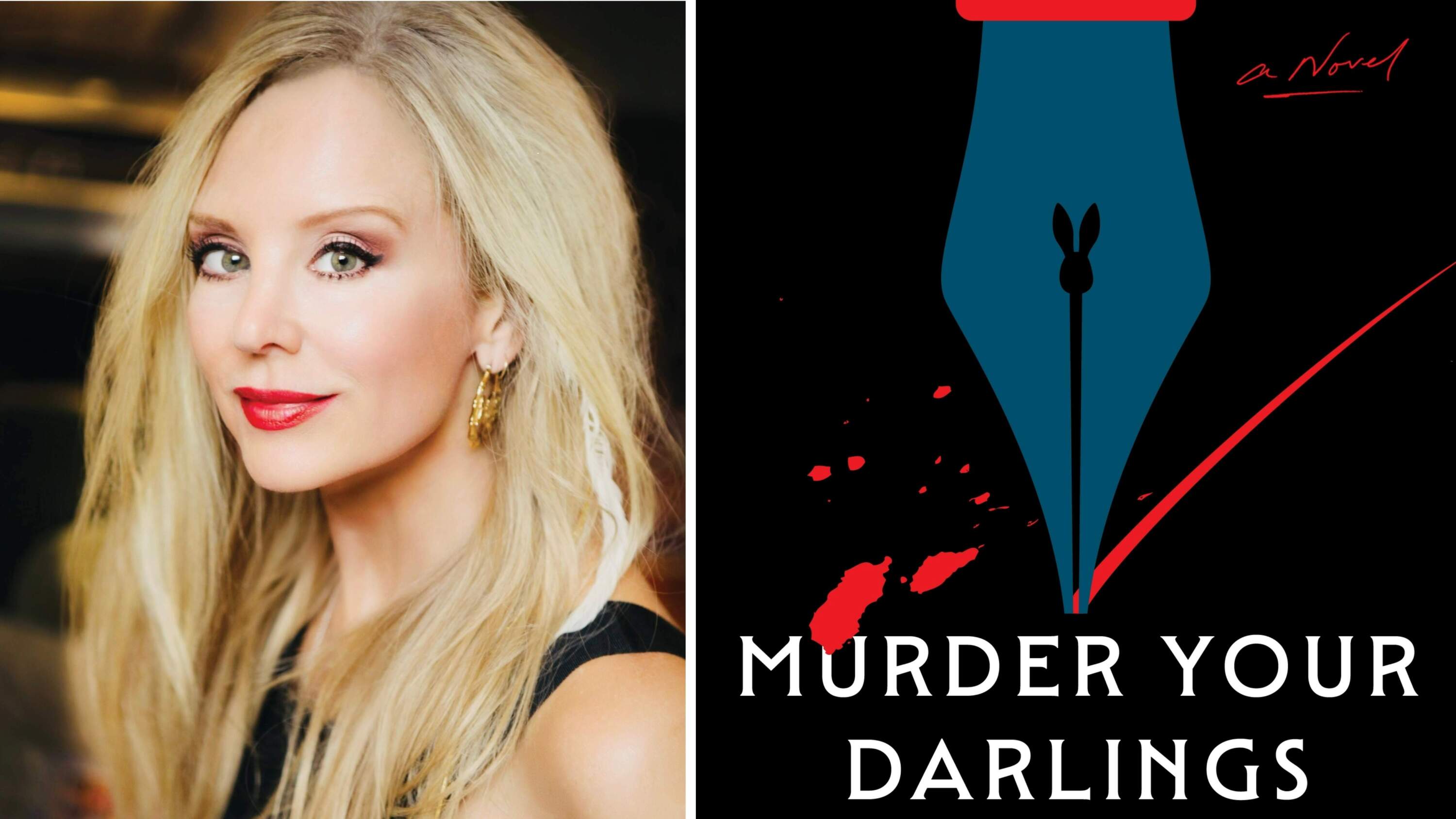
At the start of Jenna Blum’s “Murder Your Darlings,” Simone “Sam” Vetiver, bestselling author of historical romance novels, is heading back home to Boston after a lackluster book tour. Sales of her current novel have dropped well below those of her previous books. Even worse, the deadline for her next novel is already looming on the horizon.
At 47 years old, Sam would like to write a completely different kind of novel. And fall in love. More than a year after her divorce from her alcoholic ex-husband, she’s ready for a relationship, but that seems about as distant as a fresh book idea.
Then an email from bestselling author William Corwyn pops into her inbox. He admires her work and would love to meet her. So begins a whirlwind courtship.
This murder mystery romance, which is being adapted for film, is as much about the business of writing as it is the creative side. Blum, a Boston resident with an M.A. in creative writing from Boston University, here shows a deep acquaintance with both aspects of publishing. She is the author of multiple bestsellers, including “Those Who Save Us,” “The Lost Family” and the memoir “Woodrow on the Bench.”
In “Murder Your Darlings,” Sam and William handle the dual pressures of book deadlines and sales figures in very different ways. Especially entertaining are chapters composed entirely of emails between Sam and her literary agent. Underneath the oh-so-friendly back and forth about when Sam will send samples of her new work is Sam’s percolating panic at having no new work at all.
In contrast, William, in his late 50s, is a heady combination of polish and practicality. Unlike Sam, William apparently never suffers writer’s block; he turns out novels with clock-like precision, and each of his plots is unlike any previous ones.
Ideal as William seems, a small red flag is waving. He has a stalker, whom he’s nicknamed the Rabbit, a woman who has followed him on book tours and possibly even to his opulent home on an island off the coast of Maine. He dismisses this as a bothersome aspect of fame, but Sam soon learns just how clever and intrusive the Rabbit can be.
Rotating points of view keep the momentum thrumming. The Rabbit’s chapters are in the first person, completely inside her head. Blum’s fine-edged writing keeps you guessing whether this narrator is reliable or unreliable. Then again, how honest are Sam and William being with each other?
As their romance intensifies, William shrewdly engineers a power shift in their relationship. Sam had spent years putting her needs behind those of her husband’s; she now feels herself backsliding into familiar patterns.
As the body count grows, the book title’s maxim expands beyond the literary: remove anyone obstructing your ambitions.
Overlapping storylines merge ever faster toward a satisfyingly surprising finale, capping a bright and brisk read.