Support WBUR
Local cinemas celebrate actor Sidney Poitier for Black History Month

Whenever someone’s doing something radical, we’re always going to hear from other radicals about how they’re not being radical enough. Though it’s faded considerably since his death in 2022, when I was growing up, I remember the rap against Sidney Poitier was that he was too respectable, too accommodating. The first Black movie star to become beloved by a white American audience was a debonair, even-tempered icon who radiated intelligence and circumspection. Poitier looked most comfortable in a suit and tie. He seemed a bit of a square, which is why he thrived in the earnest, issue-oriented dramas of producer Stanley Kramer.
Trailblazers are saddled with the unfair burden of their actions becoming a referendum on their entire community. It took a class act like Sidney Poitier to desegregate Hollywood superstardom because he needed to be the antithesis of every stupid, hateful stereotype that movies had been helping to poison the world with since the medium was invented. Thoughtlessly bigoted audiences had to discover they were delighted he was coming to dinner. Explicitly topical films tend not to age gracefully. Culture moves quickly during tumultuous times and what was once groundbreaking can come to feel quaint. But you know what aged well? Sidney Poitier’s performances.
You’ll have a chance to see a lot of them this month at local venues. The Coolidge Corner Theatre is devoting this year’s Black History Month “Icons” series to three Poitier films: “The Defiant Ones” (Feb. 5), “Lilies of the Field” (Feb. 17) and “A Raisin in the Sun” (Feb. 22). The Somerville Theatre will be presenting a 35mm double feature of “In the Heat of the Night” and “Pressure Point” (Feb. 22), while this month’s edition of the Somerville Cine-Club is screening an extremely rare 16mm print of “A Warm December” (Feb. 10) at the Somerville Public Library’s Central Branch.
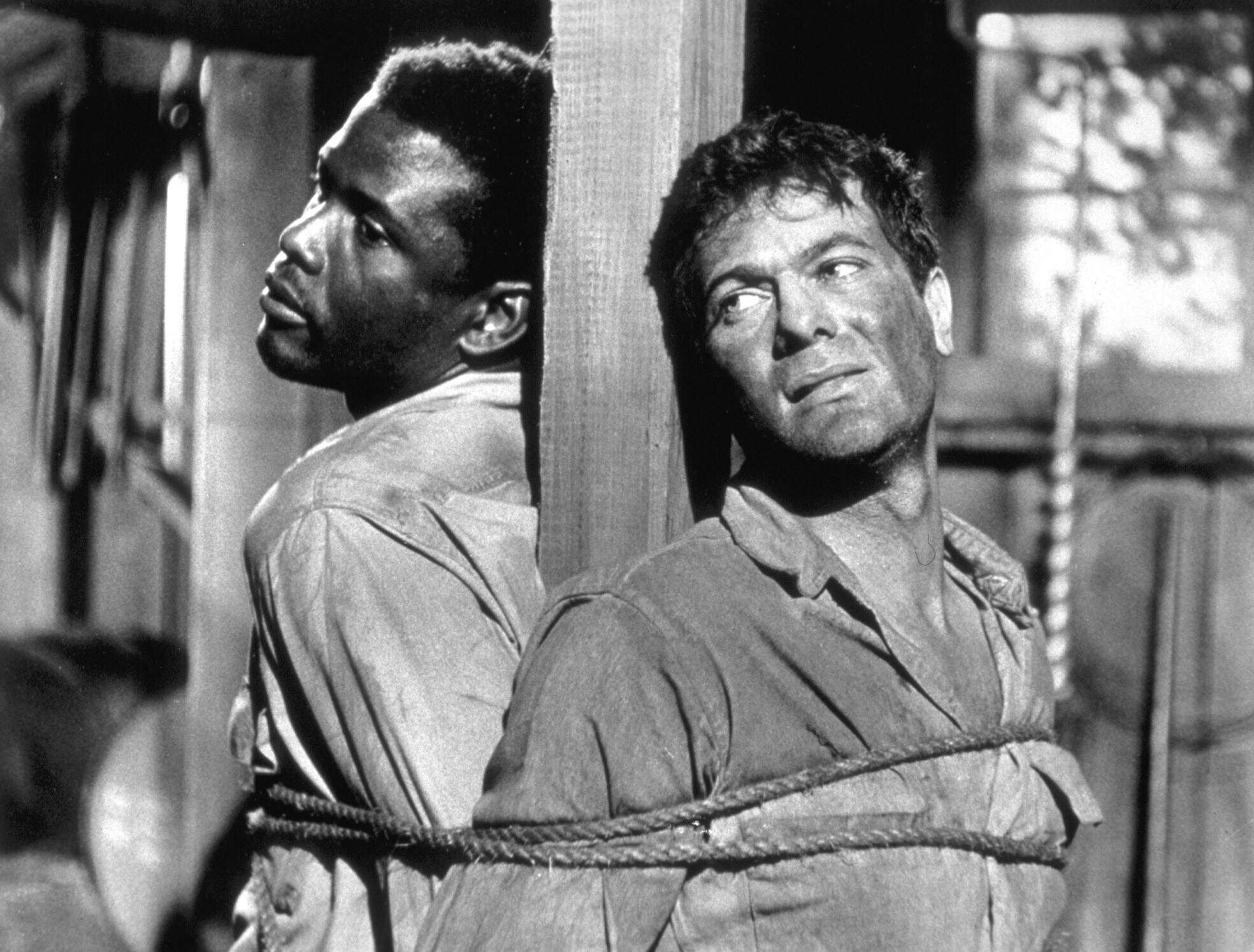
Poitier received his first Academy Award nomination for producer Kramer’s 1958 “The Defiant Ones,” starring as an escaped convict shackled to a loutish racist played by Tony Curtis. It’s a powerfully loaded scenario — Black and white men in chains being chased by cops and bloodhounds through the Jim Crow South. The acclaimed box office smash was the big bang for decades of mismatched, Black-and-white buddy movies where mutual loathing grows into grudging respect and sometimes even affection. But not all were sold on the film’s unlikely conclusion, when Poitier’s character sacrifices his freedom trying to rescue his white pal. In his 1976 rumination on cinema, “The Devil Finds Work,” James Baldwin wrote scathingly about how white viewers found the ending ennobling, while Harlem audiences were shouting, “Get back on the train, you fool!”
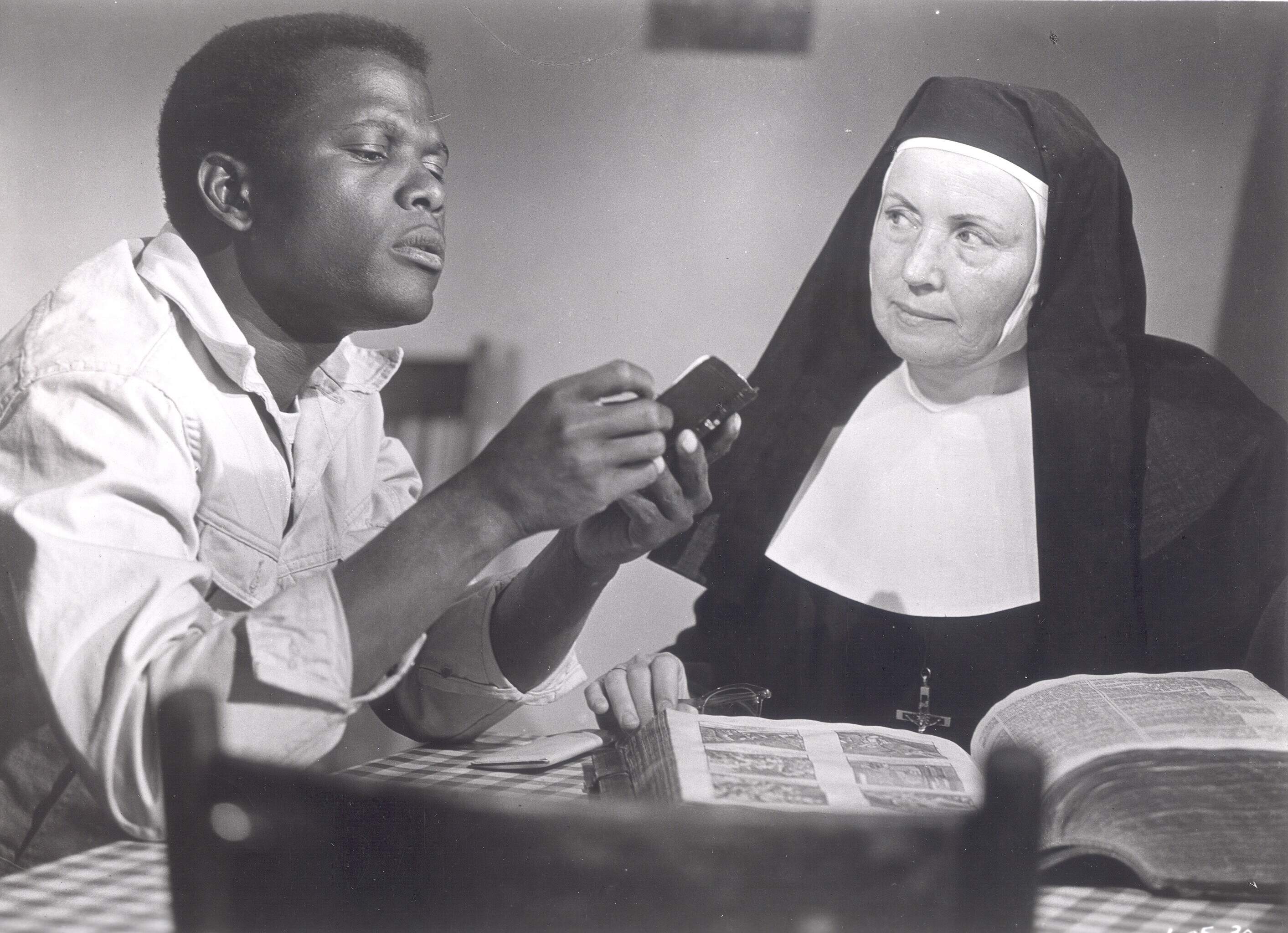
Poitier became the first Black man to win the Best Actor Oscar for 1963’s “Lilies of the Field” — a feat that wouldn’t be repeated for 38 years, when Denzel Washington won for “Training Day.” (Coincidentally, it was the same ceremony during which Poitier received the Academy’s lifetime achievement award, prompting one of my favorite Oscar moments, back when they still cared enough about film history to air such honors on the telecast.) The temperamental opposite of “The Defiant Ones,” “Lilies” is a small-scale, exuberantly wholesome charmer in which Poitier plays a handyman who helps a bunch of German nuns build a chapel in the California desert.
Nuns are inherently funny, and what makes the movie so entertaining is the sly confidence with which Lilia Skala’s Mother Maria bamboozles Poitier and the rest of the supporting cast into providing far more assistance than they’d originally planned. Using the language barrier to her advantage — Mother Maria appears to understand English perfectly, except when people ask her about getting paid — she builds not just a chapel but an entire community out there in the desert. Poitier is at his most relaxed and endearing, absent any of the angst one might expect from a screen legend’s big Oscar-winning role. The movie is as refreshing and ephemeral as a summer breeze.
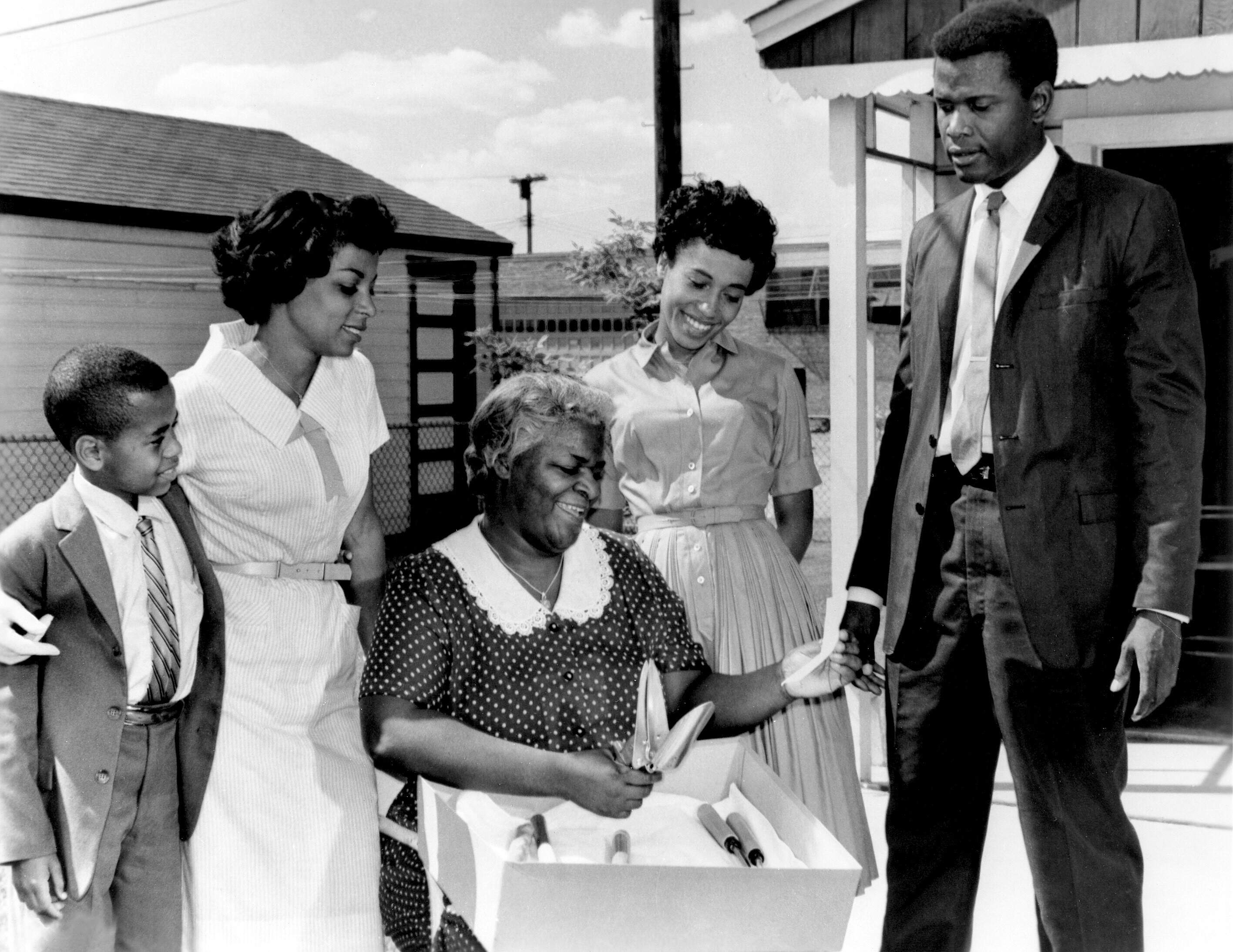
Poitier gives what many consider his greatest performance in “A Raisin in the Sun,” director Daniel Petrie’s big-screen adaptation of Lorraine Hansberry’s landmark stage play. With the original Broadway cast intact — including Louis Gossett Jr. and Poitier’s frequent co-star Ruby Dee — the film itself is an exceedingly stagebound affair, as almost all of it takes place in the front room of an apartment so cramped it’s driving its occupants crazy. Poitier burns through the screen as Walter Lee Younger, a frustrated limo driver whose family comes into an inheritance that might finally lift them out of Chicago’s South Side and into the middle class lives they’ve dreamed of. Or at the very least, a house where their son doesn’t have to sleep on the living room sofa.
It’s electrifying work, with the actor exhibiting a fallible, headstrong side that he wasn’t always allowed to explore when tasked with being an icon of dignity and fortitude. It’s surprising to see Poitier playing a screwup, and he’s so riveting you wish he could have had a few more chances at this type of role. The play takes its title from a line in Langston Hughes’ poem “Harlem,” and the story is heavy with dreams deferred. (I presume the 2008 ABC television production starring Sean “Diddy” Combs in the Poitier role has been stricken from the record.)
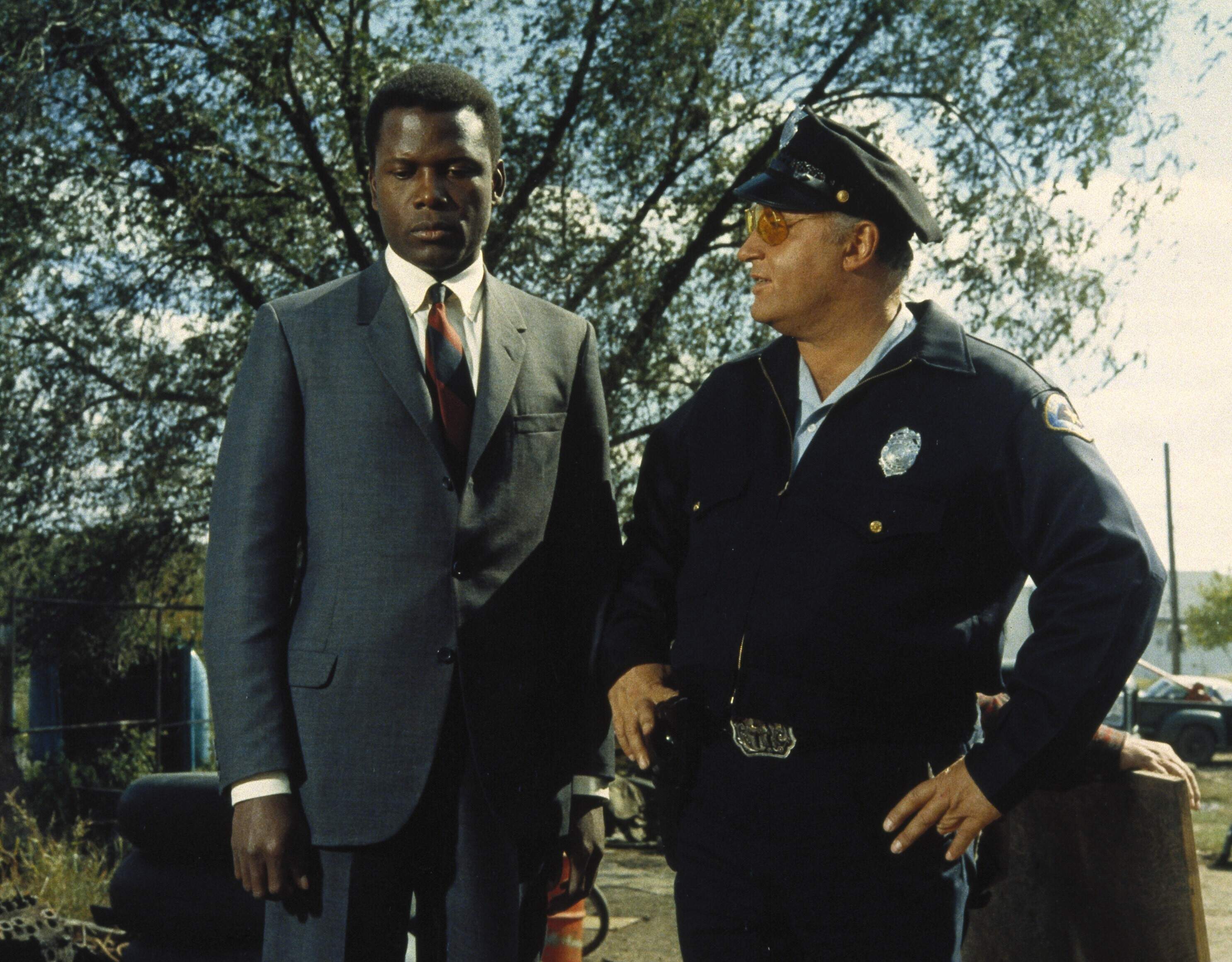
Of course, Poitier’s most famous screen moment is the slap that shook the world. Once again paired with a bloviating bigot in the South, Poitier is on the right side of the law this time in 1962’s “In the Heat of the Night,” making movie history as Philadelphia detective Virgil Tibbs, investigating a murder in a Mississippi backwater town with precious little help from Rod Steiger’s local sheriff. After an insinuating conversation in which he deliberately refuses to show the expected deference to a local orchid farmer, the white man hauls off and slaps him. Poitier slaps him right back — an act unprecedented in American cinema at the time. You won’t find the slap anywhere in the novel the film was based on. Poitier insisted it be added as a condition for accepting the role. Movies would never be the same.
“In the Heat of the Night” is screening with "Pressure Point,” a little-known 1962 drama starring Poitier as a prison psychiatrist tasked with treating a Nazi sympathizer, shockingly well-played by pop crooner Bobby Darin. The “Splish Splash” singer holds his own against Poitier while acting up a storm as a seditious sadist, though parts of the picture are overwrought even by Stanley Kramer standards. Another troubled shrink is played by a young Peter Falk, though his rumpled appearance once again proves that Peter Falk was never young.
The Somerville Cine-Club is a free monthly screening series for film aficionados at the Somerville Public Library. They usually show fun and obscure 16mm trailers and other oddities before a video projection of the main feature. This month marks the first program presented entirely on film. The Cine-Club will be screening what we’re told is a “well-loved” 16mm print of Poitier’s 1973 directorial effort “A Warm December.” He stars as a motorcycle racer vacationing in London, where he falls for the mysterious niece (Esther Anderson) of an African ambassador. She’s being followed around town by an assortment of shady looking men, and intrigue abounds until the film reveals itself to be something sadder and more grounded than the international caper we’ve been led to expect.
Poitier’s directorial career had its ups (he helmed the hit Richard Pryor and Gene Wilder prison comedy “Stir Crazy”) and its downs (his last film was the widely despised Bill Cosby vehicle “Ghost Dad”).“A Warm December” has a chintzy TV-movie aesthetic that can make it feel even cornier than it is. But it’s one of those pictures that perks up whenever it happens upon something the filmmaker is interested in, like a celebration of African music or some unexpected straight talk about Black health issues. Not a lot of “Roman Holiday” riffs would dare detour into information sessions about sickle cell anemia, but that shows you how Poitier always had higher aspirations for his projects, even this gentle travelogue romance.
“Icons: Poitier” runs at the Coolidge Corner Theatre from Thursday, Feb. 5, through Sunday, Feb. 22. “A Warm December” screens at the Somerville Cine-Club on Wednesday, Feb. 10. “In the Heat of the Night” and “Pressure Point” screen at the Somerville Theatre on Sunday, Feb. 22.