Support WBUR
Review
Two classic stories about longing are reimagined for local stages
Two fresh takes on classic tales are currently showing in local theaters: “Little Women” and a musical inspired by “The Odyssey.” Both plays are rooted in a longing for something more.
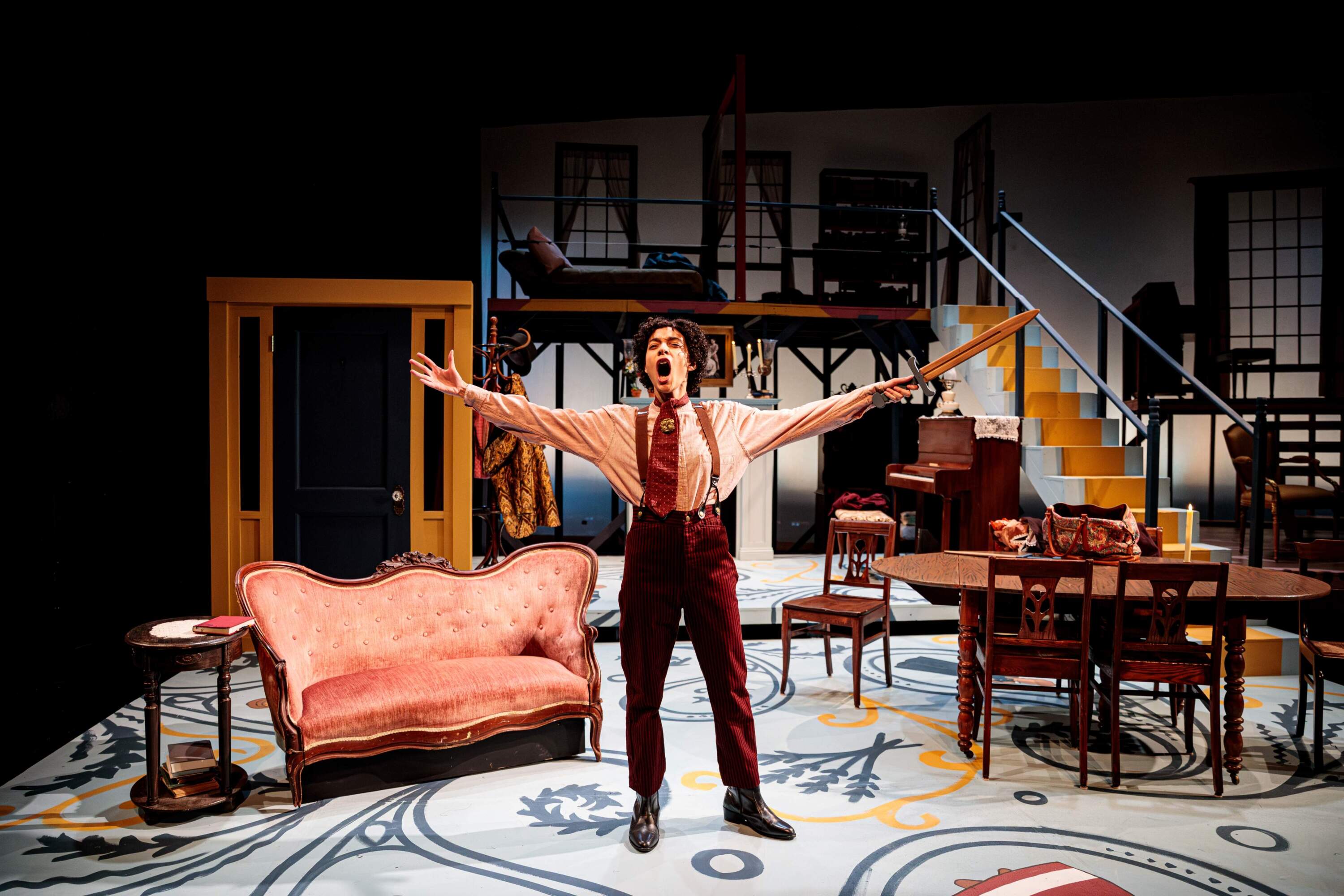
In Actors’ Shakespeare Project’s production of “Little Women” (through March 1), Jo March wants more opportunities. In Louisa May Alcott’s 1868 novel “Little Women,” Jo is the consummate storyteller with dreams of college, traveling to Europe and having a career as a writer. During downtime, Jo brings the tales that fill her mind to life by sharing them, particularly her gentle sister Beth, who is considered the conscience of the family.
Rambunctious and tomboyish, Jo’s character is in stark contrast to what was considered feminine in the 1800s. Readers of the book know that, in the end, Jo did what was expected of her. But in Kate Hamill’s reimagining, there’s more space to deeply consider the identity and future of Jo, portrayed by the talented Aislinn Brophy.
Scenic designer Jenna MacFarland Lord’s home for the March family is cozy and thoughtfully put together onstage. There’s a baby blue-colored fireplace with a portrait on the mantle, colorful floors and steps, a velvet and wood couch, a dining table to gather around and a well-stocked kitchen in the back. Close by, there’s another home, that of the sensitive and caring Laurie (portrayed by Jonah Barricklo). Over time, Laurie ends up getting close to Jo.
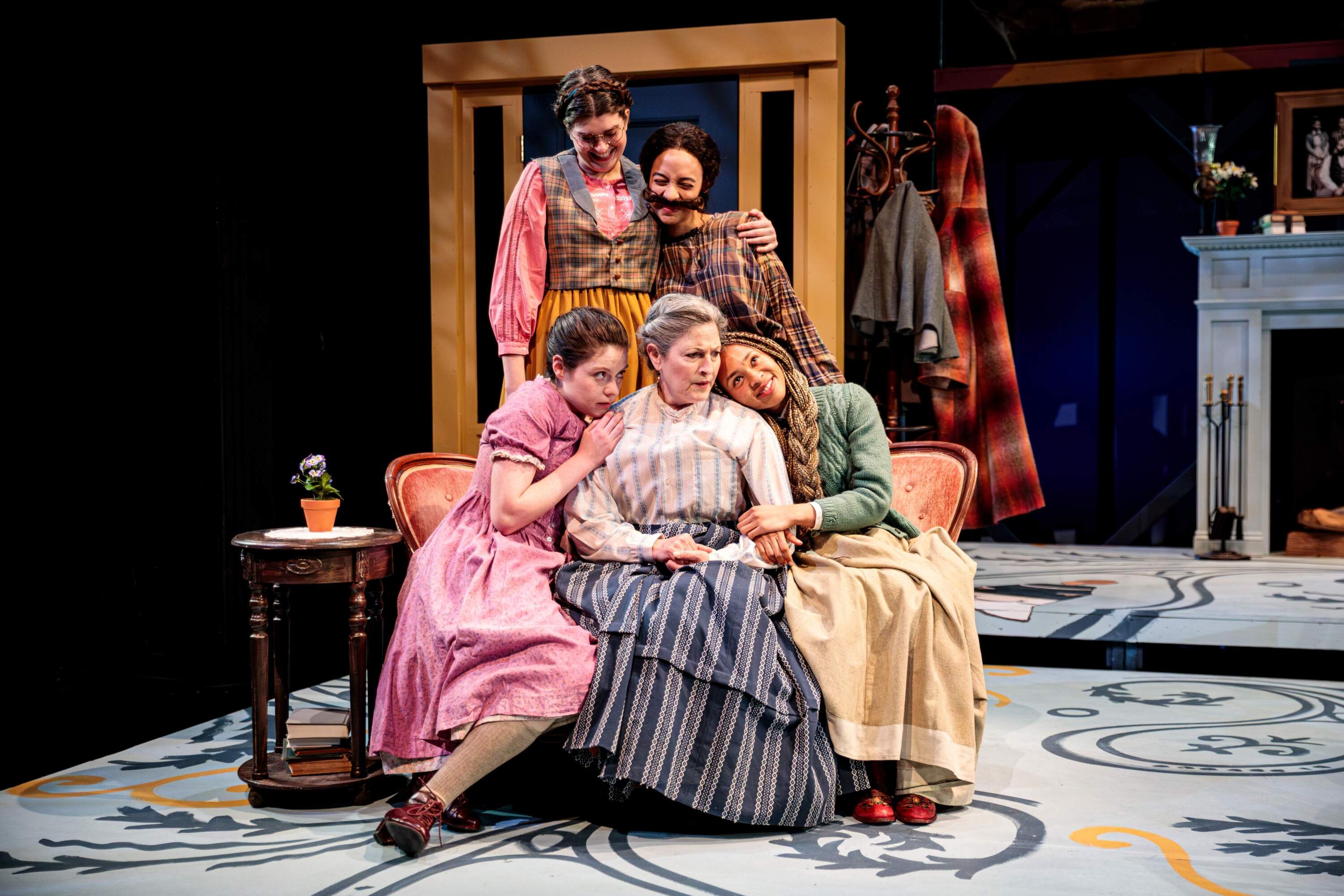
Directed by Shana Gozansky, the cast of this fun play is excellent. These little women, as their Marmee (Sarah Newhouse) calls them, are vibrant and hilarious, especially the wonderfully dramatic Amy, rendered by a fantastically skillful Chloe McFarlane, and Meg, portrayed fabulously by Olivia Fenton.
In the high-energy first act, with the cast dressed in appropriate fashions of the time by Zoe Sundra, the audience gets to know the loving family and their flaws. For instance, Jo can be selfish while Amy is petulant. There’s a fleshing out of their personalities that’s enjoyable to see unfold. There are also some intimate and vulnerable conversations about gender roles and expectations between Jo and the affable Laurie.
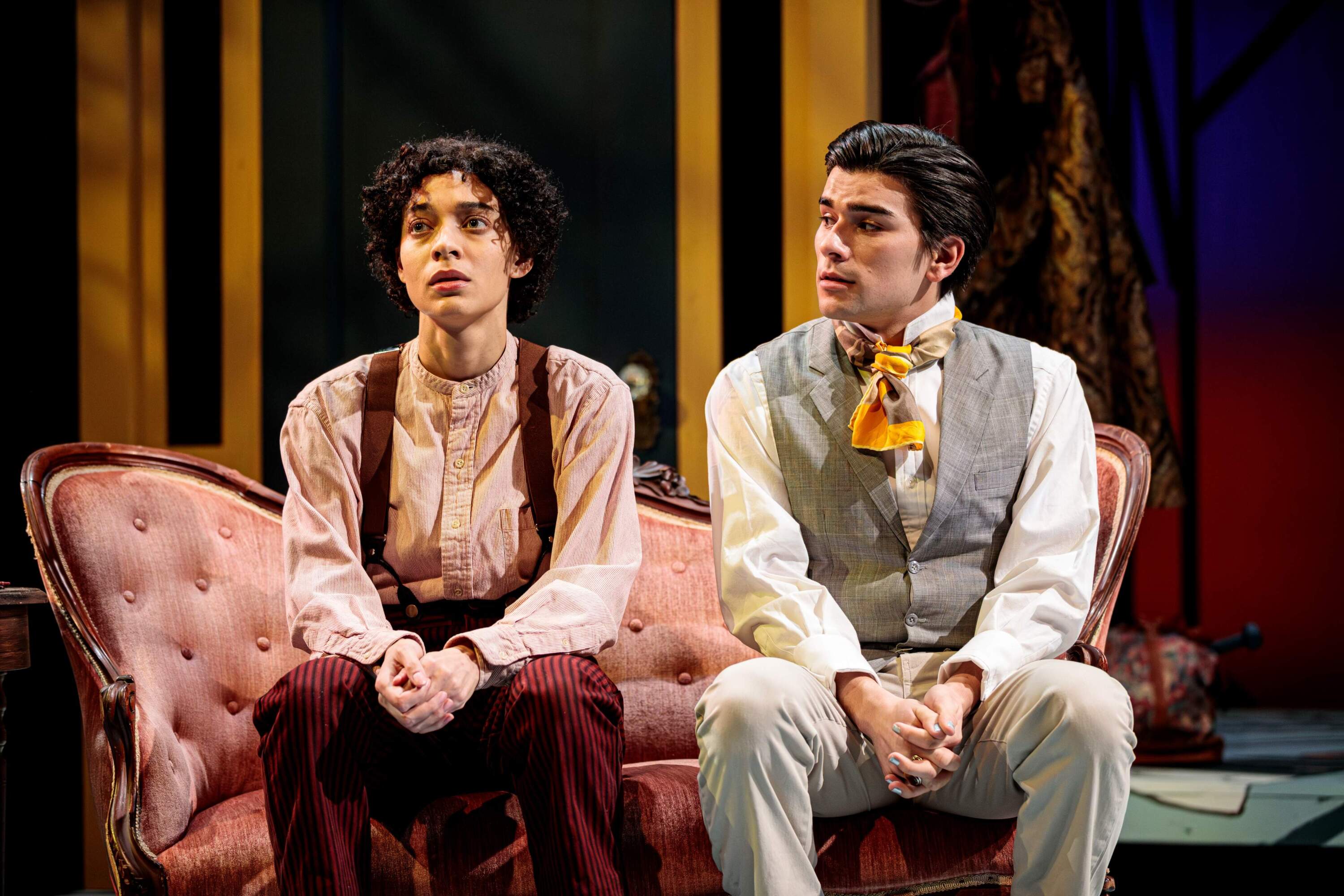
By the second act, though, the play takes a more serious turn and seems to lose some of its momentum. Also, perhaps because we’re living in a time where women have more choices than they used to (but could always use more), the changes to this reimagined story feel less than revolutionary.
The other reimagining, “Penelope” at Lyric Stage Boston through March 1, offers a look at Odysseus’ wife. With music, lyrics and arrangements by Alex Bechtel, and a book by Bechtel, Grace McLean and Eva Steinmetz, this one-woman show details the angst and hope that Penelope feels as she waits for Odysseus’ return after the Trojan war.
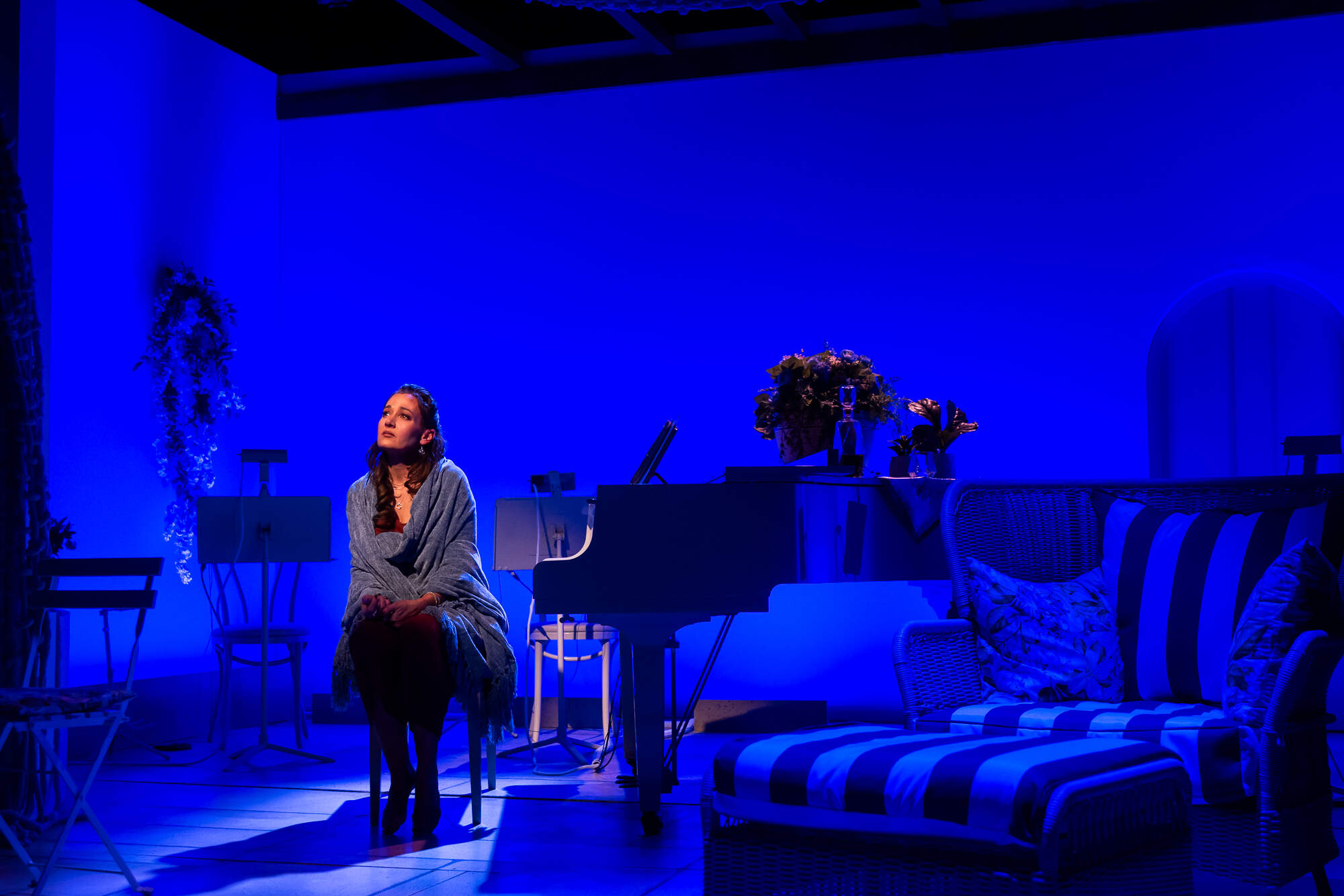
Inside a beautiful home with an ocean blue door, navy and white striped cushioned chairs, hanging plants and white-tiled floors (courtesy of scenic Janie E. Howland), Penelope tells audiences what she’s been up to through song. Lighting designer Karen Perlow and sound designer Alex Berg do great work setting the mood. Warm orange lighting feels like the sun at some moments, especially when paired with the dynamic sound of the instruments.
At the start of the 90-minute show, Penelope, portrayed by Aimee Doherty, is alone at the piano. As she plays a few chords, one by one (for what feels like several long minutes), each musician comes in and takes a seat for the big opening number. It’s the dialogue after, offered in a talk-singing style, that’s more enjoyable. Penelope pours a drink and encourages an audience member to take a shot with her as the show goes on.

Doherty is a sage actress who was excellent in last year’s magnificent “A Man of No Importance.” She is at home onstage, and shows just how much so during a moment when an audience member’s phone rang and she quipped: “If that’s Odysseus, tell him to get his ass home.”
Despite her acting skills, the songs didn’t do much to stir up emotion for me. And watching someone wait is as unexciting as it sounds. However, the musical compositions alone were beautiful. With aptly titled songs and an intro, the music would be lovely as a stand-alone instrumental project. But as a musical, it missed the mark.
Actors’ Shakespeare Project’s “Little Women” shows through March 1 at the Mosesian Center for the Arts. Lyric Stage Boston's production of “Penelope” runs through March 1.