Support WBUR
Oldest known whale song recordings discovered in Cape Cod archives
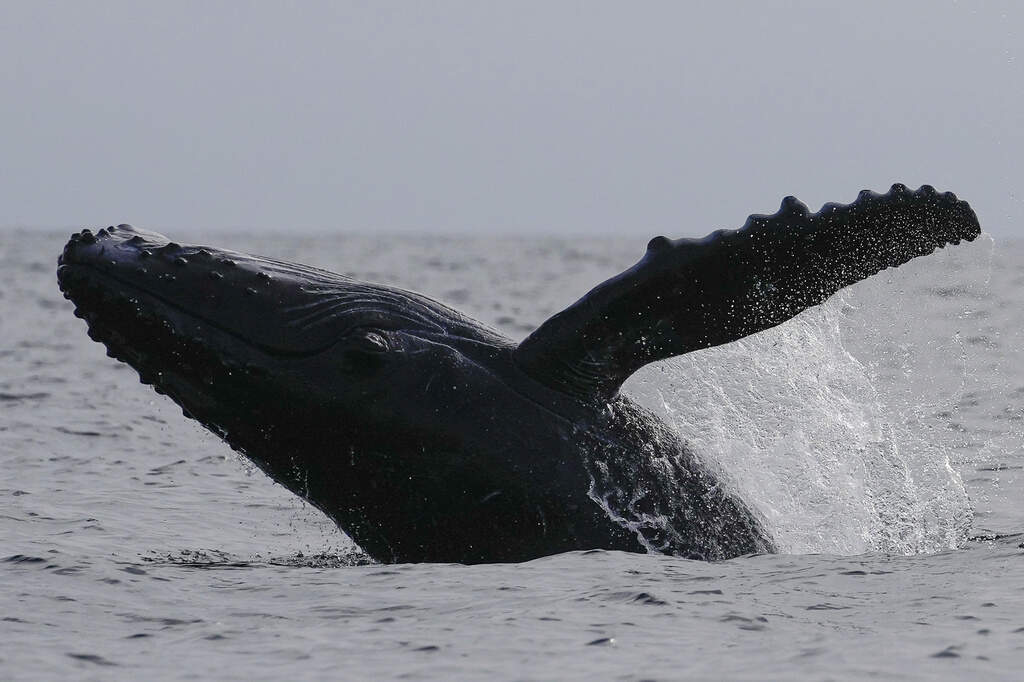
The Woods Hole Oceanographic Institution announced Tuesday they have discovered the oldest known recording of whale song in their archives.
The files, found on a bygone piece of audio recording equipment, may give scientists new evidence about how humans have changed the ocean.
The discovery of the lost files was born out of two coincidences, almost 80 years apart, according to Woods Hole Oceanographic Institution archivist Ashley Jester.
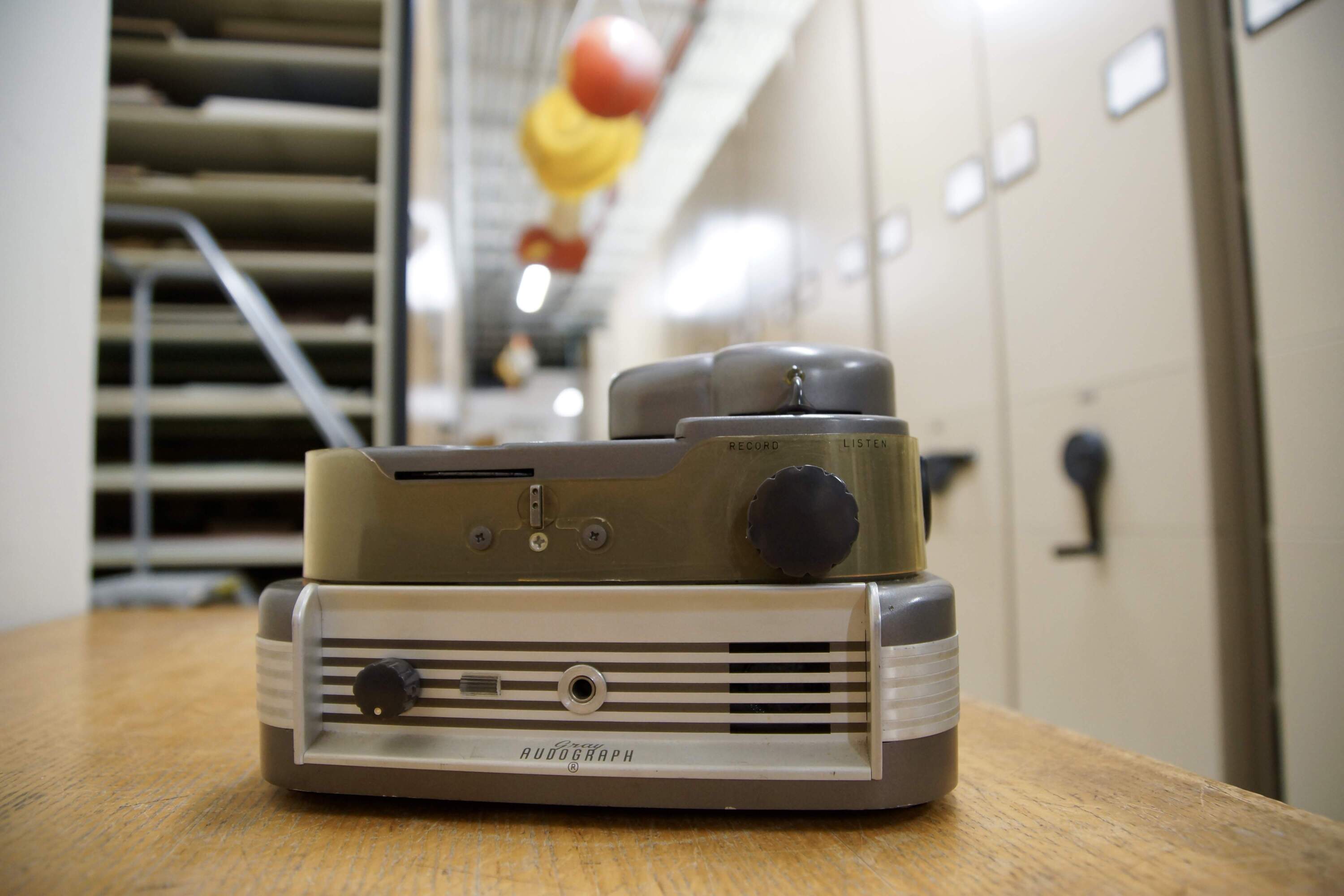
The first occurred in 1949, when a team of scientists studying sonar technology submerged a microphone into the ocean near Bermuda. The researchers plugged the mic into a Gray Audograph, an old recording device normally used for dictation, said Jester.
The scientists picked up on some unfamiliar sounds. Even though they had no idea what they were recording, she said they kept rolling.
Flash forward to 2025, when Jester was touring the archives as a new hire. She stumbled upon some strange, plastic Audograph disks, labelled “fish noises” and decided to investigate.
When Jester played the recordings for WHOI researchers, they could immediately tell from the pitch and pattern of the sound that they weren't listening to fish, but a humpback whale song. It is the oldest known recording of whales, according to the organization.
The disk fills in a gap in scientists’ knowledge of what the ocean sounded like before sonic data was regularly collected.
“Scientists are going to listen to these recordings and make discoveries, frankly, that I can't even begin to imagine yet,” said Jester.
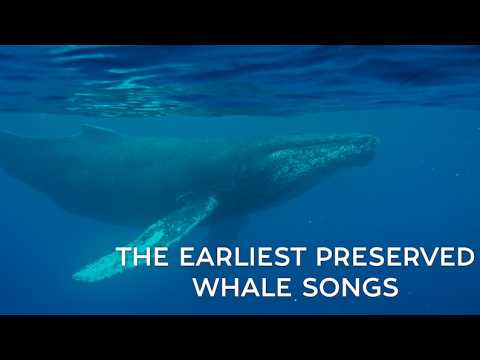
There is about an hour of sound from this particular recording. But there are other Audograph disks in WHOI's collection from the same period that have yet to be digitized, and that researchers haven’t listened to yet. Meaning, there’s potentially more to discover from the archive.
Pieced together, researchers expect to gain an understanding of how human noise has affected animal behavior. For the first time, they will be able to compare the relative quiet of the mid-twentieth century ocean to the clamorous conditions of modern day, caused by shipping vessels and industrial sounds.
“Being able to go back and understand what the underwater soundscape was like 50, 70 years ago is actually very important to understand the impact of the changes we're making,” said Peter Tyack, emeritus researcher at WHOI.
According to Tyack, the field of bioacoustics came about in the 40s to study sound-making in nature. At the time, prominent scientists in the field would find marine mammals and follow them in a boat with a recording device. That was the only sure way to link a particular mammal to a sound caught on tape, he said. Those recordings, as far as WHOI knows, have all been ill-preserved or lost.
“The exciting thing in the late forties for marine bioacoustics was just being able to identify what species makes what sound,” said Tyack. “Now we really want to understand why do animals make the sounds.”
Moreover, the recording technology has developed. For his research, Tyack deploys waterproof microphones that suction to whales’ bodies, gathering sound as they swim. Studying whale song is great for surveying populations and learning about whale behavior, he said.
Yet, it was the simplicity of the Audograph recording that may have leant to its preservation. The waveform is physically inscribed on the disk's plastic surface, making it easy to preserve and play back.
But one mystery remains from the recordings: Whose voice is at the top of the file?
“Side one of record twelve. The date, 7 March, 1949," a male voice says, before bubbles and whale song billow through the mic.
WHOI’s archivists hope to find a record or log that can clue in to who the speaker may be. For now, the humpbacks remain the only ones identified.