Support WBUR
Cape Cod Hospitals faced ‘4th of July' demand following blizzard
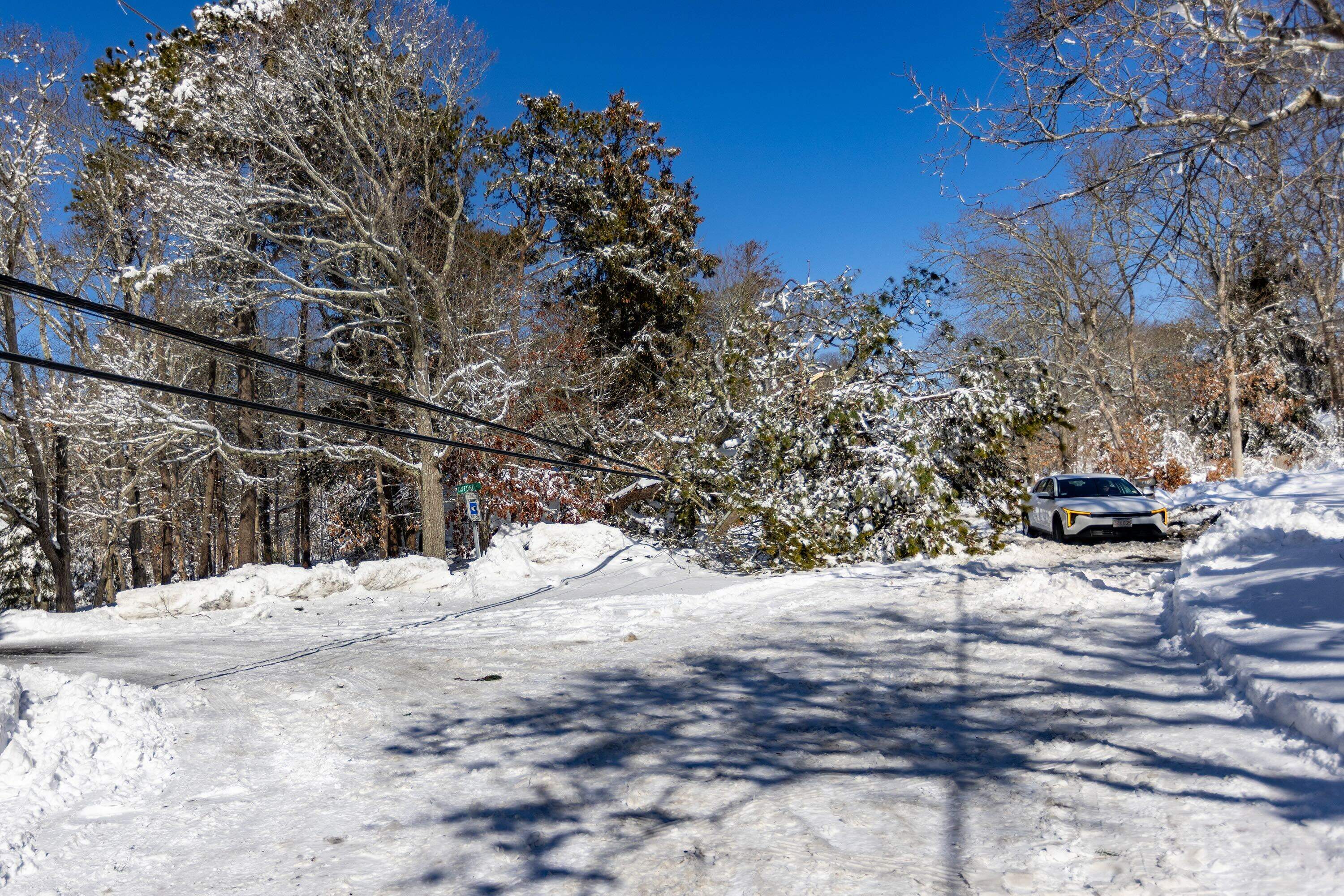
Monday's blizzard placed an incredible amount of stress on Cape Cod's infrastructure, knocking out most mostly everywhere, and making roads impassible for days.
Hospitals on the peninsula were also stressed as patients swarmed emergency rooms looking for care.
Dr. Bill Agel, chief medical officer for Cape Cod Hospital and Cape Cod Healthcare, spoke with WBUR about what he’s seen in the region’s two emergency departments — one in Falmouth, and the other in Hyannis — in the wake of the blizzard. Tens of thousands of people across the region were still without power as of Thursday.
Interview highlights
Hospitals have seen ‘4th of July weekend’ level demand
“Our census in Cape Cod Hospital's Emergency room, to give you an idea, is anywhere between 120 to 130 people at any given time, which compares to normal for this time of year: 75 to 80. So about a 50% increase over what we normally see.
"And that translates into about 230 visits a day over the last three or four days. Typically we'll see more like 180 a day in February at the hospitals. This is more akin to what we see on 4th of July weekend.”
Hypothermia, carbon monoxide poisoning and chronic illness were treated
“We haven't actually seen a really significant increase in the number of cardiac events — the classic heart attack after shoveling snow situation. What we are seeing is the population of the Cape tends toward older folks and they have a lot of underlying health conditions.
"Being isolated and without power, without fresh food and sometimes their medications, or sometimes their caregivers, those underlying medical conditions tend to decompensate, helped along by maybe being cold. And so we just see a lot of chronic illnesses that then become a little bit more acute and they end up in our emergency rooms. That's the majority of what we've seen.
"We've seen a few folks with hypothermia, especially as the lack of power has dragged on a bit. Luckily, it's not been as cold as it was during our last snow storm in January. I think if this storm had come in January with those temperatures, we'd be looking at a lot more hypothermia.
"We’ve had a couple of carbon monoxide poisonings from folks using, I'll say, inadvisable forms of trying to heat their homes or cook in their homes. And one or two unfortunate snowblower incidents.”
Nowhere to go once discharged
“ Probably one of our biggest problems has been that we have folks in the hospital who we've gotten well, but it's kind of hard to send them to a home that is still snowed in and has no heat. So we've had to rely on the local shelters and even opened up our own shelter here in the hospital for those folks.”
Both his hospitals had power
“We have redundant systems. So there's two power supplies for Cape Cod Hospital and Falmouth Hospital. Plus we have backup generators and backup backup generators. So the hospitals never lost power, although Cape Cod Hospital was on generator power for a little while.”
Health concerns remain days after the storm
“People have been without power for several days and unable to get out. The food in their refrigerators is maybe not as fresh as it should be. My physician's mind always goes to things like, ‘Okay, what are these folks eating out there? And are we gonna have a spate of gastroenteritis coming in tonight?’ That type of thing.
"There's a lot of folks alone out there with little in the way of social interaction, and we won't know for a few days yet how those folks have done. So I worry about that.
"With power coming back on, you always worry about fires and smoke inhalation and whatnot. So yeah, I worry about everything.”
This segment aired on February 26, 2026. The audio for this segment is not available.