Support WBUR
A sneak peek at the state's transit plans for World Cup
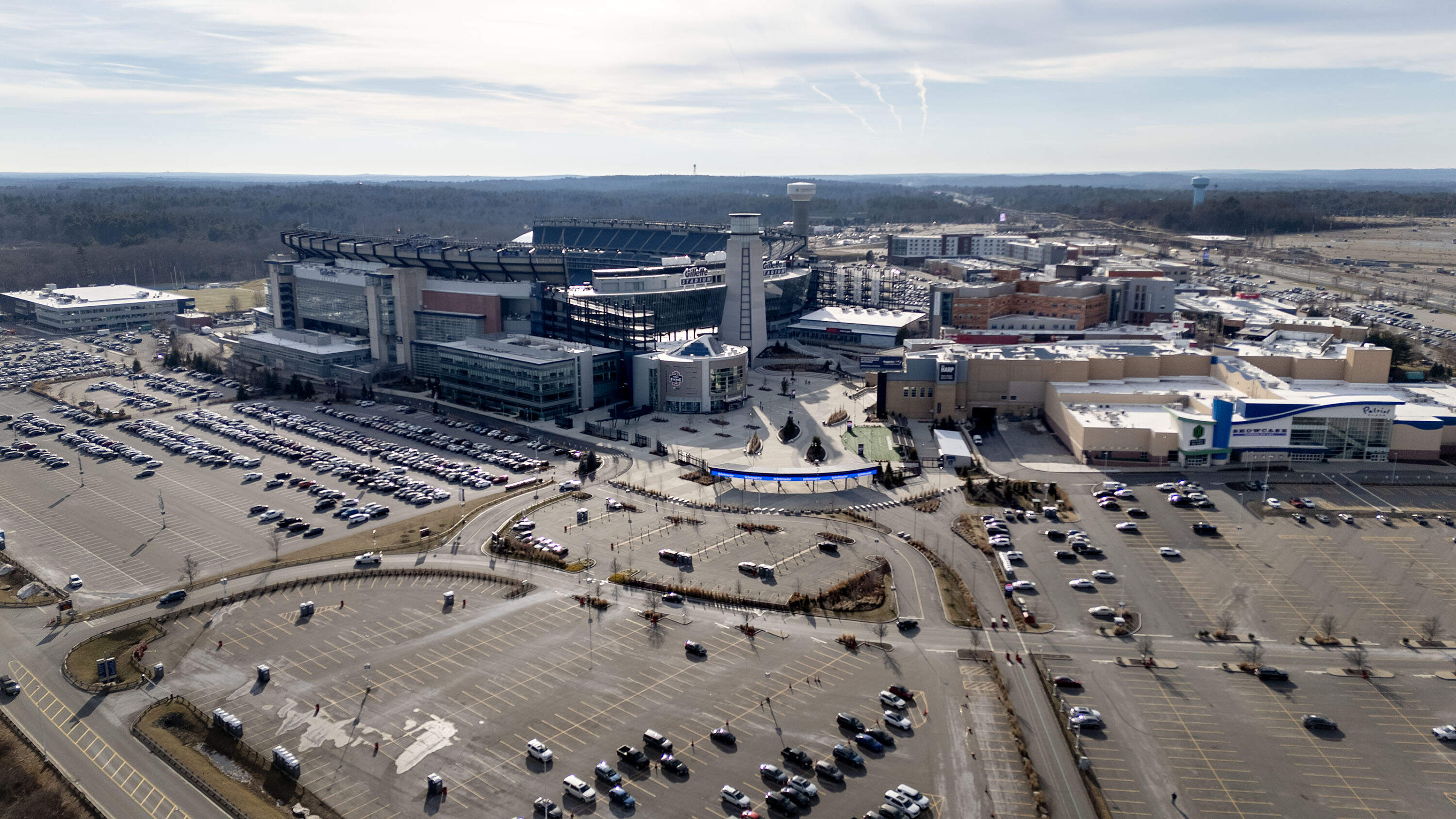
State transportation officials finally offered a peek into their World Cup planning efforts Wednesday.
The matches are set to begin in June at Gillette Stadium in Foxborough, and a presentation at a Department of Transportation board meeting confirmed what most observers assumed: public transit will play a vital role in getting people to games.
Parking at Gillette will be heavily restricted, with just 5,000 spaces available at the stadium, down from the typical 20,000, according to Erika Mazza, the T’s senior advisor for special projects.
That's in part due to an expanded safety perimeter that will be in place around the stadium for the matches and hospitality needs, said Rod Brooks, the T's senior advisor for capital, operations and safety. He said the perimeter means “you end up losing quite a bit” of space normally used for parking.
“That is why our efforts with MassDOT and our efforts at the MBTA are so important," Mazza told board members, "as we are trying to support the movement of over 30,000 individuals — not by car, but by public transit or ride share — other means as well," to the matches.
Gillette has a capacity of about 65,000. The MBTA has committed to moving up to 20,000 people to the stadium on match days by commuter rail to Foxboro station, next to Gillette.
Brooks said the T plans to run up to 14 trains on game days, leaving at about 15 minute intervals.
Interim transportation secretary and MBTA general manager Phil Eng said moving that many trains for an event at Gillette Stadium is “monumental if you think about it.” He said the system typically runs one train during Patriot games, or up to five for an Army-Navy game, so the increase is unprecedented, even for big concerts like Taylor Swift.
Brooks said the transit authority will do a run-through of the added trains in the coming months. Four trains are expected to run for a friendly match between France and Brazil slated for March 26.
"There’s a lot of work still to be done” around planning, Brooks said, and part of the solution will be buses. He said the " World Cup 2026 integrated mobility plan” will include a plan to use Massachusetts regional transit authorities as well as buses from locations including Rhode Island.
Mazza said the state expects some 2 million people will visit Massachusetts for the World Cup.