Support WBUR
The steak of the future may be growing in a Woburn office park
Americans are obsessed with protein, and the U.S. is one of the most carnivorous nations in the world. Even the federal dietary guidelines now feature a bright red ribeye steak at the tippy-top of the food pyramid.
But scientists warn the environment can't withstand our appetite for meat.
Cow burps and farts, for instance, are a large source of planet-warming gas; livestock also need lots of land and water for grazing and growing feed.
So, what if there were a steak that was gentler on the environment?
Massachusetts is betting that meat grown in a lab may be the answer, and one of the state's newest startups — an engineering company called EdiMembre — is leaning in.
In a commercial kitchen-turned-lab in Woburn, co-founder Ryan Sylvia held a plastic tube roughly the size of a syringe. In it were copper-colored fibers that resembled angel hair pasta.
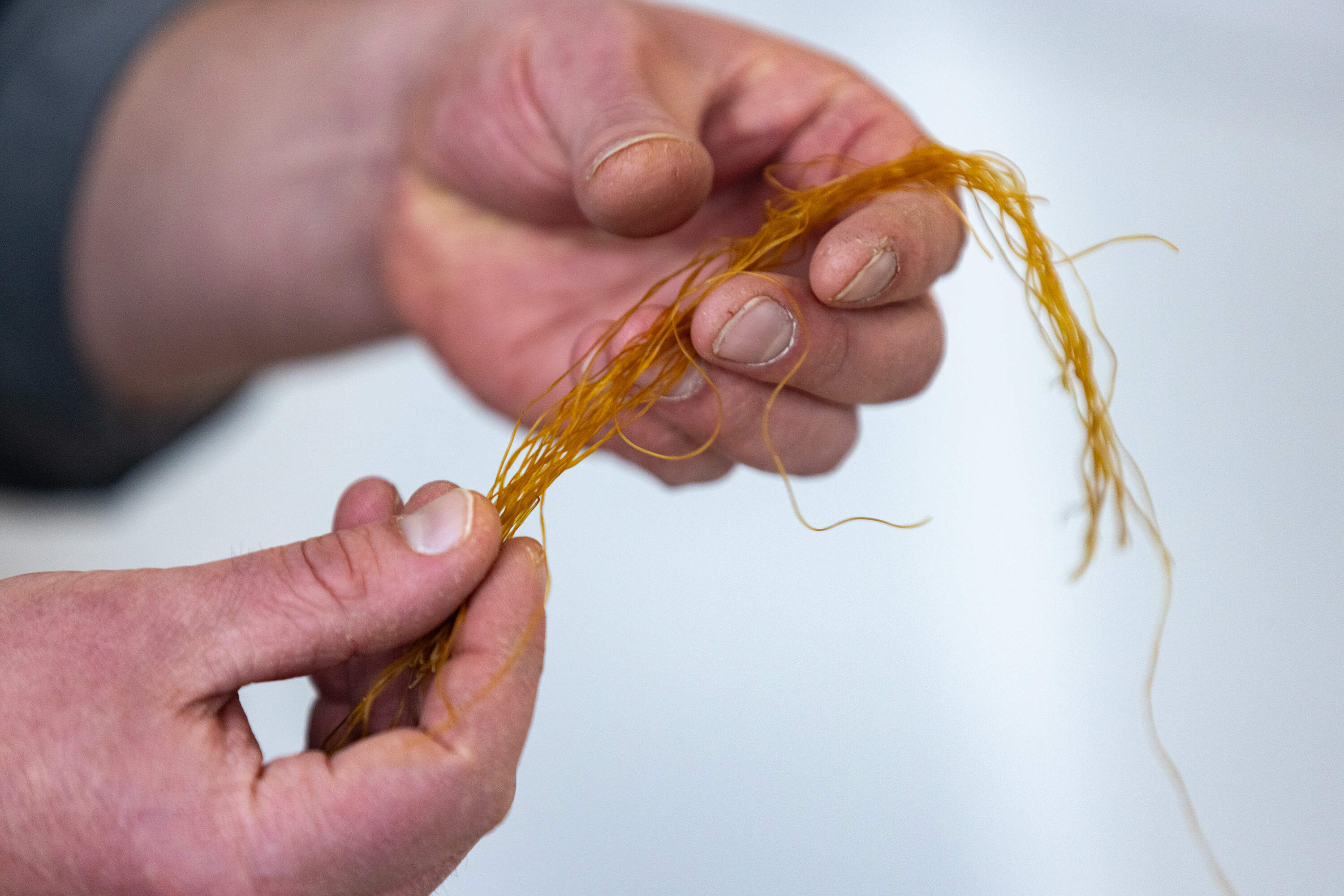
These hollow strands are key to EdiMembre's innovation. They're made from plant protein and when bundled together, they mimic the veins and arteries of an animal.
In the tube, the strands carry nutrients to animal cells causing them to replicate. The cells begin to fuse into muscle and connective tissue within a couple of weeks, Sylvia said.
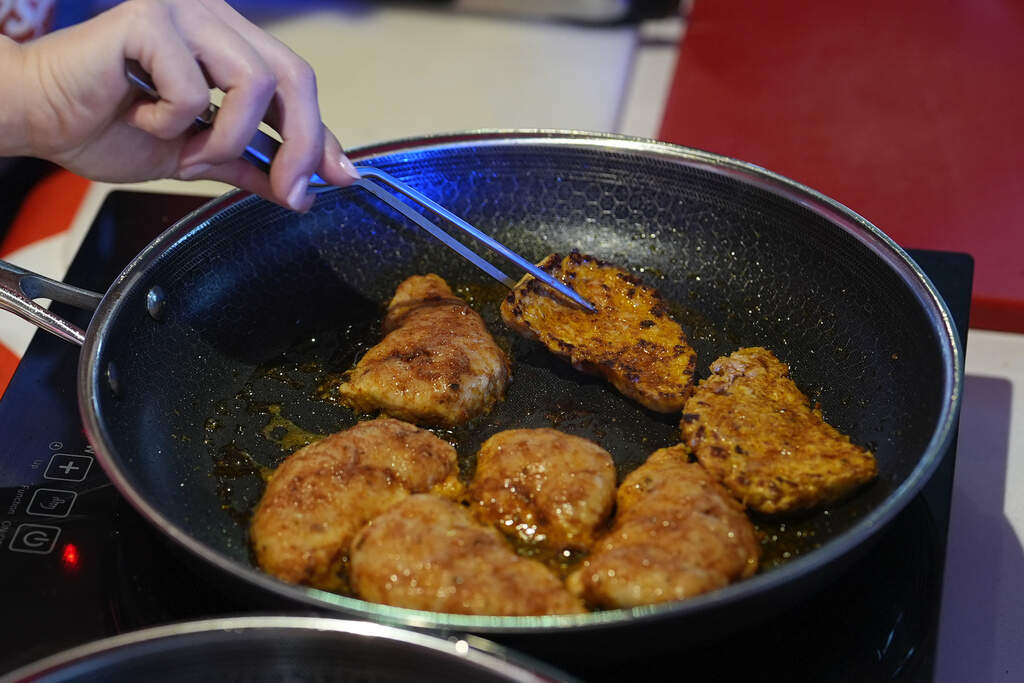
The company and other manufacturers have tested the technology with cells from pig, salmon, quail and even mouse — which, perhaps unsurprisingly, looks like chicken when it's grilled up. (The mouse meat wasn't meant to be eaten. It was just the type of cell most available for testing.)
EdiMembre's prototype can build a three-gram morsel — equivalent to a small bite.
Its next step will be testing a larger device designed to grow a couple pounds of meat.
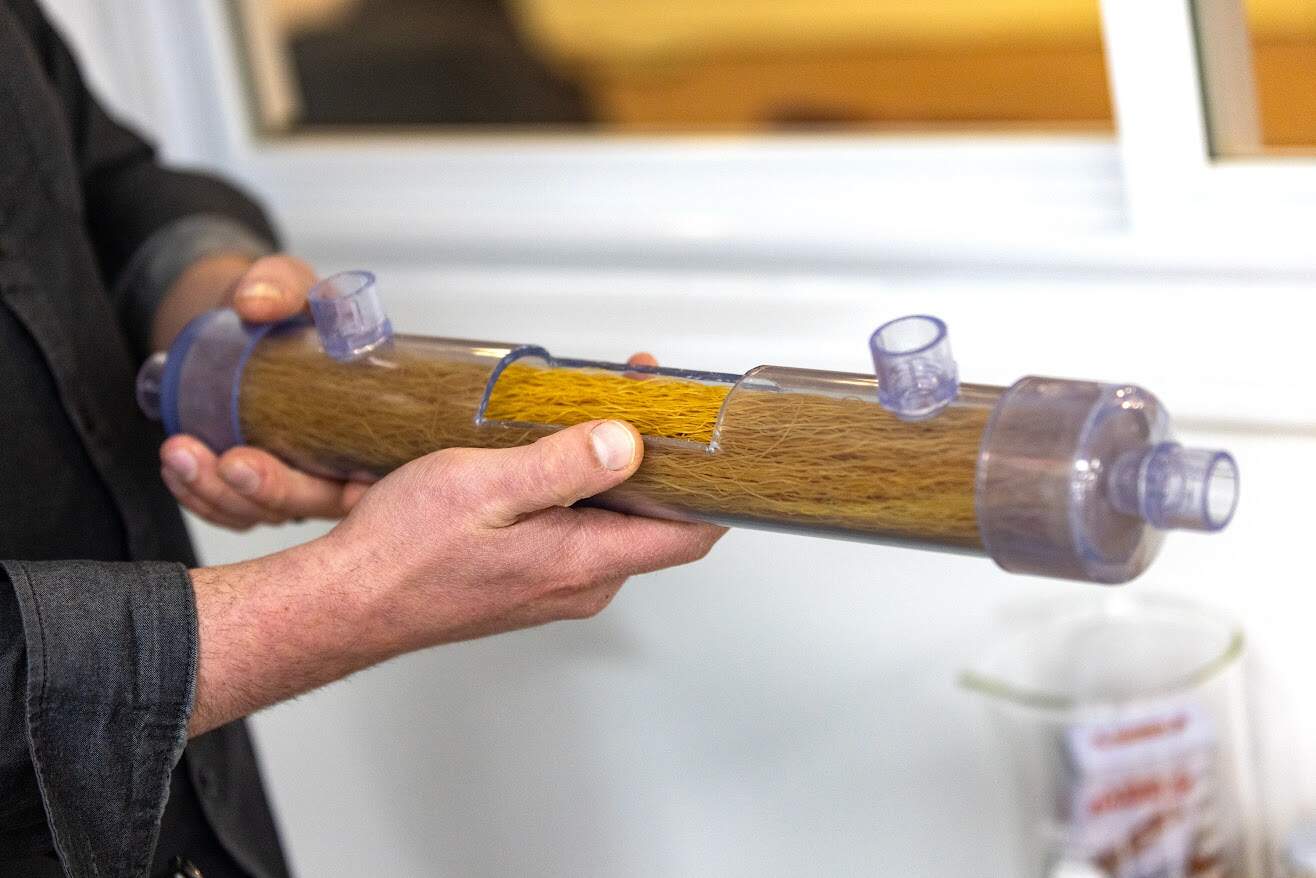
“This would represent the largest structured, whole cut piece of meat that would ever be created,” said Tim Olsen, EdiMembre’s other co-founder. The company has yet to test the new device. Olsen and his team need an infusion of cash before they can run the new machine.
Like any startup in what's known as the "cellular agriculture" industry, EdiMembre executives face the challenge of finding investors. They’re looking for $3 million in seed funding, “and that’s us staying lean,” said Olsen.
The company's founders are optimistic about their future, and are pursuing state funding opportunities and are tapping the local talent pool of trained scientists.
For over a decade, cultivated meat has offered the potential to slash pollution caused by raising livestock. The industry has had a few small successes and false starts — limited runs in restaurants, for example, and products approved by the U.S Food and Drug Administration. But Texas and six other states have banned cultivated meat, and it faces opposition from ranchers. Companies have also struggled to overcome the public's "ick" factor over meat grown in a lab. So far, the products have failed to come to market at the scale needed to fulfill their promise to feed the future.
The cultivated meat industry has raised over $3 billion in investments over the last 10 years, much of it from private sources like venture capital. But the well is running dry as investors' interests turn toward artificial intelligence, said Nick Cooney, who runs the food-tech focused venture capital fund Lever VC.
“The amount of funding going into all things non-AI in the VC space is down dramatically,” Cooney said.
Despite this, Massachusetts hopes to become a leader in this industry. The state recently granted $2.1 million to the Tufts University Center for Cellular Agriculture to bring cultivated meat to market. Tufts’ pioneering research has already led to five biotech startups.
Lily Fitzgerald, with the public agency MassTech, said the state wants to “be the main place where new innovations get to commercialization.”
Even with the state's support, the cultivated meat industry has more challenges to overcome.
Sticker shock
It’s hard to know how much a pack of lab-grown beef would cost at a grocery store. But at this stage, it would likely be expensive.
High costs are driven by three main factors, according to Cooney. First, the companies must purchase "growth media," the nutrients that encourage cells to multiply. They also have to invest in production equipment, and fund research and development.
The goal is to grow cells quicker and cheaper.
There are signs of progress. In 2017, a pound of cultivated chicken cost $9,000. More recently, the startup Believer Meats claimed it had found a way to produce chicken for $6.20 per pound, but the company declared bankruptcy earlier this year with hundreds of millions of dollars in debt.
Other manufacturers are focusing on products that mimic ground meat or include plant proteins. Mission Barns, for example, manufactures cultivated pork fat that it combines with plant-based ingredients to make bacon and meatballs.
It may not be a T-bone steak, but it’s a start.
Environmental promises
As companies iron out their manufacturing processes, another question looms: Can cultivated meat can live up to its lofty environmental promises?
The Good Food Institute, a think tank dedicated to alternative proteins, found that cultivated meat can reduce greenhouse gas emissions by 92% when compared to conventional agriculture, while using 90% less land.
But its full environmental impact “completely depends on how the system is designed,” said Nicole Blackstone, associate professor at the Tufts Friedman School of Nutrition Science and Policy. “ If you're running a cultivated meat system and your electricity grid is fossil fuel based, that's going to have a very different carbon footprint than a system that’s run on renewable fuel.”
A complete, reliable calculation would need to include all the climate-warming emissions and waste products that come from each step of the supply chain, she added.
Delivering on its environmental promises could dramatically affect the industry's chances of success. A survey by the International Food Information Council found that 28% of respondents who reported they were enthusiastic about trying cultivated meat ranked environmental benefits as a main driver of their interest.
Ick factor
Most people are unfamiliar with cultivated meat, and those who are aware of the concept may have mixed feelings. A 2021 study found that 40% of people were moderately or somewhat likely to try it, while another 40% had high interest.
The industry has largely jettisoned an earlier name — lab grown meat — after it proved unappealing to consumers.
Olivia Grieco, a doctoral candidate at Tufts University studying consumer perceptions of cultivated meat, said she gets a variety of reactions from her friends and family.
“[There’s this] mix of like, ‘Oh, I'm extremely curious about that. When can I try it?’” said Grieco, “and then there's kind of like the pushback, hesitation of like, ‘Oh, I don't know about that.’ "
In her experience, the more people understand about cultivated meat, the more they’re open to trying it.
Hedging their bets
Companies like EdiMembre are hedging their bets amid the uncertainty. The team at its Woburn lab is exploring alternative uses for their technology, such as repurposing the hollow strands used to feed cells as a drug delivery device.
Another Massachusetts company, Lasso Labs, has a similar backup plan. Its engineers developed a technology to spin muscle-like fibers that they now use to manufacture fruit snacks.
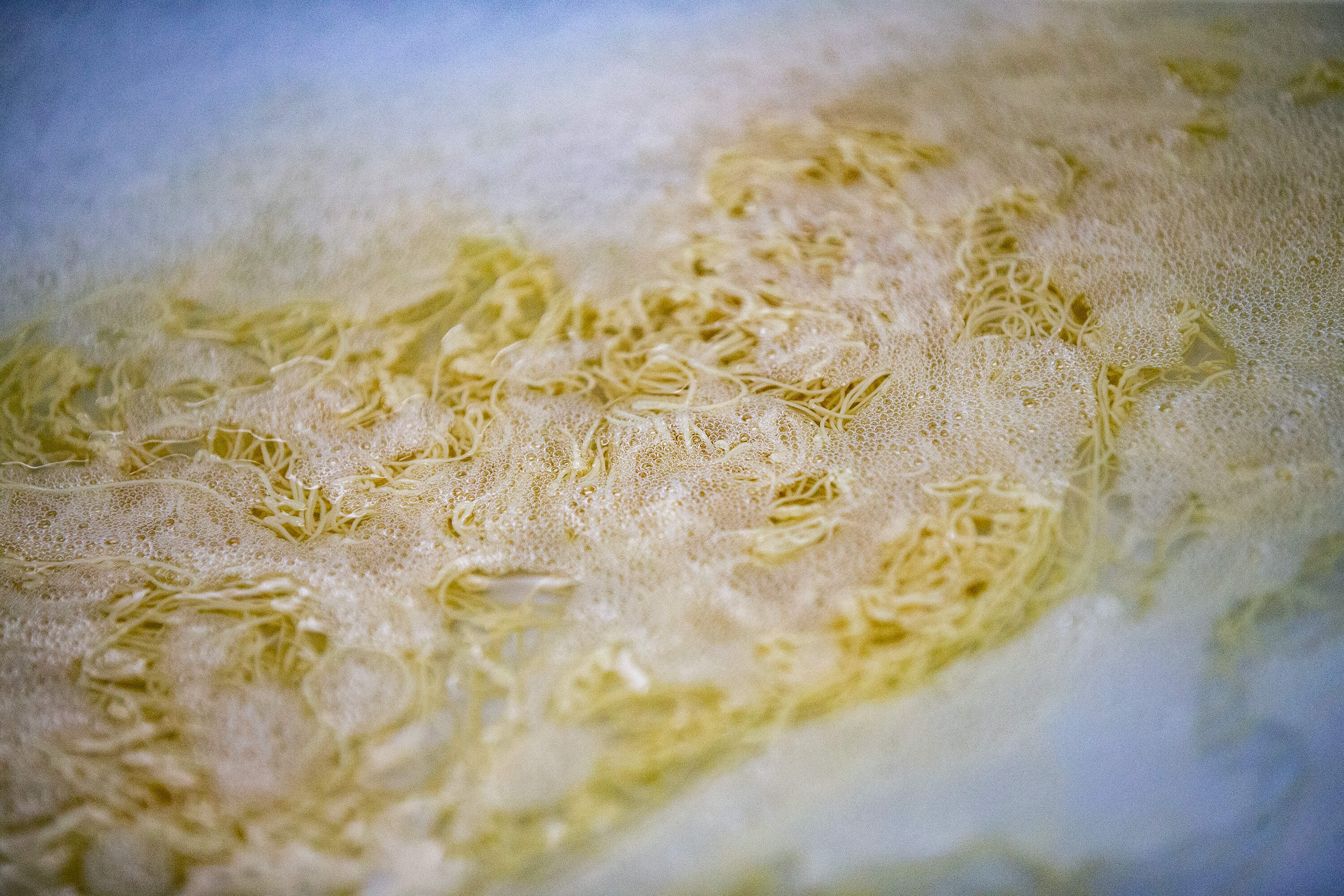
The country's protein craze could also provide a boost for EdiMembre. Its stringy fibers are made from protein-rich sources like mung beans. They could be packaged and sold just as they are: noodles.
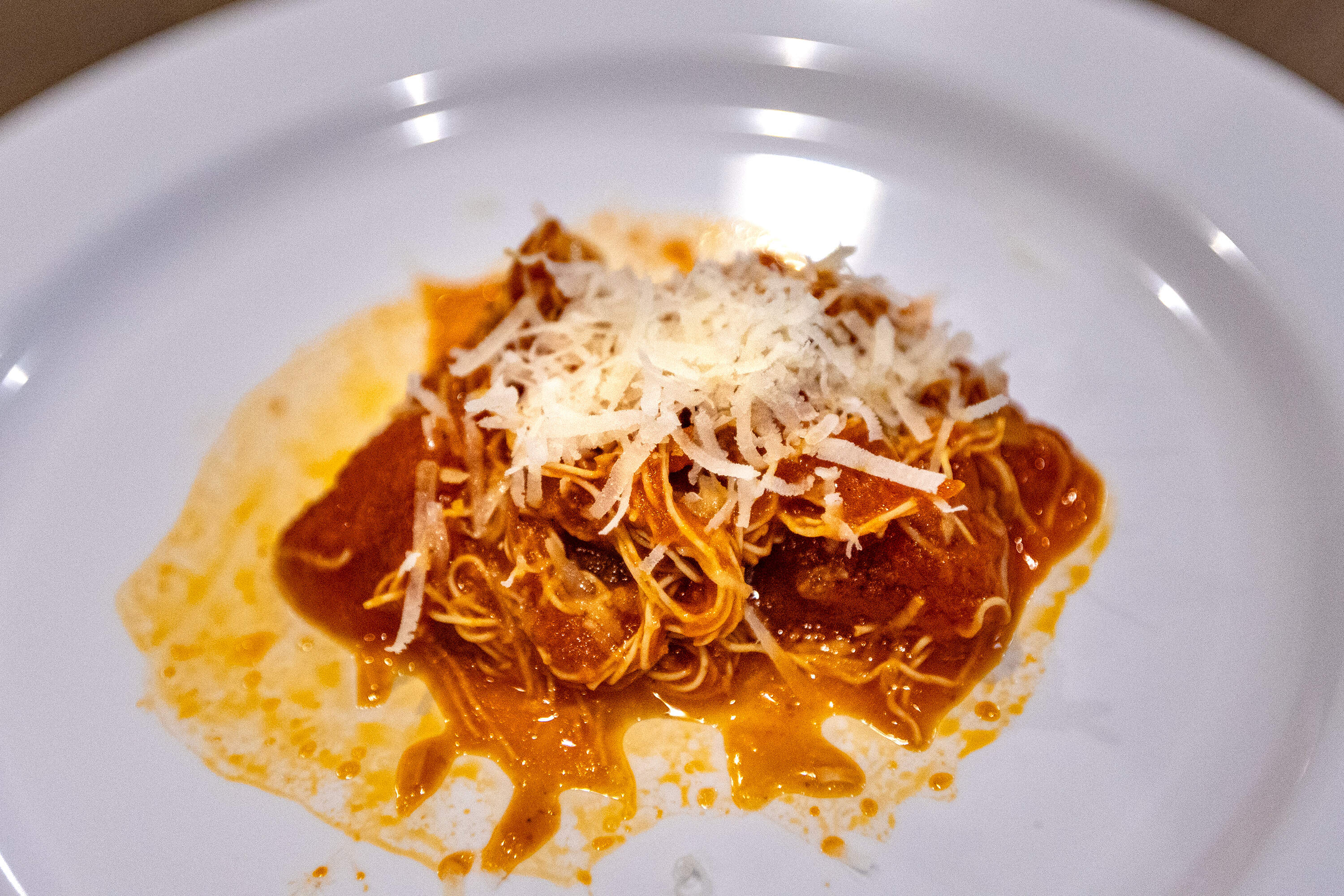
The EdiMembre staff plated a few bites for the WBUR team to taste. A full serving of this pasta would deliver more than 40 grams of protein, ideally at a cost of $5 a box.
Served with marinara sauce and parmesan cheese, the flavor and texture were convincingly pasta-like. Though the noodles were slightly on the skinny side, even for angel hair.
Dishes like this may have to tide us over while we await the main course of cultivated meat.
This segment aired on March 5, 2026.