Support WBUR
Review
'The Antiquities' grapples with technology’s power
Growing up, stories of humanity’s extinction by one technological foe or another filled the TV screens in our home. My dad was riveted by all things sci-fi. Later, I found myself fascinated by stories of the soylent-drinking dystopian societies where fresh food was a thing of the past and the great divide between those who harnessed technology and those who didn’t.
The threat of humanity’s extinction anchors SpeakEasy Stage Company’s thought-provoking production of “The Antiquities" (through March 28). At the center of the play by Jordan Harrison is The Museum of the Late Human Antiquities. The museum is filled with artifacts that point to mankind’s innovations, such as a butter churn, a 1994 desktop computer and modem, a Betamax tape and a rotary telephone.
The stimulating show with a fantastic cast feels very much of the moment. It’s amusing and just a teensy bit disconcerting. Our reliance on AI tools is growing and its further integration into our phones, Google searches and work is automatic. Still, the notion that humanity is on the cusp of collapse seems a little far-fetched. In an interview last year, Google CEO Sundar Pichai shared that while he believes the underlying risk of AI-driven existential catastrophe is "pretty high," he is optimistic that humanity will unite to manage these risks. In the world Harrison has penned, humanity may have tried, but did not win the fight.
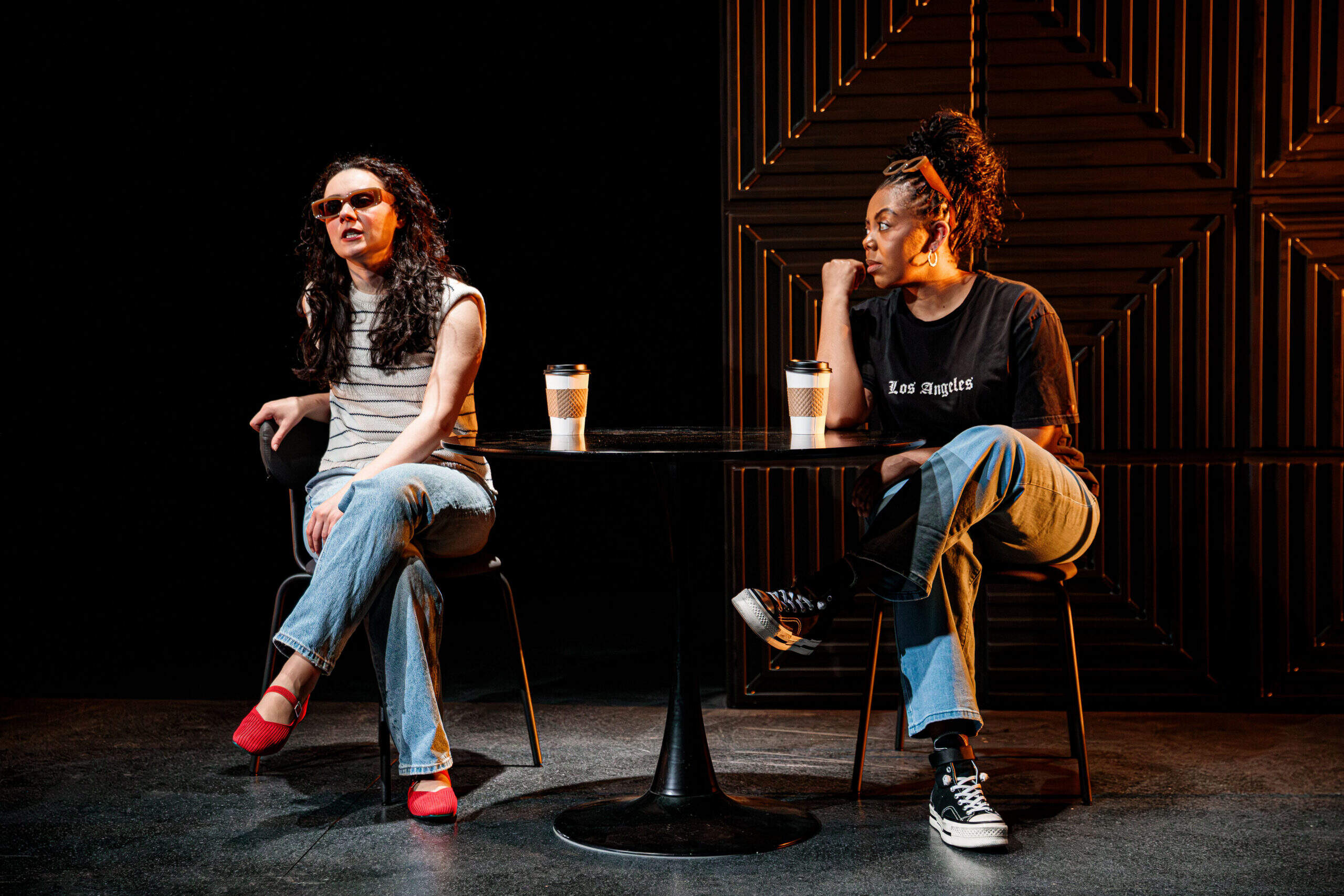
In the show, directed by Alex Lonati, the exact moment humans become extinct is unclear. What is evident is that the AI is doing its best to remember mankind, even if just for historical reference. At the show’s start, two women (Alison Russo and Kelsey Fonise) with robotic voices and movements act as guides through this museum. Woman 1 (Russo) tells showgoers to “look alive” and to “imagine having a body,” before asking a series of questions about what this imagined body looks like and what it might want.
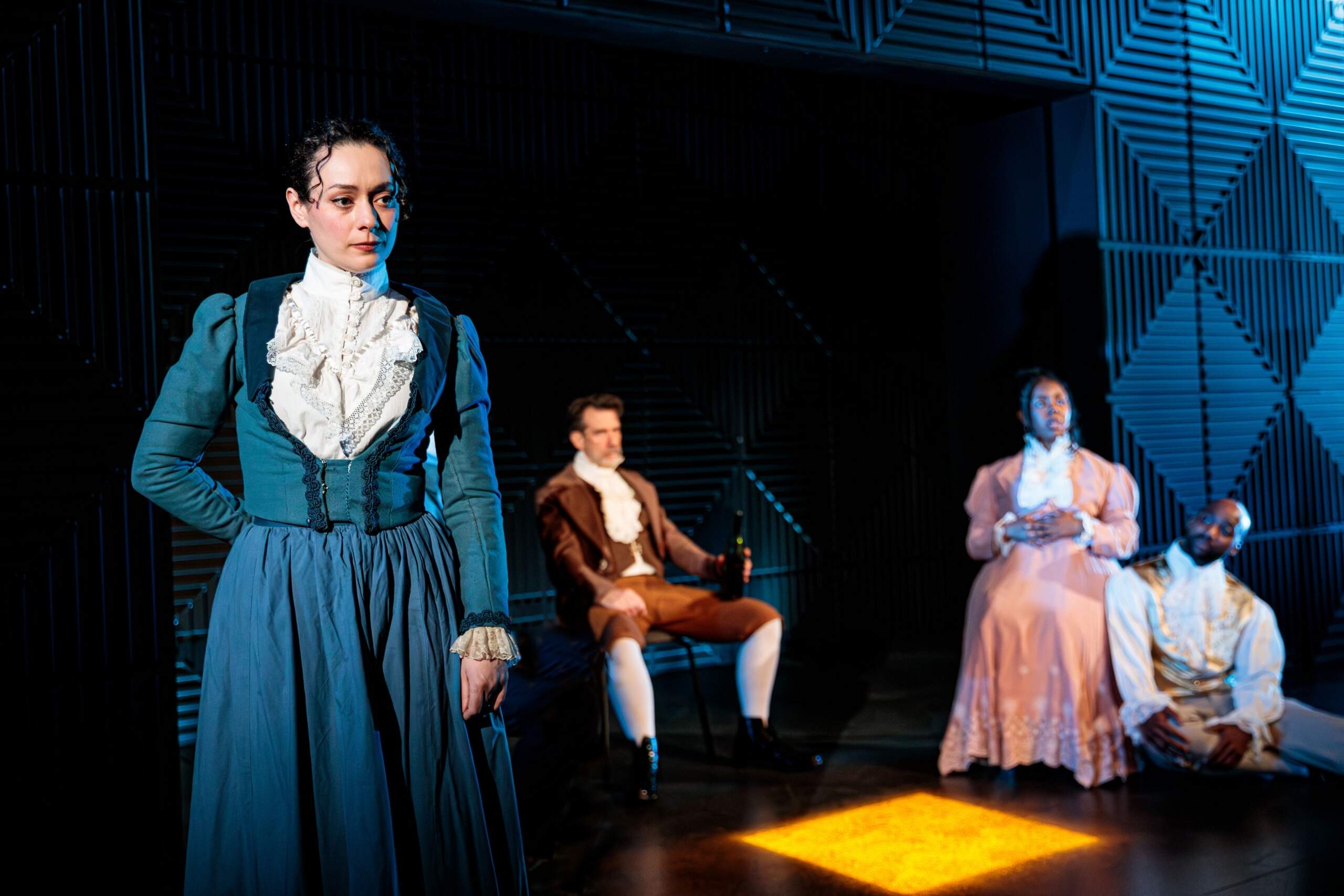
In the show, the museum’s exhibits range from the years 1816 to 2240 in which inorganic beings, as they’re called, act out the scenes. In the scene from 1816, two couples converse around a campfire, depicted as a single square of flickering orange light by lighting designer Amanda E. Fallon. Sound designer Anna Drummond adds the soundscape – full of the noisy crickets, frogs and other creatures of the night – for effect. The use of overly precise and apropos choreography reminds showgoers that these beings aren’t human. The characters make sharp turns when picking up and setting down items, and quickly turn their emotions on and off as an exhibit starts and ends.
Some of the more interesting scenes in the show include artifacts and social context such as “Exhibit 1987,” where a single mom chugs a bottle of Pert shampoo (AI isn’t always accurate) at 1:00 a.m. Her brother, who was gay, has died during the AIDS epidemic and she can’t sleep. Neither can her young son. They decide to watch a movie on a Betamax tape, which she pulls out of the fridge.
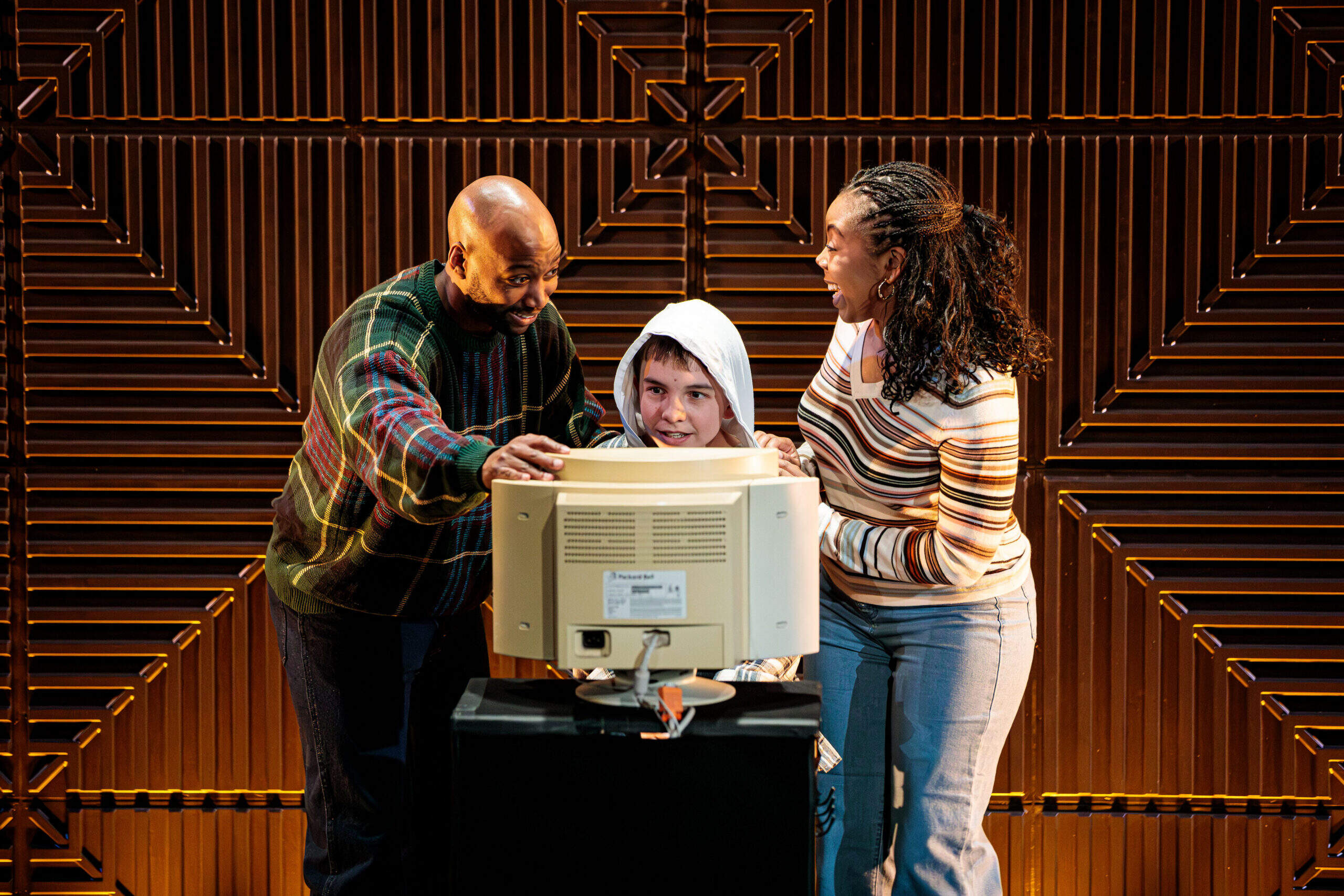
In “Exhibit 1994,” a family crowds around a computer while the sounds of dial-up can be heard through the speakers. Soon, the iconic “You’ve got mail,” message rings out. The family is excited. “Exhibit 2031” features two sisters talking about their lives. One is an actor who is considering surgery to enlarge her nose. Getting surgically implanted scars, imperfect noses or other features to evoke the “faces only God could invent,” is all the rage. Her career is being threatened by CGI actors. The other sister, a writer, complains of AI in her industry. She’s been asked by her agent to give a cover quote for a memoir penned by AI.
Later, in another exhibit, the same writer signs up to get a chip in her brain so she can access all the information on the internet to help her write better. The doctor warns her that she will be “on” all the time. He’s much older and tries to explain that the peace of sipping tea and looking out the window might not exist anymore. She’s too young to remember the feeling of not being “on,” she explains. So that isn’t a chief concern.
Exploring technology storylines isn’t new to Harrison. His play “Marjorie Prime,” a 2014 Pulitzer Prize finalist, digs into the themes of grief, AI and memory. The show, which premiered on Broadway in 2025, focuses on a woman named Marjorie who interacts with an AI-driven “Prime” who looks like her deceased husband Walter. The “Prime” evolves as it learns new information, but Marjorie’s memory is fading.
“The Antiquities” is a provocative show with a dizzying number of exhibits, making it a touch long. Harrison’s work here feels like a matter-of-fact exploration of a possible outcome, but doesn’t expend energy trying to make us fearful (some audience members laughed throughout). Rather, it points out what makes us different: being human. In a moving, final scene plump with emotion about the expectation of giving birth, loving one’s partner and enjoying the beautiful night they’re living at the moment, the AI narrator talks of the responsibility of displaying the objects. It wonders if by displaying them it trivializes “the suffering of the humans the objects belong to?”
Harrison gives showgoers much to ponder about technology, its growing power and our dependence on it. And as showgoers smirked and laughed at some of the items on display, or the scenes, I wonder if we, too, are guilty of trivializing our present predicament.
SpeakEasy Stage Company’s production of “The Antiquities” runs through March 28 at the Calderwood Pavilion at the Boston Center for the Arts.