Support WBUR
Angkor Dance Troupe's 'Swan Lake,' the Khmer way
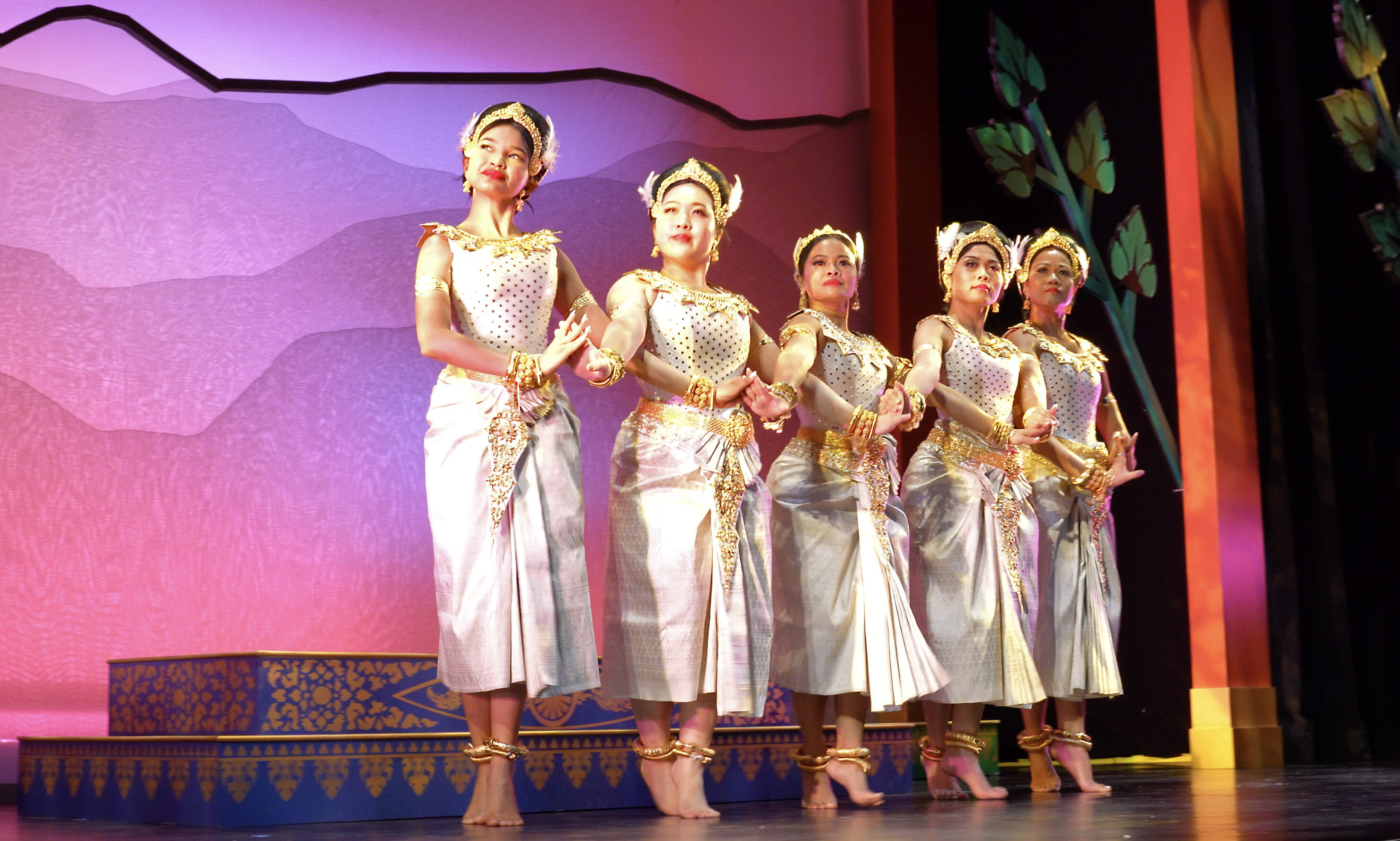
On a blustery spring evening, dancers rehearse in the warm belly of the Merrimack Repertory Theatre in Lowell. Sewn into sequined silk costumes and topped with golden crowns from Cambodia, they appear like 1,000-year-old statues brought to life.
These are the diasporic stars of “A Khmer Swan Lake,” a reimagining of Tchaikovsky’s ballet by the Angkor Dance Troupe using Robam Kenor classical Cambodian dance rooted in Indian Hinduism and Buddhism.
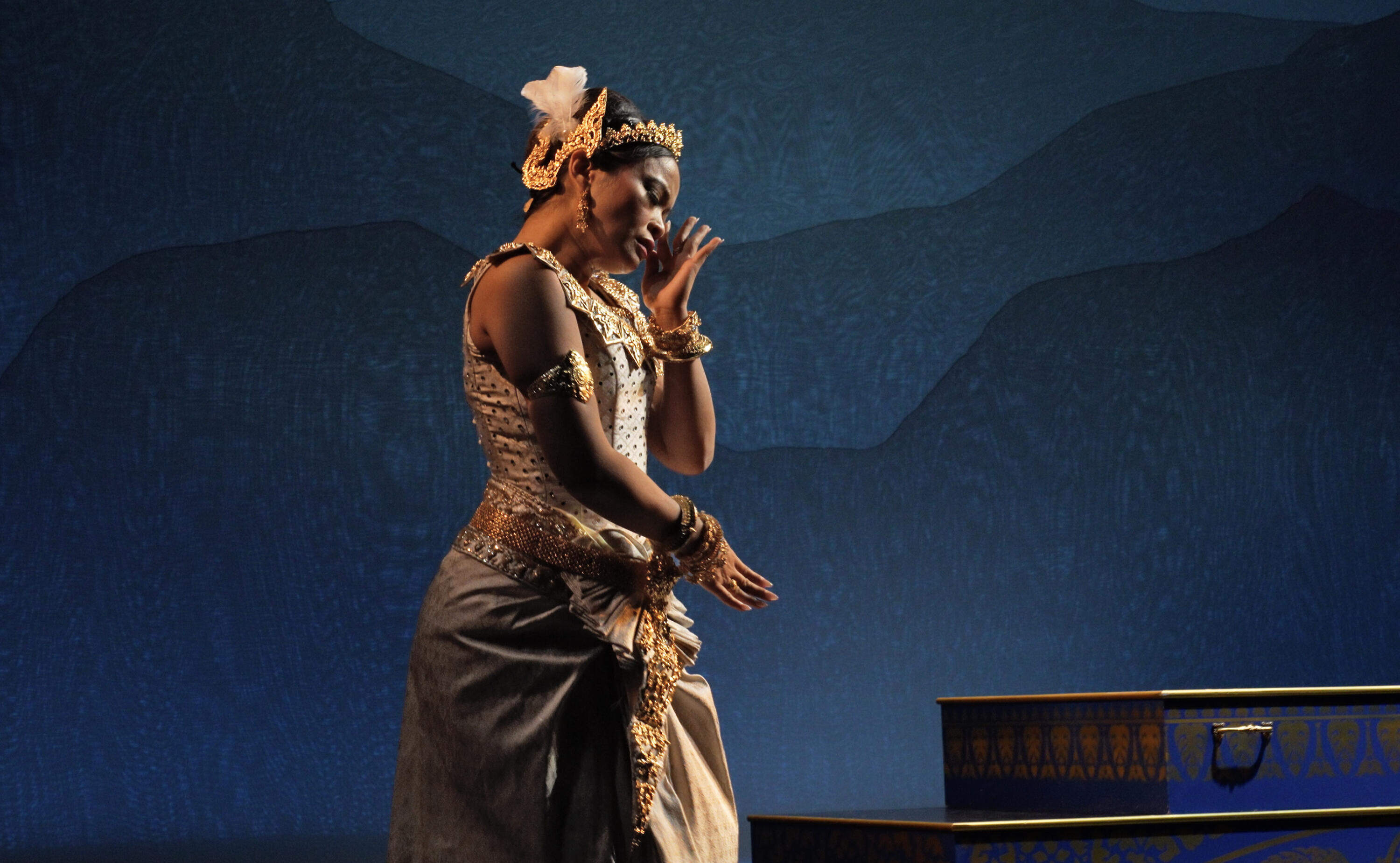
The Khmer White Swan, Odette Devi, is modeled after Kenorei, a half-human, half-bird of Angkorian lore. The ending of her story trades Western tragedy for transcendence — barely allegory for how Cambodian/Khmer genocide survivors and their descendants have channeled their ancestral arts to empower their regeneration.
“I want us to be seen,” said Bora Chiemruom, executive director of the Angkor Dance Troupe. “We’ve been here for 40 years. We’ve shaped the arts in this city.”
Chiemruom first arrived in Lowell as a young refugee in 1987 after she and her family fled the Khmer Rouge regime that lasted from 1975 to 1979 in Cambodia.
When she was 16, an ADT performance replaced inner torment about her identity with awe for the richness of her heritage. But it wasn’t until 2022 that she got directly involved with the organization, bringing with her the goal of innovation and centering the troupe in the arts scene.
She grew ADT to a staff of three employees and 25 instructors, who teach 150 to 200 pupils a year, with another 25 on the waitlist. The next challenge was figuring out how to expand upon intangible treasures that have survived up until now by staying set in stone.
She raised the idea of retelling “Swan Lake” to the Merrimack Repertory Theatre two years ago. Once the partnership went forward, the pressure to embody the story while doing justice to Khmer dance and ballet felt immense. This was also the first full-scale dance production MRT had ever undertaken.
Luckily, Chiemruom knew who could help turn the vision into reality.
She chose principal dancers Peter Veth and Chummeng Soun as the show’s creative director and program director. “We have that trust – I knew that they would be respectful of what we’re trying to accomplish,” Chiemruom said. Soun was about to ascend as ADT’s full-time program director; Veth danced with ADT and often provided artistic direction.
“Dancing is in my blood,” Veth said. A son of genocide survivors, he began attending ADT’s classes as a young child in the 1990s, sneaking to rehearsals downtown.
Ten years later, Soun was a new Cambodian immigrant kid in town, saw Veth perform and decided to follow suit. Together, they co-founded Urban Khmer Ballet, a grassroots collective incorporating traditional dance elements while carving out new spaces for creative expression.
In preparation for “A Khmer Swan Lake,” the duo traveled to Cambodia last fall to work with 10 dance masters and 10 musicians – among the last living artists from before the genocide who saved their civilization’s royal arts from extinction.
With them on the trip was Phousita Huy, artistic director of ADT and an internationally renowned Khmer classical dance master who trained at the Royal University of Fine Arts in Phnom Penh and moved to Lowell in 1996.
A fan of Disney princesses and ballet, Huy was thrilled at the prospect of infusing a Western dance tale with Khmer splendor. The task aligned with her ambitions of elevating her culture to the global stage.
“We create new scenes, but still leverage preservation to push for innovation,” she said.
The team placed paramount importance on earning the permission and blessings of the masters to reproduce sacred repertoire outside of Cambodia. This vetting process was also an opportunity to document the knowledge of culture keepers in Cambodia before it’s too late.
It wasn’t easy, but a crucial part of moving forward, according to Soun.
“This creative negotiation process is the process of transmitting information, knowledge from generation to generation,” Soun said. “And that's why this form of art perseveres in the diaspora — because it allows itself to evolve.”
The original production score, recorded in Cambodia, features Khmer instruments playing traditional numbers with glimmers of Tchaikovsky’s familiar Swan Theme. Huy, Veth and Soun worked with the masters to preserve traditional movements in the choreography, changing formation and positioning when necessary for narrative clarity and synchronization with the music.
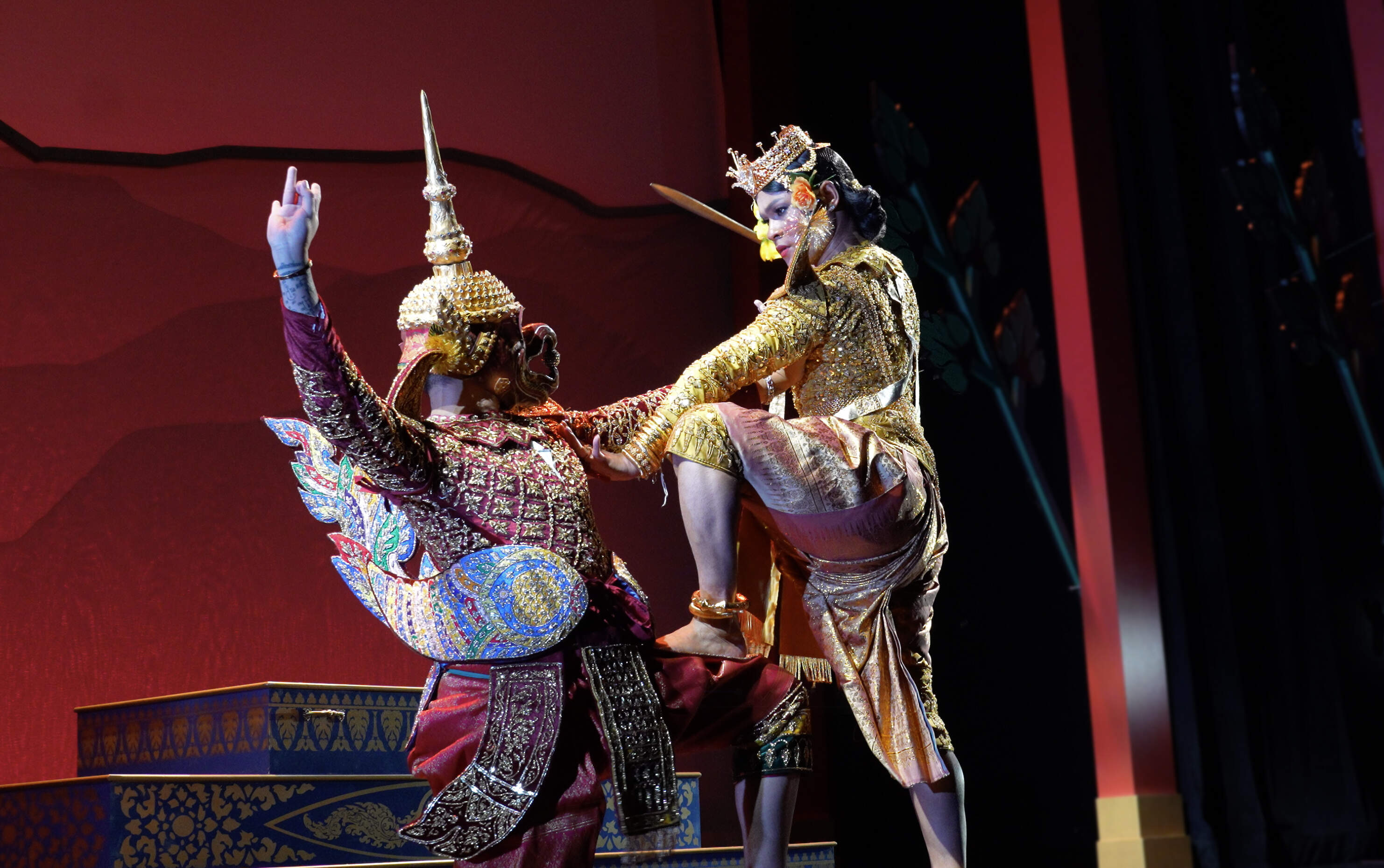
Veth was in charge of making sure all interpretations would land with U.S. audiences, bridging cultural differences with modifications. For instance, he insisted the prince kneel when proposing to the deceptive Black Swan, Odeo Devi.
“In Khmer society, to have a man put his one knee down and give her the ring is not acceptable. In fact, it's the vice versa – it's the female who washes the man's feet during a marriage,” he explained. But he knew viewers might be left in the dark with this.
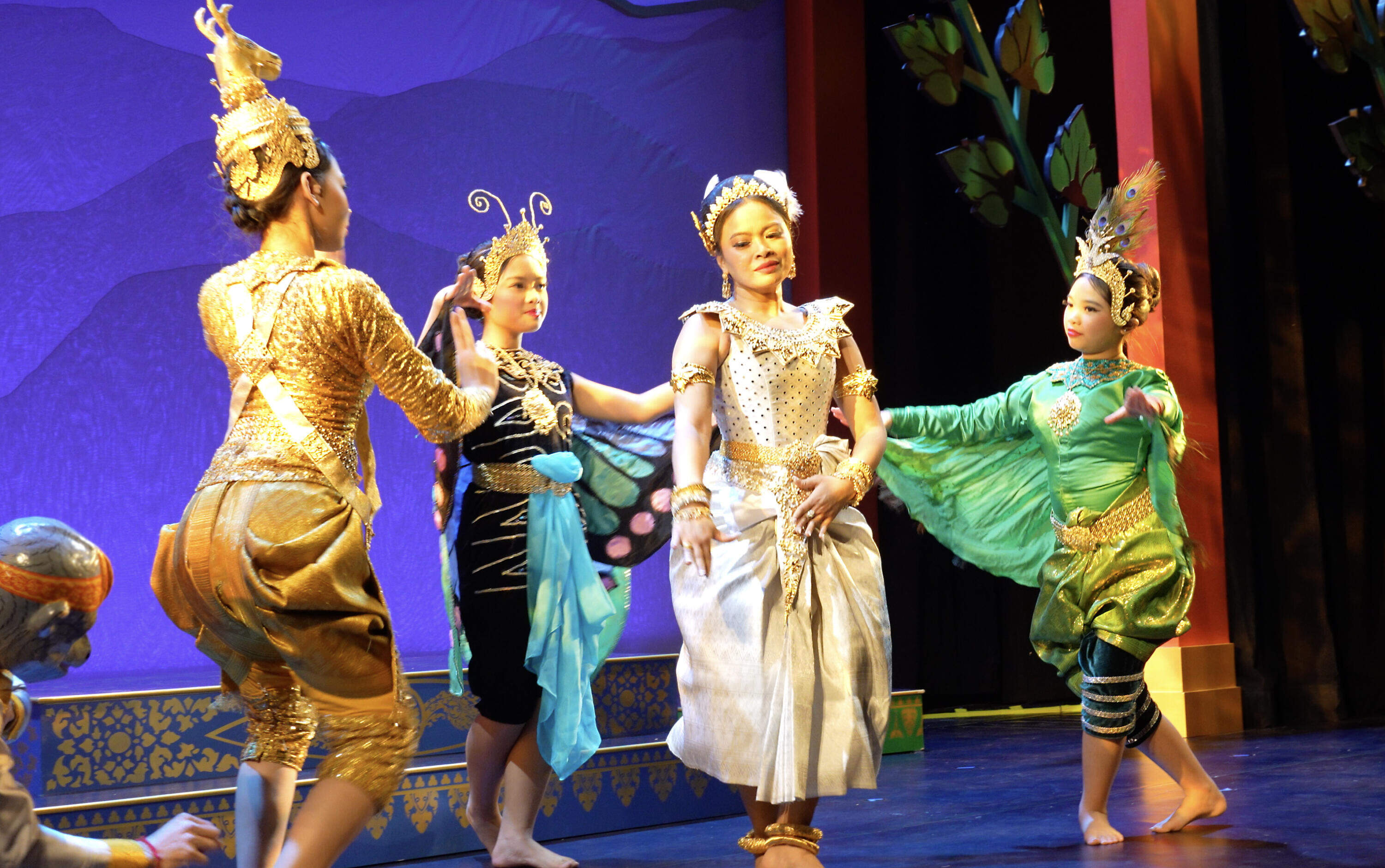
One of Huy’s favorite parts is when princesses from Laos and Indonesia vie for the prince’s favor at his palace in the fifth act. “The movements and music are very much influenced by those countries, but we still maintain our framework, our posture,” Huy said. “And the music is still Khmer.”
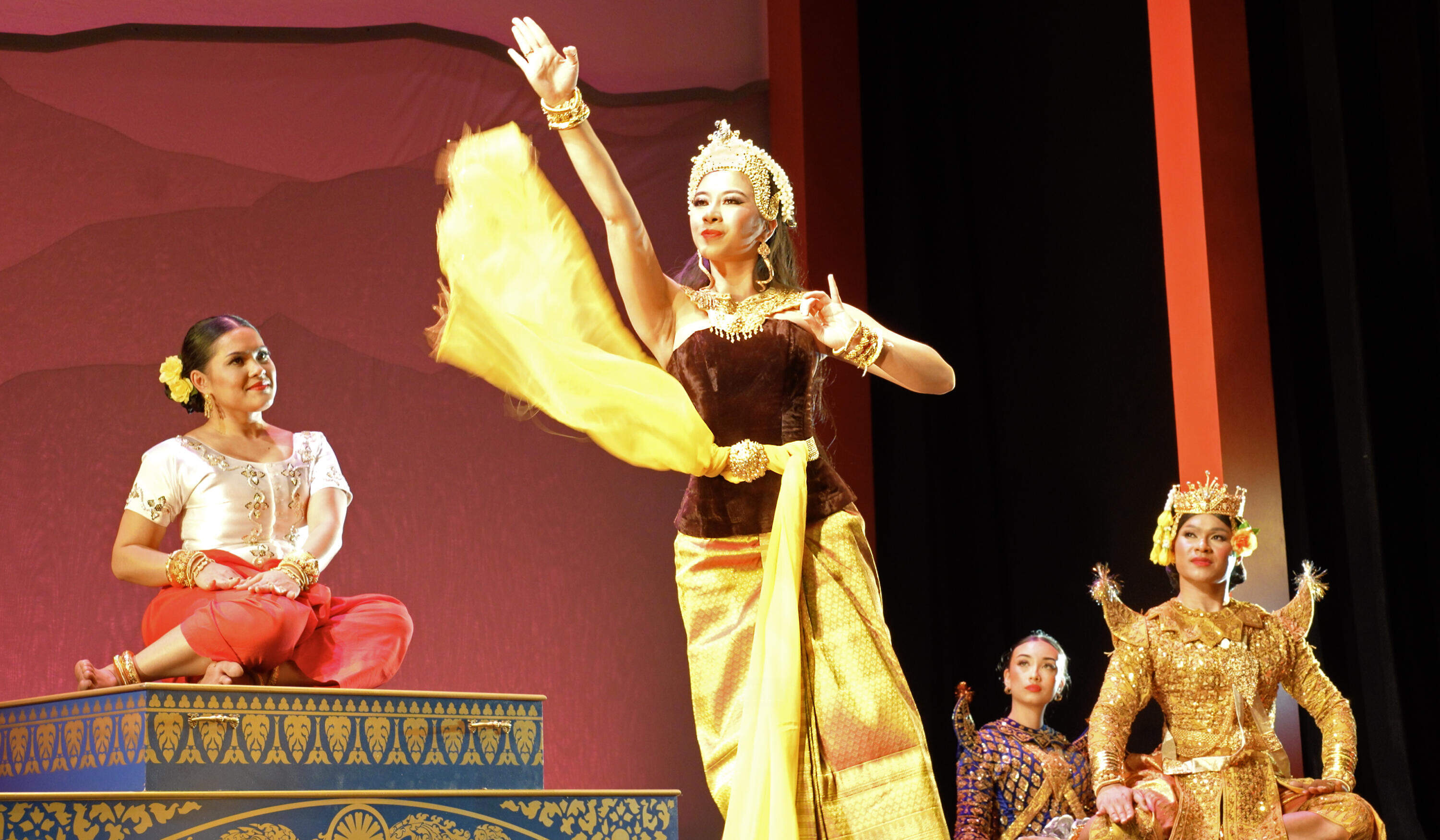
Khmer dances that appear almost completely intact in the same act include the blessing ritual of the “Gold and Silver Flower Dance” and the “Chu Chhay” solo depicting metamorphosis.
“Tevet” closes the revelatory seventh and final act when Odette Devi and the prince, Preah Siegfriend Vormann, reunite in heaven. Huy said this dance of the divine was chosen to represent Khmer culture.
The three-week theatrical run, April 8-26, encompasses the Cambodian New Year and annual commemorations of the tragedies that seeded the Cambodian/Khmer diaspora.
“I have to give this one to us,” said Veth, noting that 97% of the 35 rotating cast members selected by open national auditions were born in the U.S.
He wants the impact of their work to be intuitive and universal. “As long as the audience feels something differently, as long as you walk out feeling emotional, then I did my job,” he said.
“A Khmer Swan Lake” runs April 8-26 at Merrimack Repertory Theatre in Lowell.