Support WBUR
Delivery companies could eat $300 fines without new Boston permit
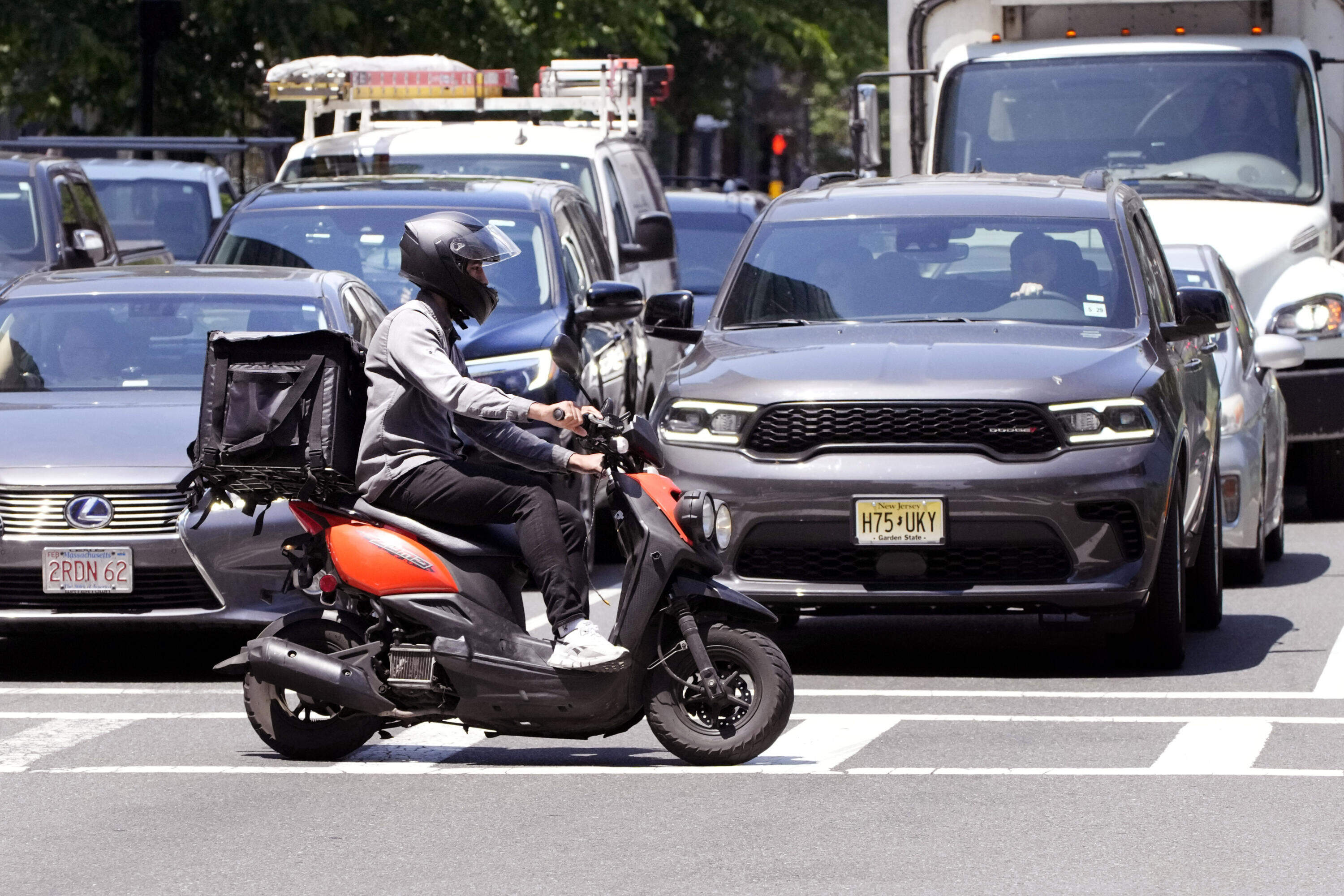
Boston officials hope a new permitting requirement can help bring a little order to the thousands of food delivery drivers clogging city streets.
Instead of chasing after the drivers on their scooters, e-bikes and mopeds, the city instead will require companies like DoorDash, GrubHub and UberEats provide insurance to their third-party deliverers.
The ordinance, which was enacted Saturday, targets delivery companies that make at least 1 million deliveries nationally each year. The companies must also share information like the location of deliveries, the routes taken and the type of vehicle drivers use.
Companies operating without a permit face hefty fines of $300 per day per restaurant or per order.
The ordinance came after city leaders experienced “ pressure” from constituents “to figure out how we can hold these third-party delivery companies accountable to what's happening on our streets,” said City Councilor Sharon Durkan, who chairs the Boston City Council Committee on Planning, Development and Transportation.
Resident complaints to Boston's 311 reporting system have jumped 200% since 2022, according to the city. The growth of food delivery services has “created a chaotic, unsafe feeling among residents” with cars often double parking and moped and scooter drivers not following traffic laws, according to a city webpage about the new ordinance.
Durkan said the ordinance should ease the fears of constituents who were concerned about being injured by uninsured and unlicensed drivers.
“We're the first city to do it,” Durkan said. “We're going to have data from these third party delivery companies, and then I think we can chart a path forward on how do we actually deal with these impacts.”
The ordinance passed last year, but implementation was delayed “ to make sure these companies could actually access insurance and, and make sure that their team members are licensed,” Durkan said.
GrubHub “applied for and received approval for a third-party delivery provider permit,” according to senior company director of communications Katie Norris. Policy communications manager Samantha Ramirez of DoorDash, which Durkan said is the biggest market shareholder in Boston, told WBUR it was “working to submit our application and we continue to work with the city to ensure compliance.” UberEats did not reply to multiple requests for comment.
Managing the growing swarm of food and curbside deliveries on Boston’s notoriously congested roads has become a hot button topic for the city council. Earlier this week, councilors weighed a ban on mopeds and scooters in the name of public safety.