Support WBUR
How goats, farming and cheesemaking inspired this author's new novel
When a herd of frolicking goats joined Jennifer Acker on a walk through her family’s former farm, she discovered these small animals have big personalities.
“Being there and watching the goats play in the snow was remarkable,” she said.
Acker’s new novel, “Surrender,” is inspired by her upbringing in rural Maine, the cheesemaker who preserved her family’s farmland and the challenges facing Massachusetts farmers today.
The story centers middle-aged Lucy Richards, who abandons New York City for the arduous but rewarding work of raising dairy goats in western Massachusetts. She has spent the last 20 years shaping her life around the academic career of her significantly older husband, Michael. It’s Lucy’s turn to grab life by the horns, but life throws some unexpected swings. A risky investment wipes out their savings. Her once erudite husband rapidly deteriorates in mind and body. Suddenly, the farm’s modest first-year growth must cover Michael’s expensive nursing home. How can Lucy balance caring for her husband’s health, her father’s land and her mentor’s goats when each demands her complete attention and money?
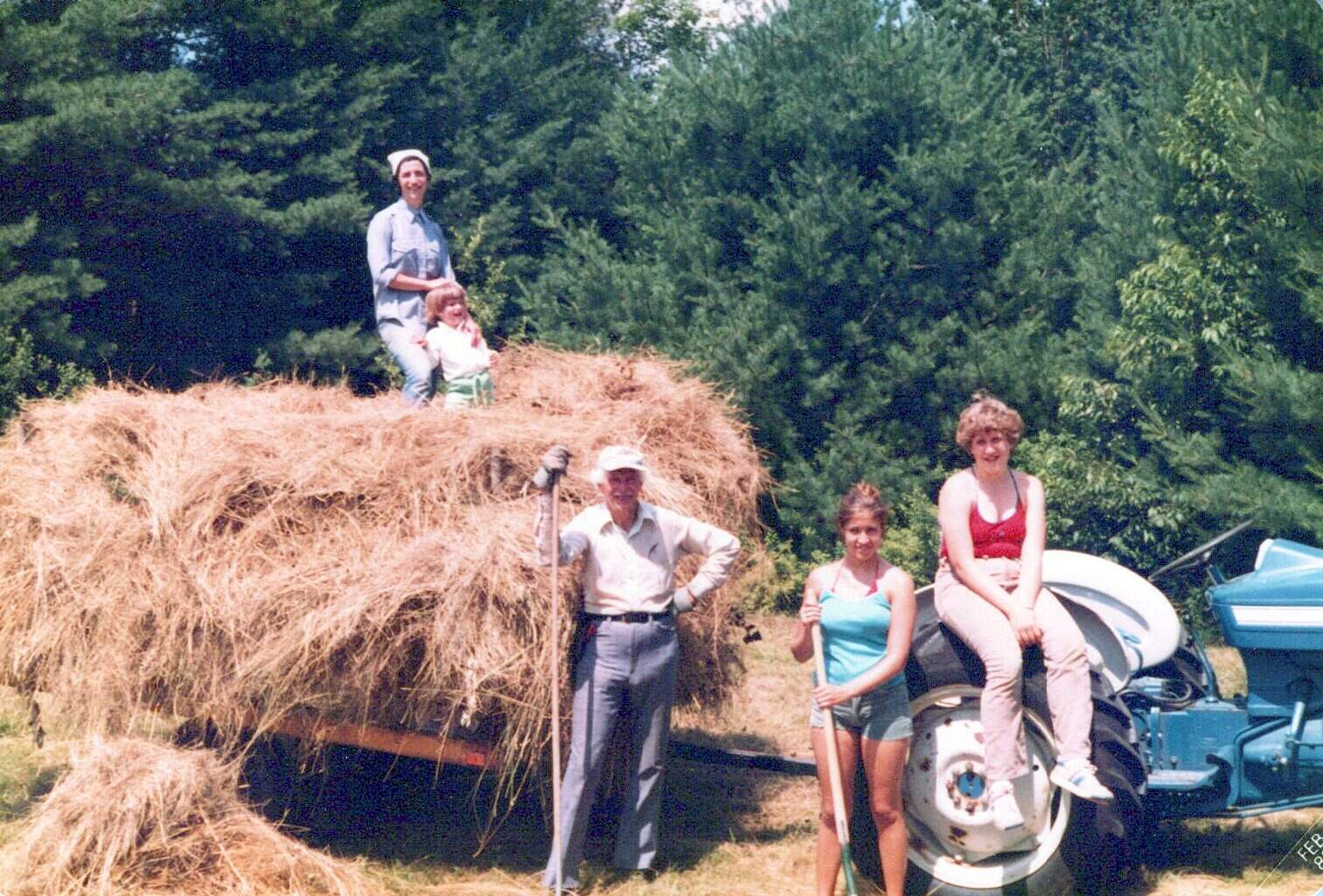
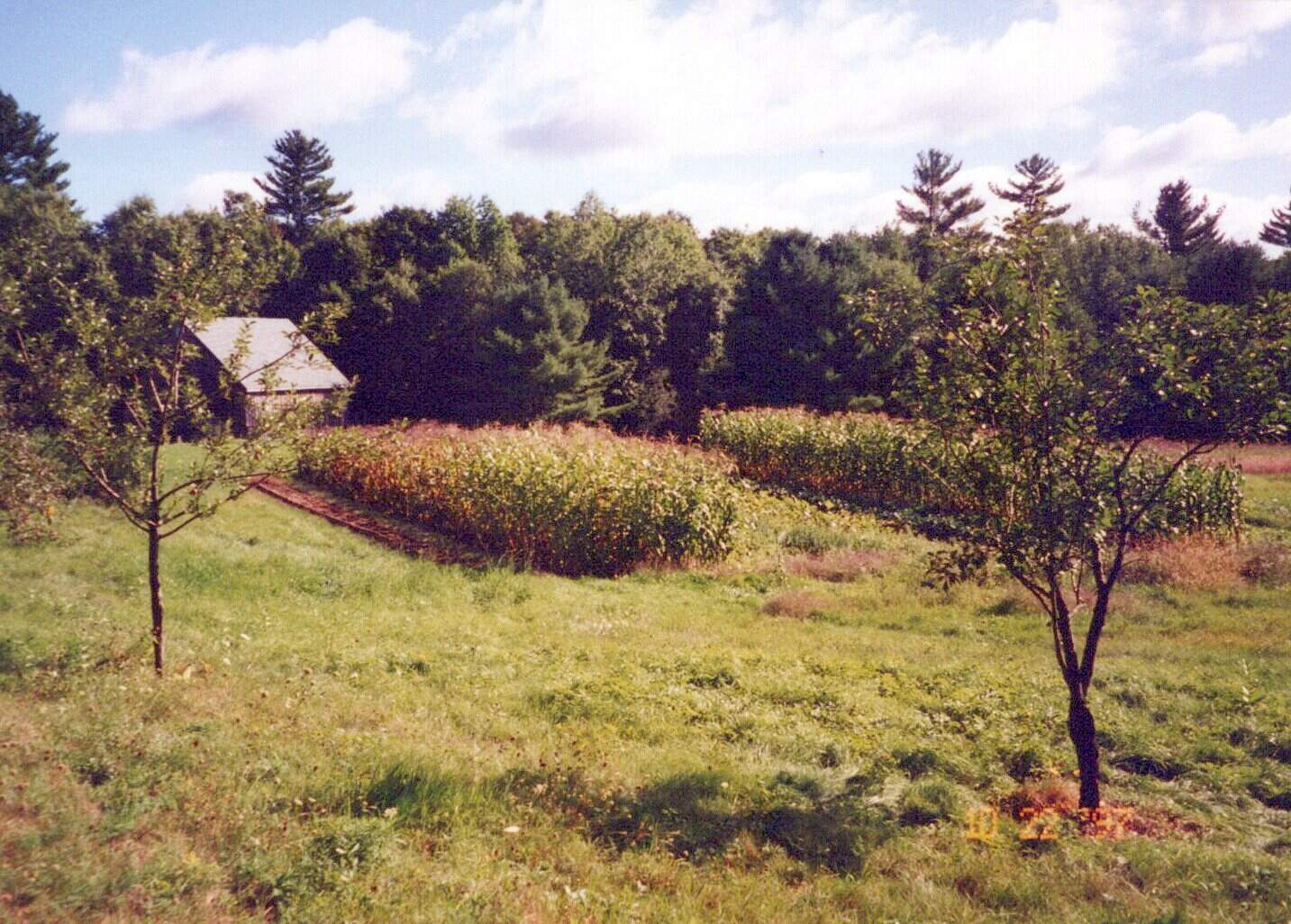
Acker grew up on a farm in Whitefield, Maine, where her parents taught her about working the rhythms of the land: spring is for planting, summer is for fresh-picked produce and canning, fall is for harvesting apples and making cider, then winter is for fixing equipment. “Surrender” follows the parallel seasons of livestock: from hibernation to kidding (the birth of baby goats), to milking, haying and rutting.
The character Lucy is partly inspired by Jessie Dowling, founder of Fuzzy Udder Creamery, who bought Acker’s family farm in 2013 to expand her artisanal cheesemaking operations. Acker’s winter walk with Dowling’s goats sparked her interest in the animals’ surprisingly human characteristics. Goats play games like hide-and-seek, form cliques and even code-switch their behavior depending on who they’re with.
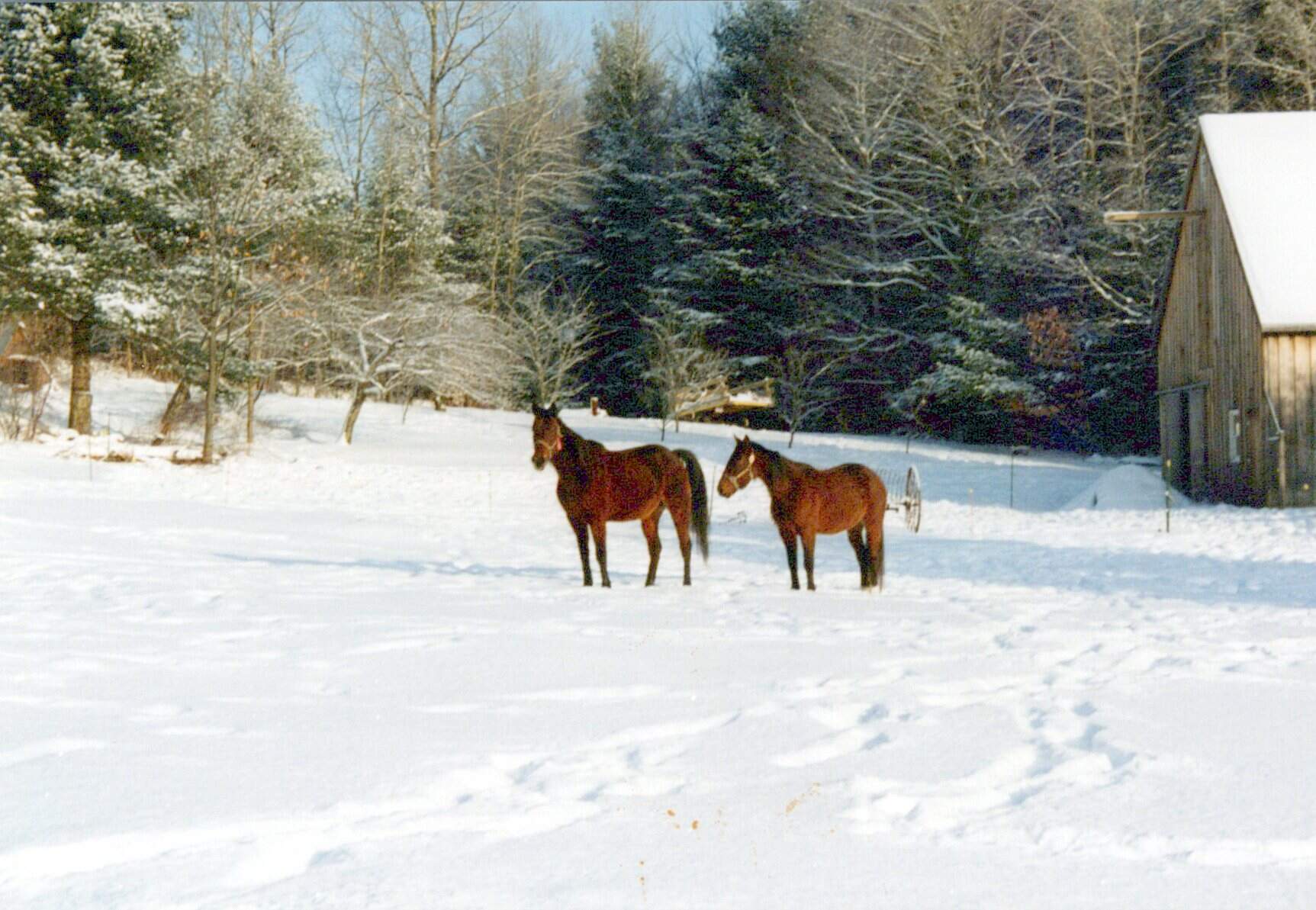
Although Acker shared a connection with her family’s horses growing up, she observed that Dowling’s strong bond with her goats and sheep seemed more profound.
“There’s an intimate daily connection with milking animals,” Ackers said. “You have a responsibility towards them because it’s uncomfortable not to be milked… That’s a connection you don’t have with other animals.”
After Acker’s father died, the family felt it was important to pass their land to another farmer.
“I’m keenly aware of how much development is encroaching on farmland,” she said.
Dowling’s devotion to her animals and enthusiastic plans for the farm’s future made her the ideal buyer. But the sale didn’t come without angst. In addition to mourning the loss of her father, Acker’s myalgic encephalomyelitis/chronic fatigue syndrome diagnosis (a debilitating illness she compares to long COVID) meant she was also grieving the impractical dream of following in his footsteps. Writing “Surrender” allowed her to imagine being physically able to save her family farm.
“The problem with farm inheritance is that farmers don’t make enough money to be able to buy property,” Acker said, noting how fortunate she felt that Dowling was able to secure the financing to preserve the land.
The prohibitive cost of farming is another topic Acker explores in “Surrender.” Beyond the value of the land itself, farmers need hundreds of thousands of dollars for specialized equipment, vet visits and other basic upkeep. With Lucy’s savings gone, she hopes that her future goat cheese profits will be enough to retroactively cover the cost of feeding them.
“I don’t get badges for a job well done. My reward is avoiding financial ruin,” Lucy says in the novel. “Diseases, a missed planting deadline — any mistake could snowball and land both Michael and me in the poor house.”
Both Acker’s parents worked off-farm jobs, so she didn’t experience the same kind of financial precarity in the novel. “Surrender” draws from her dad’s upbringing on a subsistence farm and other rural Maine families she knew whose income was dependent on their land.
To further understand the challenges farmers are facing locally, Acker also interviewed Laurie Cuevas at Thomas Farm & Dairy in Sunderland, Massachusetts, and sourced stories from western Massachusetts newspapers. She learned about wild predators attacking livestock, neglected animals being surrendered to the state and the surprisingly contentious issue of solar development.
One solution to farmers’ financial woes is leasing farmland for solar panels. Although many Bay Staters are turning to solar energy to address the climate crisis, Acker said, some don’t like the aesthetics. More shocking are the objections from environmentalists. Does the benefit of renewable energy outweigh the impacts of cutting down forests for solar farms? Is solar battery storage truly safe?
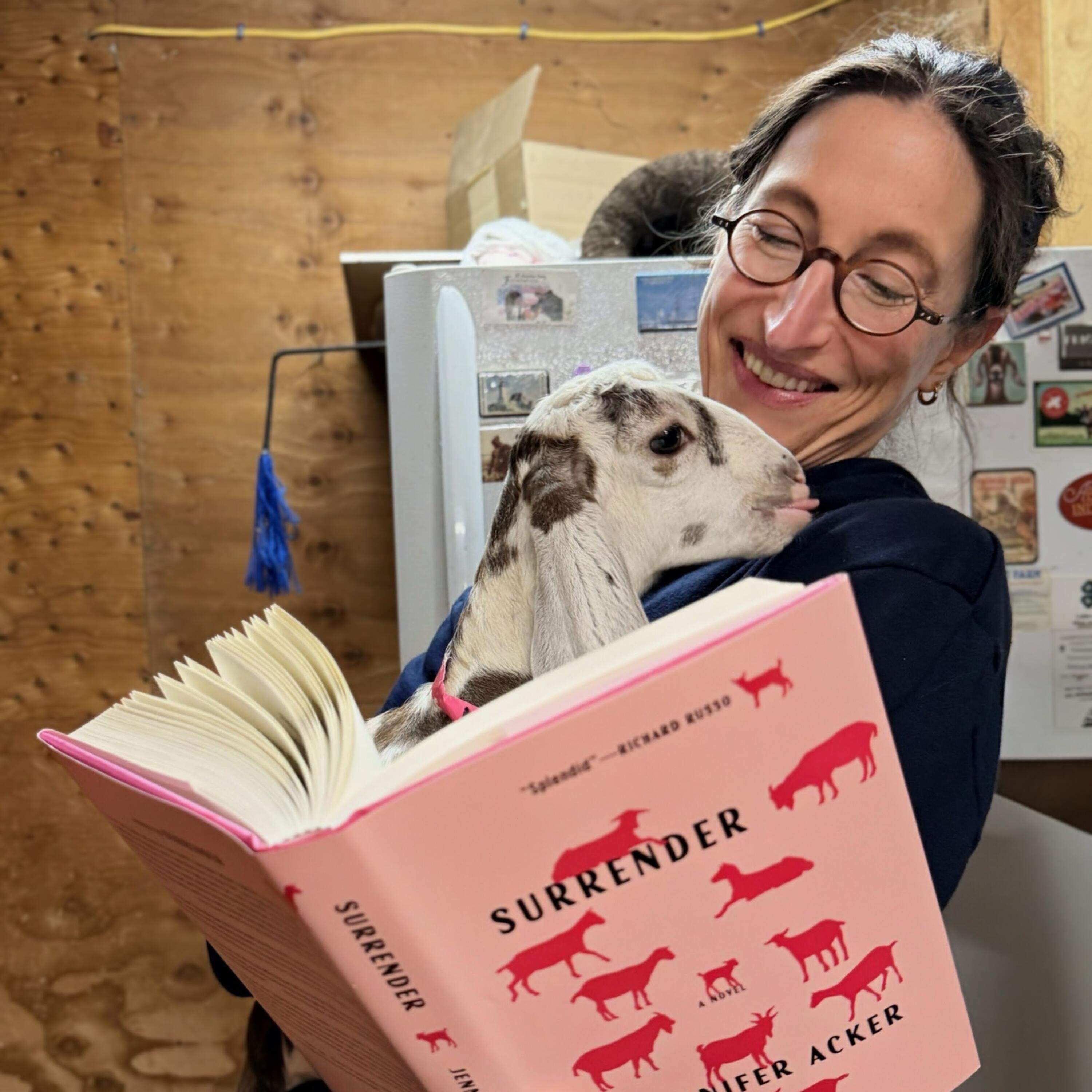
“Surrender” addresses this debate from the heart of the farmer: giving up a piece of your land is like selling a part of your soul. Even if Lucy still owns the land, those solar panels represent her inability to sustain the farm on its own merit, like her father before her.
Despite the relentless discipline and exorbitant costs her farm requires, Lucy wouldn’t have it any other way. Farming fulfills her life’s purpose.
“I see it as a source of life, not just for me but for the larger community,” Lucy says in “Surrender.”
The character’s resolve echoes the tenacity of the farmers Acker has known in real life.
“I had a lot of respect for what my father did and what all farmers do,” Acker said. “Writing this book allowed me to live that life vicariously.”
Jennifer Acker will be in conversation with writer and art historian Teju Cole on May 1 at Harvard Bookstore. The event is free.