Support WBUR
Boston Marathon forecast: A brisk day that's good for running, less good for cheering
For the 130th Boston Marathon, Mother Nature looks ready to serve up a day that’s brisk enough to be favorable for distance running — though it might feel chilly to spectators.
Marathon weather through the years
The weather plays a pivotal role in the outcome of the race and the vibe of the day. Some years, the atmosphere cooperates beautifully. Other years, it becomes part of the story.
That’s part of what makes this race so unique.
The runners aren’t just taking on 26.2 miles from Hopkinton to Boston, they’re taking on whatever New England decides to throw at them. And history tells us that can mean just about anything.
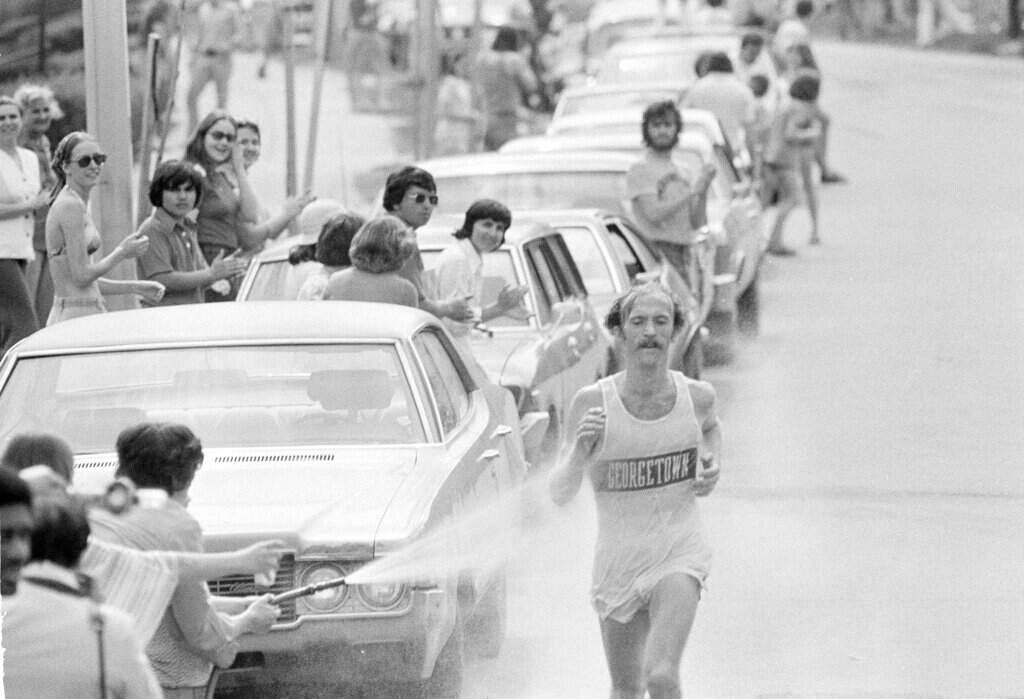
Fifty years ago, temperatures soared into the 80s on race day. The 1976 marathon became known as the “Run for the Hoses” thanks to the volunteers who used garden hoses to help cool overheated runners.
On the other end of the spectrum, 2018 delivered one of the harshest Boston Marathons in recent memory. Rain, strong wind and temperatures in the 30s and 40s made for a punishing day that left some runners battling hypothermia. The 2015 race was also a hard one due to rain, wind and temperatures in the 40s producing wind chills in the 30s.

So where does this year fit in?
For 2026, this looks like a much different story than the marathon horror shows, but also much colder than the summer preview we've had this week.
Before the marathon
Over the weekend, runners and visitors will flock to town, and the Boston Athletic Association hosts a few shorter races.
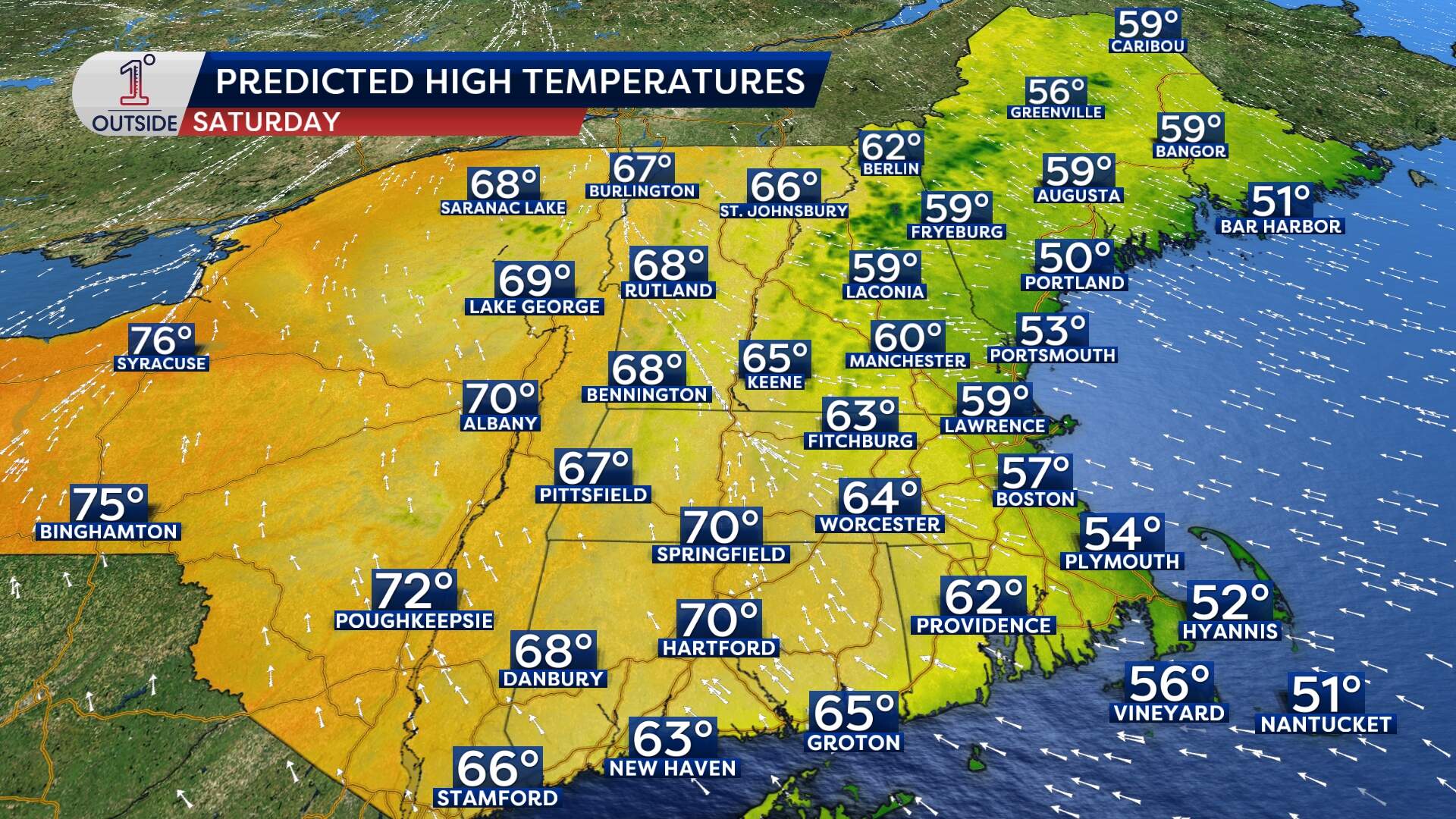
On Saturday, a cooler, onshore flow takes over, making for a gloomy day. Expect overcast skies and highs in the low 50s at the coast, with a stray light shower or pockets of drizzle from time to time coming in off the ocean. Cities and towns inland may get a break or two of sun, which would push temperatures into the low 60s.
On Sunday, a cold front will sweep through with scattered showers and downpours. If you're out and about, have the umbrella on standby. It won't rain the entire day, but showers are likely to arrive by mid-morning and las through the afternoon, tapering off between 6 and 8 p.m.
Rainfall totals should be around or just over a quarter inch. That front will be well offshore by Monday morning.
Race day
On Monday, a chilly air mass moves in. That means temperatures at the starting line in Hopkinton will be in the upper 30s. Expect partly cloudy skies and perhaps patchy fog on the town common lawn. Runners waiting around before their wave starts will feel that cool bite in the air. But once the race is underway, these are temperatures many marathoners actually welcome.
Wind, however, will be a factor.
A west-northwest wind will blow around 10 mph throughout the day, with gusts between 20 to 25 mph. The good news is that the wind direction works as a quartering tailwind for much of the Boston Marathon course. It can offer a helpful push eastbound toward Boston, especially on the long stretches where runners are exposed.
As runners move from Hopkinton through Ashland, Framingham, Natick and beyond, expect sky conditions to evolve. The morning should start with sunshine, but as colder air aloft moves in, the atmosphere will become a bit unstable. Clouds will build as the day goes on, with skies turning mostly cloudy by late morning and afternoon. An isolated sprinkle or quick rain can't be ruled out (20% chance), but it would be just that — no long lived showers are expected.
Temperatures won’t rebound much. That’s one of the defining features of this forecast. The air will stay cool all day.
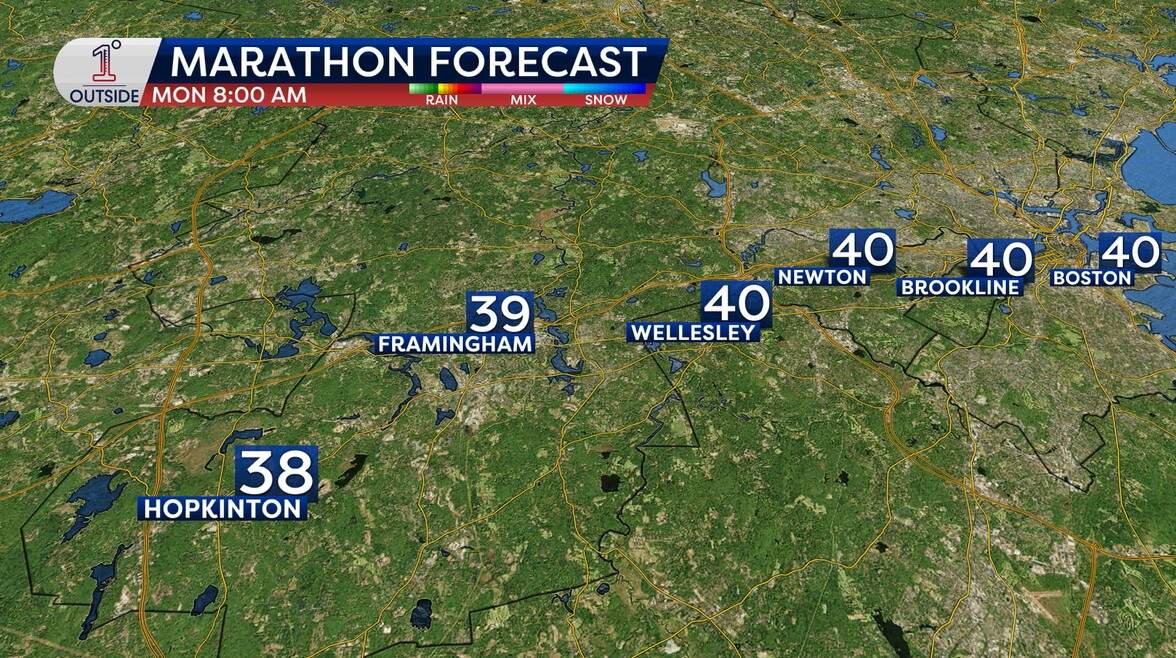
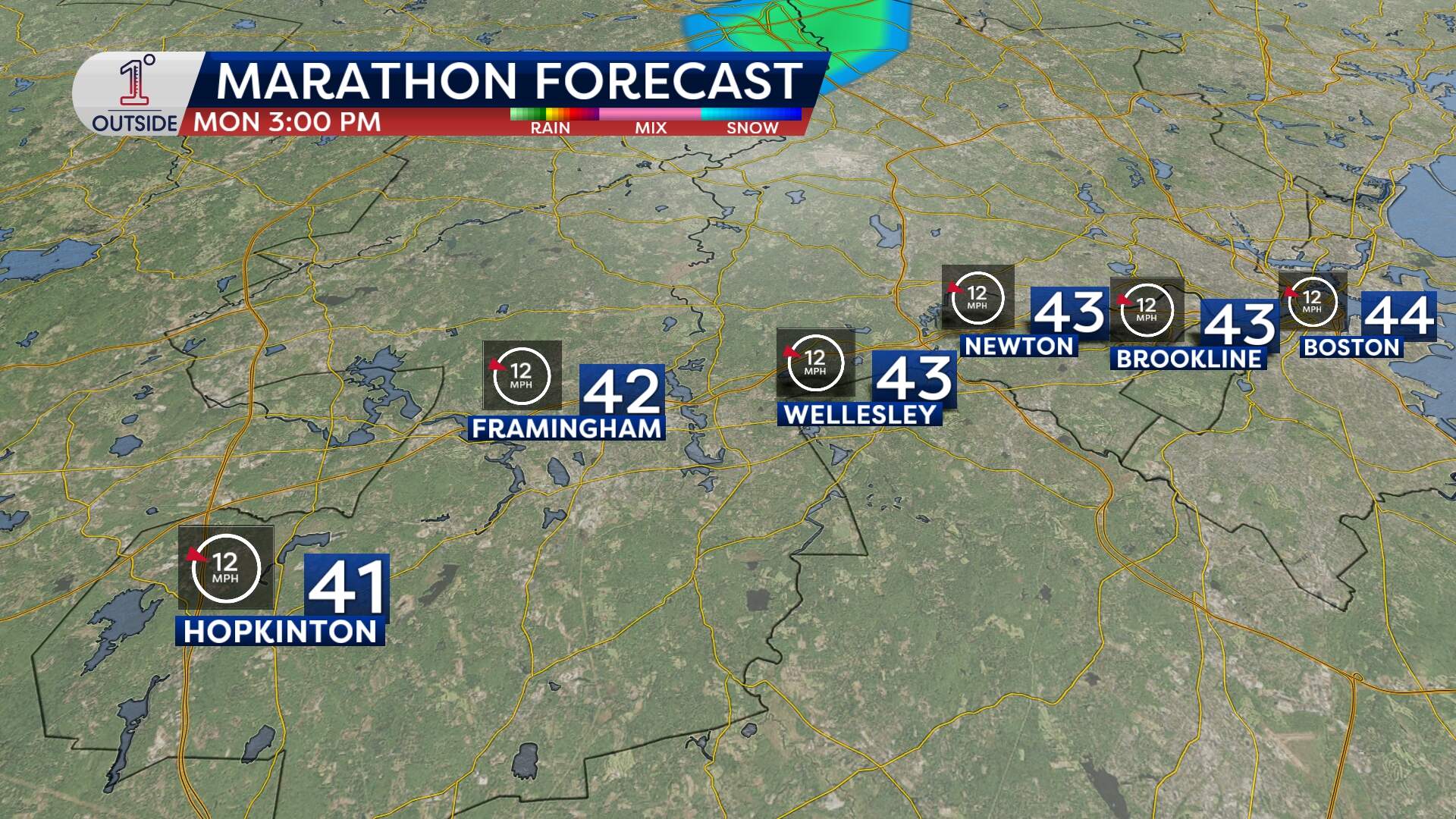
Along the route, readings should only climb a few degrees. By the time runners reach the finish line in Boston, temperatures will still only be in the mid-40s. With the wind factored in, feels-like values will be in the mid-30s for much of the afternoon.
Humidity looks favorable. Relative humidity around 50% early in the morning will drop considerably from late morning into the afternoon (to the 20-30% range), which is another positive for runners. Lower humidity helps the body cool more efficiently, and that matters a lot over 26.2 miles.
Ideal marathon conditions?
For most runners, ideal marathon weather usually means cool temperatures, low humidity, and little weather-related stress on the body.
Air temperatures generally in the 40s to lower 50s are often considered close to optimal, especially for distance running, because they reduce the risk of overheating. Add in low humidity, and the body has an even easier time shedding heat. This year checks those boxes pretty well.
The main drawback is the breeze. While a tailwind can be beneficial, gusty wind can still create a challenge, especially for runners trying to stay comfortable early in the race or for spectators standing still for hours.
The bottom line: This year’s Boston Marathon forecast looks chilly and breezy — a much better setup for runners than warm or wet conditions. For spectators, it means dressing in layers.
This article was originally published on April 15, 2026.