Support WBUR
The Eta Aquarid meteor shower peaks tonight, but will be tough to spot
Lucky stargazers might catch a few fleeting streaks of light in the night sky this week. The Eta Aquarid meteor shower hits its peak overnight Tuesday into Wednesday, May 6, 2026.
Here's a look at the science behind this spectacular cosmic show, why viewing might be a bit tricky this year, and what to expect in the Boston area.
☄️ What are the Eta Aquarids?
The Eta Aquarids are pieces of ancient space debris left behind by one of the most famous objects in the sky: Halley’s Comet.
When Halley’s Comet makes its orbit around the sun every 76 years or so, it leaves a dusty trail of sand-sized rock particles behind it. Every late April and May, Earth’s orbit crosses this path, and those tiny particles collide with our upper atmosphere at extreme speeds of nearly 148,000 miles per hour.
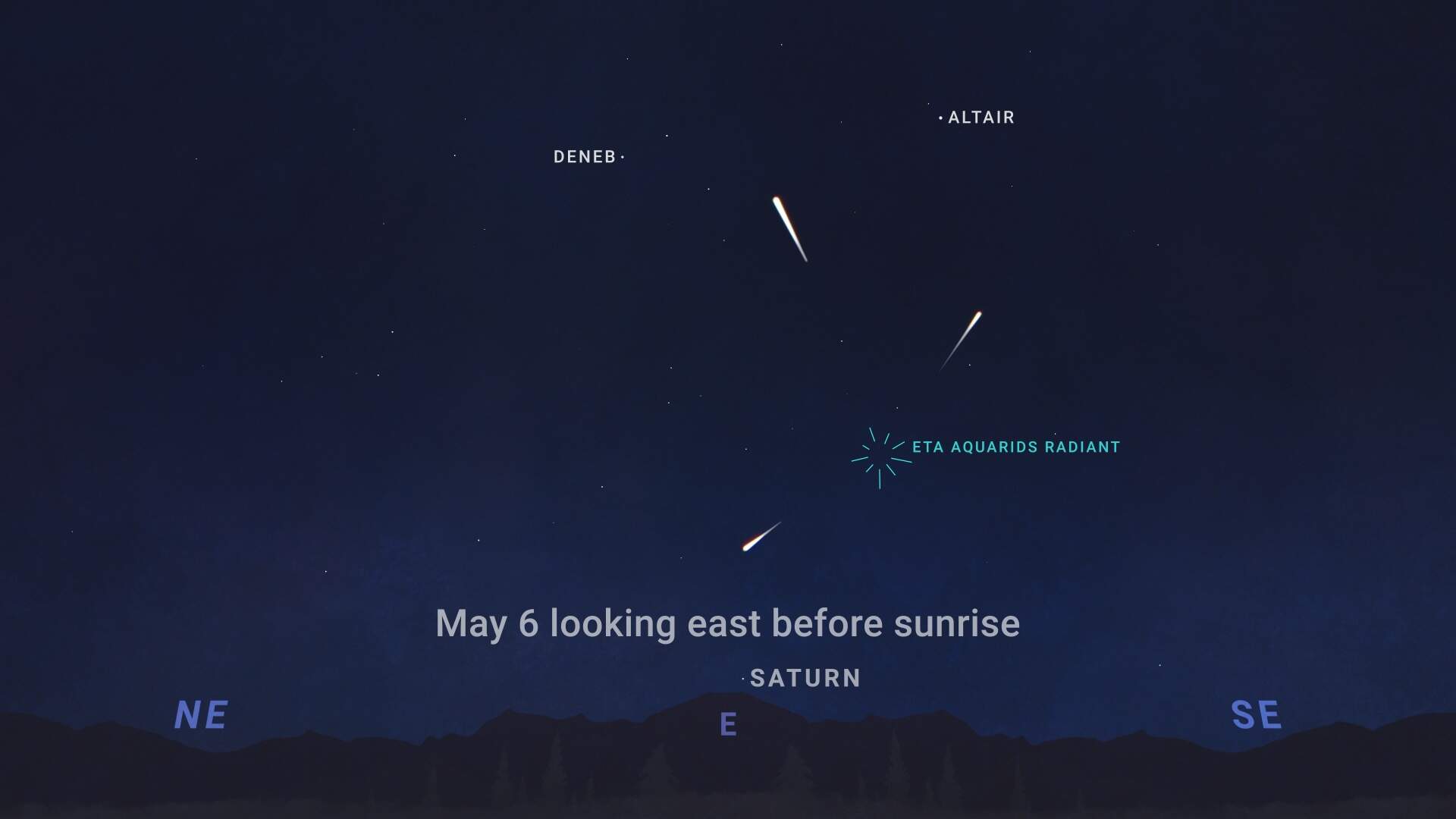
When they hit the atmosphere, they burn up, creating the bright, fast-moving streaks of light and glowing trains we see as shooting stars. Interestingly, this is one of two meteor showers associated with Halley’s Comet. The other is the Orionid meteor shower, which occurs every October when the Earth passes through the other side of the comet's debris field.
☁️ The viewing challenge
While the shower is active throughout May, the peak usually yields the best show, typically 30 meteors per hour in the Northern Hemisphere under perfect, dark conditions. However, 2026 presents a few hurdles.
Lunar interference: Following the full "Flower Moon" on May 1, the moon is in its waning gibbous phase. The moon will flood the spring sky with bright light, effectively washing out the fainter meteors. It's possible only the brightest streaks will be visible this year.
Boston cloud cover: Around Boston and eastern Massachusetts, the spring weather also plays a significant role. Clouds will increase this evening and look to fill in overnight, potentially ruining the show. Some inland cities and towns, especially in the far western part of the state, may have a brief window of viewing opportunity.
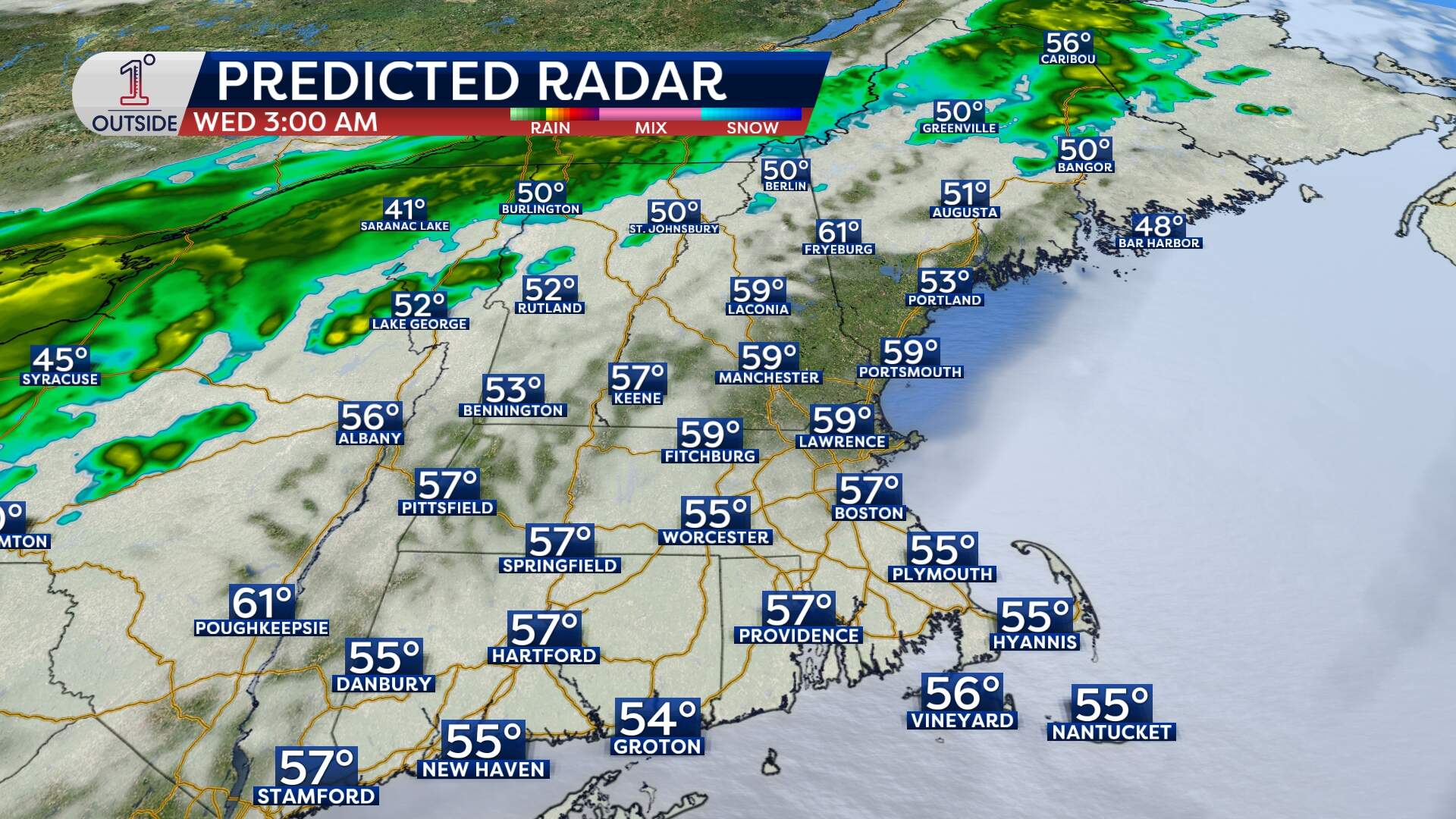
Stargazers should keep a close eye on the hourly forecast. Those lucky enough to squeeze underneath a patch of clear skies should look toward the eastern horizon. The pre-dawn hours, between 3:00 a.m. and 5:00 a.m., will provide the best chance of viewing.
🔭 Tips for future viewing
Despite the bright moonlight, it is still possible to catch a few brilliant, fast-moving fireballs in the right conditions:
- Find a dark spot: To stand a chance against the bright moon, it's best to get outside of downtown Boston's light pollution. Dark-sky locations like the Blue Hills Reservation, World's End in Hingham or the Parker River National Wildlife Refuge on Plum Island offer better contrast.
- Look away from the Moon: The meteors radiate from the constellation Aquarius, but looking directly at the constellation or the moon reduces night vision. Instead, look slightly away to see the longest, most persistent streaks.