Support WBUR
Boston's rivers struggle with pollution amid increased rainfall
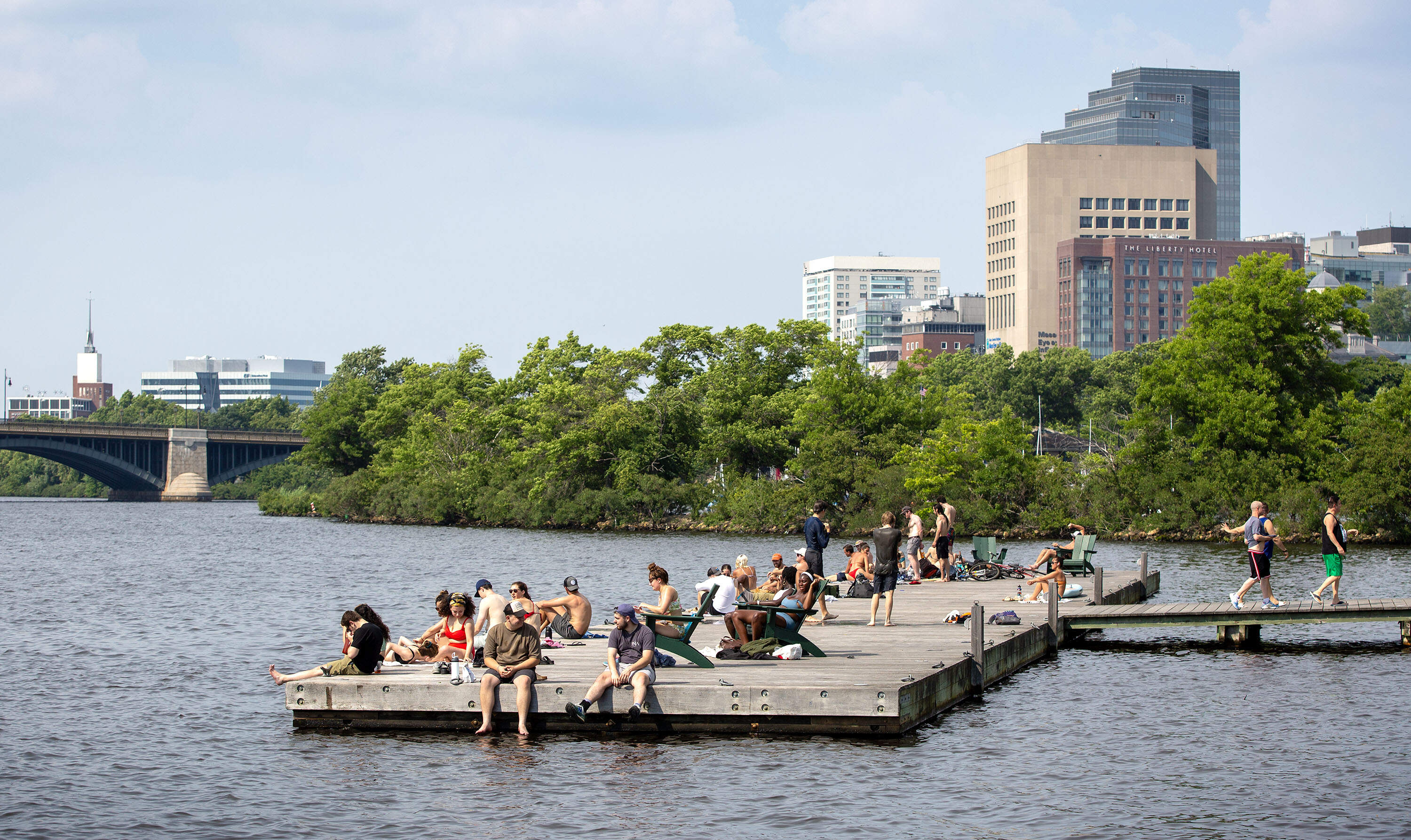
More precipitation and outdated infrastructure are hampering the water quality of the three rivers that flow into Boston Harbor, watershed groups and environmental officials said Wednesday. And they're not convinced new plans to limit pollutants go far enough.
Watershed associations representing the Charles River, Mystic River and Neponset River released 2025 Water Quality Report Card Grades for the three rivers. The grades were slightly worse than the previous year with most grades falling in the B and C ranges.
The groups acknowledged efforts to improve water quality, but said antiquated infrastructure like combined sewer systems, illicit discharge pipes and old storm drains are hampering progress.
Additionally, the groups say increased precipitation and longer droughts restrict quality improvements. They say the location of the watersheds in urban communities and some areas seeing more than 80% impervious cover means the “scale and consequences of heavier rainfall and extreme weather are stark.”
In the Charles River, which is about 80 miles long and flows through 23 municipalities, progress has been stagnant or declined in the Upper and Upper Middle watersheds and urban areas have seen slow improvements. The watershed groups say drought, heat, higher amounts of precipitation, cyanobacteria blooms, more frequent stormwater pollution and combined sewer overflows are limiting recreation in the area.
In summer 2025, the river's Lower Basin saw a cyanobacteria bloom that lasted more than 80 days. Severe drought in 2024 and 2025 led to very low water levels – under six inches in Bellingham, Medway and Newton. In the past three years, there was also about 130 inches of precipitation and 70 known combined sewer outflows that discharged more than 136 million gallons of raw or untreated sewage into the river.
“These grades make it clear that progress has stalled,” said Emily Norton, Executive Director of Charles River Watershed Association. “To achieve a truly clean, healthy, and swimmable Charles, we need to make the necessary investments in reducing stormwater runoff and ending sewage discharges.”
In the Mystic River watershed, grades ran from A's to F's, the groups said. Upper Mystic Lake continued to receive the highest scores last year with an A and the Mill Creek in Chelsea had the lowest with an F.
Combined sewer outflows continue to pull down grades, the group says. The Alewife Brook received a D and was the focus of advocacy efforts last year to remove combined sewer overflows in the Greater Boston area.
“Protecting our rivers and streams is only possible if we know where the problems are,” said Patrick Herron, executive director for Mystic River Watershed Association. “The next step is finding solutions, which we look forward to collaborating on with our wonderful partners in city, town, and state government.”
The Neponset River’s grades were largely consistent with recent years, according to the watershed association. Most of the Neponset’s lowest scoring tributaries were in highly developed areas with more impervious areas and limited stormwater controls to filter out street waste.
Rep. Brandy Fluker-Reid of Boston said contamination of the Neponset River, including Superfund contamination and stormwater pollution, shows what “environmental injustice looks like in practice - and our residents in Mattapan, Dorchester, and Hyde Park have lived it firsthand.”
“This is a public health crisis rooted in decades of disinvestment in Black and Brown communities,” Fluker-Reid said. “Crumbling infrastructure and polluted runoff don't just hurt our grades on a report card; they hurt the people who live, fish, paddle, and raise their families along these banks.”
Overall, Neponset River’s scores show it’s “overwhelmingly” safe for paddling, said Ian Cooke, Executive Director of the Neponset River Watershed Association.
“While improvements to infrastructure, stormwater management, and equitable access remain top priority goals, residents can feel confident boating on the Neponset without major concerns for their health,” Cooke said.
Grades are based on the percentage of time E. coli concentrations are safe for recreation as well as precipitation data and are weighted with a three-year average. Also, grades for the Charles River account for cyanobacteria and combined sewer overflow discharges. Each year volunteers collect samples from the rivers that are sent for analysis to the MWRA. Results are reported to the U.S. Environmental Protection Agency.
“EPA is working to improve efforts that advance water quality in and around Boston”, said EPA New England Regional Administrator Mark Sanborn.
The grades come as there has been ongoing tensions among watershed associations and MWRA over long-term recommendations to limit the amount of untreated sewage that flows into the rivers.
On April 30, the MWRA, along with Cambridge and Somerville officials, released an updated version of its draft plan to address combined sewer overflows in Alewife Brook, Mystic River and Charles River. The plan is expected to cost about $1.3 billion for design and construction and take anywhere from five to seven years to complete depending on the location.
Officials touted the plan as the first in the nation to “explicitly incorporate climate change” and say recommended alternatives in the plan are expected to lead to zero discharges in 2050. This means projected changes in precipitation as a result of climate change are offset and “largely mitigated,” officials say.
Watershed associations say the plan was delayed after officials received criticism over a previous version released in the fall. They say the old plan would have raised the amount of sewage entering the rivers relative to current conditions and the new version “only incrementally” improves on that.
The plan is available for public comment until Sept. 30.