Support WBUR
For Mass. residents, housing is where affordability hits hardest
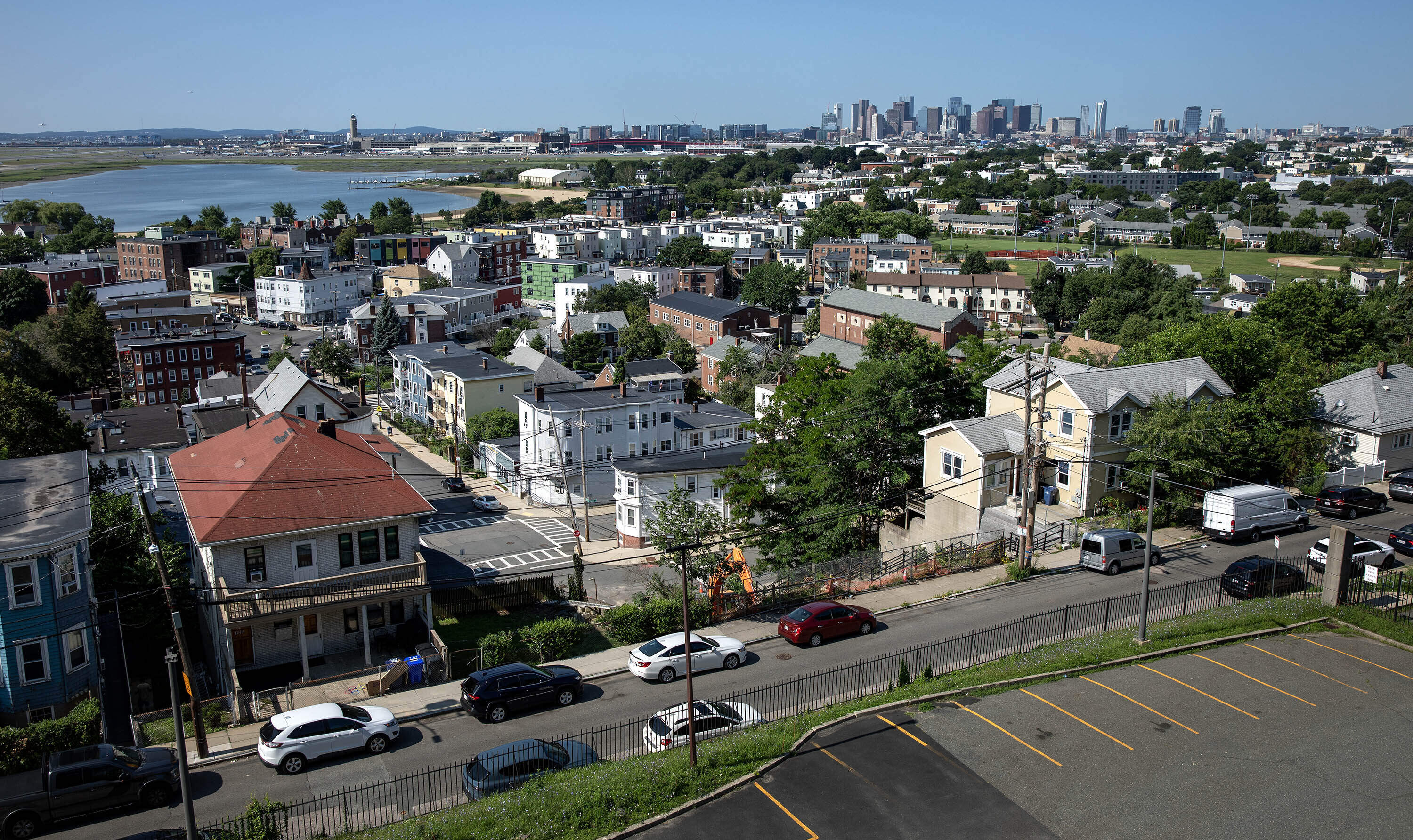
When it comes to the most visible sign of unaffordability in Massachusetts, it all comes down to four walls and a roof.
Half of Massachusetts residents say housing is unaffordable for their household, making it the single biggest financial pressure point in a new poll from the MassINC Polling Group — edging out healthcare, taxes, higher education, and vacation. The survey (topline/crosstabs) for CommonWealth Beacon and WBUR finds that housing costs are not just straining budgets but reshaping life decisions, delaying milestones, and fueling a broader pessimism about whether Massachusetts is a place the next generation can afford to stay.
“We’re seeing that younger people are more concerned about housing,” said Marta Churella, senior researcher at the MassINC Polling Group. “People in the 35-to-44 age bracket have been feeling the most frustrated in their ability to get the kind of housing that they’re looking for for their family. So it is by far the area that people are struggling the most with financially in the survey.”
Middle-class life has long had a sort of “American Dream” gloss to it — the home, the car, the kids, the security. But the poll also shows housing — be it a suburban house or a city condominium — is increasingly the middle-class marker that feels furthest out of reach. And it is bound up with another obstacle confronting residents: the ability to save for the future.
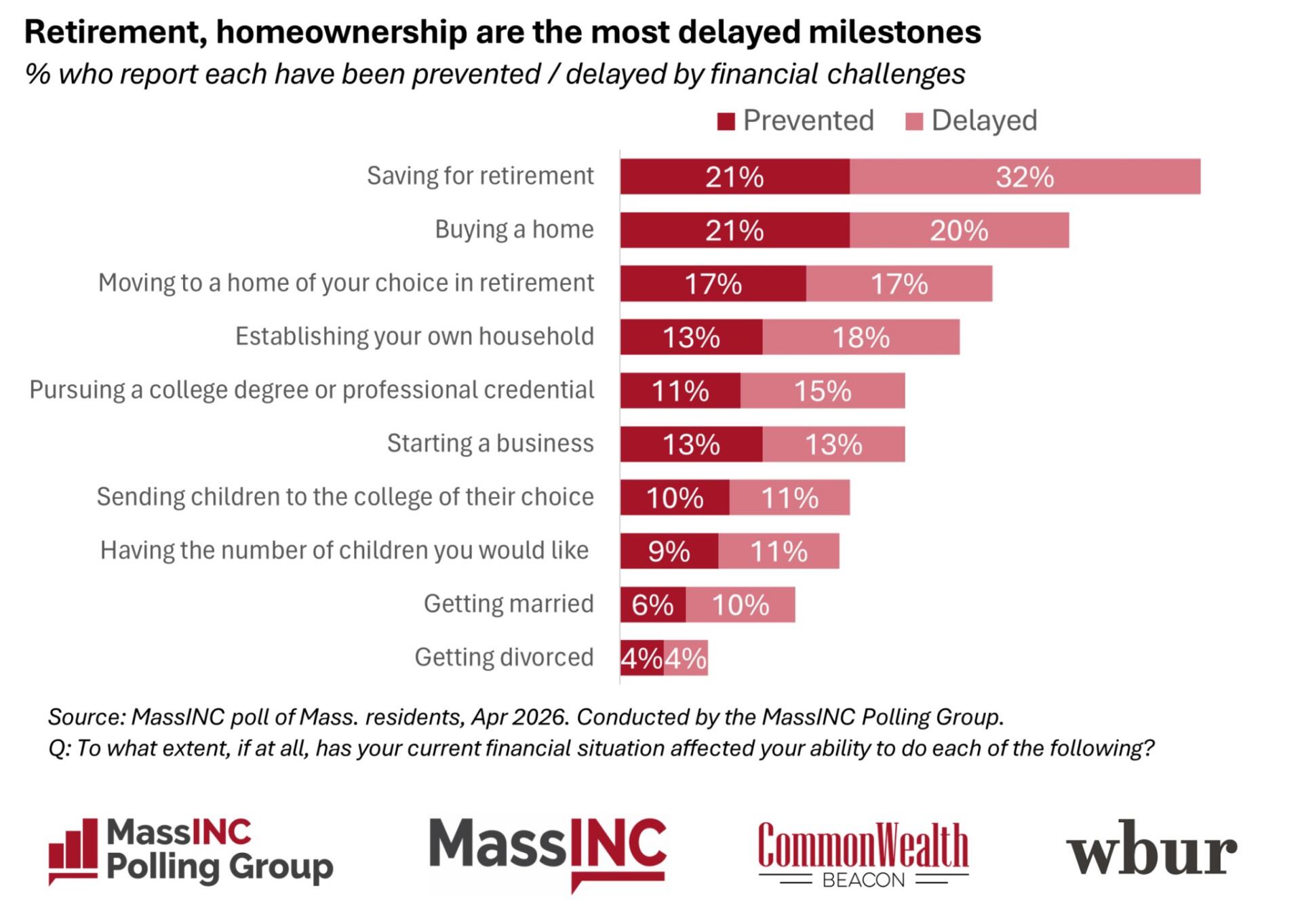
While half of all respondents describe housing as unaffordable, that figure climbs to two-thirds among residents aged 35 to 44 — a cohort old enough to have watched pre-pandemic prices slip out of reach but young enough to still need to find somewhere to put down roots. Forty-one percent of all respondents say their financial circumstances have either prevented (21 percent) or delayed (20 percent) them from buying a home.
Massachusetts’s housing crunch is, by all accounts, dire. The state has set a goal of 222,000 units that must be built by 2035 to meet demand, and meanwhile the prices remain stubbornly high. Greater Boston is the third most expensive metro area in the country based on single-family home prices, and across the state an average single-family home will cost in the mid- to high-six figures.
Mari Morales-Baez, 42, grew up in an apartment building and now lives in a rental with her husband and three children in Holyoke. Both spouses make minimum wage and live what she describes as a working-class life.
Growing up, middle-class life looked like the people who had more money than her family. And because the cost of living was lower, it seemed like people had more luxuries at their fingertips. Her family was making ends meet on a minimum wage salary, but at least “things were cheaper then,” and the wage stretched further.
“I would like to be a homeowner in the future,” she said. “It feels achievable, but the market is so hard right now.” Homeownership for Morales-Baez is about making sure that the limited money that they have goes into something that she owns, rather than a landlord’s pocket. The problem is her income, she says.
“Planning for the future is a little hard,” she said. “I’d like to set money aside but there’s always a bill or something due.”
For those who do manage to buy, the math is daunting. The median sale price for a condominium in Boston exceeds half a million dollars — roughly where Cherise Kenner, 44, landed when she finally secured a mortgage for a Boston condo after years of searching.
Kenner, laughing a little, says she sometimes misses renting.
“You don’t need to have money to fix things,” she said. Plumbing, repainting, and repairs were all handled by landlords she describes herself as “blessed” to have had. But an apartment isn’t something you can leave your kids. Kenner bought her condo with her two children specifically in mind. “I’m hoping and praying they can figure out a full-time job,” she said. “And I bought the condo so it’s something I can pass down to them.”
Growing up in an apartment with a mother on welfare, Kenner said, “I did not have that option” as a child.
Her calculus — buy now if you can, absorb the cost, preserve something for the next generation — reflects a broader anxiety running through the poll.
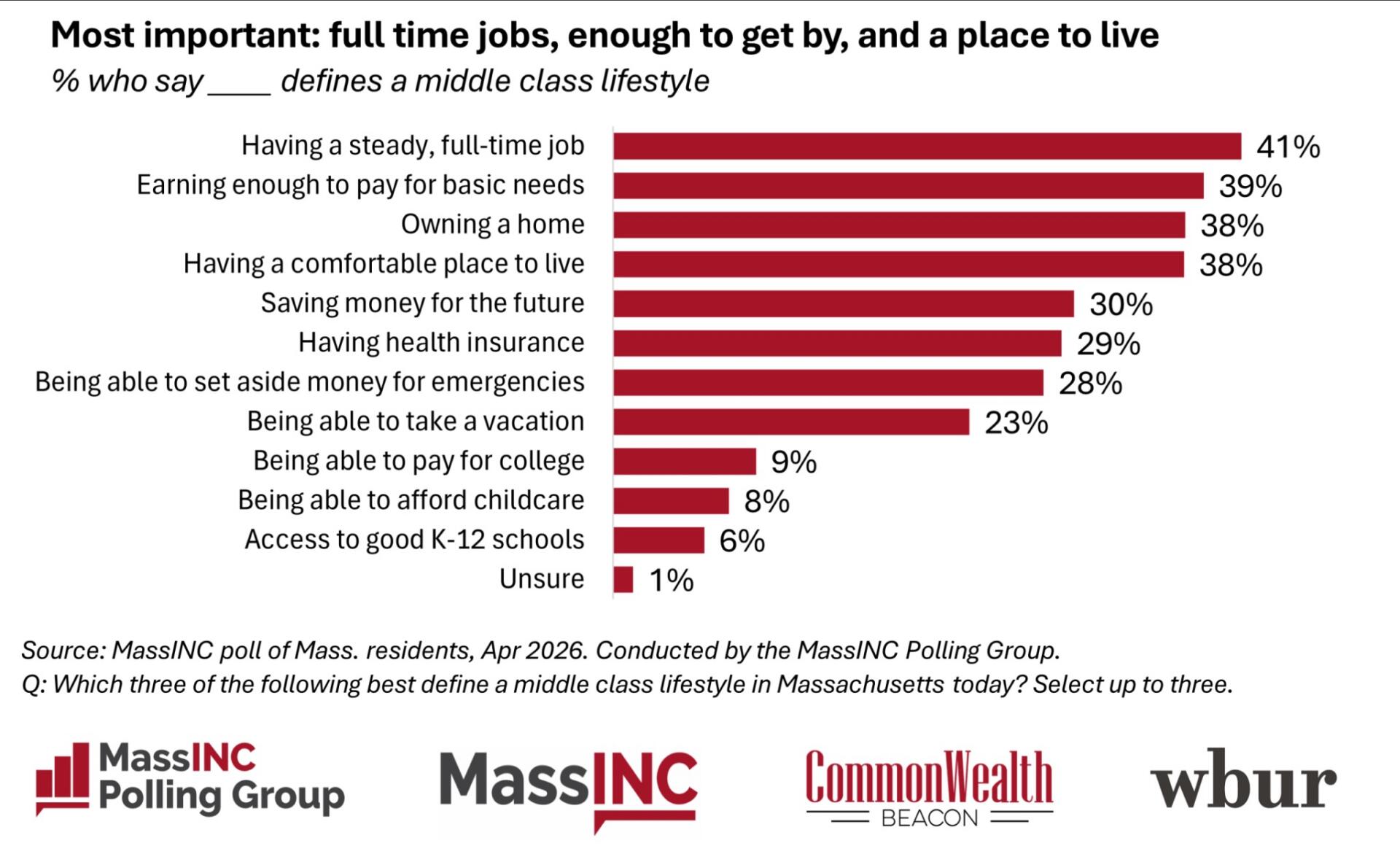
Even among residents who describe themselves as securely middle class, half say they expect the next generation to be financially worse off. Housing is central to that worry. Owning a home ranked among the top three definitions of a middle-class lifestyle, cited by 38 percent of respondents. Being financially comfortable in their housing — basically being in a place that’s affordable — tied at 38 percent.
Respondents who prioritized housing said being middle class meant things like “having enough money to own a house and go on vacation at least once a year,” or “a home owning family with one parent working. Being able to make ends meet and provide some extras.” They also defined it as “we aren’t living paycheck to paycheck with no debt other than our house,” and “I meet all my financial obligations, have a car, house, a few savings and investments and own a stable business.”
Saving for the future was the top thing that residents said they would prioritize if they were finically able, followed by improving their housing. That doesn’t necessarily mean purchasing a home, but 21 percent of renters and 12 percent of homeowners said improving housing was their number one priority if they could swing it.
Among renters, who are a minority of residents in the state according to federal data, the outlook is uncertain. Roughly 40 percent of poll respondents rent their homes, roughly in line with the state overall. Of those, 38 percent say they have no plans to buy a home in the next five years, and 13 percent say that if they do buy, it will be outside of Massachusetts.
“I think it’s helpful to think of affordability as a race between incomes and prices,” said Luc Schuster, executive director of Boston Indicators, a research center at the Boston Foundation. Massachusetts boasts fairly high and rising average incomes, “but housing prices have been driving and winning the race on the other side there for years in a row.”
“It’s tough,” he said, “when you feel like housing costs are eating your lunch every time you get a raise at your job.”
This article originally appeared on CommonWealth Beacon.