Support WBUR
Mass. gives retailers guidance on how to handle penny change as the coin is phased out
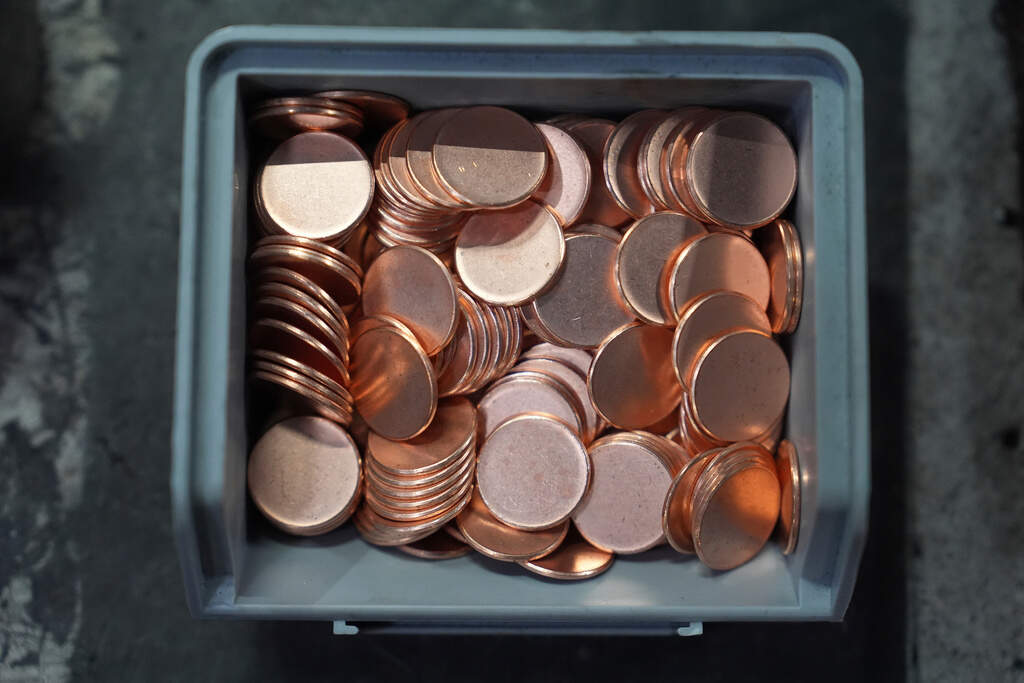
As a legislative prescription sits idle, the Healey administration this week gave businesses and consumers the lay of the legal land as pennies dry up from circulation and rounding is introduced at retail.
The U.S. Treasury Department ceased production of the penny last year after it determined making more of the coins would not be "fiscally responsible or necessary to meet the needs of commerce in the United States" given the increase in non-cash transactions and the "very low purchasing power of a single penny." When the last Lincolns were minted in November, it cost 3.69 cents to manufacture one penny, the Treasury said.
Since then, shortages of the coin have led some Federal Reserve regions to stop supplying and accepting pennies. With the universe of pennies now capped, some retailers, including the ubiquitous Dunkin', have implemented policies that round a customer's change up to the nearest nickel so the retailer doesn't have to dole out the one-cent pieces.
On Tuesday, the state's Department of Revenue and Division of Standards each issued guidance on the new landscape. Revenue Commissioner Geoffrey Snyder and Commissioner of Standards Dave Rodrigues said they wanted to clear up the questions businesses have about how state law interacts with their penny policies.
DOS said rounding up or down is permitted under Massachusetts law as long as it is applied to the total transaction price, not individual item prices. DOR made explicit that rounding a cash payment does not change the amount of sales tax owed. Businesses "must calculate and collect sales tax based on the exact purchase price, even if the final cash total is rounded up or down," the department said.
"To protect consumers, DOS recommends that any business choosing to round cash transactions clearly post its policy at entrances and points of sale, including in multiple languages where appropriate," the Executive Office for Administration and Finance said. "Before completing a transaction that includes rounding, businesses should also offer customers the option to pay using another method, such as a card or exact change."
In February, Rep. Tackey Chan filed a bill (H 5138) to simplify things for people who pay with cash and eliminate a situation in which each retailer pinches pennies differently by setting a standard set of rounding rules for cash transactions across Massachusetts businesses. That bill got a hearing last month and is still pending before the Committee on Consumer Protection and Professional Licensure.