Support WBUR
Energy company proposes big natural gas pipeline expansion in New England
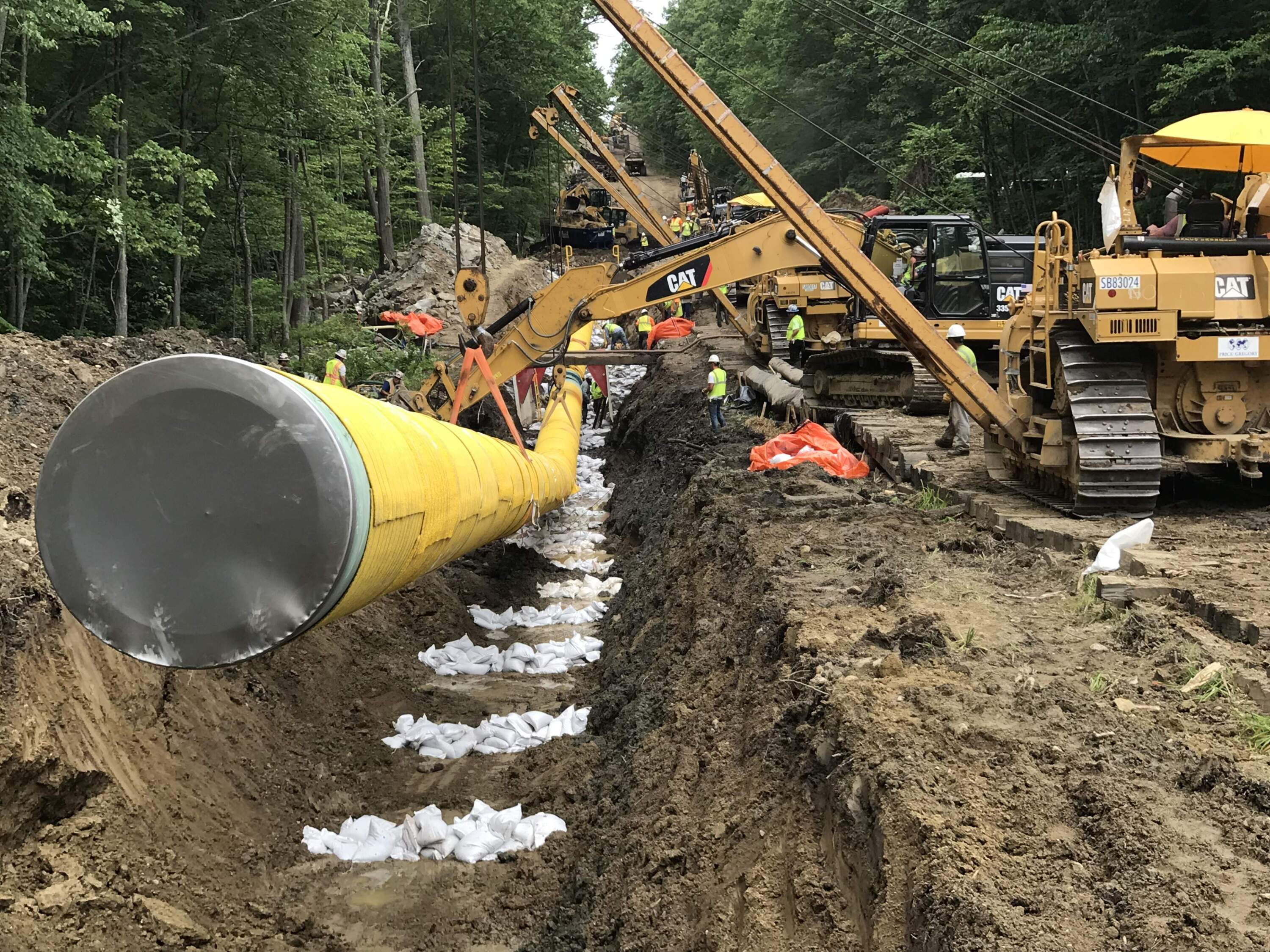
Less than three years after a large fossil fuel company proposed expanding a major natural gas pipeline in New England, the company, Enbridge, is back with a new proposal.
Known as "Project Beacon," the expansion would substantially increase the amount of gas that can flow into the Northeast through the Algonquin Gas Transmission line. This pipeline carries fracked natural gas from northern New Jersey through parts of New York, Connecticut, Rhode Island and into Massachusetts.
Details about the proposed project are vague, but according to documents released by Enbridge this week, the company would replace existing lines with larger diameter pipes in some places and run secondary pipe lines alongside existing ones in other places. Project Beacon would also involve expanding some compressor stations along the route, and could include new gas storage facilities.
Depending on customer demand, the project could expand capacity on the pipeline by 10%, the company said, and be in service by late 2030.
"Project Beacon would help meet growing energy demand by easing longstanding pipeline bottlenecks that have contributed to higher energy costs for consumers," Enbridge spokesperson Max Bergeron wrote in an email. "By improving access to abundant domestic energy supplies, the project aims to reduce price spikes and strengthen the region’s energy system."
If all of this sounds familiar, that's because it's remarkably similar to a different proposal — "Project Maple" — the company announced in late 2023.
Same pipeline, same concept for expansion, same reasons given.
While Project Maple eventually fizzled, Project Beacon could turn out to be a different story. That's because unlike in 2023, the politics of energy affordability and climate change are very different in the region.
"There is a responsibility now on all the participants in the energy system to make clear eyed, difficult decisions to preserve reliability and affordability, while continuing to keep an eye on decarbonization," said Dan Dolan, president of the New England Power Generators Association.
Thanks to a combination of cold weather and higher prices, ratepayers across New England have become laser-focused on what they're paying each month in utility bills. A recent survey from the Greater Boston Chamber of Commerce found that energy affordability was the top household concern among residents of Massachusetts.
What's more, demand for power is growing in the region, and renewable sources, like offshore wind, have faced several years of economic and political headwinds.
"New England clearly will need additional energy supplies in the years ahead," Dolan said. "Proposals like Project Beacon are welcome developments in signaling investment interest, even with the many hurdles that need to be overcome," like financing the project and getting it permitted.
In announcing Project Beacon, Enbridge is kicking off something called "open season." Think of it like an auction to gauge interest: Enbridge puts the project proposal out into the world and asks gas companies and power plants if they're interested in buying gas.
Based on the bids that come in, Enbridge will design a final project and take it to the Federal Energy Regulatory Commission for review.
In an email, National Grid spokesperson Brendan Moss said the company was aware of the proposal and "will carefully assess any potential opportunity as part of our responsibility to secure cost-effective supply solutions for our customers and make decisions based on what best serves them and aligns with applicable regulatory review and approval."
He added that "expanding access to reliable, lower-cost energy supply can help improve affordability, reduce volatility, support system reliability, and strengthen economic competitiveness across the region."
A representative from Eversource, the other large gas utility in the region, did not respond to questions about whether the company is interested in putting in a bid.
Earlier this year, the Massachusetts Department of Public Utilities approved a plan for Eversource to buy more gas from Enbridge as part of a separate pipeline expansion plan.
Gov. Maura Healey, who opposed pipeline projects in the past, threw her support behind Eversource's plan. Healey, who bills herself as a strong climate champion, has also said that she supports an "all of the above" approach to energy in the state, which could include more natural gas.
Asked about the new proposal from Enbridge, a spokesperson said the governor is focused on lowering energy costs, creating jobs and reducing the state's dependence on expensive oil and liquified natural gas.
"The governor will review this proposal carefully to make sure it is a good deal for ratepayers," the spokesperson said.
New England has several large pipelines that carry natural gas into the region, but on cold days, when demand for home heating spikes, the region's power plants often turn to burning oil, which is more expensive and polluting. The region also supplements some of its pipeline gas with liquified natural gas that comes in through a terminal in Everett, but that fuel is also expensive.
While past attempts to build a new gas pipeline into the region have failed in the last decade, many in Massachusetts have called for building new pipelines or expanding existing ones to help relieve supply constraints during the winter. Among them are Republican gubernatorial candidates Brian Shortsleeve and Mike Minogue.
Many environmentalists, meanwhile, have said a new pipeline could end up increasing utility bills — not to mention also running counter to the state's climate laws.
" New England's energy challenges are not going be solved by increasing the supply of fossil fuels," said Caitlin Peale Sloan of the Conservation Law Foundation. "We fundamentally need to be looking at decreasing peak need for gas overall, and we need to be really carefully reckoning with the cost that these resources put on to customers and people who have to breathe air when fuels are being burned."
Peale Sloan said she has a lot of questions and concerns about the Project Beacon proposal, including whether it's truly offering a new and flexible energy solution for New England. Because right now, she added, it sure looks a lot like "a retread of the pipeline strategy that failed 10 years ago."
Editor's Note: This story has been updated with comment from National Grid.