Support WBUR
Field Guide to Boston
Restoration of old ‘ghost signs’ shows off Boston's fading West End history
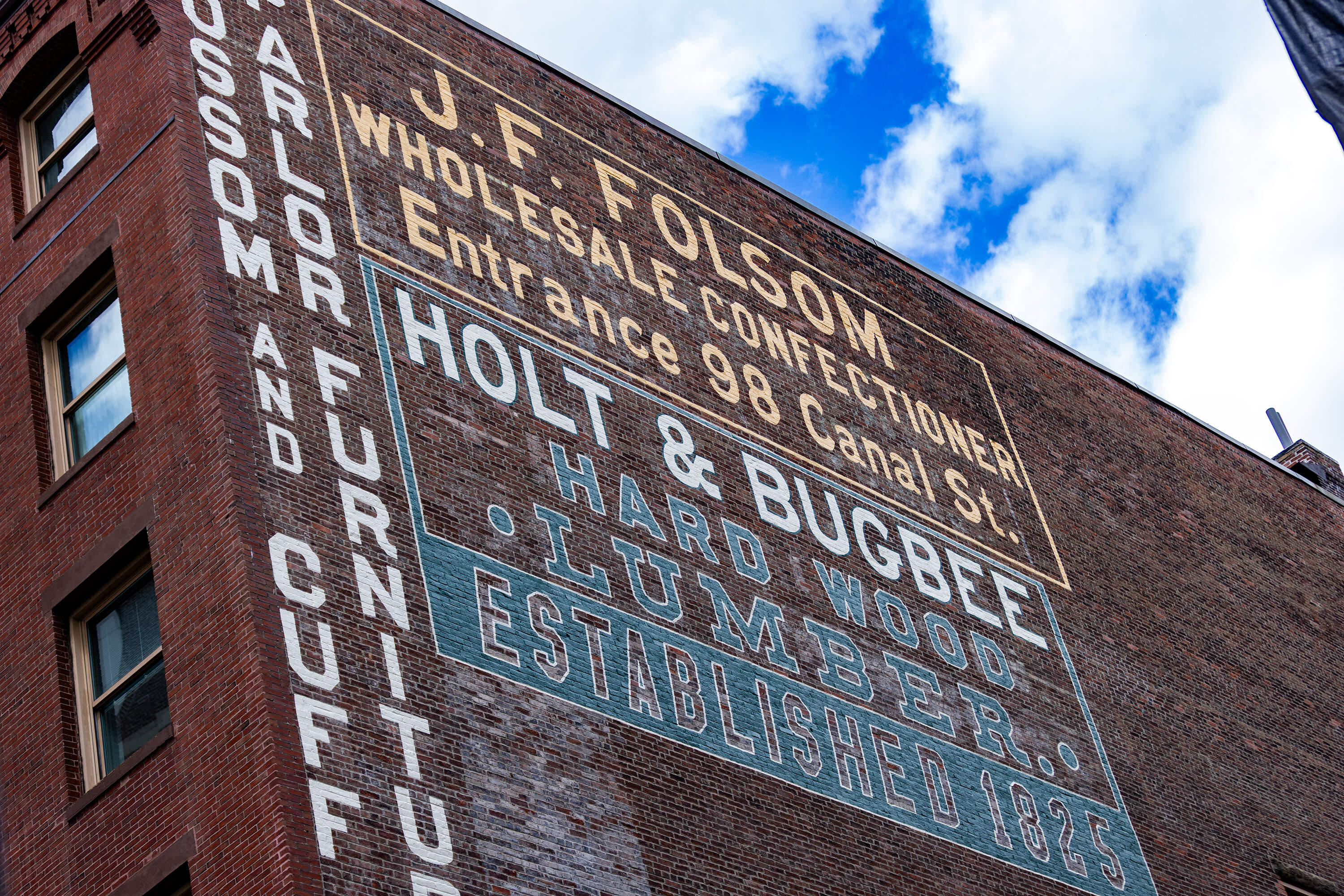
When Brian Egdahl moved to Boston’s West End a few years ago, three faded signs on the brick building next door caught his eye.
“It was something that you could barely really make out,” he said. Eventually, he came to learn more about the "ghost signs" and how these giant building advertisements once promoted local businesses.
Egdahl searched online for the companies behind the signs. One of them, a lumber manufacturer called Holt & Bugbee, was still in business.
He didn’t want the signs to remain faded. He began working with the company's owners and the West End Museum to commission two artists from out of town to restore them to their former glory.
“We're taking the history out of the archives and putting it back on the street,” Egdahl said.
Many of the ghost signs across the region had their heyday in the 19th and 20th centuries. Boston officials don't officially track them, but estimate hundreds pepper the city.
Telling the story of Boston
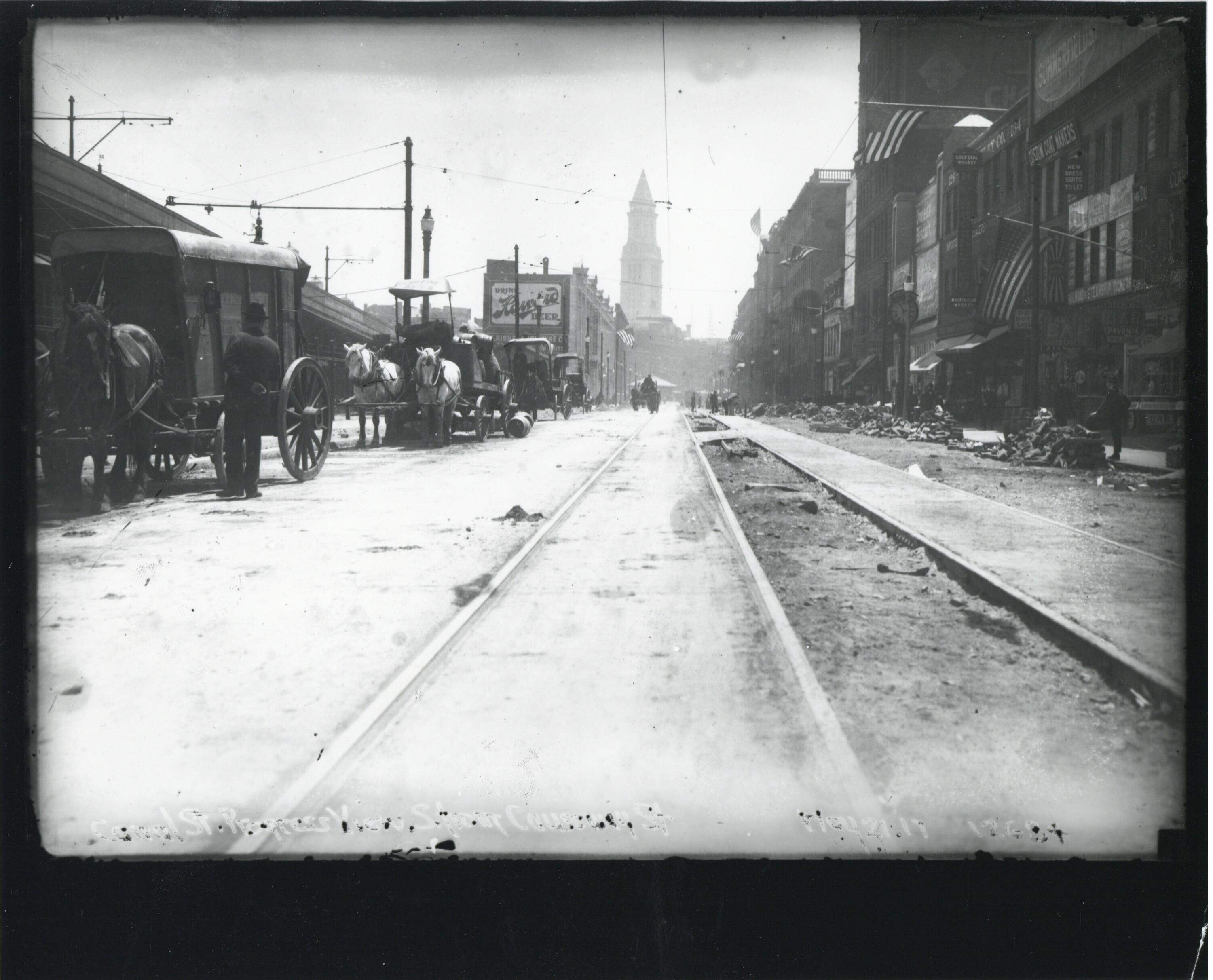
Arguably no neighborhood in Boston has seen as much change as the West End. It evolved from farmlands during the Revolution to the city’s manufacturing hub.
It was once one of Boston’s most ethnically diverse neighborhoods, and the city’s most unified and influential voting block. But a series of urban renewal projects starting around the mid-20th century razed dozens of buildings and displaced thousands of residents.
The West End “tells Boston's story very well,” said Sebastian Belfanti, executive director of the West End Museum. “We see the city change through the West End.”
Today, TD Garden serves as a centerpiece of the city's entertainment and sports culture and is surrounded by the neighborhood's old manufacturing facilities. Meanwhile, busy North Station drops commuters onto aged sidewalks that line freshly painted storefronts in the West End.
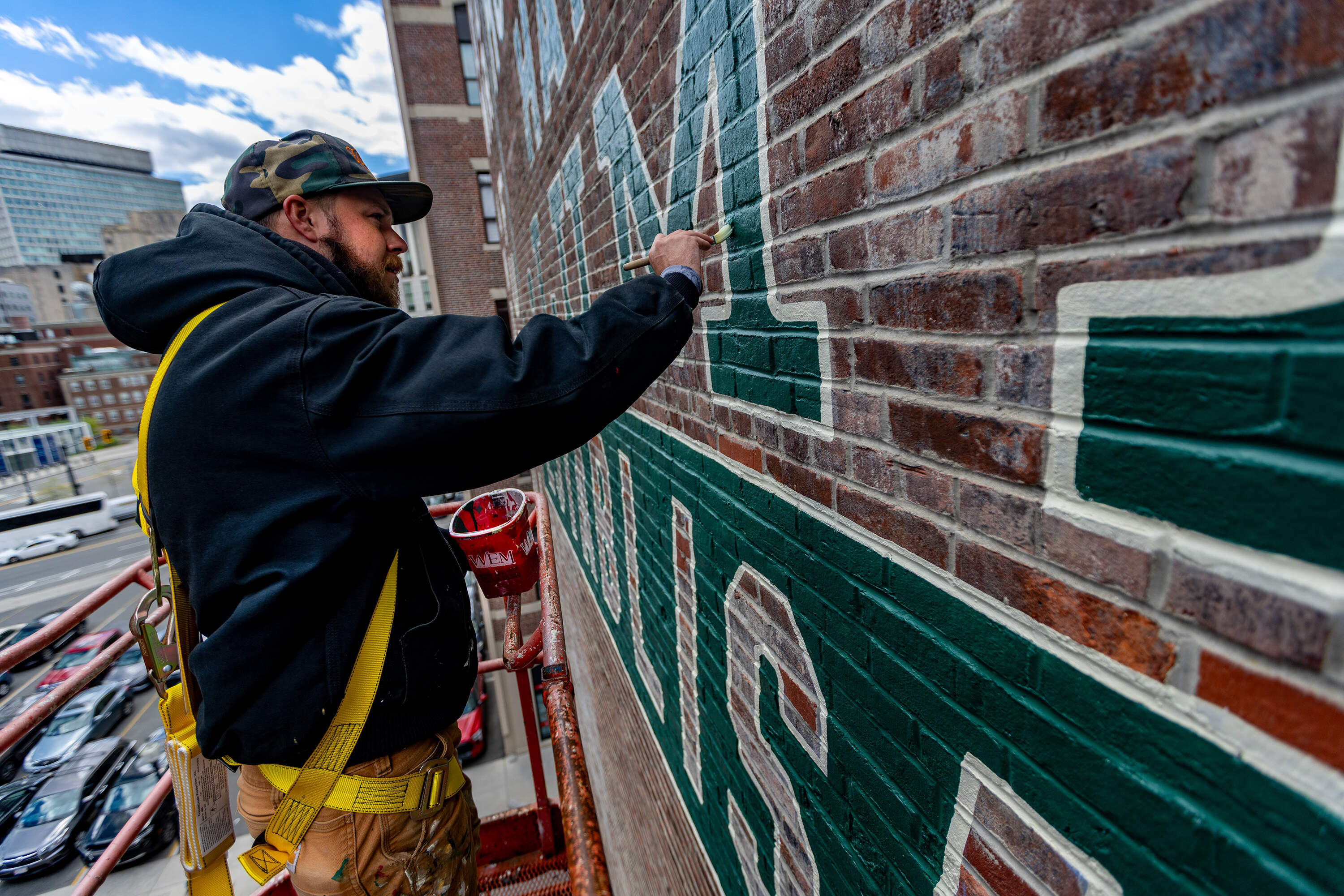
Holt & Bugbee and the museum hired Jack and Eli Williams, the owners of WMS Brothers in Albemarle, North Carolina, to fix up the three signs at the back of 90 Canal St.
The brothers, who have restored more than a dozen old ads along the eastern seaboard, said the intersection of past and present is what motivates them to do their work.
It's "cool to see just another artist's brushstrokes up there," Jack Williams said, " or kinda what they brought to the table, and how we're kinda trying to bring that back."
Eli Williams said they love digging into the history of each new project.
Aside from Holt & Bugbee, the other signs read: “J.F. Folsom Wholesale Confectioner” and “Bossom and Cuff Parlor Furniture.”
Holt & Bugbee paid for the $51,000 sign restoration project. The family-owned lumber company just celebrated 200 years in business.
Ben Pierce, a sixth-generation member of the family who runs the company, said Holt & Bugbee once had a small facility in the West End. Today, its plant is in Tewksbury.
He hopes the sign will preserve his family’s legacy in Boston.
“This is a mark that we'll have forever,” Pierce said. “Just to have a physical location in the middle of town that you can go to and point at and say, ‘Hey, like, we had a place here, we had a presence here,’ is really important.”
The brothers toured the Tewksbury facility and dug into the city's archives to learn more about the Canal Street building.
The actual restoration process involved drawing everything out by hand and painting it in, first with a primer then with a high-quality paint.
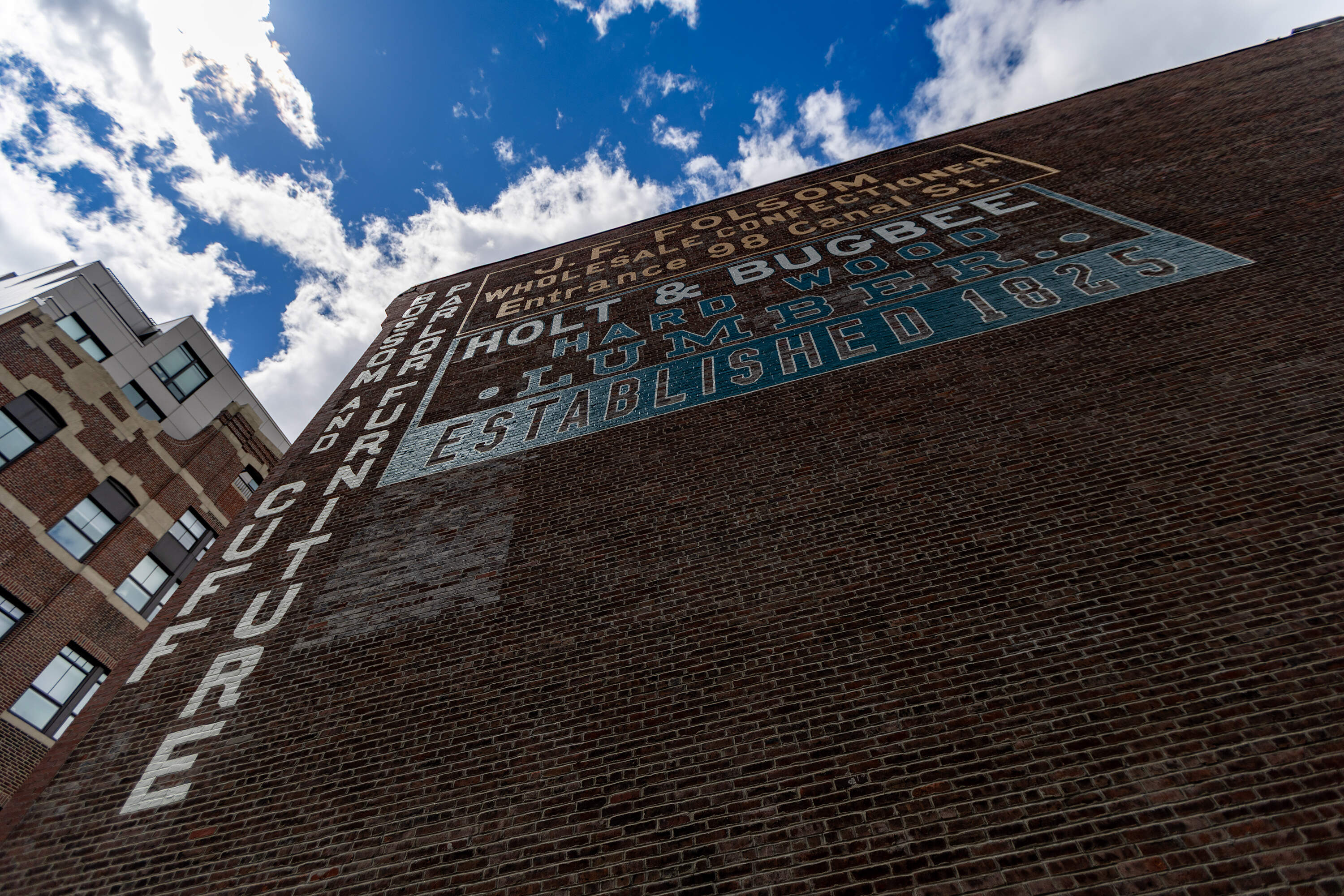
The brothers suggested — and the group agreed — that they wanted the faded remnants of other past signs on the building to still be visible from the street. This meant some parts of the signs are just outlines and aren’t filled in completely.
“We didn't want to erase the history of the other signs that had been there,” Jack Williams said. “They just get painted on top of each other all the time back in the day.
"And so if you kinda look up here, there are some remnants of other signs, other letters," he added, "and we didn't want to lose those.”
Jack Williams, 27, said his first ghost sign job was about a decade ago when he restored a faded Pepsi sign for his senior project in high school.
“WMS” was their grandfather’s signature, and those are the initials the brothers sometimes paint to sign their work. Eli Williams, 23, said the two work and live together, having converted a former gas station from the 1920s into a house in their hometown.
"We get along great, surprisingly," he said. "When we were younger, I don't know if I'd say the same thing. But, it's really good."
The brothers acknowledged there’s debate about whether or not to restore ghost signs. Some people like the faded signs the way they are, Jack Williams explained.
He said he understands there’s beauty in their age. But he also doesn’t want to completely lose the signs to time and have to recreate them from scratch.
Still, even the brothers’ high-quality paint from Sherwin-Williams will fade.
“It's one of those things that's inevitable, so it will return to looking old again,” Jack said. “You can always recreate them and put them back on there. But bringing back the characteristics from the original signs is just a little harder than you would think.”
Do you have ghost signs in your neighborhood? Send your pictures to abeland@bu.edu, and we might feature them in a future story.
This segment aired on May 19, 2026.