Support WBUR
Mass. removed more than a dozen dams last year. Hundreds more are considered hazardous
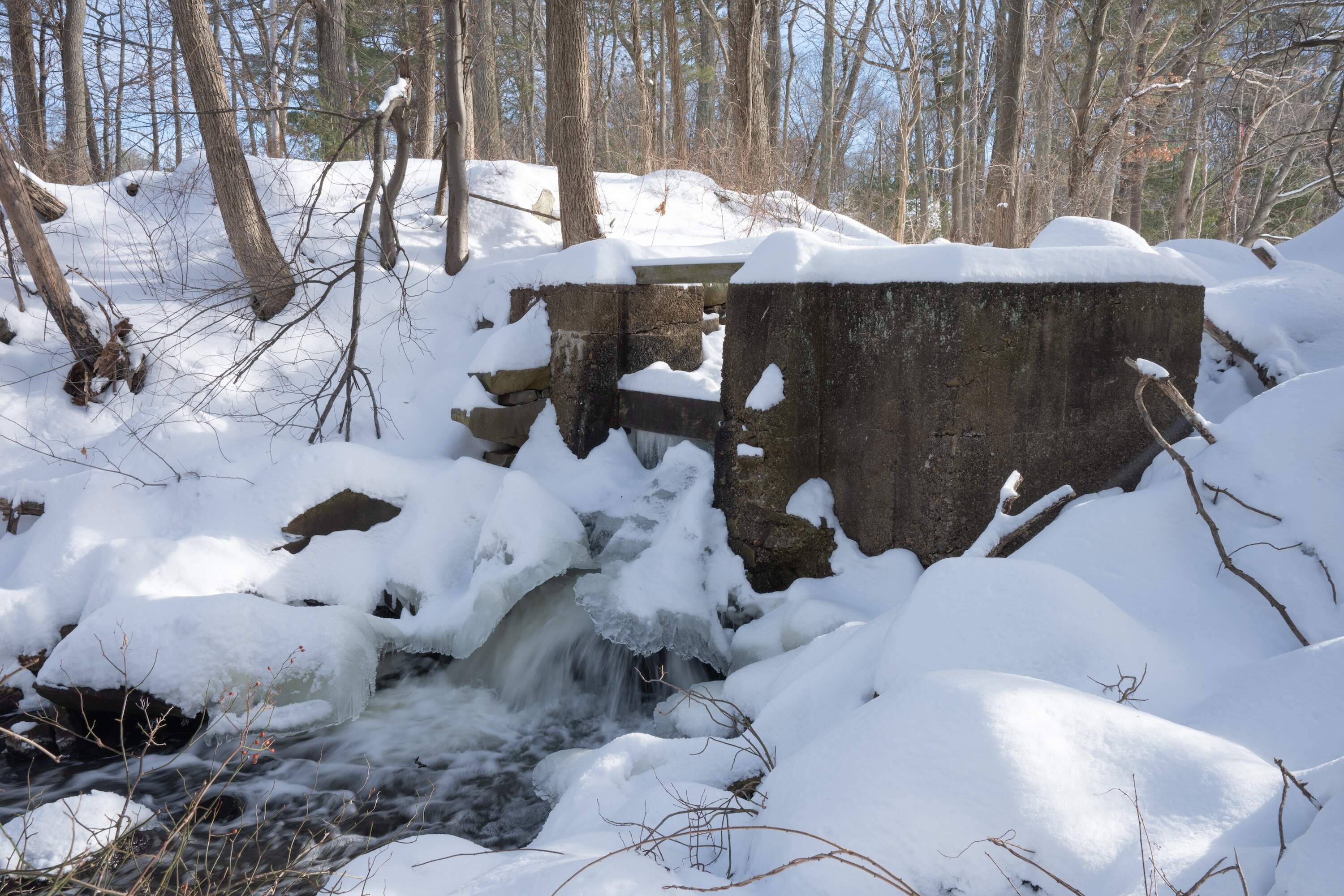
Bad weather hit Massachusetts on Sept. 8, 2023. A slow-moving, six-day storm became one of the most significant weather events the state had experienced in decades. After the first day alone, almost 200,000 people were left without power.
Leominster, a city of about 44,000, was among the areas hardest hit. In just a few hours, nearly 11 inches of rain fell, sending water rushing down hillsides and overwhelming local waterways.
The surge put severe stress on two dams in the area — Brooks Pond Dam and Barrett Park Pond Dam — both of which were damaged during the flooding. If they had failed, hundreds of homes and businesses downstream would have been put at risk.
State officials declared a state of emergency and asked residents downstream of Barrett Park Pond to seek shelter elsewhere. Approximately 300 residents left their homes, with many seeking refuge in a local middle school.
The dams held that time. But dangerous dams are not unique to that storm or to Leominster.
Massachusetts is home to more than 3,000 dams, most of which were built in the 18th and 19th centuries to power mills that have long since closed. The state lists roughly 330 as "high hazard," meaning their failure could pose a significant danger to people and property in the surrounding area. Some other dams are classified as "significant hazard," indicating their failure could cause economic losses and disrupt important infrastructure. Many dams no longer serve any purpose, yet they continue to clog waterways, trap sediment and put communities downstream at risk.
The Charles River Dam in Boston, which relies on a system of pumps and gates during major storms, is classified as "significant hazard." A failure there could send floodwaters into parts of Back Bay, Beacon Hill and the South End, including areas near major medical centers, public schools and MBTA tunnel entrances. A high-hazard dam in Brockton could put more than 500 dwellings and commercial properties at risk for flooding.
“Our dams are failing,” said Stephanie Covino, Executive Director of the Blackstone Watershed Collaborative, a nonprofit dedicated to restoration and outdoor access around the Blackstone River. “They are not built to today's standards of extreme weather, let alone the future standards of extreme weather, and we don't always have a path forward of being able to remove those dams.”
The future of the region’s storms is unpredictable, and the window for addressing hazardous dams is shrinking, warned Lisa Kumpf, river restoration director at the Charles River Watershed Association.
"We have not seen the worst of the storms that we're going to get, for sure,” she said. “We are getting wetter in the Northeast with climate change.”
A high-hazard case study in Marlborough
Among the state’s high-hazard structures is Hager Pond Dam in Marlborough, whose failure could send floodwaters through populated areas downstream, threatening homes, U.S. Route 20, and commercial areas in Marlborough and Sudbury.
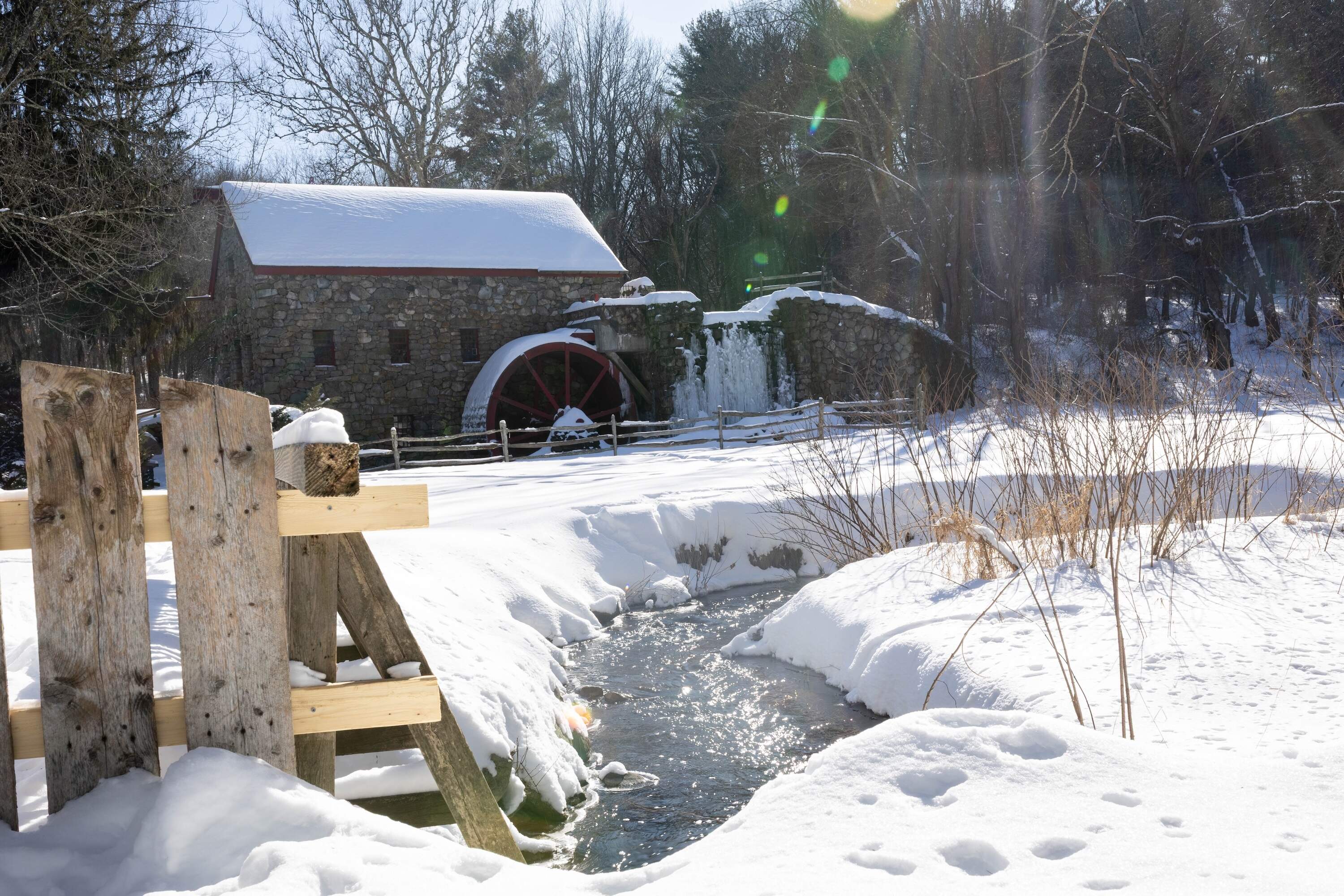
Hager Pond Dam was last inspected in 2023 and classified as high hazard, according to a federal database of dams. A report the same year by the Metropolitan Area Planning Council for the city of Marlborough found that were the dam to fail, two other downstream dams, Grist Millpond Dam and the Carding Millpond Dam, and seven downstream bridges, would likely fail.
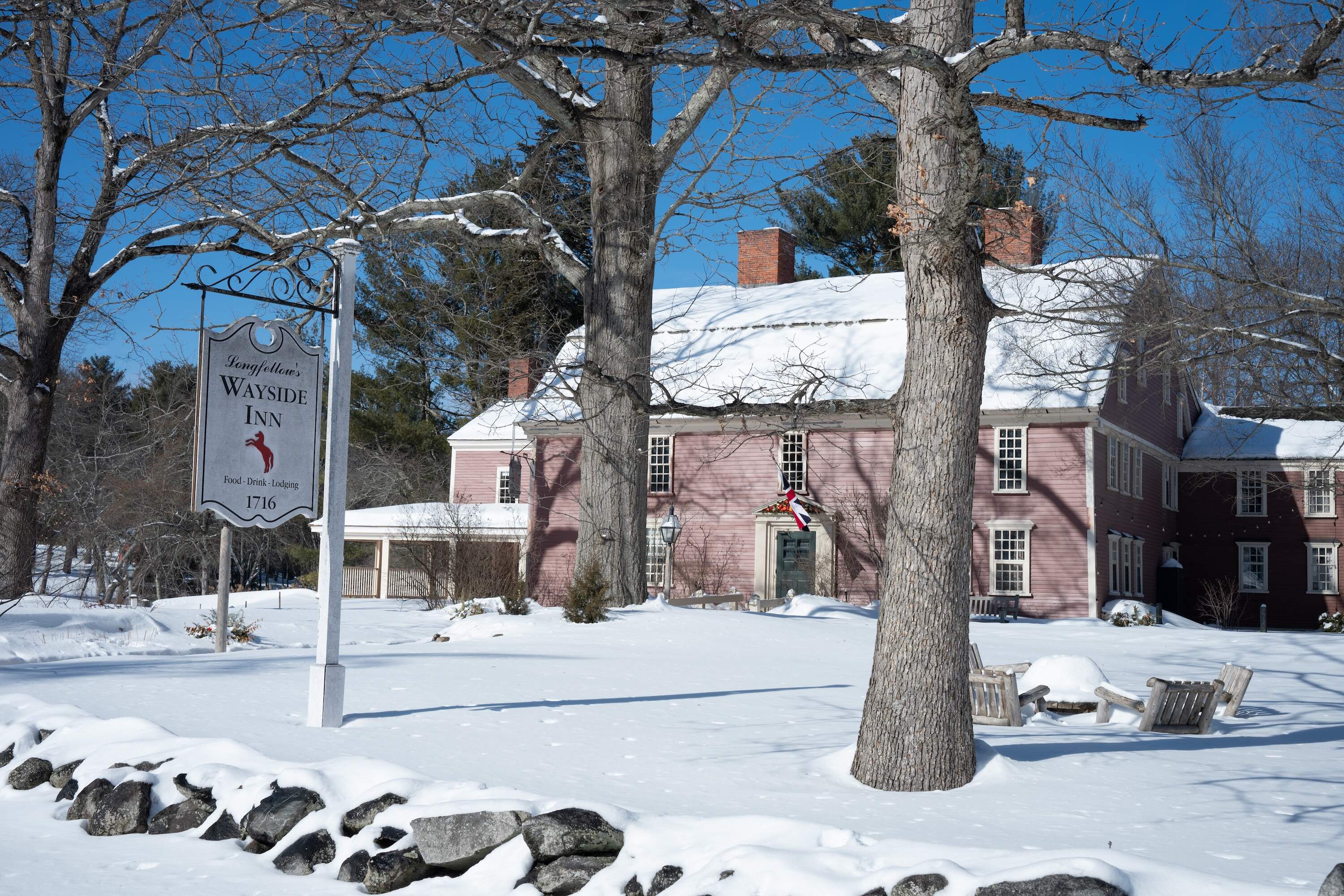
The Wayside Inn, which opened in 1716, lies directly in the flood path.
"If the dam were to break, in addition to obviously a lot of houses and other property, the Wayside Inn would probably get destroyed," said state Sen. James Eldridge, a Democrat whose district includes Middlesex and Worcester.
Obstacles to removing dams
Potential danger to property is not the only reason that politicians, environmentalists and local activists have advocated for removing dams like the one at Hager Pond.
"There is no faster or more effective way to bring a river back to life than removing a dam," said Heather Conkerton, the ecological restoration coordinator at OARS 3 Rivers, the watershed organization for the Sudbury, Assabet and Concord Rivers, in a written statement.
Removing dams and allowing rivers to flow more freely can help them return to their natural state in a surprisingly short amount of time, “providing significant ecological and community benefits,” Conkerton said.
At Hager Pond, the trapped water develops algae blooms and foul odors throughout the summer months.
“Water that moves very slowly allows nutrients to collect, which is harmful to fish and to the overall health of the water,” said Eldridge, the state senator.
Who is responsible for the cost for maintaining or removing a dam is not always clear. Some are owned by state or local governments. But many sit on private property, placing the burden on individual landowners who often lack the resources to act.
“Most of the dams are private and remain private just because the state, unfortunately, does not have the money [to acquire them],” Eldridge said.
Hager Pond Dam sits on private property, but it’s unclear who owns it, according to a state mandated emergency action plan.
"The owners would need to seek grant money," explained Tom DiPersio, city engineer for Marlborough, who occasionally has to coordinate unclogging of the spillway. “Most people don't even realize it's a dam — it's a small embankment in the woods with remnants of an old concrete spillway."
Massachusetts does provide some assistance for dam removal. In 2025, 15 dams were taken down across the state. A report by American Rivers, a conservation group, found Massachusetts had more dam removals than any state in the country.
The Massachusetts congressional delegation secured $221.5 million for 209 projects statewide, including dam repair and removal, in the fiscal year that ends in June. Following major disasters, FEMA's Hazard Mitigation Grant Program has made upwards of $110 million available to the state for flood mitigation, drainage improvements and infrastructure protection. A portion of these funds could go a long way in helping to research, restore or remove the state's high risk dams.
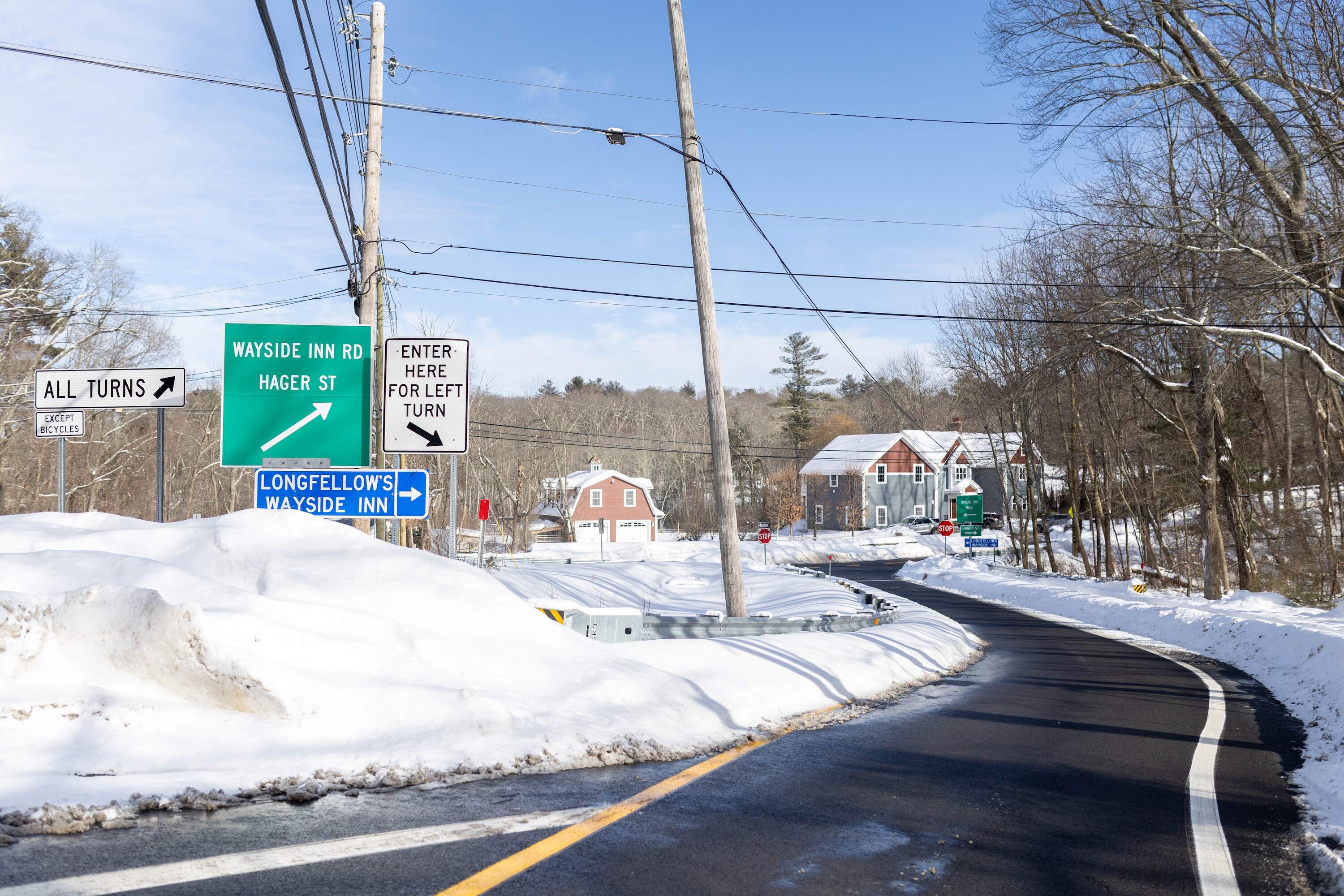
The removal of Hager Pond Dam would drastically change the landscape around it — transforming a pond into a narrow, fast-flowing stream surrounded by newly exposed land.
“It would obviously look very, very different,” said Eldridge.
Many abutters prefer the scenic pond they know, he said, to what would replace it — a common tension in dam removal efforts. The aesthetic appeal of a pond or a waterfall often clashes with the ecological and safety reasons for taking down a dam.
Despite the complications, last November, the Marlborough-Sudbury legislative delegation secured FEMA funding to begin a formal study on Hager Pond dam, a crucial step toward applying for funding to repair or remove it.
Eldridge said removing it would create opportunities to restore ecosystems and add green space — maybe even a new park.
"Taking down a dam, having the funds to make a certain area more attractive — you're going to get more people to visit," he said. "It improves quality of life.
Editor's note: Following publication, a spokesperson for the Department of Ecological Restoration responded to note four additional dams were removed by the state but never included in the American Rivers report. The story has been updated to include the additional removals.
The Open Source Investigations Lab at Northeastern University’s School of Journalism combines traditional reporting with analysis of digital evidence found in satellite imagery, videos and social media. The reporting team for this project was Lily Anzalone, Asher Ben-Dashan, Anastasiia Boltkova, Maeve Brackett, Vivica Dsouza, Emily Glick, Namira Haris, Peiyao Hu, Jacob Kolton, Savannah Lavigne, Lana Messinger and Juliette Piovoso, working with journalism professor Dan Zedek.
This article was originally published on May 25, 2026.