Support WBUR
Welcome to Boston? Transit-savvy World Cup visitors may be surprised by the T's dingy stations
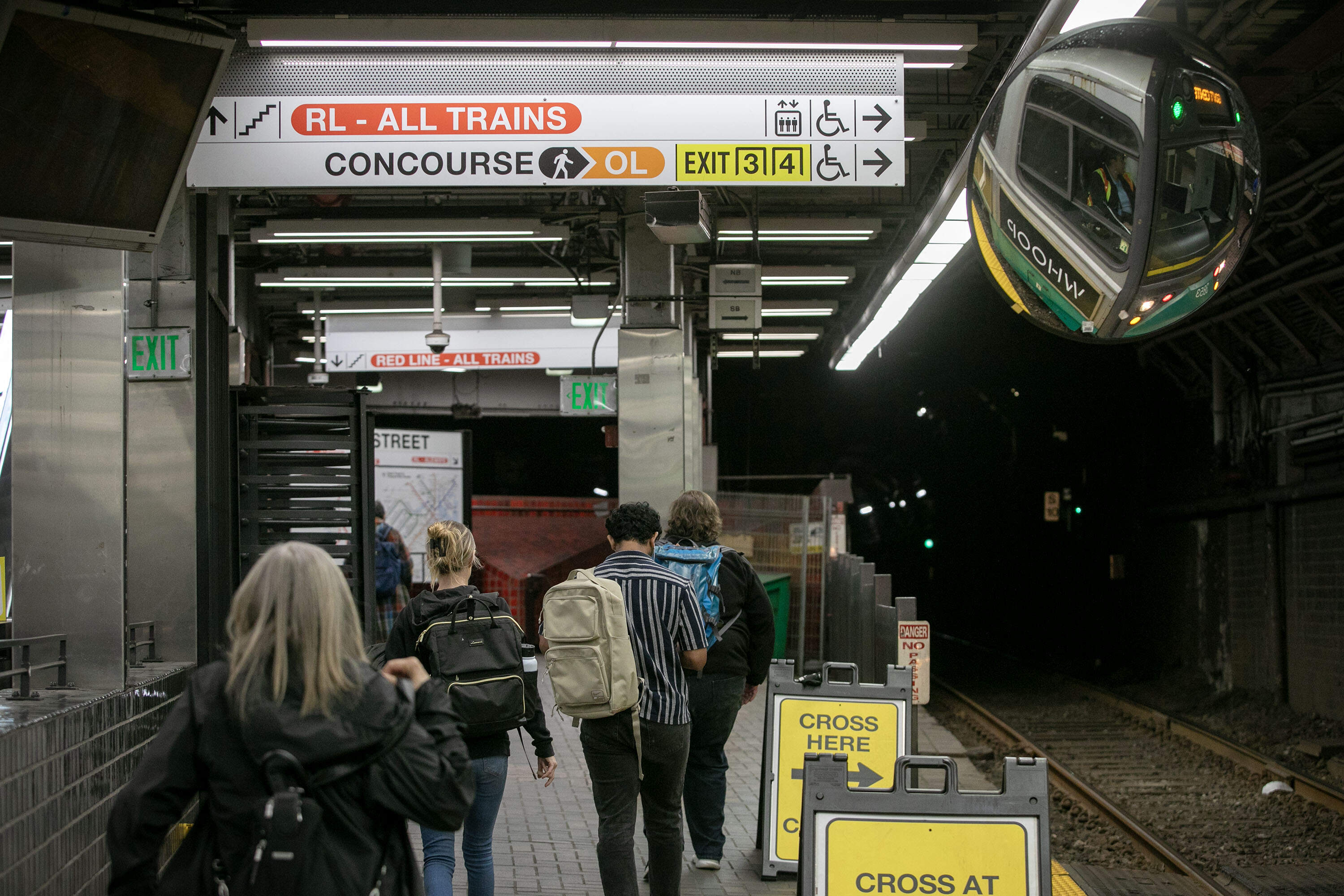
One recent weekday morning, Salem resident Daisy Grullon took in the brown tile and yellow-tinged lighting on the Orange Line's State Street platform. There was a nearby station sign covered in soot and some mystery liquid staining the walls.
“Dingy, smells sometimes, probably leakage from water,” she said. “Who knows?”
Locals like Grullon are accustomed to the T’s dank conditions. But as global soccer fans make their way to Boston for the World Cup, many will come from cities with clean, state-of-the-art public transit — and they may be surprised at the MBTA’s less-than-sparkling, dungeon-like spaces.
“Well, they're not going to be impressed,” Grullon said of visitors taking the T. “If they're going to compare it to what they see in other countries, in Europe? Yeah, we're behind.”
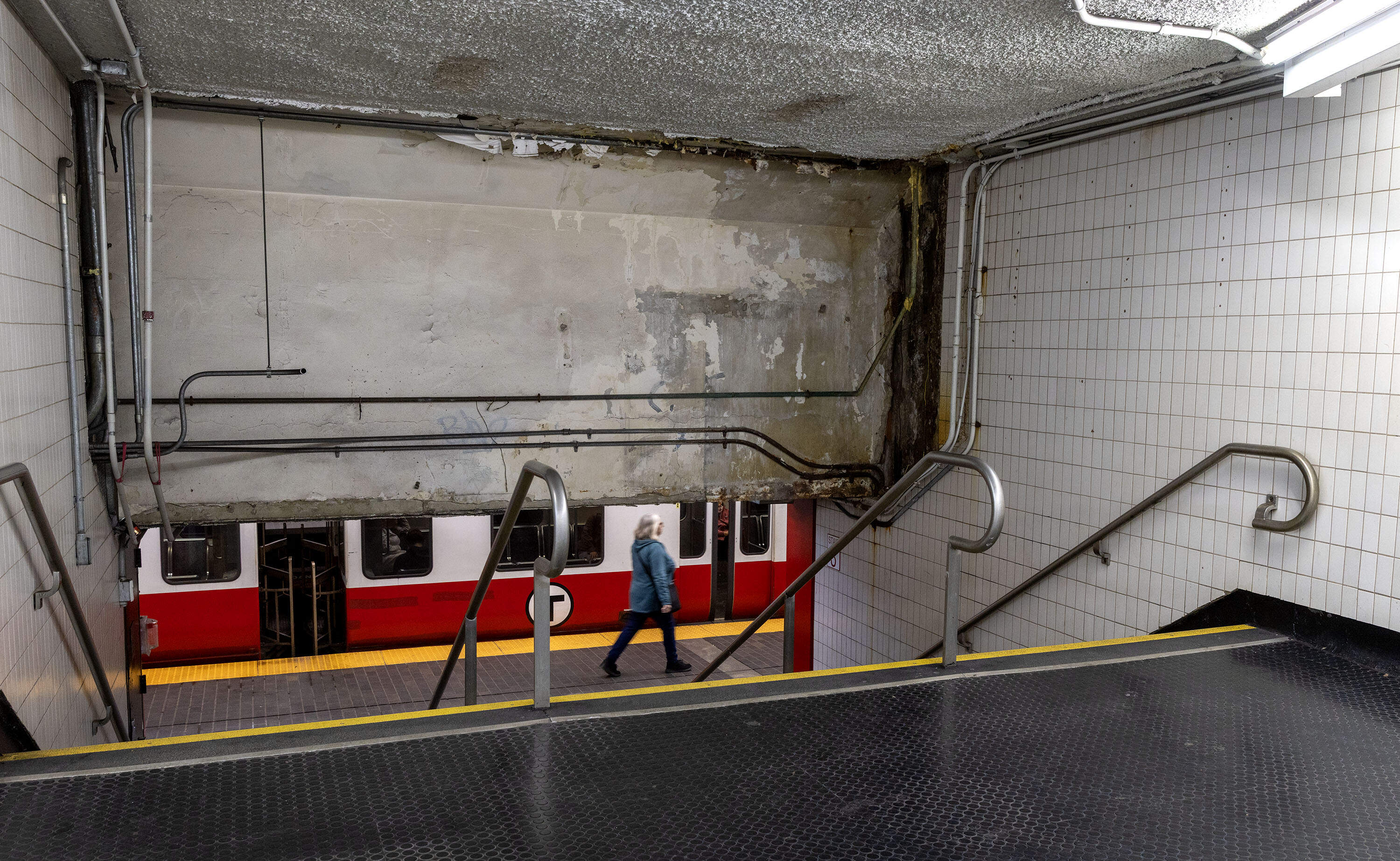
The MBTA’s chief of stations, Dennis Varley, is the guy charged with making the T cleaner and safer. And it’s a tall order, thanks to decades of neglect. He said he’s brought in more engineers and tradesmen; they’ve changed more than 2,500 light bulbs, rebuilt walls and columns and have a 24/7 cleaning regimen that includes scrubbing bathrooms, mopping by day and power washing platforms overnight.
A New York transit system veteran brought in by T chief Phil Eng, Varley said he has a simple test.
“If I was a passenger, would I want my mother or my girlfriend, my daughter in this station?" he asked. "Does it look safe? Is it clean? Is it a nice place to be?”
In some of Boston’s busiest stations, like century-old Park Street and Downtown Crossing, the answer is no. Or meh, at best.
Ally Thompson travels from Boston to Lexington for work and said Red Line stations seem to be the dirtiest and most cramped stations she encounters.
“Some more of the Orange Line stations are better,” Thompson said. “The Haymarket Station, though, is kind of gross, always very wet.”
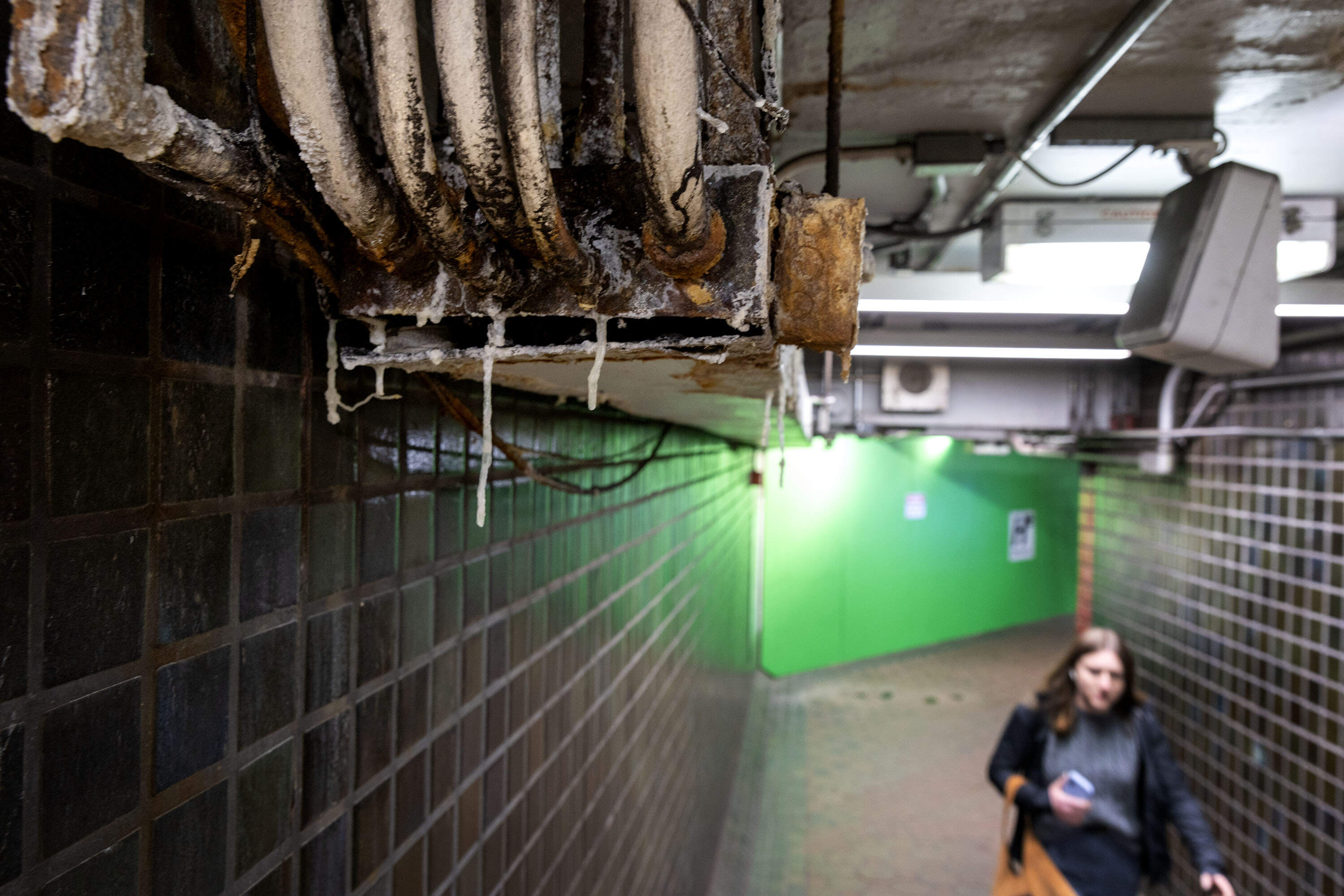
Water, it turns out, is a curse for much of the subway system, according to Varley. During a visit to the Green Line’s Copley station, he explained that the black discoloration on a white, painted wall was from oozing water.
“Gravity being what it is, Boston being built in basically what used to be a bog,” he said, “we have a lot of water intrusion.”
Varley explained that what often looks like brown, black or white residue on station walls and floors isn’t mold or something harmful; it's just water that has dried and left behind a stain, often bearing the color of whatever minerals or grime the water came through.
As for lighting, Copley is brighter than some stations, because LEDs have been installed. And there isn’t a single piece of trash on the ground.
“We are obviously doing the best that we can to our core stations — you know: re-lamp, clean, structural deficiencies,” after years of delayed maintenance, Varley said.
The work is not being done specially for the World Cup, he said.
“We were doing it anyway,” he said.
So while the T isn’t pushing to beautify any particular stations ahead of the games, it is preparing to keep up with the rush of soccer fans expected to use the transit system this summer.
“There's going to be a lot of tourists and a lot of revelers, right? So there'll be a lot of people that are having a big party, which may extend to some of our stations,” Varley said. “First of all, we want to make sure everybody's safe. And then we're going to keep everything clean.”
Varley said the T will have extra signage and volunteers at stations throughout the World Cup games in June and July. There will be signs with numbered exits, to help passengers more easily find their way around town.
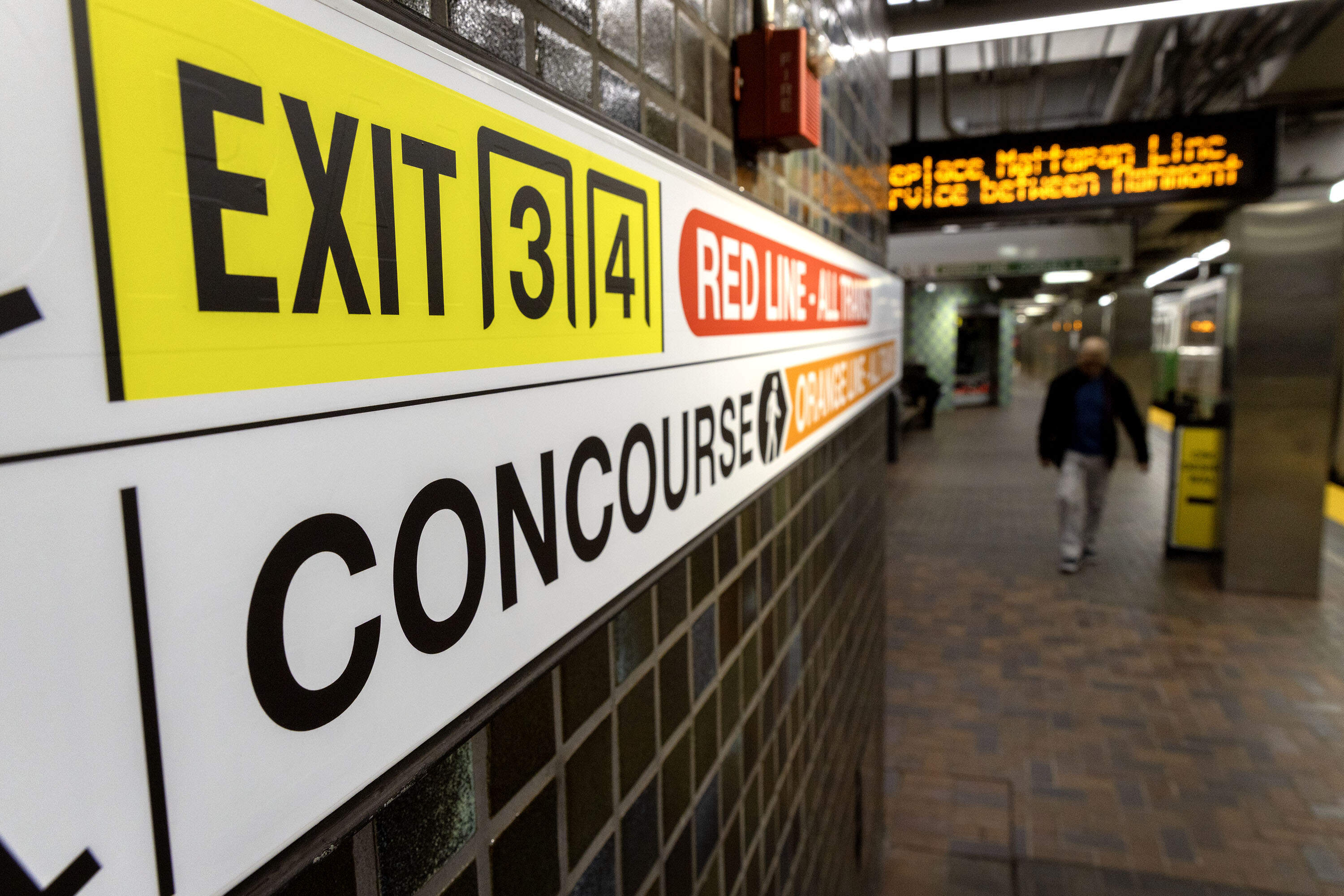
Historically station exits signs display the street name. But, Varley said, a street name doesn't help an out-of-towner who isn't familiar with the area know which exit to take to reach their destination.
"When I came here from New York, these streets didn't mean anything to me," he said of the exits.
New signs being installed display exits as numbers. The transit authority has partnered with Google so that the company's GPS instructions will guide users to their corresponding exit.
"It's very easy to follow and very, very consistent, and in line with a lot of other systems that, you know, that do this, other transit systems similar to ours," Varley said.
And in Foxborough, where the matches will be played, a renovated train platform is supposed to be completed “ahead of schedule” according to Varley, before the tournament begins on June 13.

This segment aired on May 29, 2026.