Support WBUR
Boston's Morning Newsletter
Boston will allow later last calls this summer. Here's what to expect
Editor's Note: This is an excerpt from WBUR's daily morning newsletter, WBUR Today. If you like what you read and want it in your inbox, sign up here.
Team France has landed at Logan. Scots are wandering around downtown. It's the 2026 World Cup. After nearly eight years of planning, the North America-hosted games officially kick off this afternoon in Mexico City with Mexico versus South Africa. (It's a rematch of the 2010 World Cup opener — sans vuvuzelas.)
Click here for the basics on the schedule and how to watch. But first, a look at one of the ways Boston is trying to capitalize on the excitement around the games:
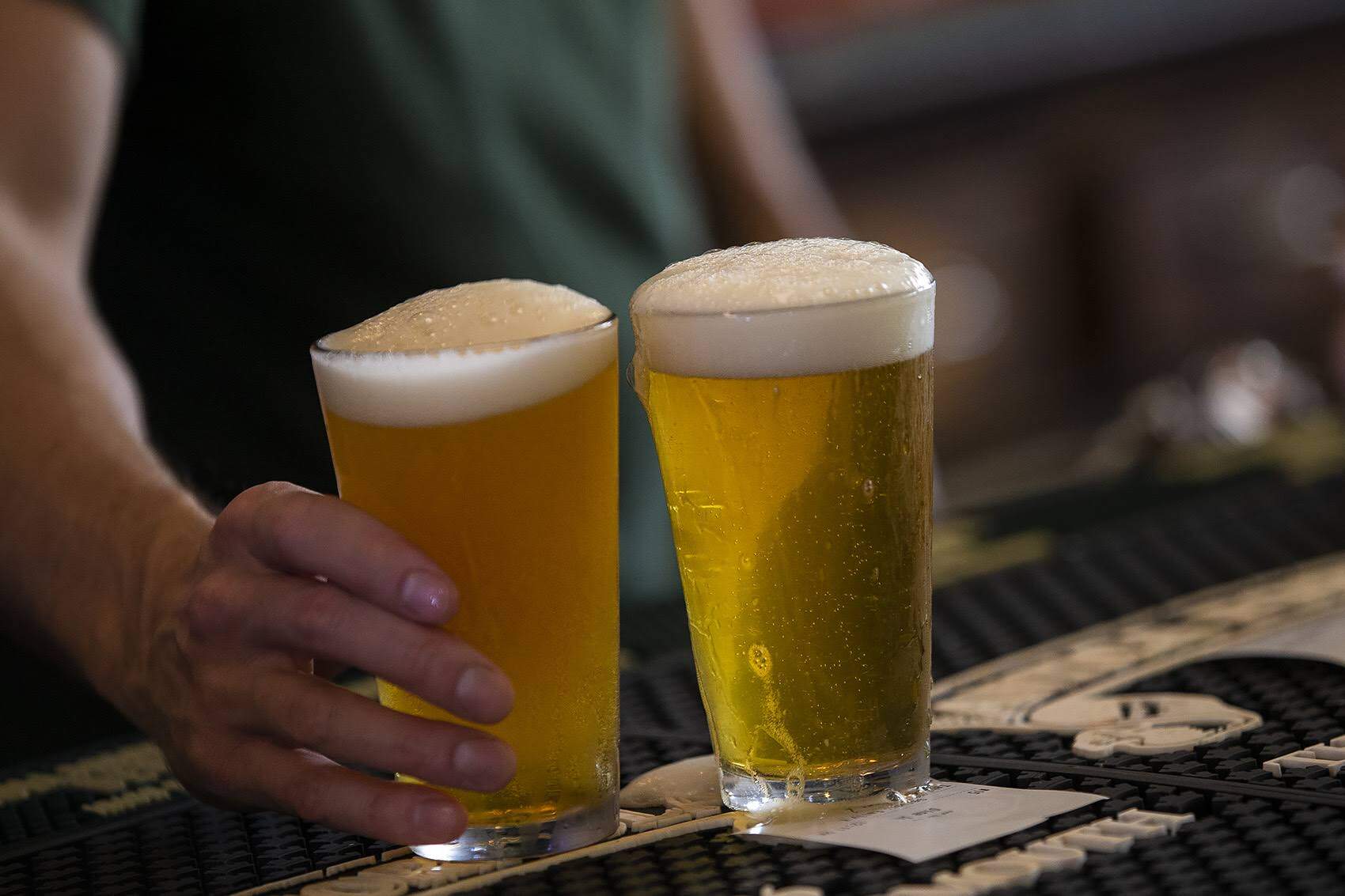
Opting in: Boston will allow later last calls this summer. Mayor Michelle Wu announced yesterday that the city will let local businesses apply for a one-hour extension of their license to serve alcohol, as late as 3 a.m., through the end of July. It made Boston the first community to formally embrace the new state law giving cities and towns the flexibility to loosen drinking rules this summer.
- How it works: Don't expect everywhere to suddenly stay open until 3 a.m. Bars and restaurants can only extend their license by one hour — so it's the places that are currently licensed to serve alcohol until 2 a.m. that have the option to keep going until 3 a.m. All they have to do is submit an online form to Boston's Licensing Board and get same-day approval, according to Wu. "That's it," she told reporters yesterday. "No barriers. No hearings required or anything. We know we're up against it, so want to do this efficiently and effectively."
- The reception: Local bartenders and restaurant owners have generally greeted the change with somewhat lukewarm approval. Supporters say this summer is a good opportunity to test out ideas that have been debated for years and counter Boston's reputation as a sleepy city. "It's worth a shot," Steve Clark, the head of the Massachusetts Restaurant Association, told WBUR's John Bender. That said, after-midnight hours don't tend to be the most profitable, according to Frederic Yarm, the head of Boston's Bartender Guild, told WBUR's Amy Sokolow. Businesses will have to decide whether it's worth the cost of paying all of their staff (bartenders, doorman, barbacks, DJs) an extra hour. "Not everybody wants to be getting home that late," Yarm said. "Not everybody wants to be stuck there to an empty room — or to a room of a bunch of people who are satiated with their drinking and not spending another thing."
- What to expect: Yarm thinks the change will most benefit areas where there are lots of tourists and young people — such as around Fenway Park, TD Garden or the Seaport. "Having the after-party for [a] concert be until 3 a.m. probably would be a good thing, if your staff knows that it's not everyday," he said.
- Zoom out: Boston isn't the only city moving to embrace the law. Cambridge also signed off on letting bars apply for later last calls yesterday — and Methuen and Worcester are scheduled to discuss today.
- What's next: Wu's office also plans to take advantage of the other part of the new law: designating a district where people can drink alcohol in public areas, like on the sidewalk or in a park. The specific location and details are still TBA.
- Quote of the day: "I've never seen a bill pass so quickly in the State House," state Rep. Aaron Michlewitz said of the temporary alcohol rules' swift passage into law this week. "I don't know what that means about us in terms of getting to drink 'til 3 a.m, but that might, uh... we'll leave that for another discussion."
Meanwhile at City Hall: The Boston City Council is sending a $4.9 billion budget plan back to Wu’s desk today — with a few changes. WBUR's Eve Zuckoff reports the Council moved around $12 million in the budget, pulling money out of dozens of other departments to restore funding for immigrants, housing, seniors and arts. (You can read more about the background on those funding debates here.)
- In the room: The meeting was interrupted for several hours by protesters who took over the floor and called on councilors to reject the budget over funding cuts to youth jobs. Eight people were arrested for trespassing.
- What's next: Wu can accept or veto some or all of the Council's amendments. However, the Council can override mayoral vetos with a two-thirds vote — a relatively new power thanks to a 2021 city ballot question. (The amended budget was approved yesterday on a 12-1 vote.)
Zoo news: The Franklin Park Zoo's long-anticipated African Experience exhibit opens to the public today. Zoo New England CEO Stephanie Brinley says visitors will be able to watch critically-endangered African penguins in a state-of-the-art outdoor habitat. "There is split level viewing," Brimley told WBUR's Fausto Menard. "So you'll be able to see the penguins out on the beach, but you'll also be able to see underwater and be able to see them swimming around." The $21 million project also includes an expanded "Serengeti Crossing" with zebras, wildebeests and ostriches.
- Heads up: The zoo is hosting a penguin festival this weekend with penguin-themed events and giveaways.
P.S.— Our "Set in Boston" movie series returns to CitySpace this Friday, featuring "Girl, Interrupted." After the screening, WBUR film writer Erin Trahan will moderate a conversation with Susanna Kaysen, the Cambridge native whose real-life experience and memoir served as the basis for the movie. Get tickets here!