Support WBUR
Paid for by Silent Spring Institute
Massachusetts PFAS and Your Health Study: Protecting residents through science and community engagement

This post was paid for and produced by our sponsor, Silent Spring Institute, in collaboration with WBUR’s Business Partnerships team. WBUR’s editorial teams are independent of business teams and were not involved in the production of this post. For more information about Silent Spring Institute, click here.
Dr. Laurel Schaider didn’t set out to study PFAS.
A senior scientist at Silent Spring Institute, Schaider had been investigating contaminants in groundwater and drinking water. At the time, PFAS — a large class of synthetic chemicals used in consumer products and firefighting foam — were not yet widely known. “There was some evidence they could be in drinking water, but not much,” she recalls.
In 2009, curious whether the chemicals were present in Massachusetts, Schaider and her colleagues began testing drinking water on Cape Cod. The samples showed PFAS, the first measurements in the region’s water supplies.

Subsequent testing by the U.S. Environmental Protection Agency (EPA) showed the problem was more widespread. Water systems in Hyannis, Westfield, Mashpee, Danvers and Hudson had some of the highest PFAS levels measured in the country. Since then, 12 percent of Massachusetts water systems have been found to exceed the state’s drinking water standards.
What began as a small research question uncovered a much larger public health threat. PFAS, often dubbed “forever chemicals” due to their persistence, have been linked with cancers, thyroid disease, reduced fertility, among other health effects. Today, roughly 200 million people in the United States have PFAS in their drinking water.
A community health study
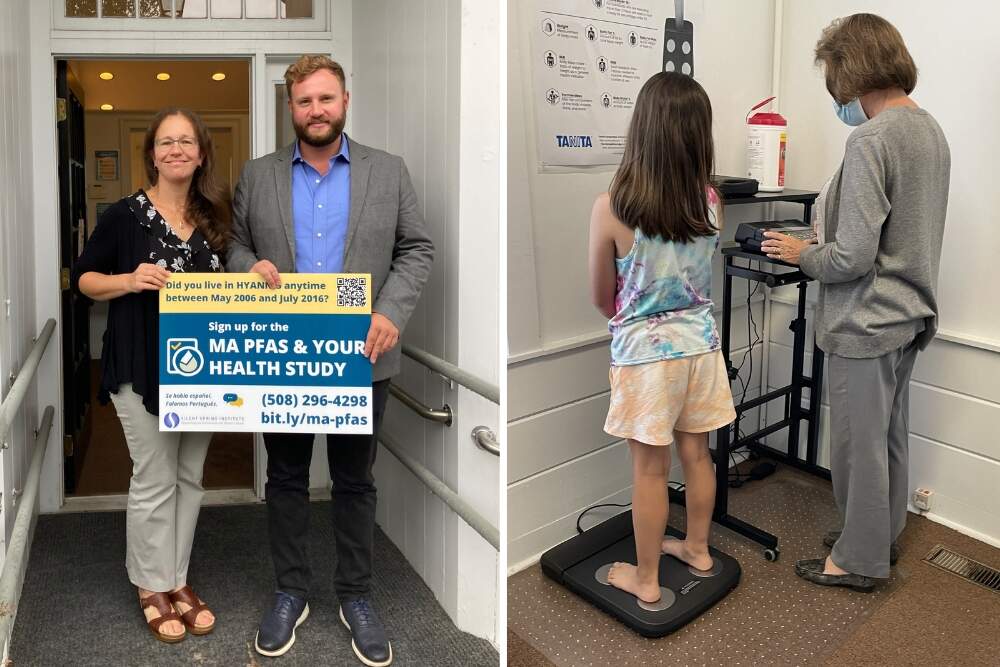
As evidence of widespread contamination grew, researchers at Silent Spring expanded their work to better understand the health impacts. In 2019, Schaider and her colleagues launched the Massachusetts PFAS and Your Health Study, focusing on two communities — Hyannis and Ayer — where drinking water had been contaminated by firefighting foam.
The project is part of a larger national effort called the PFAS Multi-site Study, started by the Centers for Disease Control and Prevention. Data from Massachusetts are being combined with those from seven other states, creating one of the largest research efforts to examine PFAS exposure and health outcomes in the United States. Silent Spring is taking a leadership role in analyzing the pooled data from the different sites.
Health insights with national implications

Massachusetts has a long history of landmark public health research, like the Framingham Heart Study, which helped identify major risk factors for heart disease. Scientists hope the Massachusetts PFAS and Your Health Study will similarly shed light on the long-term health effects of PFAS.
Researchers enrolled nearly 800 adults and children, collecting blood samples, health surveys and other data. Tests showed that levels of some PFAS chemicals in people from Hyannis and Ayer exceeded those in the general U.S. population — and remain high even though local drinking water has been treated for years.
Schaider and her team are now using the data to understand the health impacts. For instance, early findings show higher PFAS levels are associated with higher blood pressure. The researchers are also reconstructing historical levels of PFAS in drinking water to better estimate past exposures and how they may influence health today, while searching for early biological markers of PFAS-related disease.
In the coming years, the researchers plan to investigate:
- How PFAS blood levels change over time: Scientists will track how quickly the chemicals leave the body after contaminated water is treated.
- Whether diet plays a role: The team will examine whether certain foods help the body eliminate PFAS more quickly.
- Additional health outcomes: Continued follow-up will explore possible links to other conditions including breast cancer.
Supporting communities and clinicians
With stricter EPA drinking water standards established in 2024, more Massachusetts communities are grappling with PFAS contamination. “We can't change past exposures,” says Schaider. “But we can take steps to better protect people’s health.”
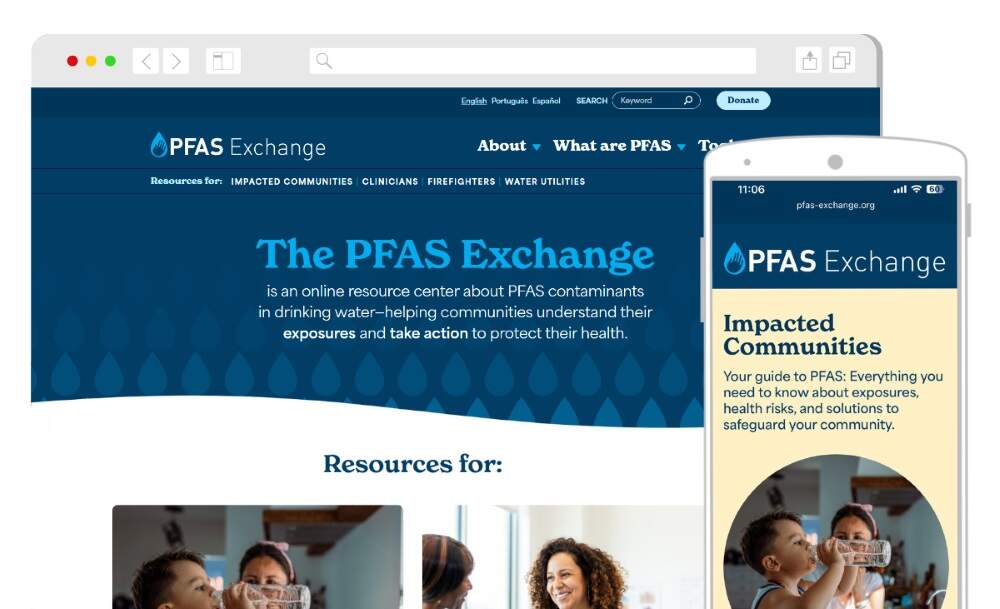
To help, Silent Spring and its partners created the PFAS Exchange, a free online resource with information about PFAS, health risks, and ways to reduce exposure. The site offers:
- Information on filtering your drinking water and tips for avoiding PFAS in everyday items like non-stick cookware, stain-resistant upholstery, food packaging and cosmetics.
- A “What’s My Exposure” tool to help people interpret their PFAS blood or water test results.
- Medical guidance for clinicians to support caring for patients with elevated PFAS.
- Information for firefighters on reducing exposures in the workplace.
- An interactive contamination map so users can see if they live near an area with known PFAS contamination.
For Schaider, providing clear, science-based information is an essential part of the solution.
“Our overall approach at Silent Spring is to give people information that empowers them to limit harmful exposures,” she says. “Ultimately, though, we need to turn off the tap by keeping PFAS and other toxic chemicals out of products and the environment in the first place so we can protect future generations.”
Learn more and support Silent Spring’s research on PFAS: https://silentspring.org/support-our-work