Support WBUR
Paid for by The Women's Edge
Innovating to advance women leaders: The 6th Annual Women’s Leadership Impact Study in MA
This post was paid for and produced by our sponsor, The Women's Edge, in collaboration with WBUR’s Business Partnerships team. WBUR’s editorial teams are independent of business teams and were not involved in the production of this post. For more information about The Women's Edge, click here.
The 6th Annual Women’s Leadership Impact Study in Massachusetts, published by The Women’s Edge, sheds light on a challenging yet transformative moment for advancing women in the workplace. Against a backdrop of declining resources and political pushback in businesses across Massachusetts, the report highlights concerning trends while also emphasizing innovative solutions and proactive steps that can help companies chart a path forward.
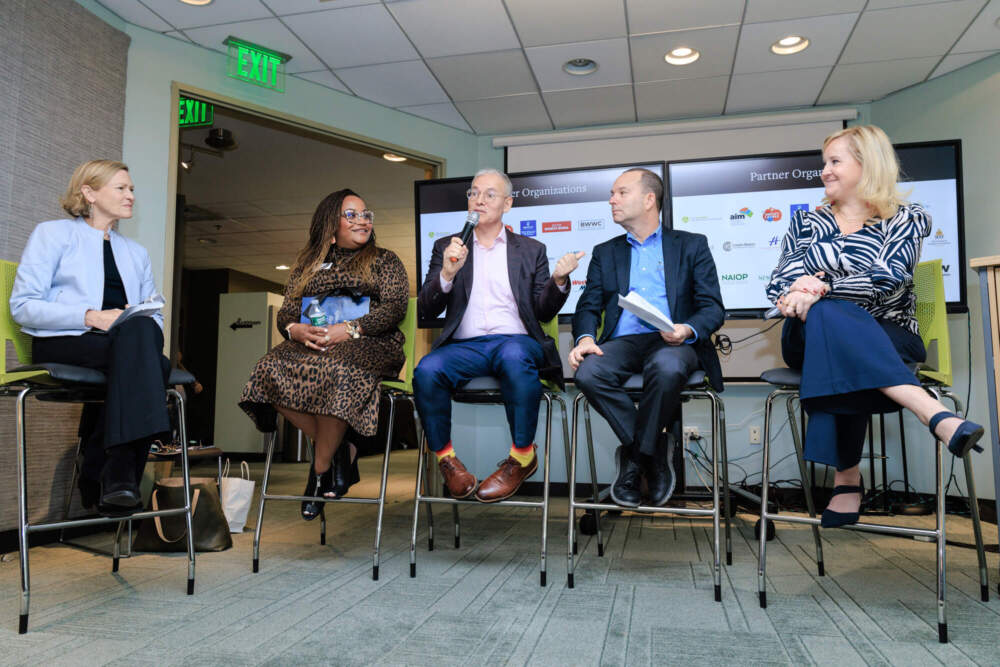
The 6th Annual Women’s Leadership Impact Study is longitudinal research, conducted annually, on women’s leadership in businesses across the state of Massachusetts, led by The Women’s Edge and sponsored by corporate sponsors and research partners. On November 14, 2024, The Women’s Edge hosted an Impact Study Reveal event to discuss the study results with five business leaders in a dynamic, interactive format.
Challenges in equity
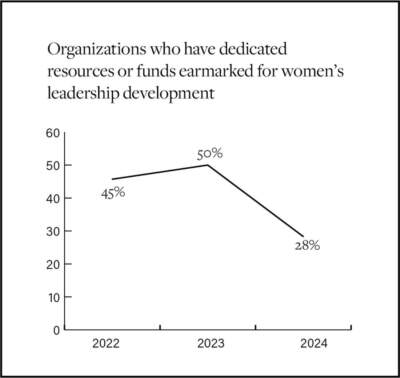
The Impact Study finds a troubling decline in funding for women’s leadership development, with only 28% of surveyed organizations dedicating resources in 2024, compared to 50% the previous year. Even more concerning is the drop in measurable goals for advancing women of color, a demographic that continues to face disproportionate challenges in leadership pipelines. These trends underscore the fragility of progress in women’s leadership development efforts amid growing cultural and political resistance. In many organizations, women’s leadership programs are part of broader diversity, equity and inclusion (DEI) initiatives, which are facing political and cultural pushbacks. Yet in the midst of this backlash, companies should continue to be committed to providing fair and equitable access to leadership development programs to drive competitive advantage and business outcomes.
Return on inclusion: Advancing women leaders is good business
Beyond its ethical implications, women’s leadership programs remain a clear business advantage. Javier Barrientos, Chief Diversity, Equity and Inclusion Officer at Point32Health, aptly describes the long-term value of these initiatives: “Businesses want to optimize talent. They don't want to leave any unrealized value on the table, whether it's their employees, customers, or suppliers.”
JD Chesloff, President and CEO of Massachusetts Business Roundtable said “Research supports this claim with 59% of Americans agreeing that businesses with diverse workforces are more profitable, and 63% believing such organizations develop more innovative products.” (Source: The 3rd Annual Bentley-Gallup Business in Society Report)
Innovation as a beacon of hope
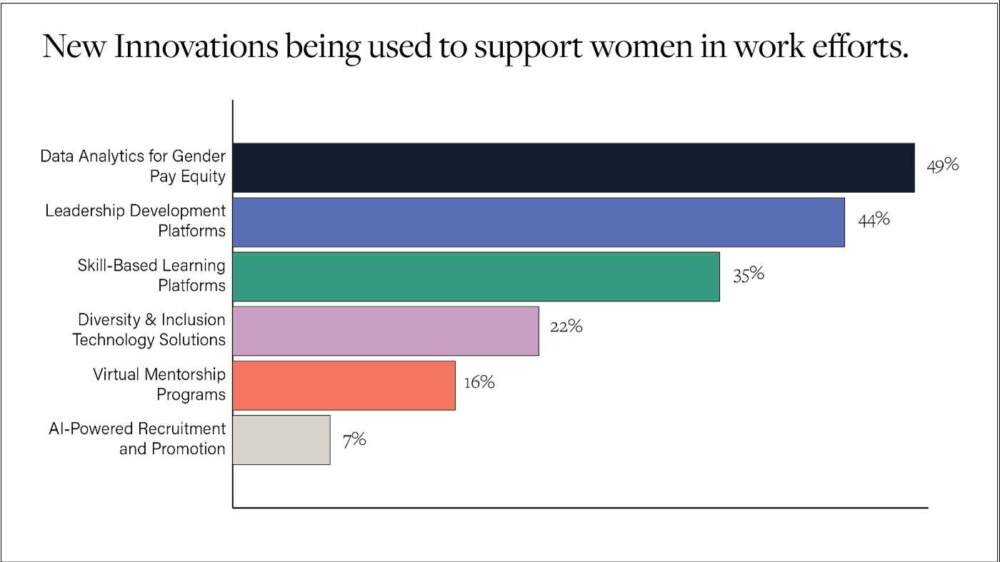
Despite setbacks in women’s leadership, the Impact Study identifies a surge in technological innovation as a bright spot to address opportunities for collaboration and connection. Trish Foster, event moderator and diversity and equity consultant, highlights this promising shift: "Many organizations are leveraging data analytics tools for gender pay equity, AI-driven recruitment platforms, virtual mentorship programs to support women’s advancement and increased data collection on marginalized communities.”
Brooke Thomson, President and CEO of Associated Industries of Massachusetts, said, “As we start collecting pay equity data from MA businesses due to recently passed legislation, the data will show a direct result about how it’s impacting the workforce."
This pivot toward innovation reflects both a response to resource constraints and a recognition of technology’s potential to drive equity at scale.
A roadmap for success
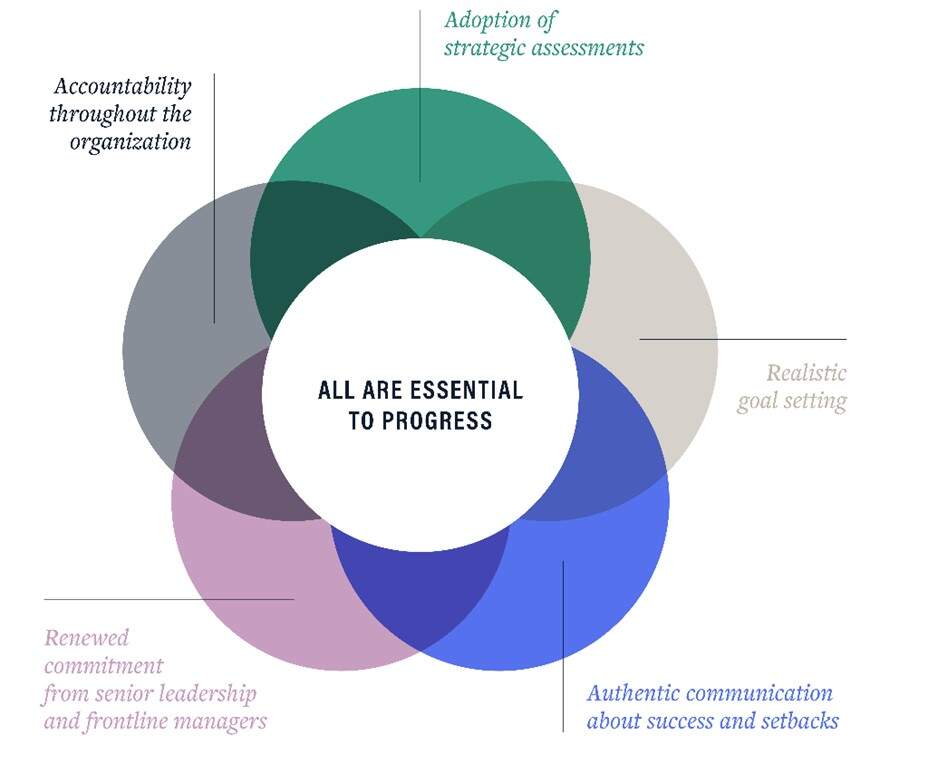
The Women’s Edge offers a Roadmap for Success, outlining actionable recommendations for organizations to advance women leaders. Key steps include conducting thorough equity assessments, creating measurable action plans, cultivating inclusive cultures and investing in women-specific initiatives such as mentorship, sponsorship, and employee resource groups (ERGs).
As Shirley Knowles, Chief Inclusion and Diversity Officer at Progress emphasizes, “Leadership matters. There’s a direct correlation between how people feel about belonging in an organization and whether that organization authentically invests in this work.” Organizations that prioritize authenticity and accountability are more likely to sustain momentum and retain top talent.
Navigating a Way Forward
The Women’s Edge study serves as a call to action for organizations to align their stated commitments with meaningful action. As Foster notes, true success will come from building “a genuine, authentic culture of inclusion offering education, training and resources.” By staying the course, businesses will advance equity and secure a competitive edge in an increasingly diverse and dynamic workforce.
The Women’s Edge propels women leaders to achieve personal and professional success and deliver a positive impact within their businesses and communities.
To learn more, contact the Women’s Edge or download the complete 6th Annual Women’s Leadership Impact Study.