Support WBUR
Paid for by Olin College
Farming for the future: Solving on-farm challenges using AI and robotics
This post was paid for and produced by our sponsor, Olin College, in collaboration with WBUR’s Business Partnerships team. WBUR’s editorial teams are independent of business teams and were not involved in the production of this post. For more information about Olin College, click here.
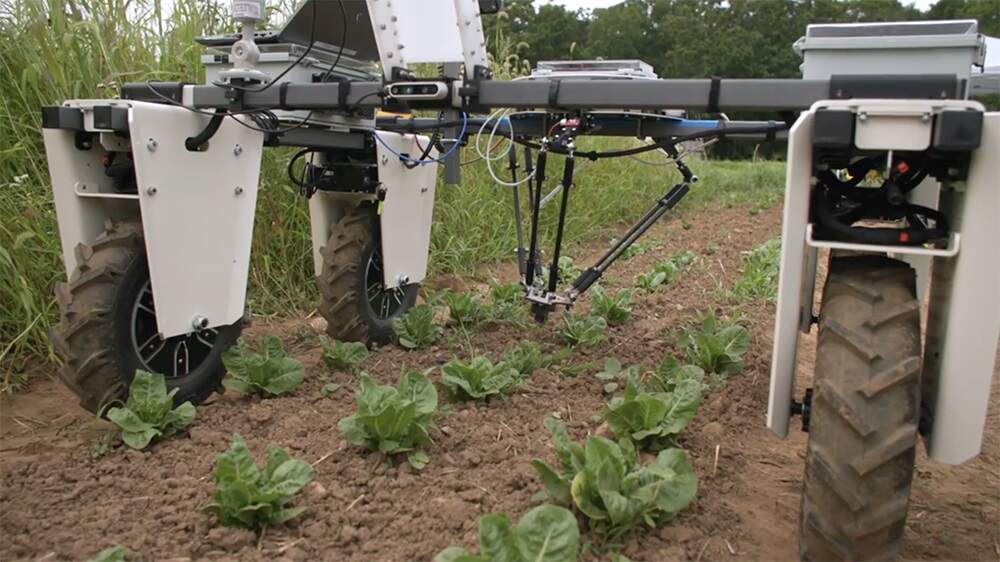
What if robots could reduce chemicals and improve soil health? That’s what an award-winning team of undergraduate engineers from Olin College of Engineering has accomplished with the development of PhoenixBot, a robot that uses artificial intelligence (AI) to autonomously navigate and weed row-crop fields with minimal soil disturbance, in what is universally a time-consuming and labor-intensive task for small farms.
The Olin team collaborated with farmers at The Trustees’ Powisset Farm, a working community-supported agriculture (CSA) farm with over 300 years of agricultural history in Dover, Mass.
“We spent about a month interviewing local farmers, and one of the things that emanated from those conversations was the difficulty of weeding, especially on small farms,” said Kenechucwu “Kene” Mbanisi, Assistant Professor of Robotics Engineering and PhoenixBot team advisor.
“The conventional approach to weeding is to use chemicals, which can be detrimental to crops and has other negative environmental impacts. We decided to focus on building a robotic weeding system that minimally disturbs the soil and safely uproots weeds around crop plants without the use of chemicals.”
What the student team has developed here is truly exciting and amazing to see. They’re taking a complex, multifaceted problem and building the entire system from the ground up.
Kenechukwu (Kene) Mbanisi, assistant professor of robotics engineering
During the yearlong contest, the student teams engaged with growers about their pain points and challenges and then developed creative solutions using the farm-ng Amiga robot platform. The student teams leveraged AI, machine learning, automation, coding and fabrication to advance innovation in agriculture.
“Not only does the challenge demonstrate the future of farming with robotics, but it's also encouraging the next generation of engineers to focus their talents on the challenges that exist in growing our food,” said Brendan Dowdle, CEO of farm-ng.
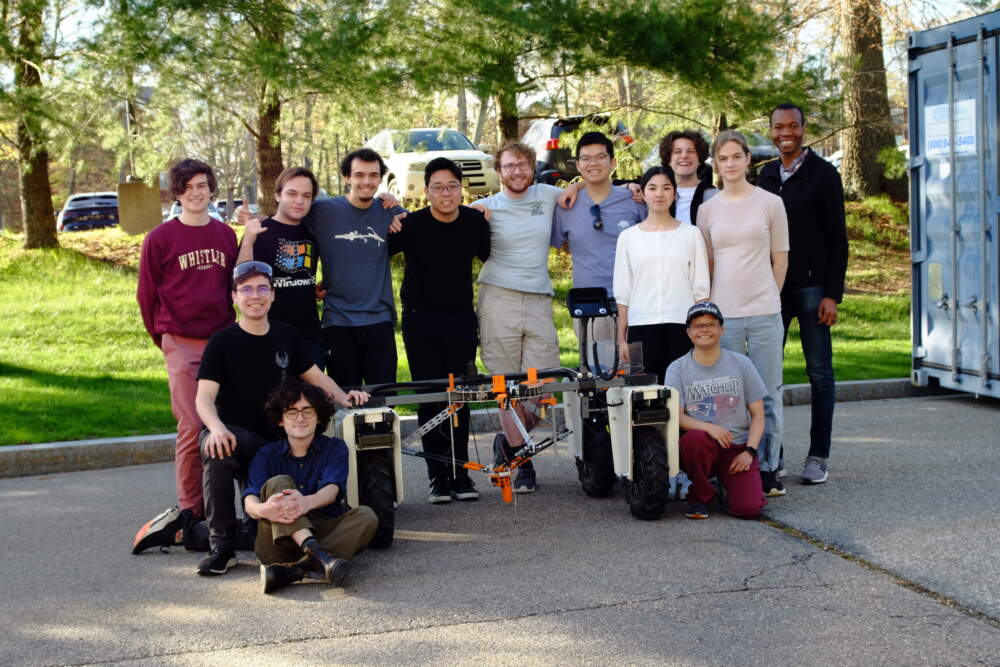
The result: the Olin College team won the $10,000 grand prize in the second annual Farm Robotics Challenge.
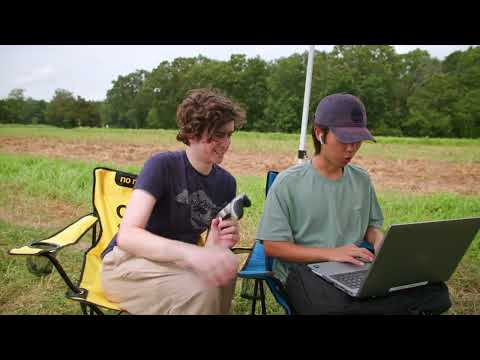
As part of the competition, the Olin team produced a video documenting and explaining their work and featuring Powisset farmers.
About Olin College
Founded just twenty-eight years ago, Olin College of Engineering has made a name for itself in the world of undergraduate engineering education. It is currently ranked the No. 2 Undergraduate Engineering Program by US News & World Report and is known around the world for its innovative curriculum.
The curriculum at Olin College is designed to provide students with real-world experiences and prepare them to make real-world change. Students complete dozens of projects over their four years, preparing them well for the workforce of today — and tomorrow. And the world needs more engineers, like Olin students and graduates, who care about the planet and about engineering a more sustainable future.
Olin is focused on becoming a living laboratory to serve our society, our climate and our campus. This next phase of reinventing engineering education will incorporate all areas of Olin operations and curriculum, and will include partnership from like-minded external partners.
Learn more about Olin’s unique approach to engineering education at olin.edu.