Support WBUR
Commentary
The poetry (and delight) of summer fruit
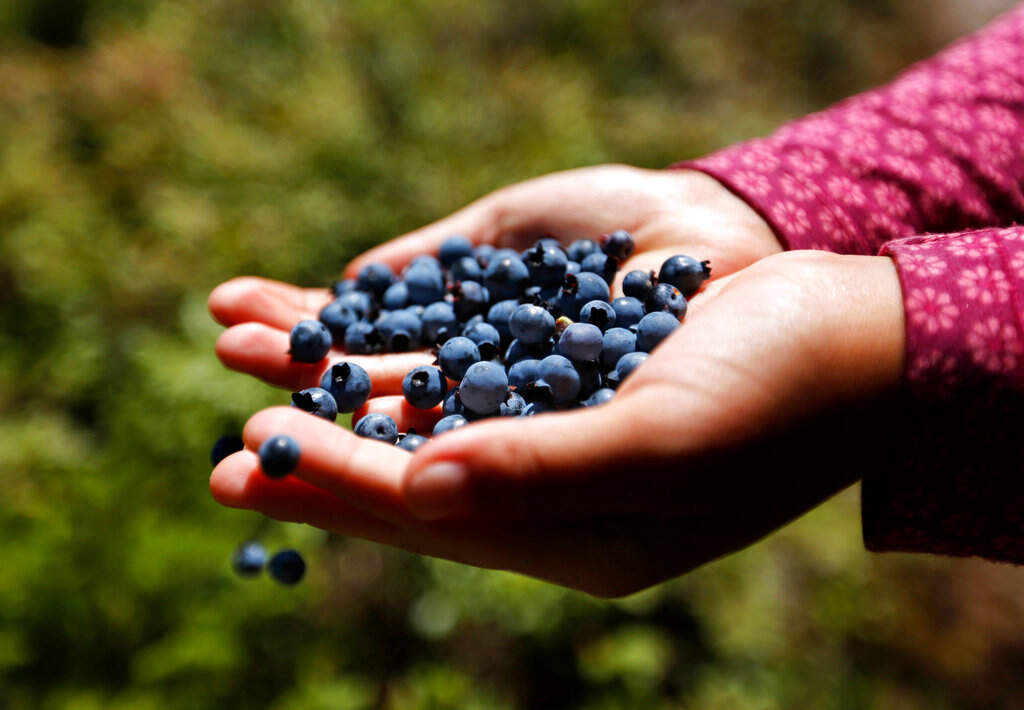
All too soon, the produce aisles at my local grocery store will be full of apples and pears. Those will get me through the winter well enough, but for a few more weeks, I am bingeing on summer fruit — the most provocative food group.
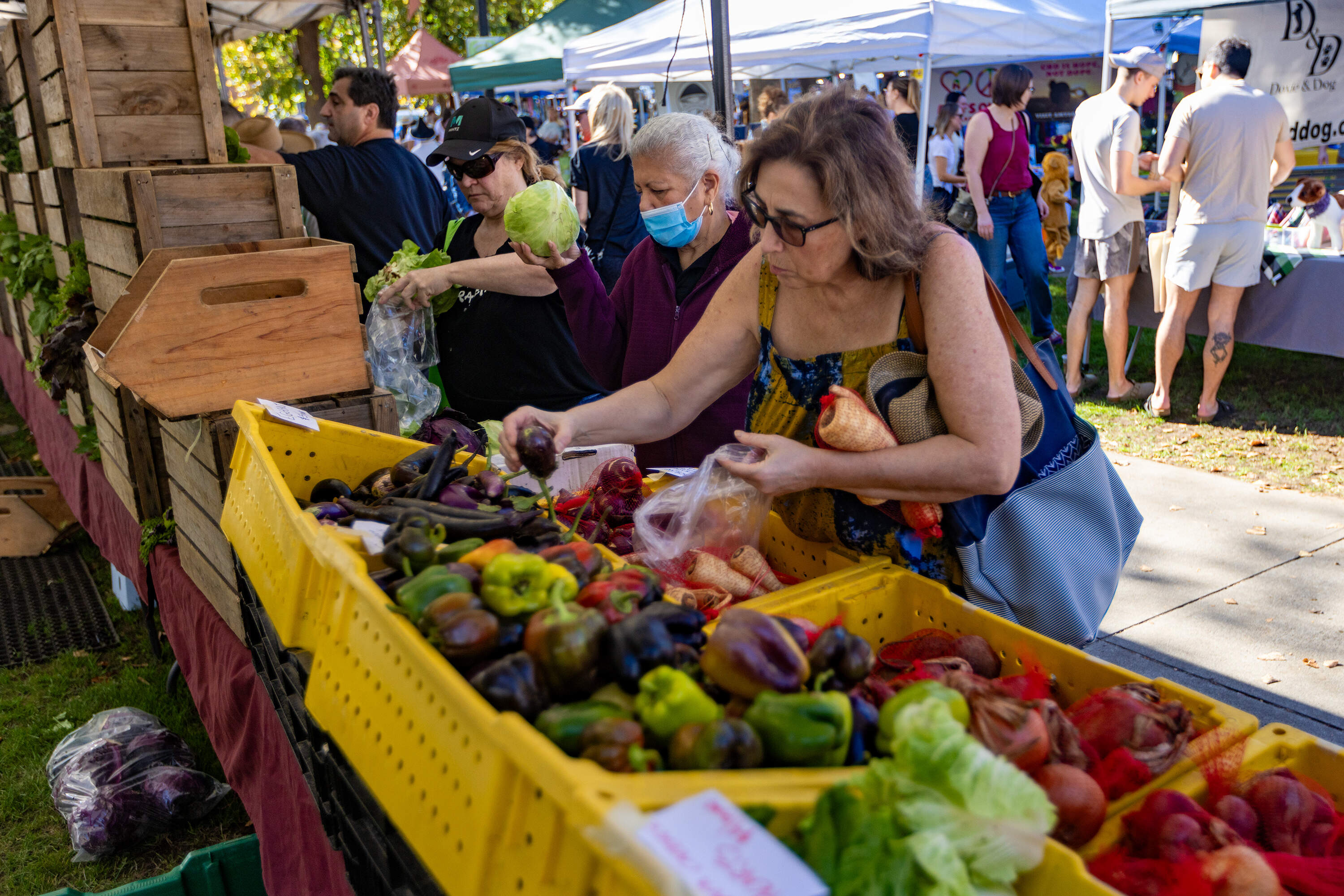
On the occasions I get myself to a farmers’ market or farm stand, I lose control. There, the fruits and berries are heaped in piles or collected in those green paper boxes that beg to be reused in craft projects. There, you can touch and smell everything — which is how to identify the good stuff.
But I, like most Americans, do most of my produce shopping in supermarkets, where the fruit is ice cold and often bagged or cellophaned. And while it’s almost impossible to choose well without access to contact or scent, I poke and sniff anyway, like a detective searching for clues.
Recently, I was tempted by a display of dark purple plums well-formed and well-priced. But they were hard as rocks and sealed in a plastic bag, so I thought better of it … until I saw the little hand-lettered sign propped up in the bin:
I have eaten
the plums
that were in
the icebox
and which
you were probably
saving
for breakfast
Forgive me
They were delicious
So sweet
and so cold
The title of that poem by William Carlos Williams is “This is Just to Say.” I remember it from an undergraduate English class, where the teacher said, “This probably only makes sense if you’re married.”
So, I bought the plums, which were, alas, not delicious. Eventually I stewed, sweetened, pureed, and then poured them over vanilla ice cream. I should have known better. Plums are not my favorite fruit; they’re not even my favorite stone fruit — also known as “drupes” — which may be one of the funnier nouns in the English language.
Nectarines, which are nicer than plums, have been immortalized in interviews with Mel Brooks, “The Two-Thousand-Year-Old Man” himself, who attributes his longevity to fruit — and nectarines in particular: “It's half a peach, half a plum. It's a helluva fruit. It's not too cold, not too hot. Just nice. Even a rotten one is good. That's how much I love 'em. I'd rather eat a rotten nectarine than a fine plum.”

The Romantic poet John Keats shared Mel’s opinion in a letter he wrote in 1819: “Talking of Pleasure, this moment I was writing with one hand, and with the other holding to my Mouth a Nectarine — good God how fine.”
Nectarines are wonderful, but I prefer peaches (another drupe), which satisfy all the senses: rose-gold and yellow, the color of dawn; an aroma that is aphrodisiacal; and velvety thin skin that yields to soft, juicy pulp that melts in the mouth. For my money, peaches are the sexiest fruit of summer.
I’m not sure that Bing cherries are sexy, but they seem sophisticated somehow — maybe it’s because they’re the color of Merlot, or that the gleaming peel suggests evening wear (although getting rid of the pits discretely can be a challenge).
When cherries showed up at the supermarket, I grumbled about how they were packed in unsealed bags that can hold up to three pounds of fruit — a transparent marketing ploy. But the open bags were also an invitation to taste, and once you taste a good cherry you realize that there is no such thing as too many cherries.
And then there’s watermelon — the big kahuna of summer fruit. On a steamy hot day, a slice of cold watermelon cools you off all the way down. And for some reason, you almost have to smile while eating it. Watermelon is joyful. Watermelon is jolly and social. You have to share it with friends.
At least once a summer I buy a whole watermelon, prepared with advice from the internet to make an informed selection: uniformity in size; rounder rather than elongated; a dull rather than shiny surface; an orange field spot (where the melon rested on the ground) rather than a white one; it should be heavy for its size and sound like a drum when slapped with an open hand.
Following those criteria doesn’t always yield a winner, but this summer I got a one that would have delighted Chilean poet Pablo Neruda, who wrote “Ode to the Watermelon.”
He called it the “the green whale of summer,” “firmament of coolness, “jewel box of water,” and “queen of the fruit shop.” He wrote:
we
want
To bite into you,
To bury our
face
in you, and
our hair, and
the soul!
As much as I love watermelon, peaches and cherries (also blueberries and all varieties of melon), to me, the queen of the fruit market is the raspberry.
Raspberries are so fragile a thoughtless word can bruise them.
I mean red raspberries — the caviar of fruit, furry rubies the color of a heart newly fallen in love. Raspberries are so fragile a thoughtless word can bruise them.
Each berry is miniature architectural wonder: 100 little beadlike druplets (real word) each of which contains a tiny seed, are clustered around core that stays with the plant when picked – leaving behind what looks like an empty chalice.
The flavor of raspberries has been described variously as tart, floral, sour, sweet, with notes of rose and cherry. In other words, there are no words.
Redder berries are sweeter, and pale berries do not ripen once picked. You can buy them all year long, packed in those half-pint plastic clamshells. They are always expensive – even on sale. In winter most are an almost ghostly pink and nearly tasteless. Adding sugar doesn’t help. And even though I know better, I buy them occasionally – nostalgic for last past summer’s cornucopia and looking forward to the next.