Support WBUR
Commentary
Ethel Skakel Kennedy wasn't afraid to die
As long as Ethel Kennedy lived, Bobby Kennedy would never die.
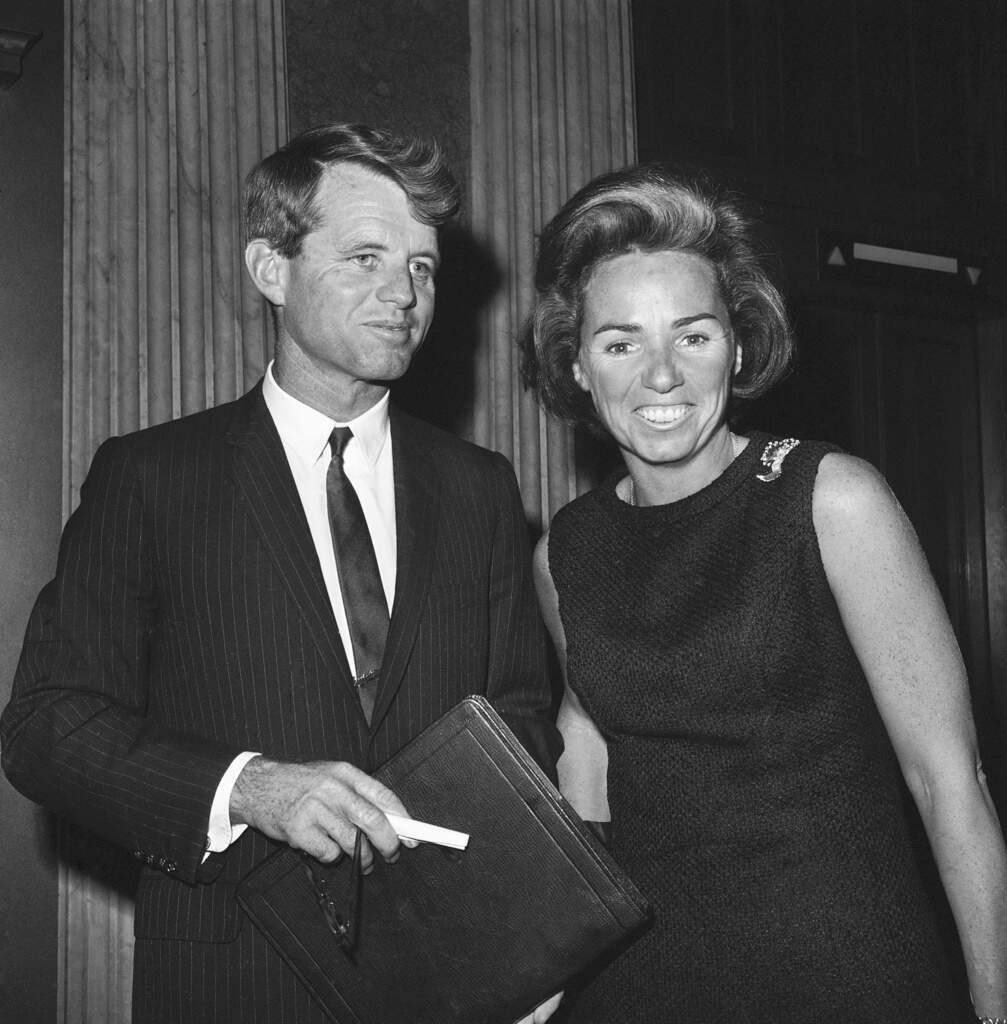
When she spoke of him, with ease and in the present tense, it was as though the young man with the toothsome smile and unruly mop of russet hair were not merely memorialized in the scores of photographs that filled her walls and tabletops. He was there in full, the 25-year-old University of Virginia law student she had married fresh out of Manhattanville College of the Sacred Heart in 1950, and the 42-year-old Democratic presidential contender with whom she had been building a purposeful and rambunctious life when he was struck down by an assassin’s bullet in 1968.
It is true that Ethel, who died on Thursday at 96, would spend the decades that followed her husband’s death campaigning for a seemingly endless roster of Kennedys, including her children and grandchildren, but it was no mythical Camelot she aimed to restore. It was with the living memory of Bobby — the interrogator of Jimmy Hoffa, the compatriot of Cesar Chavez, the bane of Lyndon Johnson — that she knocked on voters’ doors in Maryland for daughter Kathleen, who would be elected that state’s lieutenant governor, and in Massachusetts for son Joe II and grandson Joe III, who would both be elected to the U.S. House of Representatives, and for her brother-in-law Ted, who would serve 47 years in the U.S. Senate until his death in 2009.
There was so much fun in her stories and so much laughter in the retelling that I hesitated before asking how she had weathered the many tragedies that had marked her life.
“Mrs. Kennedy can give you 30 minutes,” one of her loyal assistants called to tell me in 2016 after multiple, and what I presumed to be fruitless, appeals for an interview for the biography I was writing of Eunice Kennedy Shriver. Famously resistant to sit-downs with reporters, Ethel was then in her late 80s and perhaps thought time was running short to share her memories of those halcyon days along the Potomac. Within a few weeks, she would speak separately with me and with Larry Tye, the estimable author of “Bobby Kennedy: the Making of a Liberal Icon.”
On the flight to Palm Beach, Florida, where Ethel Kennedy spent the colder months in a lovely house down the road from the Mediterranean-style mansion that once served as President John F. Kennedy’s winter White House, I pared down my questions to maximize my 30 minutes. We spoke for more than three hours, moving between the patio and the living room, where the flags of the United States and of the U.S. attorney general framed the picture window.
She told hilarious tales of racing Eunice across Nantucket Sound in their identical 27-foot Wianno sailboats and intentionally running one another aground on Great Island or on Egg Island, a sandbar that emerged during low tide, of the menageries of dogs and sheep and reptiles kept by the Shriver and Kennedy households, about summer suppers of inconsistent edibility that rotated among the extended family’s several houses in Hyannis Port.
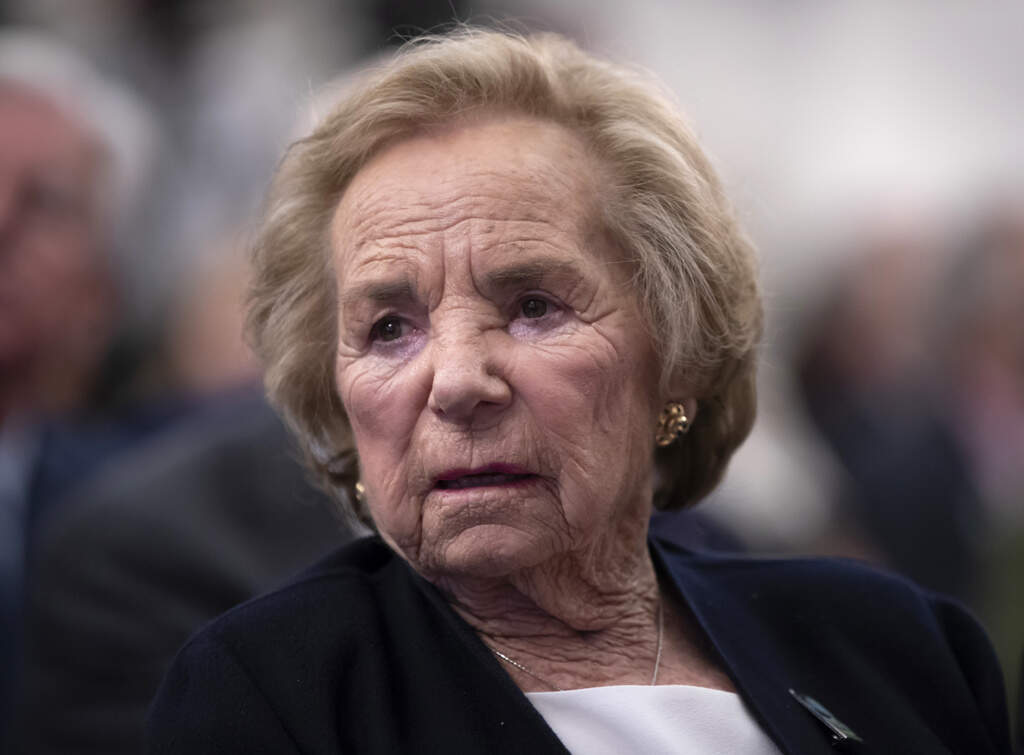
There was so much fun in her stories and so much laughter in the retelling that I hesitated before asking how she had weathered the many tragedies that had marked her life. Her parents died in a private plane crash in 1955. An assassin killed her brother-in-law President John F. Kennedy in 1963, five years before Sirhan Sirhan murdered Bobby in the kitchen of the Ambassador Hotel in Los Angeles. Her son David died of a drug overdose as the family gathered to celebrate Easter in Palm Beach in 1984. Her son Michael died while skiing in Colorado in 1997. Her nephew JFK Jr. and his wife and sister-in-law died in the crash of a plane he was piloting to Martha’s Vineyard to attend her youngest child Rory’s wedding in 1999. (Two grandchildren and a great-grandson would die prematurely in the years after we met.)
She looked genuinely perplexed by the question. Bobby’s murder when she was three months pregnant with their 11th child had, of course, been devastating. But she knew, with a confidence that only people of deep faith can know, that Bobby was with his brother Joe Jr., who had died in combat in World War II, and with his sister Kick, who had died in a plane crash in France in 1948, and with his brother Jack, whose assassination had so recently caused Bobby to question his own devout Catholic faith.
That his siblings were waiting for Bobby at the gates of Heaven, Ethel Skakel Kennedy had no doubt. When God called her one day to “that heavenly banquet table,” she told me, she would not be afraid. “Bobby will be there,” she said, “waiting for me.”