Support WBUR
Commentary
Don’t helicopter-parent your kids into college. Let them take the lead
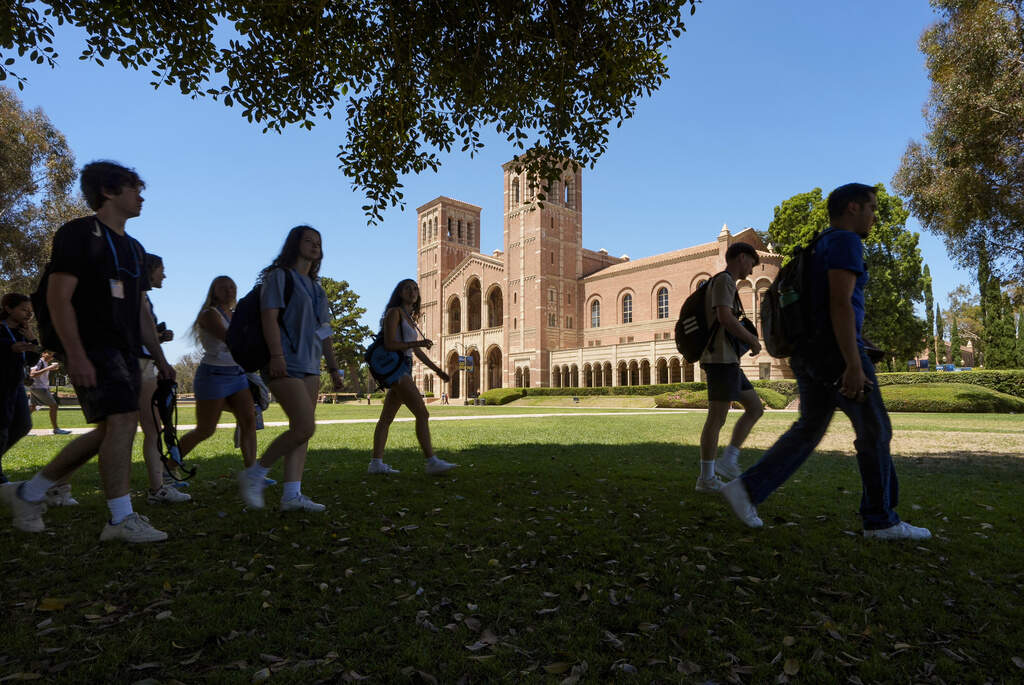
As a high school senior in 1986, I applied to one college. One. So it’s ironic that I’m now a college admissions advisor, helping high school students navigate the murky waters of today’s admissions process. I am a luxury for the parents who hire me: Some do it to alleviate household stress and to protect intrafamily relationships, while others simply want help managing the logistics of it all. All of them want their kids to be successful. But success is a complicated word.
I live in an area of Massachusetts that oozes prestigious degrees. Our elementary school PTO leadership is stacked with as many MBAs and JDs as a Fortune 500 boardroom, and youth soccer sidelines are showcases of college sweatshirts, hats and travel cups (any chance to subliminally indoctrinate kids). On paper, these parents are wildly successful. They went to excellent schools. Lots went to Ivys. And many of them don’t realize how their success places burdensome expectations on their children. Or how much college admissions has changed.
On average, high school seniors applied to seven schools in 2021. In affluent communities like mine, that number is usually more than twice as high. My best friend in high school filled out her college applications in fine-tipped magic markers that matched each school’s colors — red for Colgate, purple for Northwestern, and brown for Brown. But today there are no paper applications. The Common App, an online platform, has streamlined the ordeal so kids can now fill out most of their information once, and then with a little additional effort, apply to up to 20 colleges (way too many in my opinion).

What was considered a high standardized test score in 1986 is just OK today. The raw ACT/SAT scores aren’t much higher than nearly 40 years ago, but the business of ACT/SAT tutoring and the fact that we’re still in a post-COVID test-optional era (for now), means the mean scores that are reported are much higher.
And parents aren’t the only influence these kids contend with. Because of the rise of social media, today’s high school seniors are aware of a much wider range of schools. Some are even swayed by influencers (the Alix Earle impact on the University of Miami was real and TikTok’s #BamaRush is one of the trends that heightened interest in Southern schools). Kids are also often victims of the Flutie Effect, when a school soars in popularity because of a successful sports team. And sometimes even mascots can affect how students feel about a school; the University of Richmond Spider is not a popular one, but Georgia’s “dawg”, Uga, is.
When families first come to me they’re often overwhelmed. One way I break it down for them is through game theory. I study the numbers for the colleges my students are interested in — the early decision (ED) rates, the percentage of freshmen classes filled by ED, the percentage of applicants who submit standardized scores as well as the scores (both of admitted students and entering freshmen — the difference can be important) and the percentage of out-of-state students at public schools. I could tell them where to apply, but that isn’t the point. The kids have to do their own research. Because here’s the thing: They’re not just getting to know schools, they’re getting to know themselves. This is likely the first time in their young lives that they have agency over such a big decision. They are shaping their own destiny.
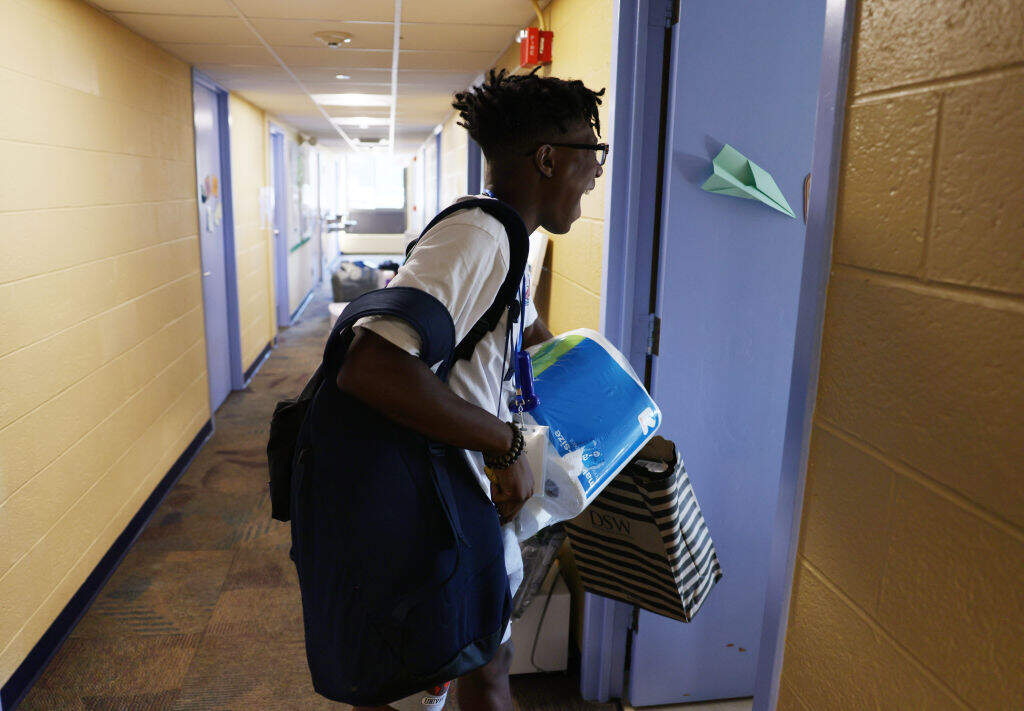
Figuring out where to apply isn’t always easy for them, but teaching these young adults how to make tough choices is part of my job. Many kids want to apply to far too many highly selective schools (they think the more they apply to, the better their chances) and some just find comfort in the idea of throwing in as many applications as possible and seeing what sticks. These conversations are hard, but when a student realizes they can remove a school that their parents added from the list, or one that is simply too far from home, they start to understand that the choices are theirs to make.
Having them limit the number of schools they’re considering and balancing the list (with reach, target, and likely schools — we don’t talk about “safetys” anymore) helps. But they also need to think deeply about what is important to them. I could tell them that the school their mom and dad love isn’t a good fit — it’s too urban, not urban enough, no Division I athletics, no Greek life, too much Greek life — or that it simply isn’t a realistic option, but it’s so much better if they figure that out for themselves.
I’ll be honest, sometimes I want to just craft a student’s list myself. It would be a lot easier (and I think I would do a decent job) but again, that’s not the point. Far too often, we as adults do far too much for kids and it’s a real disservice to them. We have helicoptered and snowplowed them through school, camps, sports, theatre, dance and whatever else we signed them up for. Most parents still do their high school children’s laundry, make their doctors’ appointments and solve every problem that might arise, from bringing forgotten cleats to practice to buying posterboard at CVS the night before a project is due. It is time to loosen our grip and let them take the wheel.
I once saw a sweatshirt that just said “COLLEGE” on it and thought it was brilliant because the specifics don’t matter. A fulfilling college experience doesn’t require a fancy brand name. It requires a good fit. I’ve helped dozens of kids with their college choices. Once they’re settled in, the ones who reach out to tell me they picked the perfect place are the ones who did the most work getting to know schools — and themselves.
Success in the college admissions process can mean a lot of things, but the emergence of kids’ autonomy should be at the top of the list.