Support WBUR
Commentary
Trump pits immigrants and working-class Americans against each other. But they both need the same things
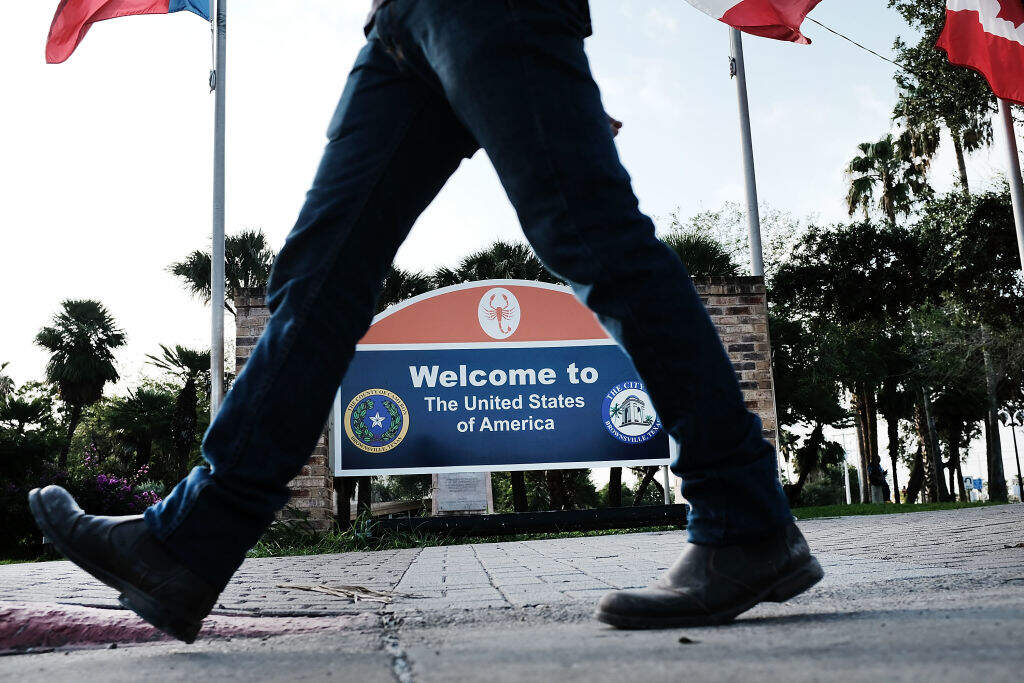
As Donald Trump and JD Vance’s anti-immigrant rhetoric reaches ever-new lows, I want to tell you about some of the families I’ve gotten to know in the past two years as a volunteer helping newly arrived refugees. (I’ve changed their names to protect their identities, but have not altered their stories.)
Abdul, a recent immigrant from Syria by way of a refugee camp in Lebanon, works at a food co-op washing dishes. He rides a donated bike there. His wife, Leila, walks to a local coffee shop five days a week where she cuts vegetables and makes sandwiches. Both are seeking second jobs, as it’s nearly impossible to raise their four kids on minimum wage, even with modest government assistance. They desperately want a car to expand the geographical area in which they can work, but of course that’s a vicious cycle: without a car, they struggle to find a second job, and without a second job, they struggle to afford a car.
Marie is a mother of three from Cameroon who works mornings as a home health aide and takes classes in the afternoons. Amina is a Sudanese single mother of four feverishly studying English when she’s not knitting hats and shawls to sell at local craft fairs to augment her income. Mohammed had been an accountant and his wife a teacher in Aleppo, Syria, before their home was also destroyed in that country’s civil war. Now he and his sons work a 10-hour overnight shift in a warehouse that distributes junk food to convenience stores; his wife takes online English classes in the hope of one day being trained and licensed as a Certified Nursing Assistant. When I asked Mohammed and his sons whether they were learning much English from their co-workers, they laughed. “No, but we are quickly learning Spanish.”
Amina is a Sudanese single mother of four feverishly studying English when she’s not knitting hats and shawls to sell at local craft fairs to augment her income.
These are just a handful of the documented immigrants who, thanks to Trump and Vance’s vicious lies, live in fear of hate crimes and deportation.
I want us to look at the facts. Contrary to the politically expedient myth that immigrants take the jobs and depress the wages of native-born American workers, economic data suggests that the economic impact of immigrants is neutral at worst, beneficial at best.
For example, when Fidel Castro briefly lifted his country’s ban on emigration in 1980, 125,000 Cubans (most lacking a high school education) moved to Miami. In a few months time, the workforce expanded by about 25 times more than the U.S. workforce expands in a typical year from immigration. But when economist David Card compared Miami to comparable cities that did not experience a similar influx of immigrants, he found that “the boatlift had virtually no effect on either the wages or employment prospects of less-skilled workers in Miami, including those who lacked a college degree.”
Numerous studies in the U.S. and other countries demonstrate that not only does a large influx of immigrants have no impact on wages or employment rates, but it tends to create new jobs, since these immigrants are not just workers, but consumers who buy products and services. Thus even if immigrant workers accept lower wages, the impact of that is cancelled out by their willingness to spend those earnings with local businesses.
And immigrants often become small business owners themselves who employ other people. One study found that that immigrants to the U.S. were 80% more likely than native-born Americans to start a business. And as The Atlantic notes, “When a community loses immigrant workers, the result isn’t higher-paid natives; it’s fewer child-care services provided, fewer meals prepared, and fewer homes built.”
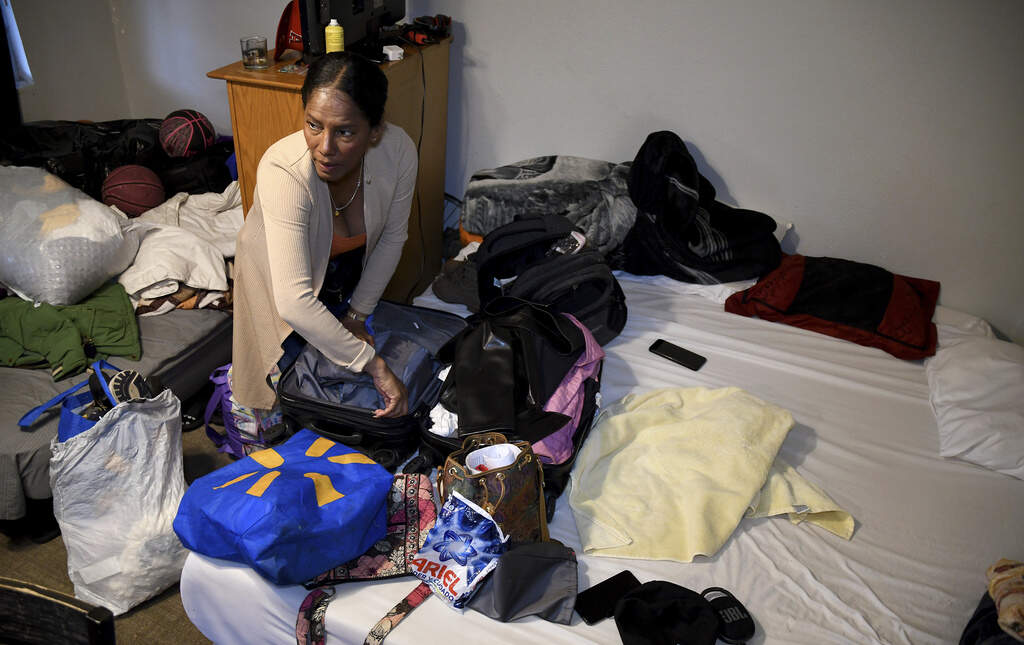
I was about to write that the blame Trump and Vance so vociferously sling lies not with immigrants, but with our broken immigration system. And while that’s true, perhaps the even bigger problem lies in this country’s lack of affordable housing.
When they arrived in the U.S., the refugees I know found themselves crammed into a dingy Howard Johnson’s motel on an industrial strip of road far from public transportation, six or eight people to a single room with no microwave, wondering if they traded one hell for another.
In this regard, they share common ground with low-income, native-born Americans. Since the start of the pandemic, urban rents have increased on average by 25%. According to the Bipartisan Policy Center:
The United States has underbuilt housing by millions of homes over the past 15 years. In fact, the decade immediately after the Great Recession saw less housing construction than during any previous decade since the 1960s… According to various estimates, the United States has a shortage of between 1.5 million and 5.5 million housing units.
But are immigrants exacerbating that shortage? There is little data to suggest that they are.
All of the five- to eight-person refugee families I know are living decrepit one- or two-bedroom homes with a single, barely functioning bathroom, often doubled up with other families. And for many, the vicious cycle of being unable to find a home and unable to look for a job because they don’t know where they’ll be living, continues.
Affordable housing and decent-paying jobs are the life raft that immigrant and native workers alike so desperately need.
And the impact of the housing shortage isn’t and won’t be limited to foreign-born immigrants. There are already an estimated three million internal climate migrants, with that number expected to rise to 13 million.
What binds Abdul, Leila, Marie, Amina and Mohammed is their resourcefulness, their willingness to work hard, and above all, their desire to provide their children with better lives. They help one another, recognizing that their interdependence is the only way to take the next small step in this quest.
The native-born Americans against whom they are falsely pitted need a similar understanding. More than that, they need to do something that these immigrants cannot. They need to vote — not for the candidates who promise mass deportation and ethnic cleansing, but for those who commit to housing and help for small businesses. Affordable housing and decent-paying jobs are the life raft that immigrant and native workers alike so desperately need. Low-income and unskilled American workers must recognize that their survival lies not in submerging the heads of others gasping for survival, but in the truism that a rising tide will raise all ships.
Follow Cognoscenti on Facebook and Instagram. And sign up for our weekly newsletter.