Support WBUR
Commentary
A handbook for midlife? Try ‘Beetlejuice Beetlejuice’
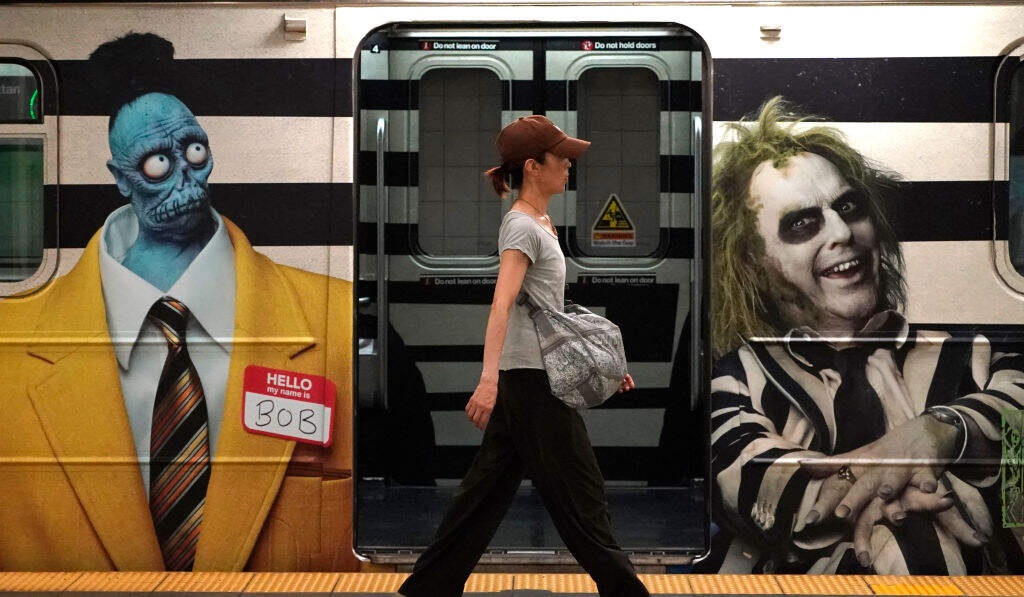
When I sat down to watch “Beetlejuice” with my kids, I tried to remember — is it actually scary? I couldn’t say for sure. I apparently spent my formative years averting my eyes, even as the movie’s ubiquitous presence at Blockbuster Video dominated elementary school sleepovers. I’m happy to report that my kids share no such qualms, and the movie is now a solid Halloween tradition at our house.
As you can imagine, anticipation for the long-awaited sequel, “Beetlejuice Beetlejuice,” was very real, and not just for us. The film pulled off a three-peat at the box office, sitting atop the highest grossing spot for three weekends in a row, and cracked the coveted list of top 10 movies of 2024.
This is all to say, when we went to the theater I figured we were in for some nostalgia, some laughs and light-hearted scares. I, myself, didn’t expect to feel so spookily seen by this movie, some 30 years after the original.
What wasn’t scary to me in the first movie was the way the story portrayed death and the afterlife as something so recognizable as to be rendered painfully mundane, if not entirely manageable with the correct paperwork. As a kid, it reminded me of how my dad worked for NASA, on projects like the International Space Station, yet when I went to visit his office it was all beige filing cabinets and calculators, engineers in neckties and coffee in vending machines. His favorite part about “The X-Files” was the government-issue rental car, always a forgettable tan or pale blue sedan. The extraordinary was easy to metabolize when it was grounded in the inevitable details of the everyday.
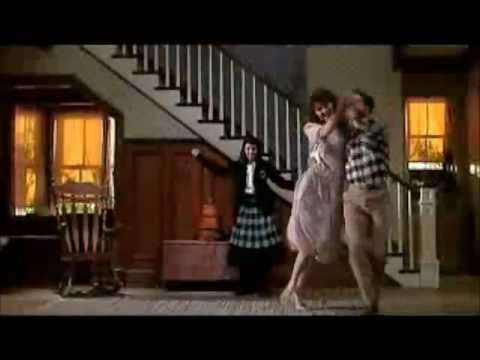
In explaining why she can see ghosts, 15-year-old Winona Ryder, in her breakout role as goth teen Lydia Deetz, says, “Well I read through that handbook for the recently deceased. It says, 'Live people ignore the strange and unusual.' I myself am strange and unusual.”
But what she wants is actually pretty simple: a happy family, a safe home and — now and again — to levitate while lip syncing Harry Belafonte. At its core, “Beetlejuice” is more of a traditional story than a 600-year-old demon would lead you to believe.
When we meet Lydia again though, in the sequel, she’s gone from strange and unusual to … kind of lost. Her spider bangs and combat boots remain, but she’s dating a smarmy (if hilariously dim) Justin Thereoux, and she hosts a ghost hunter show on what looks like daytime cable. I struggle to think this is what she imagined for herself when she was scoring A’s at Mrs. Shannon’s School for Girls and taking moody photos with her Nikon.
It reminded me of another queen of the dark who finds herself at odds with the U-Shaped curve of midlife malaise: Morticia Adams. In “Addams Family Values,” she laments, “I'm just like any modern woman trying to have it all. Loving husband, a family. It's just, I wish I had more time to seek out the dark forces and join their hellish crusade.” Who among us?
This is what rings true to me in “Beetlejuice Beetlejuice,” that sense of play and possibility, the intentional commitment to conjuring, or re-visiting, a sense of wonder and creation.
If there’s a handbook for the recently middle-aged, I’d like a copy, please. If you’d asked me at 14 what I thought my life would look like 30 years later, I can tell you, it wouldn’t have felt quite so … improvisational. Moving, managing family health crises, balancing work and kids, publishing a novel, all in the last six months. I have 134 unread texts on my phone. And I don’t know what jeans to wear.
In an interview with NPR, Tim Burton said that one reason he finally came around to making a sequel three decades after the original was thinking about who Lydia would be now. “What happens to all of us? You go from cool teenager to questionable adult,” he explains. “Sometimes as an adult you lose your way a little bit, and you have to kind of reconnect to yourself. So it became very personal and emotional to me.” A lot of reviews hail this movie as a return to the celebratorily irreverent and macabre leanings of Burton’s early career.
Plot-wise, this movie has everything: mother-daughter conflict, emo boy in a treehouse, exorcism call center, spurned (and stapled) lover, Italian film homage, shrunken heads, sandworms and a seven-and-a-half minute lip sync to Richard Harris’s “MacArthur Park.” And while upon first watch, it felt a little chaotic, now I think that’s part of its charm.
Tim Burton is 66, and in that same interview with NPR, he talks about wanting to recreate the certain ways they filmed the original movie: they shot it quickly and they used puppets and makeup, making things up on set and turning around physical effects on the spot. In the first film, Michael Keaton didn’t even rehearse, so they treated his role the same way: at 72, he simply showed up on set one day as Beetlejuice. This is what rings true to me in “Beetlejuice Beetlejuice,” that sense of play and possibility, the intentional commitment to conjuring, or re-visiting, a sense of wonder and creation. And how that’s so essential, especially when we feel far away from a version of ourselves that we recognize.
About midway through the film, Lydia’s stepmother Delia, played by a gloriously narcissistic Catherine O’Hara, asks, “Where’s the obnoxious little goth girl who tormented me all those years ago? It’s time to find her.”
I'm not sure there's a more strange and unusual time than midlife. But this past summer, while I was navigating the early stages of grief and feeling a little lost myself, I carved out two days to go to the Newport Folk Festival. I took my 8-year-old surfing on my birthday. I floated in Buzzards Bay with a friend. I ate an ice cream cone at 11 p.m. after seeing Noah Kahan at Fenway Park. What brought me joy at 45 was pretty similar to what did at 14. It was the stuff of every day, and it was also kind of extraordinary.
To me, “Beetlejuice Beetlejuice” has less to say about the meaning of home, or nostalgia even, and more about the inevitable nature of impermanence and change. How growing up doesn’t have to mean you know what you’re doing. But it’s also about how what made you feel like the best version of yourself, once, is still in there, waiting to be summoned.
Follow Cognoscenti on Facebook and Instagram. And sign up for our weekly newsletter.