Support WBUR
Commentary
The tradition that brought Halloween back from the dead
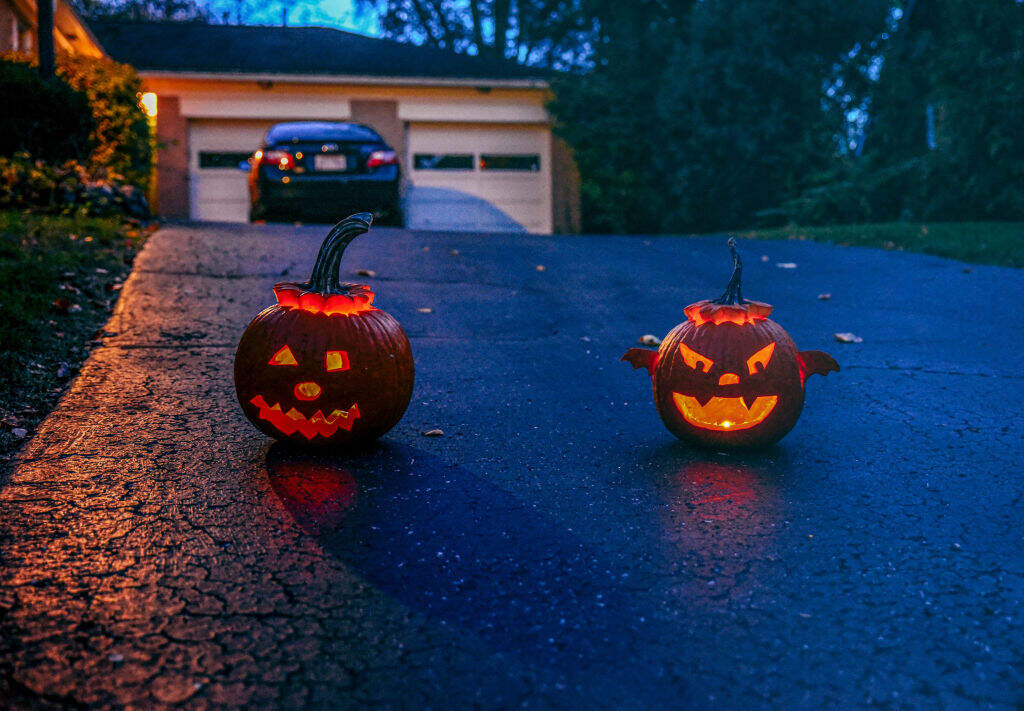
I’ll just say it: I hate Halloween.
I hate carving pumpkins: the stringy innards get all over my hands. I hate scary movies: I grew up terrified of going to Hell — I don’t need anyone to remind me there are horrors in this world. Look, I even hate candy — get out of here with your fun-size Snickers, your Smarties and Tootsie Roll Pops. Give me a sack of salted peanuts and we’ll call it a day.
But you know what I hate most about Halloween? The costumes.
I’ve always been bad at Halloween costumes. In my earliest memories, cantankerous adults and bratty kids alike snipe, “What are you supposed to be?” Nothing shatters the suspended disbelief of childlike imagination quite like having your costume called into question.
Rather than offer a place to hide, the Halloween costume shines a light on your ghostly imperfections. All eyes on you, baby! But there were already too many eyes on me in the first place. I had my parents, teachers, and the Ever-watching Presence of the Triune God keeping tabs on me. By middle school the eyes of my peers hunted me, leering for blemishes like hawks stalk prey. And there were so many blemishes to find! Zits, big zits, knockoff Doc Martens, and hand-me-down American Eagle jeans. I was exhausted from the effort it took to avoid being seen. My greatest fantasy was simply to blend in. To not be noticed. To be normal.
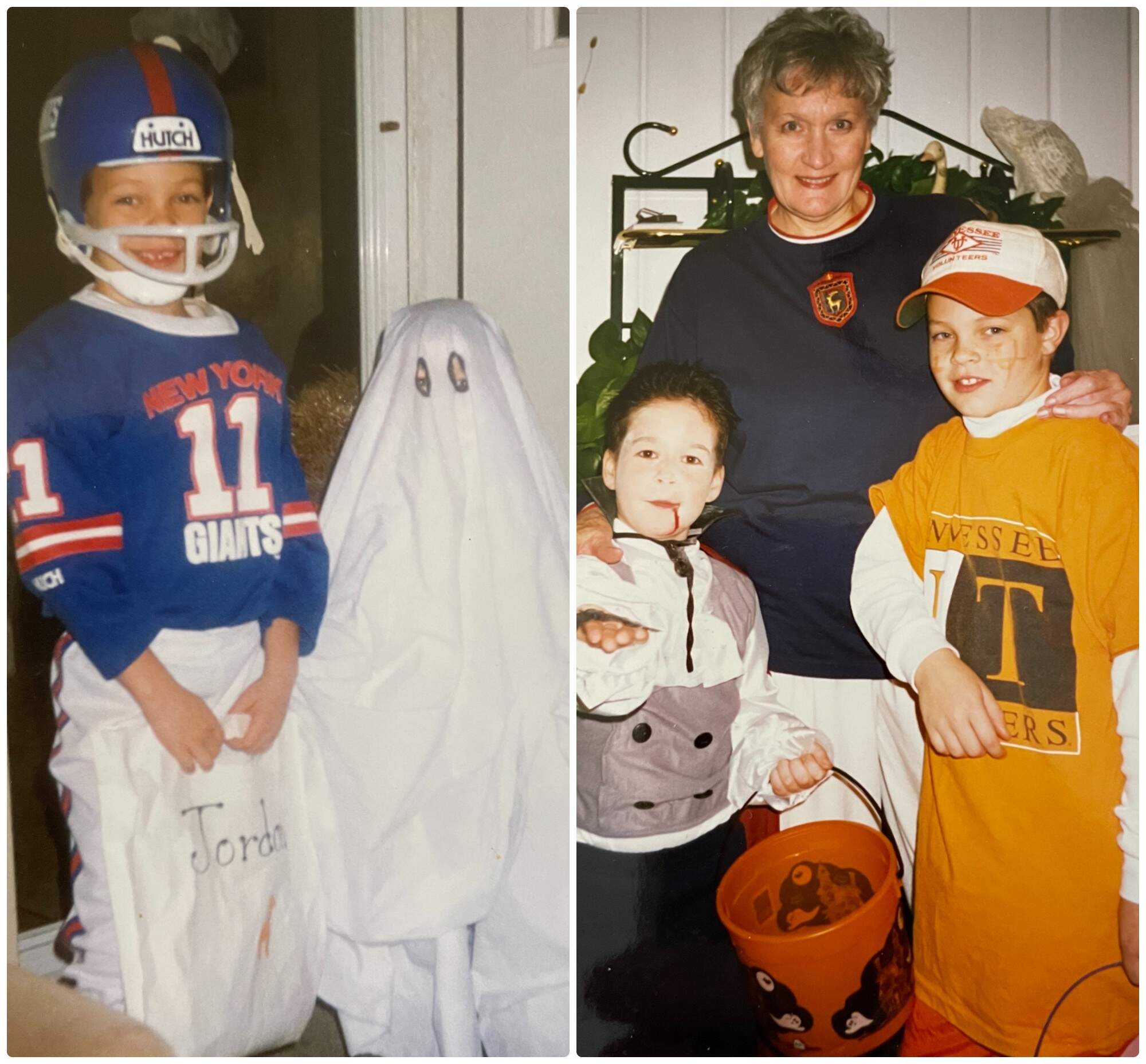
And what reveals our fantasies more than our Halloween costumes? While my classmates were Spiderman, Harry Potter and Legolas the Elf, all I could imagine being was somebody I was supposed to be in the first place: baseball player, football player, football fan. One year I simply went as a man, slathering on my Dad’s shoe polish to mimic facial hair: thick mustache, full goatee, pointy sideburns — the look I’d one day sport if I was lucky. My friends went as Dracula and Darth Vader; I went as a better version of me.
I still went through the Halloween motions, trudging around a sack of candy on a cool autumn night, but in photos from my mom’s scrapbook, you can tell my heart isn’t in it. My brother the ghost squeals with delight, my parents grin in their witch and Mrs. Doubtfire costumes — and then there’s me, forcing a smile through my shoe-polish mustache, my eyes like a zombie’s, the living dead.
As an adult, I’ve succumbed to fear: fear of missing out on Halloween parties. I’ve begrudgingly slapped on half-hearted costumes — stapling the label from a package of tofu to my shirt, I became “Killer Tofu” from the ‘90s show “Doug.” I took off my shirt, flung a beach towel over my shoulder, and went as a surfer. I drank enough beers to forget where I was, forget it was Halloween, forget all the “mes” I was having trouble becoming. In these photos, I seem happy. But just above my booze-fueled smile you can still see my vacant, hopeless eyes. Some unseen vampire, sucking my joy like blood.
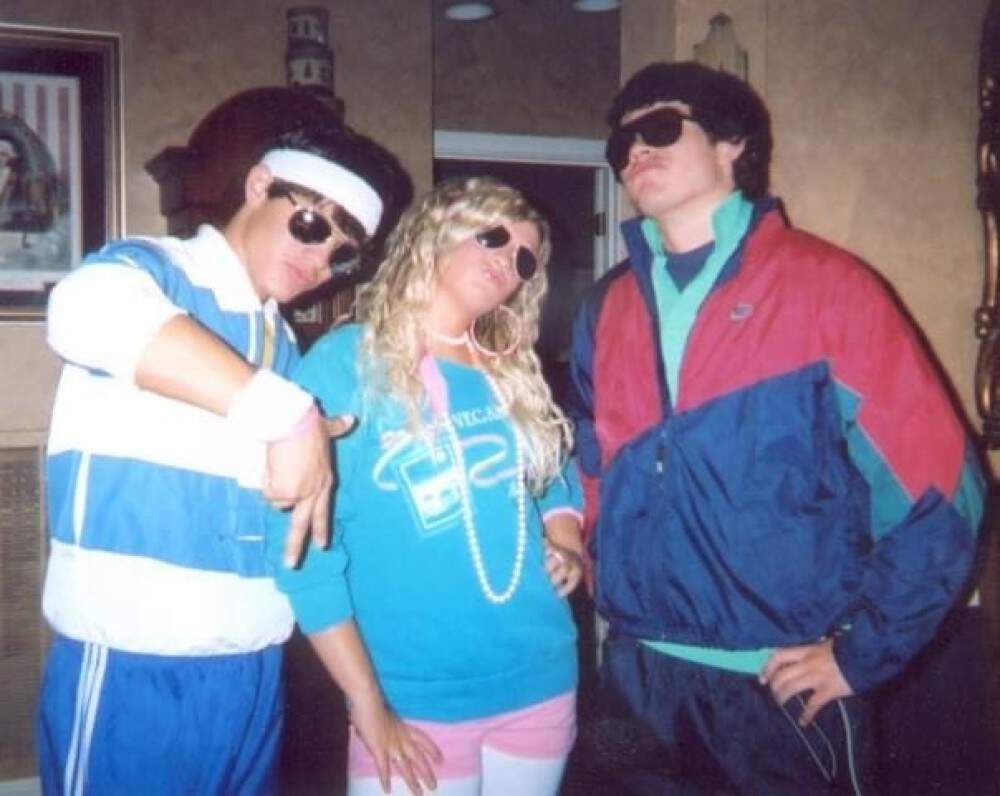
A decade ago, I found myself sitting at some hauntingly dumb Halloween party with a few friends. As we shouted over the music and brushed away the gauzy fake white spider web decor that kept falling into our beer, a spell fell over us. We all realized it at once.
“This party sucks, right?” I asked.
Color returned to Natalie’s ghost-white face. Jonathan removed his mask. Josh’s visage raised from the dead.
“Halloween sucks,” Natalie said, “Let’s get out of here.”
We rejected the spooky status quo, went back to Natalie’s house and started our own tradition. To this day, on Halloween, we watch our favorite movie, the 1989 holiday classic “National Lampoon’s Christmas Vacation.”
Christmas suits us. Its traditions speak to a solidity, a friendship that sticks around. None of the devious flightiness of Halloween, a day with one hand behind its back, devils and disappearing acts. Halloween is for ghosting. Christmas is for showing up.
Plus, we’re in our 30s now. Halloween is a young person’s game. The candy, the late nights, the pressure to dress as the Sexy Cowardly Lion. Then there’s the spooky stuff — I’m too old to be willingly terrified. Which is what made it so scary when I realized: “Christmas Vacation” is actually a horror movie.

At its core, “Christmas Vacation” is about Clark Griswold’s manic drive to host the perfect family Christmas. He wrangles his family, decorates a tree, endures his in-laws, buys elaborate gifts, carves the turkey, and spends days decking the house with lights. Clark longs for the American dream — family around the table, swimming pool out back, the best lights in town — and he drags his entire family into his holiday drama, his dream becoming a nightmare.
Instead of enjoying Christmas with his family, Clark drifts into fantasy: all the things he might have if only he was a little better, a little richer, a little more loved. Terror follows in Clark’s wake. The film repeatedly uses horror movie tropes to display the absurdity of his fantasy. Clark finds himself trapped in the attic. A cat is burned alive. In search of a last-minute Christmas tree, Clark revs a chainsaw while wearing a Jason Voorhees-style mask.
Scary movies have monsters, and “Christmas Vacation” has the bumbling man-child Clark Griswold, the architect of terror in his neighborhood, his family, his own heart. “Griswold” even sounds like the name of a monster.
Horror movie or not, our “Christmas Vacation” tradition holds me close — a warm fire on a cold night. I like to think I no longer let myself get pulled into Halloween’s glommy web: the pressure to party, to dress up, to be somebody. But all season Halloween lurks, peering its jack-o’-lantern eyes around every corner: a candy corn-ucopia of longing, to fit in, to be seen. I know I belong, right here on the couch with my friends, but I still get scared sometimes, the Griswold in me willing to make a mess of things for a little love.
This Halloween, we’ll be at Natalie’s house. We’ll laugh together, unafraid to be who we are. On the way, I’ll stop at the store to pick up the egg nog. And if anyone happens to ask, “What are you supposed to be?” I might just tell them: Clark Griswold.
Follow Cognoscenti on Facebook and Instagram. And sign up for our weekly newsletter.