Support WBUR
Cog's Weekly Newsletter
The math of our democracy
Editor's Note: This essay appeared in Cognoscenti's newsletter of ideas and opinions, delivered weekly on Sundays. To become a subscriber, sign up here.
Arizona, Nevada, North Carolina, Georgia, Michigan, Wisconsin, Pennsylvania. The Sun Belt, the Blue wall. Those states are the ones, we’ve been told over and over, that will decide the outcome of this year’s presidential election. These seven account for approximately 61.4 million people, or 18% of the U.S. population, and 93 electoral votes. And during my last trip on the pollercoaster, they were all within the margin of error.
On Tuesday night, you can bet that my husband and I will be hunched over our laptops — TV blaring, text threads pinging — as we track results from 16 or so swing counties that will decide the presidential race. I’m already having visions of Jon King at the “magic wall” and Steve Kornacki’s khaki pants.
But there is something disturbing to me about how we treat elections like Game 7 of a World Series; that billions of dollars have already been wagered on the outcome of the presidential contest, as if the candidates are ponies at Saratoga.
I know, as you do, that elections matter. The tenor of world conflicts, the makeup of our Supreme Court and how we manage public health crises will pivot on the outcome of who American voters choose. A lot of the time, I’m uncomfortable with how we think and talk about politics, the dominance of horse-race coverage, the gamesmanship of gotcha journalism. I think my discomfort opened me up to new ways of thinking. Enter — quite unexpectedly — a Wellesley College math professor.
Unexpectedly, because I am not a math person. Long division brought me to tears in fourth grade; I took the one baby calculus class required in college and quit the subject for good. But professor Ismar Volić, the author of a book called “Making Democracy Count” and the founder of Wellesley’s Institute for Mathematics and Democracy, has a knack for getting through to non-math people like me.
Volić grew up in Bosnia-Herzegovina during that country’s brutal civil war. In an interview with The New York Times about a new documentary he’s featured in, he explains how he sees parallels between what happened to his country and what’s happening now to democracies around the world, including the United States. From his perspective, the mechanics and infrastructure of democracy “is very much mathematical.”
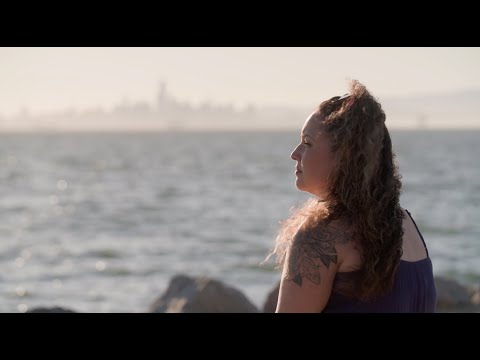
“Collecting and tallying votes, allocating legislative seats, deciding sizes of legislatures, drawing district maps,” Volić said. ”There are various mathematical ways these things can be done, and math can also tell us which methods are good or not so good.”
Among the not so good: there is a theoretical way to win the White House with only 23% of the popular vote. Only about 10% of U.S. House seats are considered competitive, in part because of gerrymandering. Our plurality-based system regularly results in candidates winning elections without winning the majority of votes.
Even a non-math, non-electoral policy wonk like me can understand the perils of a system that potentially disenfranchises large swaths of the population. If mechanisms of American-style democracy aren’t set up to be “representative,” people can feel like their votes “don’t matter.” The fact our hyper-polarized politics make it difficult to implement policy change (that voters actually feel in their lives) could also contribute to less overall confidence in our democracy, making people more open to different styles of governance. The math really matters.
Volić’s work gives me some hope. He told the Times how his students are “excited to learn that our democracy can be mended through a purely quantitative approach” – regardless of partisan or ideological leanings. What if one solution to all the big feelings and vitriol and confusion that animates today’s politics is math?
We’re in for some uncertainty these next few weeks. It seems unlikely we’ll have final results on Tuesday night, election denialism could run rampant, and in this post-Jan. 6 era, politically-motivated violence isn’t out of the question. The task of tracking county results from Lackawanna, Maricopa, Mecklenburg and more will give me something to do — and keep the ground beneath me. I imagine I’ll be walking my dog a fair amount, too.
I hope you’ll vote if you haven’t already, and find your own way to navigate the unpredictability of the season. See you on the other side.