Support WBUR
Commentary
Carrying the weight of two worlds
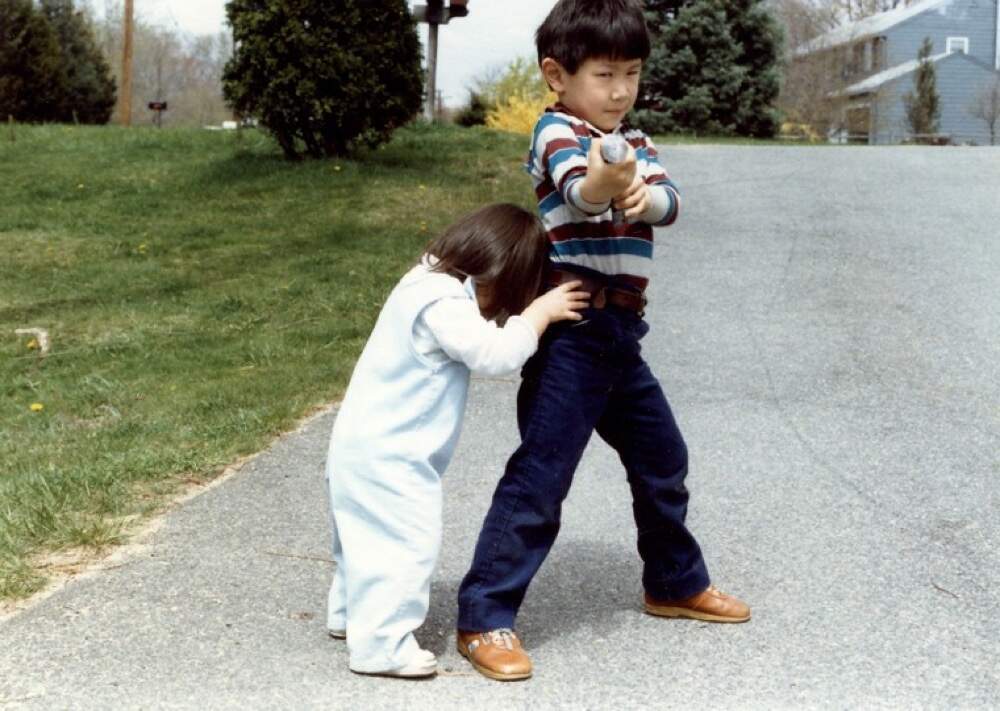
As a 7-year-old boy in Concord, Mass., I stood at attention, my eyes locked on the American flag flapping in the biting wind. I recited the Pledge of Allegiance with a fervor that only a child can muster, hoping each syllable would transform me into something quintessentially American. But even as I spoke the words flawlessly, the reflection staring back at me in the window told a different story. I was unmistakably, irrevocably different.
Growing up as one of the few Asian kids in a town steeped in Revolutionary War history, I was always straddling two worlds. At home, my Taiwanese immigrant parents instilled values of hard work, respect and filial piety. Outside, I desperately tried to blend in, playing hockey and memorizing baseball cards. Yet the casual comments — "Where are you really from?" or "You speak English so well!" — served as constant reminders that I would always be seen as an outsider.
When we moved to Cupertino, California, during my teenage years, I was surrounded by Asian faces for the first time. But even there, I felt just as unmoored. The relentless pressure to excel academically, to embody the perfect Asian kid, was suffocating. I rebelled, adopting a goth style and shoplifting constantly — a silent scream in a culture that prized conformity and quiet obedience.
It was within the pages of a stolen book that I found an unexpected beacon. Gus Lee's "Honor and Duty," a novel about a Chinese-American cadet at West Point, resonated deeply. Here was an Asian man who was strong, who led, who served a higher purpose. It was a vision of myself I had never dared to dream.
West Point became my obsession, my ticket to shattering the stereotypes that confined me. Yet, even as I hurled myself into the application process, doubts gnawed at me. I didn’t know anyone who’d joined the military, and my friends were busy applying to Berkeley and UCLA, setting their sights on paths I was supposed to want, paths that seemed safe and prestigious. Could I really belong in a place like West Point? Did I have what it took to lead, to break free of the roles people expected me to fill? I wrestled with those questions unsure whether this was ambition or merely a stubborn attempt to defy the expectations of being like any other Asian kid.
The day I received my acceptance letter, my parents' reaction was a blend of disapproval and concern. "You wouldn't use good iron to make nails," my father said, quoting an old Chinese proverb that suggested soldiering was a waste of talent. But I envisioned myself in training — the grueling drills, the crisp uniforms, the discipline — and I felt a pull that was deeper than mere ambition. It was a chance to redefine myself, to step outside of the expectations that had shaped me and find out what I was truly made of. This wasn’t about pleasing anyone else; it was about proving something to myself.
I started to see how straddling two worlds was an asset, in many areas of my life.
My plebe year at the academy was a crucible of cultural conflict. As one of only a handful of Asian cadets, I felt isolated and out of place. The physical demands were as taxing as expected, but it was the psychological toll that nearly broke me. Each day brought a new way to fail — a shortfall on the push-up test, a mess hall duty I just couldn't quite get right or a uniform crease just slightly off. Every misstep felt magnified, each one like a confirmation of the worst stereotypes about Asians: weak, passive, unfit for leadership. These repeated failures attracted the ire of upperclassmen like a moth to a flame, some seeing me as a target to humiliate, others attempting to break me under the pressure. I was barely hanging on, just trying to make it through each day.
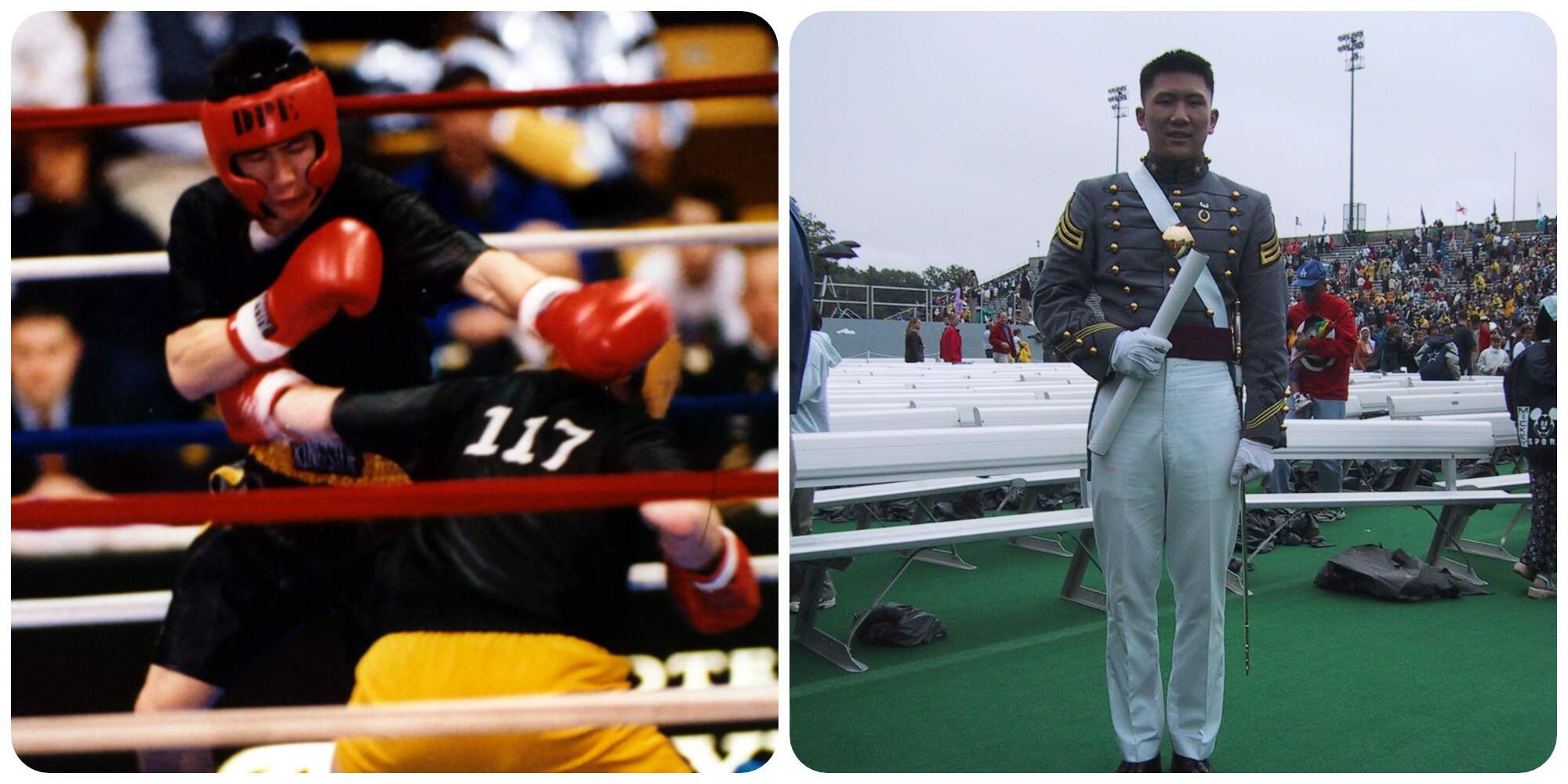
But it was in the boxing ring, of all places, that I began to discover my true self — in my first year at the academy, during the mandatory physical education class. After a humiliating knockout in my first match that sent me to the hospital for days, I found myself questioning everything. I could have walked away from West Point, avoided the pain and the bruising. But something deeper than pride pushed me to voluntarily go back and compete in the ring for years to come. Each punch thrown and taken was an act of defiance against every voice that said I didn't belong, including my own. In my senior year, when I defeated four formidable opponents and won the academy-wide Brigade Open Boxing Championship, it wasn't just a personal victory — it was a declaration to myself and to everyone who doubted, that I had earned my place, that I could be tough, that I could be a fighter, too.
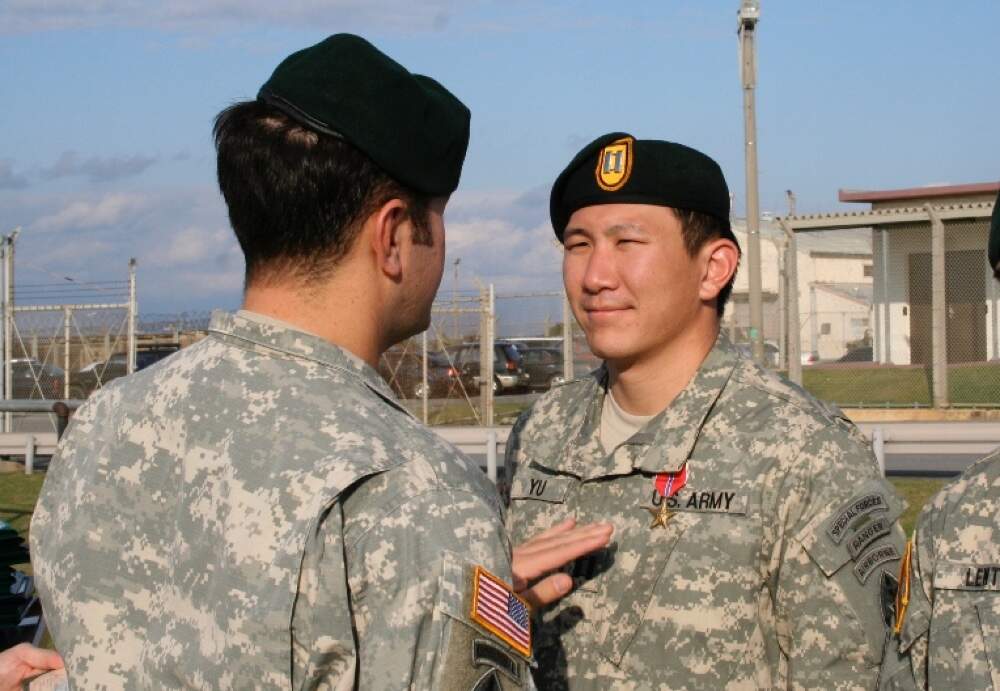
Even after West Point, as a Green Beret, I pushed myself to the limits of human endurance. And yet, even as I helped lead teams of America’s most cunning warriors in Iraq and the Philippines over four combat tours, there were still moments when I questioned if I truly belonged in this world of iron discipline and relentless grit. It wasn’t that others doubted me — at this level, everyone is tested. The real challenge was facing the doubts that crept up within me, in the quiet moments. It wasn't until years later, well after my time in uniform and during a high-stakes rescue mission in the Philippines, that these two halves of my identity began to reconcile.
Volunteering to help save Evelyn Chang, a Taiwanese family friend kidnapped by Abu Sayyaf terrorists, I realized that my bicultural background was far from a weakness. In fact, it was my greatest strength. My understanding of Asian cultural nuances helped me navigate the intricate web of relationships necessary to engineer the rescue. My years of military training provided the tactical skills to execute the operation.
For the first time, I wasn't trying to be purely American or purely Asian. It wasn’t a choice between identities—it was the power of holding both, a fusion of strength and perspective. I remember the relief, the sense of belonging in my own skin, like I had finally unlocked a part of myself that had been split down the middle. I started to see how straddling two worlds was an asset, in many areas of my life. It led me to found Blackpanda, a leading venture-backed cybersecurity company headquartered in Singapore that bridges East and West, combining the strategic thinking I honed in the American military with the Asian cultural competence I've developed over a lifetime of navigating two worlds.
From where I stand now, I see a world that's slowly changing for this next generation, one where stories like mine are becoming more common, the face of American heroism growing more diverse. In the end, the greatest battle I've fought hasn't been on foreign soil or in the boardroom, but within myself. It’s one I’m finally winning. Each day I work to be an example, hoping that I might inspire others to add their voices to a new narrative in which Asian kids, growing up as I did, can stand tall, pledging allegiance with gratitude and pride, to both the land of their birth and the cultures that shape them.
Follow Cognoscenti on Facebook and Instagram. And sign up for our weekly newsletter.