Support WBUR
Commentary
Joe Biden and the precedent of preemptive pardons

Now that President Joe Biden has used his clemency power to pardon his son, he can use it for another and more noble purpose: to foil President-elect Trump’s revenge-filled desire to punish his political opponents and the prosecutors whom he holds responsible for his legal troubles.
Trump’s plan is hardly a secret. He first announced it in March 2023 in an address to the Conservative Political Action Conference (CPAC).
He told his CPAC audience, “In 2016, I declared, ‘I am your voice.’ Today, I add: I am your warrior. I am your justice. And for those who have been wronged and betrayed, I am your retribution.”
As the Washington Post’s Aaron Baker wrote at the time, “Even for a former president known for casting situations in the most apocalyptic terms possible, and his enemies as being as nefarious as possible, it was a remarkable rhetorical flourish. (It)… validates long-held suspicions that Trump’s 2024 campaign amounts to something of a ‘revenge tour.’”
In October, NPR reported that after announcing his presidential bid, Trump “ issued more than 100 threats to investigate, prosecute, imprison or otherwise punish his perceived opponents.”
Last week, Massachusetts Democrat Sen. Edward J. Markey called on Biden to respond to those threats by issuing “preemptive pardons to individuals President-elect Donald Trump considers his political enemies.” The president should heed Markey’s advice. Doing so would not only be a service to the recipients of Biden’s mercy. It would also protect the rule of law and forestall one of the president-elect’s most dangerous plans.
And it would drive Trump crazy.
The president’s pardon of Hunter Biden was partly motivated by his justifiable fear of what Trump’s Justice Department might do to his son. But that worry is one that we should share not just for Hunter, but for anyone who crosses the retribution-seeking president-elect.
The Washington Post quotes someone privy to Trump’s plan who says Trump “wants to clean out ‘the bad guys, the people who went after me.’”
Indeed, Trump’s very reason for running for president for a third time was to pay back a vast array of people and organizations whom he considers to be his political enemies and responsible for the legal troubles that vexed him after he left the White House. The Washington Post quotes someone privy to Trump’s plan who says Trump “wants to clean out ‘the bad guys, the people who went after me.’”
Among those whom Trump considers “bad guys” is the person he defeated in November, Vice President Kamala Harris. In September, he told rally attendees in Erie, Pennsylvania, that she "’should be impeached and prosecuted.’"
During the campaign, he also pledged to “appoint a real special prosecutor to go after the most corrupt president in the history of the United States of America, Joe Biden, and the entire Biden crime family." In addition, NPR notes, at various times during the 2024 campaign, the president-elect “repeatedly targeted the prosecutors, judges and even courtroom staff connected to the prosecutions against him for alleged election interference, improperly holding classified documents and business fraud.”
Trump has already begun to implement his plans. Matt Gaetz, his first nominee to be Attorney General, was distinguished only by his loyalty to Trump and his devotion to the revenge and retribution scheme. When his nomination failed, Trump turned to former Florida Attorney General Pam Bondi, who told Fox News last year: “The Department of Justice, the prosecutors will be prosecuted — the bad ones. The investigators will be investigated.”
She will be aided by Kash Patel, who Trump wants to install as FBI Director. According to an article in Forbes, “Patel has broadly vowed to retaliate against Trump’s enemies during a second stint in the White House…‘not just in government but in the media.’”
Last month, Trump took another step to make good on his promised retribution when he sued CBS News over its “60 Minutes” interview with Harris. He alleged that the interview was a “partisan and unlawful act… of election and voter interference.” Not surprisingly, he filed his suit in Amarillo, Texas, so that it would be heard by U.S. District Judge Matthew Kacsmary, another of Trump’s most devoted allies.
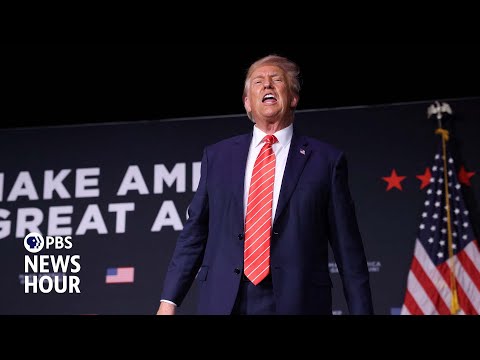
While there is nothing Biden can do about the frivolous suit against CBS, he can, as Sen. Markey suggested, shield others on Trump’s target list.
Preemptive pardons of the kind Markey recommended are unusual but legal. The Brookings Institution notes, “Pardons need not follow convictions but can be issued before or during a criminal prosecution. The rationale for so-called ‘preemptive’ pardons is that there is no point in requiring a person to live in fear of conviction or to go through a trial….”
The most important precedent for the kind of preemptive pardons that Biden should grant was the pardon President Gerald Ford granted to his predecessor, Richard Nixon after Nixon resigned in the wake of the Watergate scandal. Ford pardoned Nixon “for all offenses against the United States which he… has committed or may have committed or taken part in during the period from July (January) 20, 1969 through August 9, 1974."
Other preemptive pardons include President Jimmy Carter’s 1977 pardon of all Vietnam-era draft dodgers and President George H.W. Bush’s 1992 pardon of former Defense Secretary Casper Weinberger, before Weinberger was brought to trial. In 2017, Trump himself issued a pardon to former Sheriff Joseph Arpaio after he was charged and convicted of criminal contempt of court, but before he had been sentenced. Trump’s pardon specifically included “any other offenses that might be charged.”
More than a 150 years earlier, in 1866, the United States Supreme Court approved preemptive pardons in a case involving a former Confederate senator pardoned by President Andrew Johnson. It made clear that the pardon power “extends to every offense known to the law and may be exercised at any time after its commission, either before legal proceedings are taken or during their pendency, or after conviction and judgment.”
Another vehicle that Biden could use to thwart Trump’s nefarious plan is amnesty. Amnesty is “essentially identical to pardon in ultimate effect,” but generally is granted to a group or class of people rather than a specific individual.
So, whether by presumptive pardon or amnesty, there is no doubt that before he leaves office, Biden has the authority to protect some, if not all, of Trump’s intended victims.
The power to grant amnesty was first used by President George Washington, who granted amnesty to participants in the Whiskey Rebellion. President Thomas Jefferson, “granted amnesty to any citizen convicted of a crime under the Alien and Sedition Acts.” In 1871, the Supreme Court made clear that the president’s pardon power includes amnesty.
So, whether by presumptive pardon or amnesty, there is no doubt that before he leaves office, Biden has the authority to protect some, if not all, of Trump’s intended victims. While the list of people who should receive clemency is long, Biden should begin with former special prosecutor Jack Smith and the “dozens of attorneys, FBI agents, and support staff” who worked with him.
If Biden grants clemency to Smith and the others on Trump’s enemies list, he would, as Gerald Ford said of the Nixon pardon, “uphold the Constitution,… do what is right…. and …do the very best…for America.” No doubt Trump, his MAGA allies, and the hosts of Fox News shows would not see it that way.
They would scream foul and allege that Biden’s act was corrupt and criminal. In response, Biden could remind them that their allies on the Supreme Court granted immunity to all presidents, including Joe Biden. That would be a supreme irony indeed.
Follow Cognoscenti on Facebook and Instagram. And sign up for our weekly newsletter.