Support WBUR
Commentary
Welcoming the light in this season of darkness
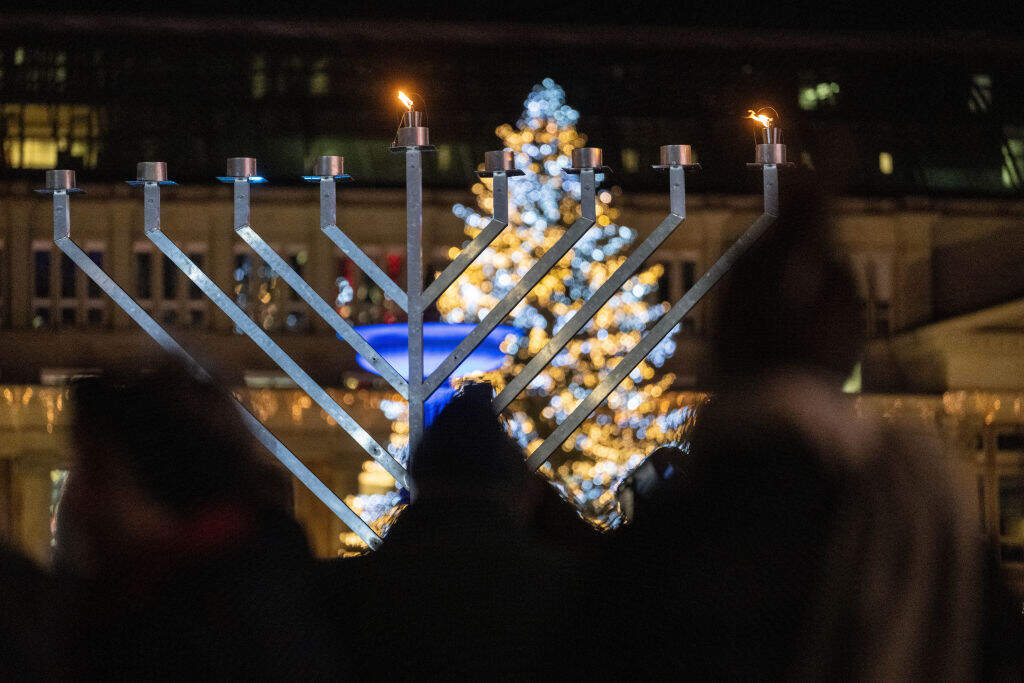
Hanukkah and Christmas fall on the same day on the Gregorian calendar in 2024: this year people of Christian and Jewish faiths will come out to play together.
The Gregorian calendar is a solar one with a leap year every fourth year, allowing an extra day to adjust the calendar so our seasons stay in sync with the planet’s orbit around the sun. The Jewish calendar is lunar, adding a month every 14 years to keep season-specific holidays like Passover and Sukkot on track. In Hebrew, the extra month is called a "pregnant year."
Since 1900, this will be the ninth time that wonderful calendar coincidence has Hanukkah beginning on December 24 or December 25. This calendar occurrence, which falls on December 25 this year, won't happen again until 2052, seven leap and 14 pregnant years away.
This is a holiday treat for me, a Jew who goes way back with Christmas. As a child, my family spent Christmases with the Dominguez family, our close friends. Mimi, the mother, was supportive of my own mother when she moved to Connecticut from Cuba. Mimi always had presents for my two siblings and me, and their tree was magnificent.
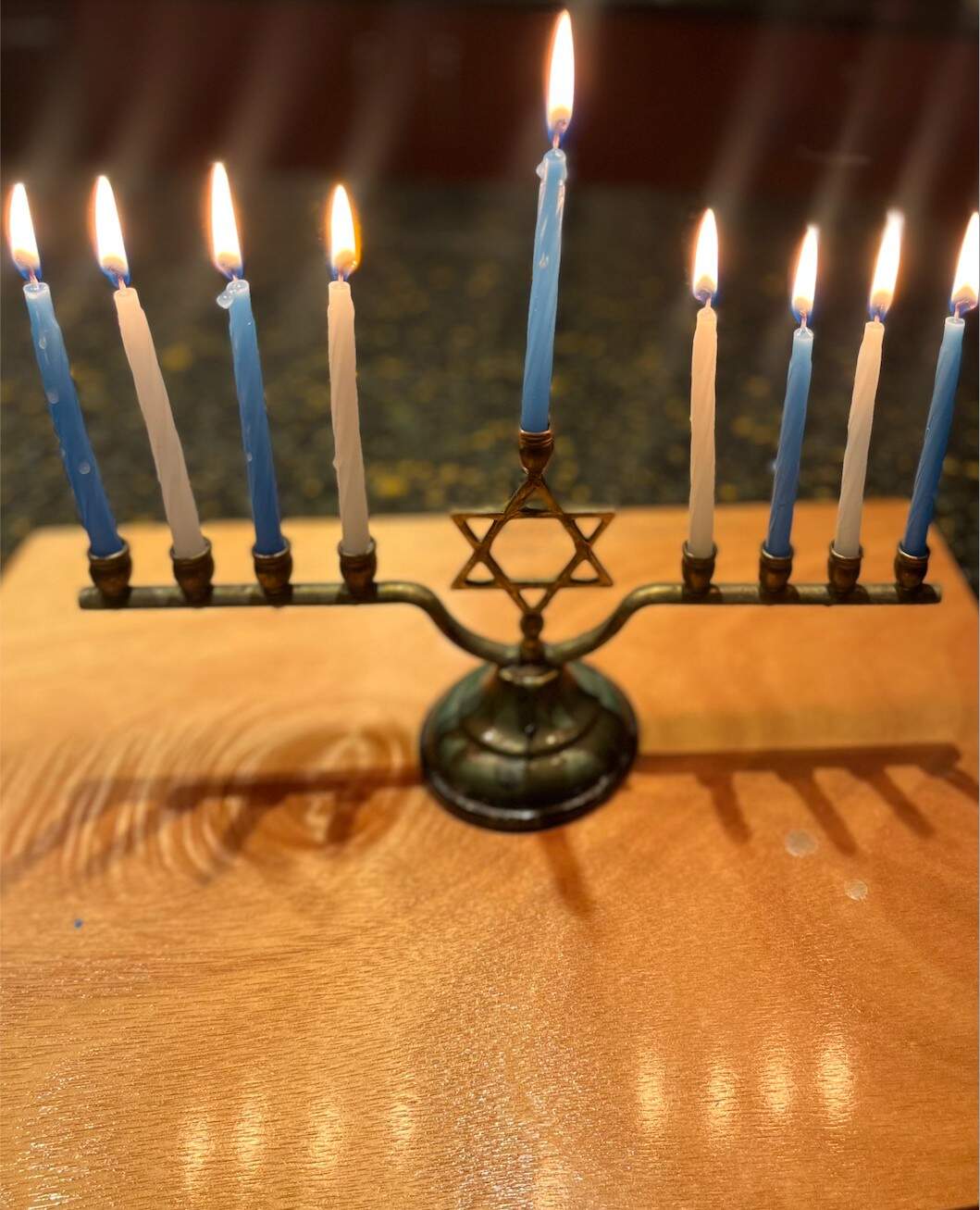
A Star of David anchored our menorah. The star, affixed to the middle, was beautifully stark and stalwart, and it held up the shamash, or the candle used to light the other eight candles, which were added one by one each night of Hanukkah. My mother bought that menorah in 1958, her first Hanukkah in a dark, freezing America that felt like the antithesis of her light-filled tropical Cuba.
My mother, raised in Havana, was comfortable with the adjacent Catholicism of living in majority-Catholic Cuba. My family came to Cuba in the early 1900s from the Ottoman Empire. Unlike their Sephardic Jewish forebears expelled from Spain in 1492, Cuba's Jews found safe harbor and practiced Judaism comfortably, in the open. There were no curtains drawn to hide lit Sabbath candles or a menorah as there had been at various times in Spain and other European countries. My grandparents affixed a mezuzah to their doorpost in Havana as God had commanded every Jewish household, without worry of being targeted.
Nuns tutored my mother in math and English when she was a teen. She, in turn, sent me to a Catholic high school for girls in my Connecticut hometown, which changed my life for the better. My happiest moment in high school was when the nuns picked more neutral prayers to say at the start of classes after my classmates said they wanted me to pray with them.
When I explained the symbolism of Hanukkah lights to my Christian friends, they taught me about their Advent calendars and the four candles representing hope, peace, joy and love lit on the four successive Sundays leading up to Christmas. I also starred in the senior class Christmas play. We acted out the Twelve Days of Christmas, and I had the recurring role of the partridge. I wore a brown body suit with a beak I attached to my nose and grocery bag wings to flap, which Sister Constance, the physics teacher, designed for me. The final time I appeared from behind my friend, who stood rooted as my tree, I received a standing ovation.
Passing along a sense of ecumenicism to my daughter and son was instinctive.
Embracing other cultures has been natural and even necessary for me, a Latina Jew. Passing along a sense of ecumenicism to my daughter and son was instinctive. We'd cruise the town at night when they were small, slowly driving by the mesmerizing Christmas lights. From the time they were of car seat age, they exclaimed, "Oh my gosh," at each dazzling display. My son ran with this love of Christmas lights this year and put up a Christmas tree alongside his menorah in his new apartment. He says combining those lights makes the darkness of the season easier to bear.
Ever since he was a young child, my son has intuited that Hanukkah and Christmas are festivals of light to stave off darkness and fear at the winter solstice. A rabbinic tale bears out this feeling. The first man, Adam, noticed the days becoming shorter, and became frightened that darkness would swallow him into oblivion. The day after the winter solstice, he saw that daylight was incrementally returning. Extend that to the human impulse to face darkness with light, and you have an exegetical interpretation for Hanukkah and Christmas coming together on the calendar this year.
The twinkling star atop the Dominguez Christmas tree, the festive lights on my son’s tree, the Advent candles blazing together on December Sundays, and the menorah's daily accretion of candlelight for eight days illuminate the world ever so brightly, in concert.
Follow Cognoscenti on Facebook and Instagram. And sign up for our weekly newsletter.