Support WBUR
Commentary
The land of my childhood is on fire
I grew up in California. My parents were East Coasters who came west in 1969, settling me and my brothers in the then-quiet college town of Palo Alto, California.
This was before Silicon Valley existed. Heck, there was barely even a Bay Area, just a bunch of cities scattered around the hilly thumb of San Francisco.
When I think about California, I see majestic oak trees casting skirts of black shadow across rolling hills of yellow grass. The air gives off the mentholated perfume of eucalyptus. The sun is always shining.
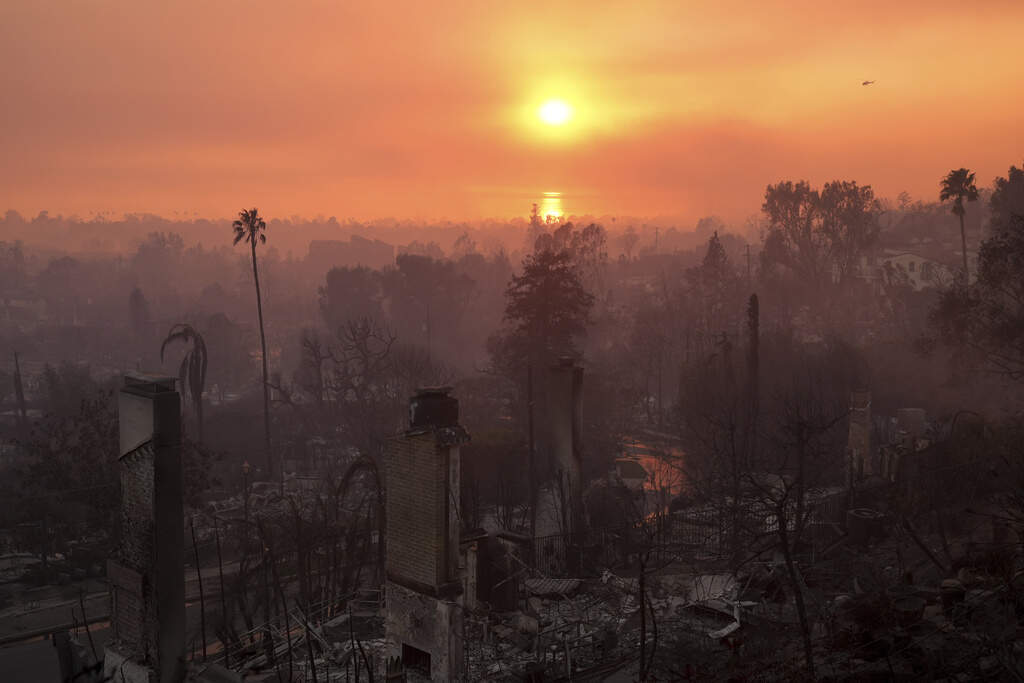
That’s the place that’s lived in my mind ever since I left, nearly four decades ago. But those images are being replaced by visions of fire and ash, vast swathes of blackened forest, the charred husks of car and home, a sky hazy with smoke.
These are the kind of apocalyptic images coming out of California this week, thanks to the Eaton, Palisades and Sunset fires, which, fed by high winds, have been ripping across Southern California, forcing mass evacuations and a rising death toll.
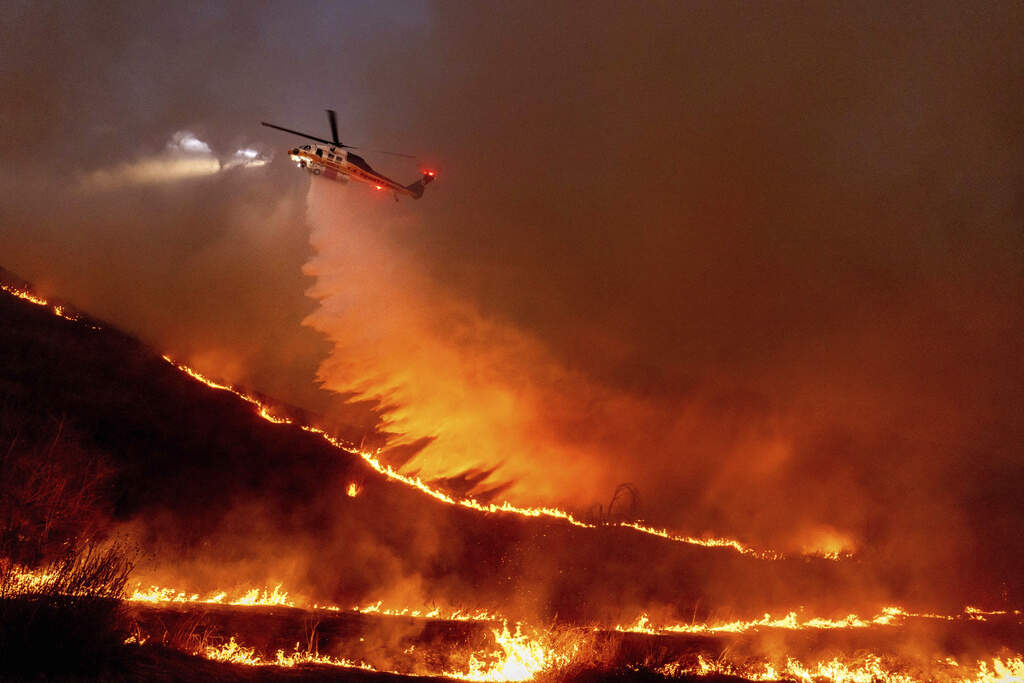
As horrifying as the spread of these fires has been, they are merely the latest in a long and harrowing catalogue. Over the past decade, not a year has gone without news of some wildfire threatening the landscape, and people, I left behind.
Back in 2013, the Rim Fire nearly torched the hallowed ground of Camp Tawonga, where I spent my teenage summers. A few years later, my brother and his family had to evacuate their home in Sonoma County. Then it was friends in Mendocino, Riverside, Alameda.
Growing up, the natural disaster that hovered over all of us California kids was of the Big One, an earthquake so immense that it would cleave our state from the mainland and send us floating off into the Pacific Ocean. Quakes are still a threat. But they feel remote compared to the perpetual threat of fires.
The reasons for this are not especially hard to identify. Over the past few decades, urbanization has collided with prolonged periods of drought, producing unprecedented amounts of “surface fuel,” a fancy term for man-made tinder.
The problem is not limited to California. According to a new study, climate change has spiked so-called “whiplash” conditions, in which decades of drought are followed by heavy rainfall—the exact conditions my friends and family in California have described to me.
There are, of course, sensible ways to try to reduce these risks: limiting development, controlled burns, fire-resistant landscaping.
What these communities deserve from us, and from their leaders, is enough aid to recover what they’ve lost, and a scientific approach to prevention.
And one other measure: ignoring politicians and pundits who exploit natural disasters to push misinformation and attack their opponents. I mention this, naturally, because the president-elect and his allies wasted no time in doing just that.
This is going to happen a lot over the next four years. And media outlets face a familiar choice: they can continue to amplify these false claims, or they can focus on the scientific basis of these disasters.
It’s scary to confront the growing dangers of the world. I’d prefer to remember the California of my childhood: verdant and eternally sunny. But huge portions of the state are enveloped in flames, hundreds of thousands have had to flee, whole communities have been razed. The last thing they need is more hot air.
What these communities deserve from us, and from their leaders, is enough aid to recover what they’ve lost, and a scientific approach to prevention.
Follow Cognoscenti on Facebook and Instagram. And sign up for our weekly newsletter.