Support WBUR
Commentary
A woman now leads a department in the Vatican. It's a big step, but not enough
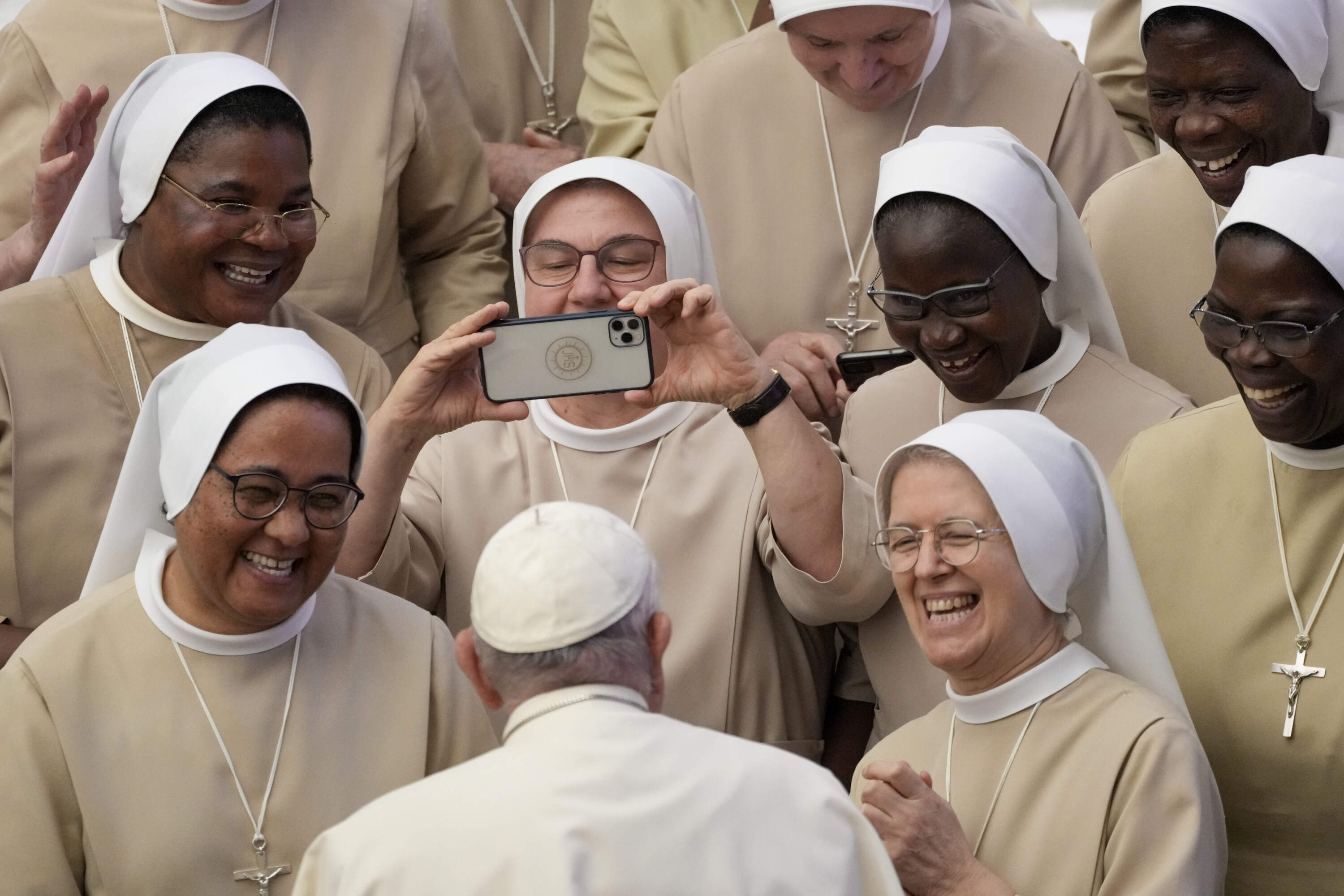
Pope Francis just tapped the first woman to lead a Vatican office. Sister Simona Brambilla will head the department in charge of religious orders, male and female. “The choice reflects Francis’ avowed aim to give women greater leadership roles in the Roman Catholic Church,” the New York Times reports.
But if the pope truly aspires to make good on that vow, he should reconsider Catholicism’s insistence on an all-male priesthood.
I’m less certain than my church that God Himself commands ordination based on sexual organs. Certainty, as Ralph Fiennes’ Cardinal Lawrence preaches in the buzz-heavy film “Conclave,” is the "one sin which I have come to fear above all else. … Certainty is the deadly enemy of tolerance.” Leave aside the intolerance undergirding the all-male clergy, an argument in which irreconcilable, definitional disagreement will forever separate feminists and the pope. Engage instead with the church’s theology on its own terms.
Respectfully, that theology emits the aroma of human spin, not divine intent.
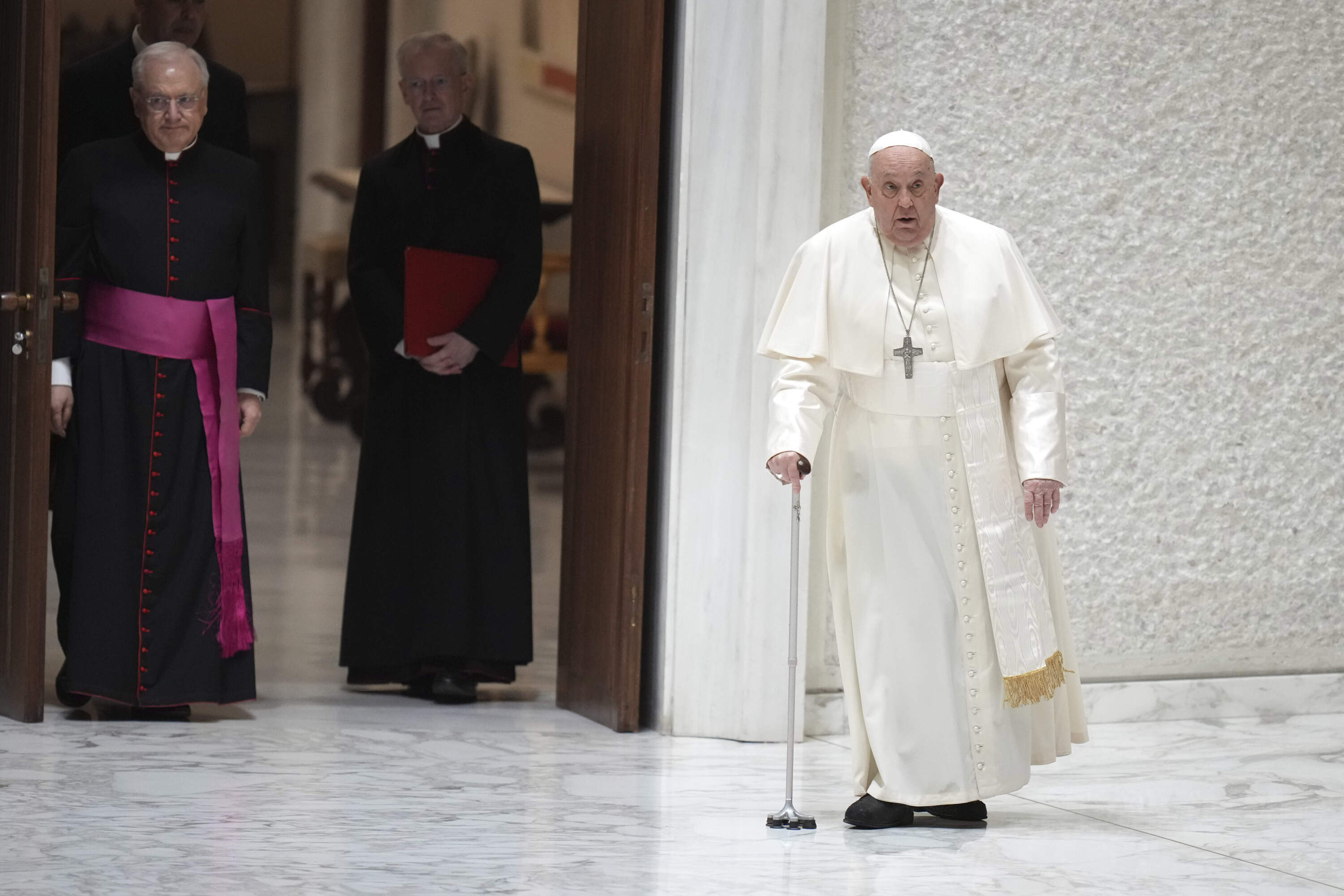
The all-male priesthood hinges on the concept of “apostolic succession.” As my guide to the catechism notes, “It was only men whom [Jesus] chose to be the Twelve Apostles and the foundation of the ministerial priesthood.” Peter, the story goes, received from the Lord “the keys of the kingdom of heaven” as the church’s “rock,” making him the first bishop of Rome, aka pope. Heaven’s will ties the church’s hands; the Vatican couldn’t ordain women even if it wanted to.
Except that Peter, “like all other [New Testament] apostles or disciples, is not a priest — much less a bishop,” the Catholic classicist Garry Wills writes. Bishops didn’t exist in his lifetime; Rome didn’t have one until decades after Peter died. You needn’t take Wills’s word for it, as he cites the late Raymond Brown, himself a Catholic priest and world-renowned Bible scholar, who swatted down the notion of any episcopal or administrative role for Peter.
Unlike modern priests and bishops, Wills says, biblical apostles and their duties — primarily as emissaries of the gospel —“are all functions, not offices, and they derive from the [Holy] Spirit, not from human organization or any bureaucracy.” Beyond ancient Jewish priests — hardly a model for Christians who broke with Judaism — the only “Christian” called priest in the New Testament is Jesus himself (who, of course, was Jewish, the word Christian coined only after his death).
As for Peter and the kingdom’s keys, Matthew’s gospel also quotes the Lord granting that authority to all of his disciples. “The idea that there is an ‘apostolic succession’ to Peter’s fictional episcopacy did not arise for several centuries,” Wills says. My own parish includes women serving as music director, religious education coordinator, organist and lectors. You might as well argue that God denies them those roles, too.
The Twelve certainly enjoyed privileged intimacy with their teacher. Another Catholic priest/historian, John Meier, argued that Jesus chose them to represent the patriarchs of the 12 tribes of Israel, symbolizing his “vision of an Israel restored in the last days.” Yet “as a matter of fact,” Meier added, “the Twelve soon lost their prominence in the early church, which indeed had trouble even remembering all 12 names.”
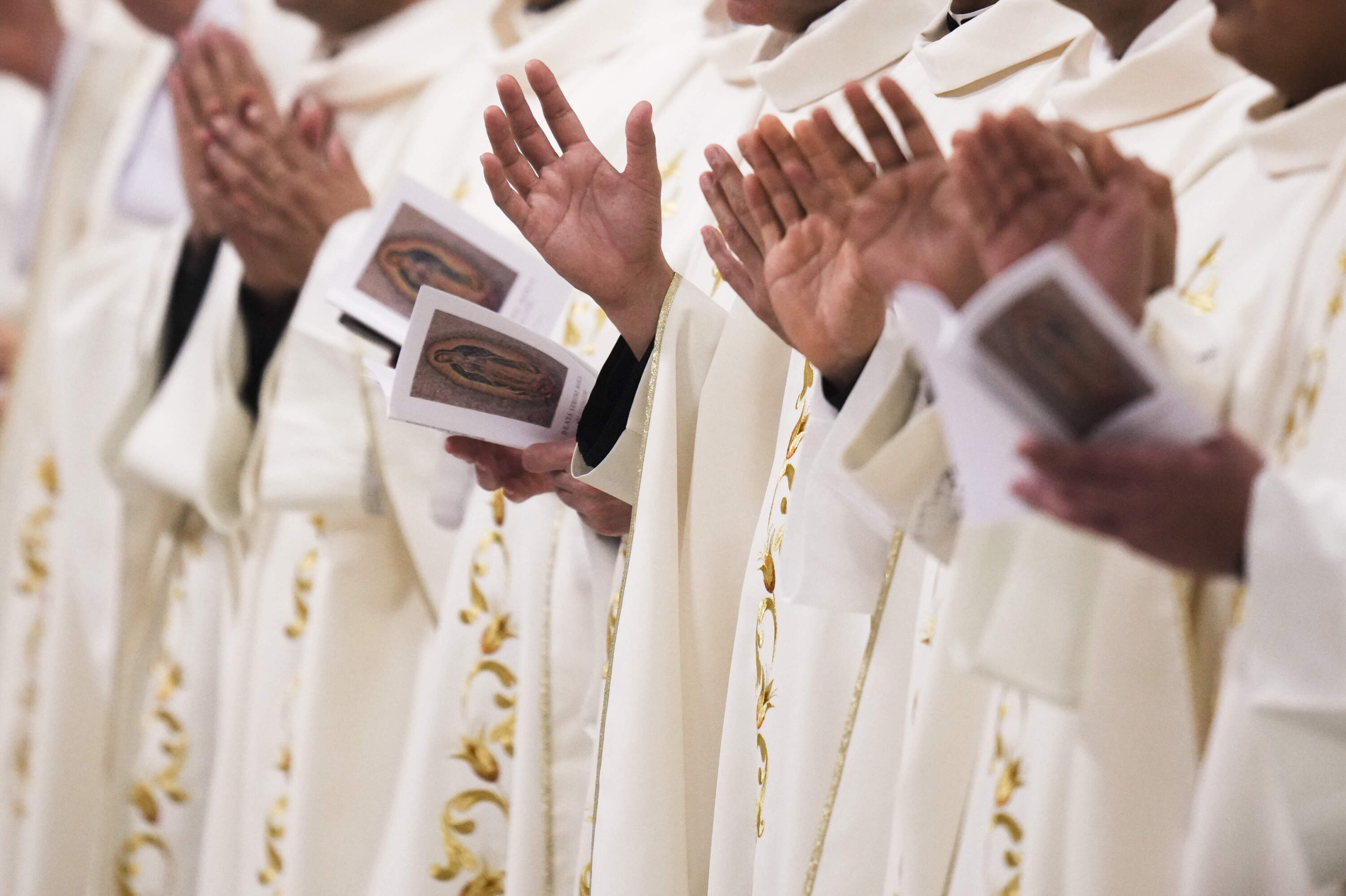
The New Testament refers to others besides The Twelve as “apostles,” including a woman. The Letter to the Romans applies the word to Junia, the female half of a husband-and-wife team supporting St. Paul. In medieval times, this flummoxed the church, whose leaders attempted history’s first gender transition, rewriting the accusative form of Junia’s name to be a man’s.
This malewashing belly-flopped. Historians note that no such man’s name is found elsewhere in antiquity.
All my adult life, good priests have inspired me to work harder at living Jesus’ message to love God and neighbor. But the fact is that the newborn church operated without such ministers. Of course, that won’t convince our current pontiff, for all his liberalism, to reconsider ordination. And conservative Catholics will cringe at the suggestion that the church has been wrong for 2,000 years.
Yet there’s precedent for walking back ancient ideas that have hit their sell-by date. For example, the Rev. Robert Barron, a prominent Minnesota bishop in good standing, dilutes the hoary no-salvation-outside-the-church doctrine, calling Christ the “privileged route” to heaven — which is to say, not the only route.
“If there was only certainty, and no doubt,” Cardinal Lawrence says in “Conclave,” “there would be no mystery, and therefore no need for faith.” Using our God-given reason to doubt all-too-human gender guardrails around the priesthood isn’t anti-Catholic. Quite the opposite. It reminds us of the common humanity that St. Paul preached: In Christ, he said, “There is no more Jew or Greek, slave or free, man and woman, but all are one.”
Follow Cognoscenti on Facebook and Instagram. And sign up for our weekly newsletter.