Support WBUR
Cog's Weekly Newsletter
The concept of death isn't uniquely human. There's comfort in that
Editor's Note: This essay appeared in Cognoscenti's newsletter of ideas and opinions, delivered weekly on Sundays. To become a subscriber, sign up here.
Susana Monsó, the author of “Playing Possum,” is a philosopher who studies how animals understand death. This work, called comparative thanatology, is a new field of study that emerged from anecdotes about bizarre animal behavior: a troop of chimps who watched in respectful silence as one of their own was buried, a dingo who carried her dead pup for four days while still caring for the rest of the litter and, perhaps most famously, an orca who carried her dead calf for 17 days in 2018.
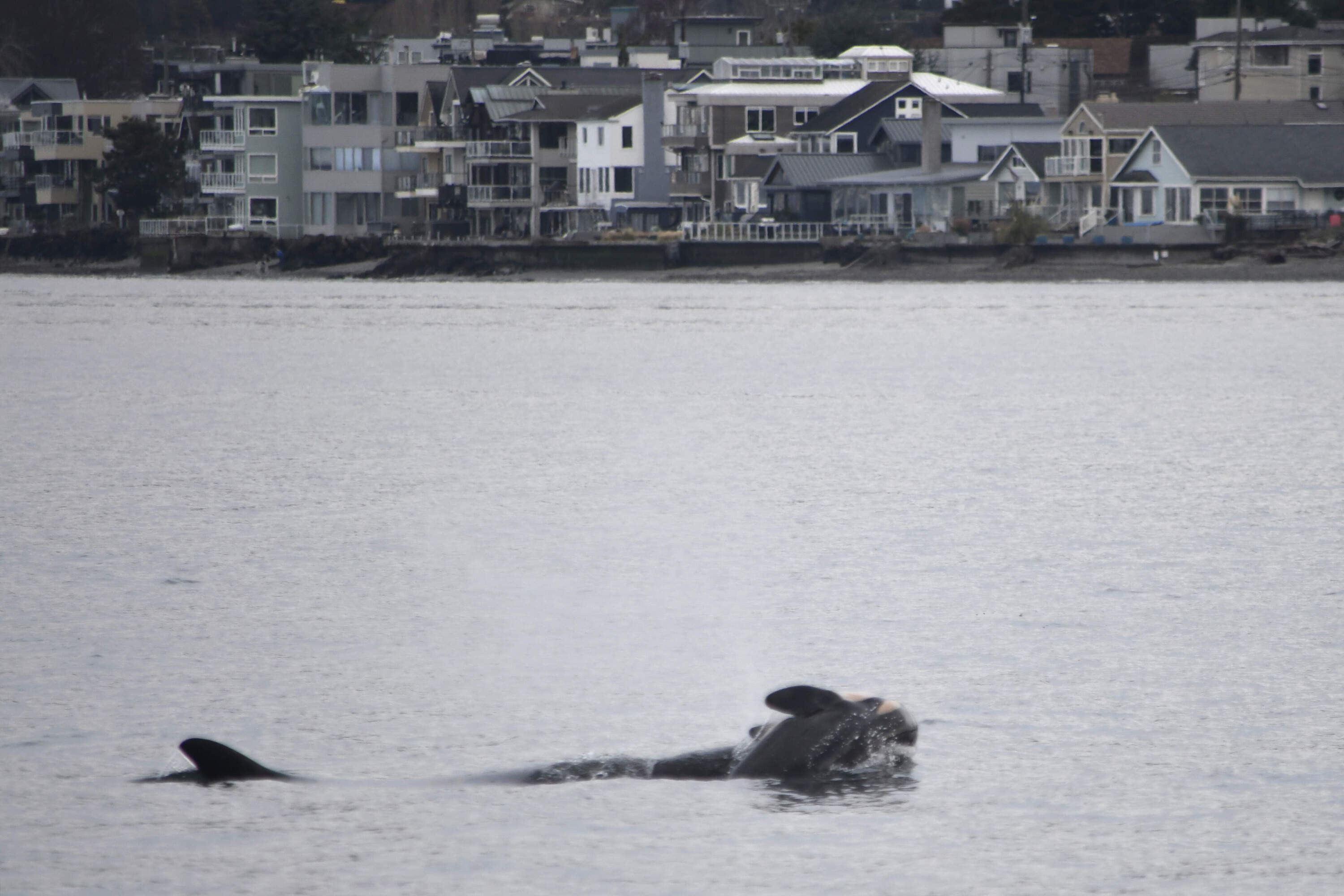
I’ve been thinking about animals and death because Tahlequah, that mother orca, lost another calf this month. The baby whale was first spotted by whale watchers on Dec. 20, 2024. Then, on Jan. 1, 2025, Tahlequah was spotted swimming with its body draped over her head. Days later, she still hadn’t let go.
To me – someone with zero scientific expertise – a mother orca carrying her deceased baby orca looks a lot like grief. But Monsó cautions us not to draw too many conclusions about how — and even whether — animals grieve. Still, she’s certain that many animals do have a “concept of death” and that we have something to learn from them. “Thinking about death in animals, how they cope with it, how they live with this reality, can help us to understand that death is not something unfair that happens to us,” she explains. “It’s a deal that any animal that is alive must step into.”
Every living thing will die. It’s inescapable.
As predictable as death is, our reactions to it — our grief — never cease to surprise us. “It’s a funny thing, grief,” Elissa Ely writes in an essay this week. “All griefs are not similar, all grief is not predictable, all grief is not by the book, and your grief is not mine.”
And yet, there is something to be said for sharing your grief with others. We humans have rites and rituals to honor people who've passed, to grieve in community. We sit shiva, we host wakes and funerals, we create ofrendas and celebrate Día de los Muertos, elected officials lie in state.
Maybe this orca's story spoke to me when it first made headlines six years ago because I was swimming through my own grief with a child whose future looked very uncertain. I felt very alone. No one had died, but I was still living with a kind of loss, grieving what could have been.
Needing a distraction from my own problems, I became a little obsessed with the plight of this mother orca and her calf. Each morning when I woke up, I’d check the news to see if the Talequah had let go. She swam more than 1,000 miles with the calf’s carcass before surrendering it to the sea. Orcas may have only a basic concept of death, but I don’t believe Talequah thought her baby was sleeping that whole time.
I haven’t gotten very far in Susana Monsó’s book, but I’m confident she would tell me I’m projecting my own human experience and feelings onto this whale, these chimps, that dingo. She’d probably say I’m anthropomorphizing their behavior. And I suppose if I were a scientist, that would be problematic.
But for those of us on the sidelines, for anyone living with loss — and aren’t we all? — I don’t see the harm in finding some comfort in the idea that we’re all in this together.
Follow Cognoscenti on Facebook and Instagram. And sign up for our weekly newsletter.