Support WBUR
One of the (many) problems with medical billing practices

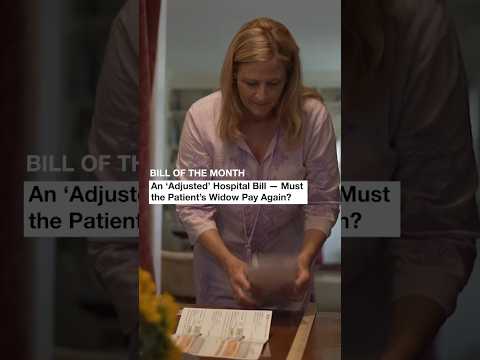
In January, I got a surprising bill for $249.48 for an ultrasound. The cost wasn’t the part that shocked me — unfortunately it seems like every time I see a doctor I can expect to pay at least a few hundred dollars. But I did a double-take when I saw that the services I was being billed for had been performed in March 2023. Nearly two years later, this was my first bill.
While states have laws that require medical providers to bill for services in a timely fashion, this can vary widely depending on where you live. In my state of Oregon, hospitals have to submit medical bills within 60 days. In Arkansas, they have up to two years. In Florida, medical providers can’t legally collect on a debt older than three years (though it could still affect a credit report.)
But that’s just the clock on submitting to an insurance provider. It doesn’t account for how long it will take for the bill to finally reach you.
I called hospital billing to ask if there was anything they could do, but they said no. Because the hospital’s initial claim to my insurance company in 2023 was done promptly (though initially denied), I’m still responsible for paying. The customer service representative told me I was welcome to apply for financial assistance or get on a payment plan.
Like anyone with a grievance, I complained about this on social media. In addition to a lot of people who were similarly shocked, I got comments from others who’d had the same problem. Over $1,000 for physical therapy billed 18 months later. Medical bills for someone who died in the hospital that didn’t arrive until after the estate was settled. A “facility charge” tacked onto a doctor’s bill two years later. Some were able to get a discount, others sucked it up and paid it off a little at a time, a couple people ignored their late bills entirely.
The expense of health care in this country can make going to the doctor feel like a financial dance. I’ve seen many friends gleefully schedule multiple doctor’s appointments after getting a job with good benefits, able to afford care for the first time. Likewise, I know lots of people who have loaded up on medical care before leaving a job, knowing health care might cost significantly more in the future. One in three Americans skip medical treatments because of cost.
In March 2023, I was married with access to a Flexible Spending Account (FSA) account I could have dipped into to pay this bill had it arrived in a timely fashion. Those FSA funds expired at the end of that year along with the marriage and the relative ease of sharing expenses. In 2025, my financial situation has changed drastically from the day I got that medical treatment — something that often happens and can make the sting of a late bill more painful. Do you know how much rent and utilities cost when you live alone in a city? Do you know how expensive it is to buy medical insurance through a marketplace plan? I do too. Those costs alone eat up almost two-thirds of my income every month, before I ever set foot in a doctor’s office.
Even though more than 90% of Americans now have some form of health insurance, 44 million Americans are considered “underinsured,” meaning they pay high health care costs relative to their incomes. And medical debt is still a big problem: Twenty-seven percent of Americans have no emergency savings. If you count money Americans owe to family and friends and credit card companies who gave them loans — and why wouldn't you? — 41% of Americans have health care debt. In extreme cases, patients and their caregivers use crowdfunding platforms like GoFundMe to help pay bills.
Because our medical system is so expensive, many people I know pick their insurance coverage based on how sick they think they’ll be in the coming year. They also take into account the price of prescriptions or whether they’ll need surgery or other expensive procedures. This year I chose an insurance plan with a tax-advantaged Health Savings Account (HSA) because when I pay for medical care, I’ll get a discount of sorts. I confess that I patted myself on the back for being so smart about my choices. If I’m as healthy as last year, or if I get very sick – and max out my out-of-pocket expenses – I could potentially save a couple hundred dollars. But if the winds of health blow a little differently, I could lose just as much money.
How is this combination of gambling and fortune telling what we have for health care? I may as well have consulted a tarot deck.
Individuals get bogged down in choices like which insurance plan is best or whether or not to get an HSA or FSA. We try to learn enough to be savvy shoppers. We congratulate ourselves when we manage to spend a less astronomical amount of money on health care one year as if not getting sick was a reasonable New Year’s resolution. We budget monthly premiums and ration doctor’s appointments and then get late bills for hundreds or thousands of dollars anyway, destabilizing our finances.
These late bills also illuminate the problem with health care as an individual responsibility and burden. As long as people can receive, and be forced to pay, hospital bills from years ago, it’s impossible to argue that there’s any way to smartly budget when it comes to medical costs. Individual control is an illusion.
The bills come when they come and we have to pay them in Net 30.
I’ll fill out the financial assistance application the billing rep pointed me to and mail it in, hoping the hospital will lower that $249.48 debt by some amount — even if it’s just $50. Then I get to make my only real choice in all this: whether to pay it all off at once or a little at a time.
Follow Cognoscenti on Facebook and Instagram. And sign up for our weekly newsletter.