Support WBUR
Commentary
Guinness World Records has always been about more than trivia
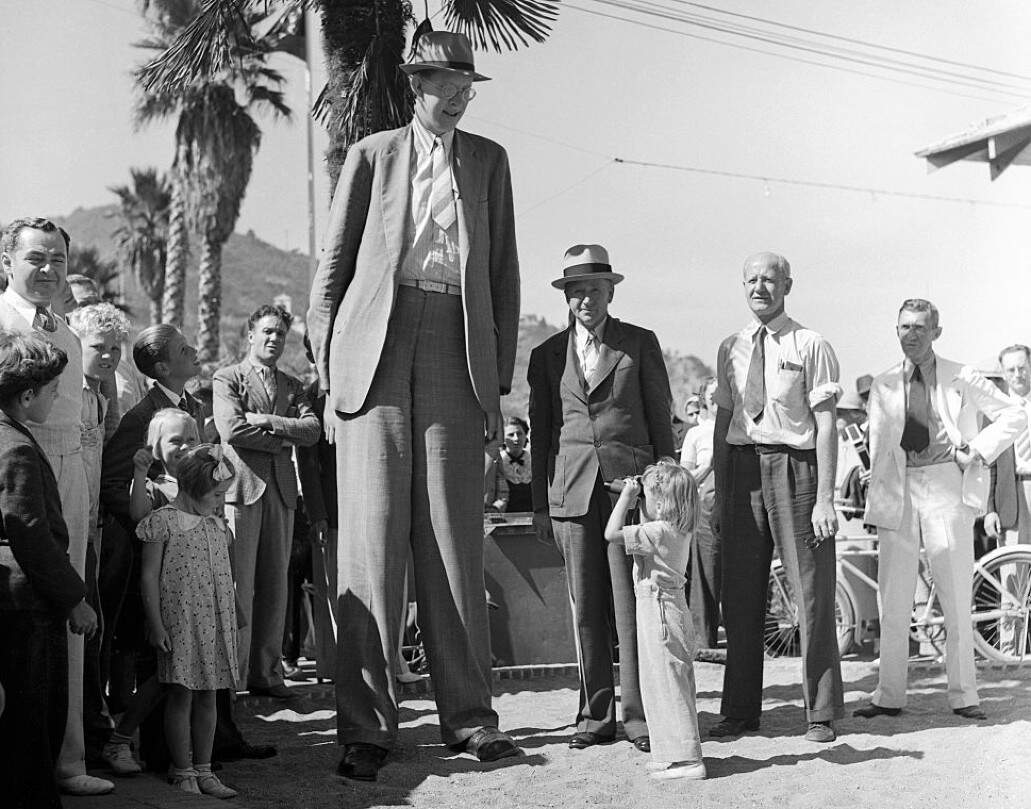
As a child I loved Tom Thumb, the perfectly formed human who was only a couple of inches tall; he roamed the countryside while sitting on the back of a mouse or hitched a ride in the ear of a horse. It grieved me to eventually learn that he was a fiction, not an actual human being. I consoled myself by learning about the indisputably real, 8 ft 11.1 inch Robert Wadlow, courtesy of what was then called “The Guinness Book of World Records.”
At the age of 9, I was the perfect target for this publication. And when I got my own copy, I was blissed out. I now had the answers at my fingertips, making me not only a sparkling conversationalist, but a sought-after resource during schoolyard debates.
First published in 1955, Guinness was the definitive and verified reference to discover the fastest time for swimming across the English Channel (6 hours, 45 minutes), and even more staggering, the slowest (28 hours and 44 minutes). It could tell you who held their breath underwater for the longest time (24 minutes, 37 seconds), jumped rope for the greatest number of times in a single minute (388 skips), sunk the highest number of consecutive free throws (an astonishing 5,221 over the course of 7 hours and 20 minutes) and answer the question of how far a yo-yo player could Walk the Dog (32 feet).
Sports records were easy to find. But my interests were (and are) more arcane.
What is the highest IQ score ever recorded? (276.) How large is the world’s largest birthday cake? (A vanilla sponge cake, baked by 1000 volunteers to celebrate the 100th birthday of Las Vegas, which weighed close to 60 tons. And here I thought sponge cakes were supposed to be light.) And because I briefly shared my father’s passion for office supplies (and let’s face it, what 9-year-old isn’t besotted with office supplies?), I was grateful to know that the world’s largest collection of ballpoint pens contains 285,150 unique ones.
I may be in contention for the World’s Most Dismissive Boomer, but I get that record-setting is serious business.
However, despite its status as an endlessly fascinating resource of jaw-dropping trivia, even the Guinness World Records (having dropped “Book of” from its name in 1999) faces financial challenges. To compensate for falling print sales, Guinness began cultivating another revenue source — the would-be record holders themselves. While anyone can still, at no cost, submit a record to be verified, the approval process is slow. But if an individual or company is willing to pay a fee ranging from $12,000 to as much as $50,000, they will be given expedited service, adjudicators and help in finding good records to break.
This is why we now have world records for the fastest-time-to-fillet-a-10-pound-fish-into-15-pieces-of-at-least-40-grams-each (set by Gordon Ramsay to promote the opening of a new restaurant). And even a record for the number of athletic records achieved in a single day (44 records in 24 hours) set by a Reebok-assembled team of athletes to promote the launch of their Nano 7 shoe). More disturbingly, though, by promoting self-promotion, Guinness may have contributed to the epidemic of professional social media “influencers” inciting others to buy useless products.
Still, unlike some major technology companies, Guinness will only trade in objectively provable superlatives, and it still insists upon adjudicators who confirm the accuracy of the record claim. While this may do little to advance humanity, we can at least trust that the world’s largest collection of ingested objects extracted by a single physician does in fact include: “nails, screws, buttons, dentures, toys, a child's opera glasses, a padlock, a set of rosary beads, crucifixes, poker chips, three squirrel vertebrae and even a miniature trumpet.”
I may be in contention for the World’s Most Dismissive Boomer, but I get that record-setting is serious business.
But these records are also about play — healthy and perhaps necessary play, particularly for children. Like most 9-year-olds, when I fell in love with Guinness records, I was also engaged in navigating one of the essential tensions of childhood and adolescence: How can we simultaneously fit in with our peers — be “ordinary” kids — while also find a way to be extraordinary?
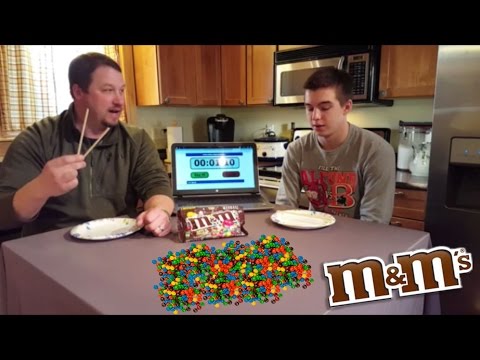
With its invitations to children to set records for peeling the most mandarin oranges in one minute, set the fastest time to type the alphabet, or to sort 30 M&Ms by color using a set of chopsticks, Guinness is providing one answer to that challenge. It’s good that they are. Now more than ever, children of all ages need to dream, to strive for some achievable, if unusual, goals, and to be simply, kindly entertained by outlandish but harmless achievements.
As for me, in these dark days I am seeking solace in stupid facts simply because they are facts. I now know that the largest gathering of people dressed as Mohandas Gandhi did indeed comprise 4,772 people. I’ve learned that a man flinging chopsticks at balloons was able to break 55 of them in one minute. And while none of this knowledge — let alone the deeds themselves — will make the world a better place, they at least keep the notion of verified truth alive.
Follow Cognoscenti on Facebook and Instagram. And sign up for our weekly newsletter.