Support WBUR
Cog's Weekly Newsletter
The cost of being a baby-making being
Editor's Note: This essay appeared in Cog's newsletter, sent every Sunday. We share stories that remind you we're all part of something bigger. Sign up here.
My mother tells me menopause can be summed up like this: “There’s a cost to being a baby-making being.”
It’s such a good line. But she knows — and I know, too — that there’s much more to it than the symptoms that have been the punchline of jokes for eternity: hot flashes, insomnia, brain fog, hormonal rage.
I learned just this week that humans are about the only mammals to experience menopause, besides toothed whales (orcas, belugas, short-finned pilot whales, narwhals) and perhaps some chimpanzees, though it’s not fully understood why. One explanation scientists subscribe to is the “grandmother theory.” At a certain age, it becomes better for females to help raise existing offspring than to reproduce them. For the vast majority of other warm-blooded animals, females who live for significant time beyond their reproductive years – some 40% to 70% of adulthood for humans, 30% for orcas – just don’t exist. But for humans and toothed whales (and Ngogo chimps in Uganda) there’s clearly an evolutionary benefit to female longevity. Fascinating, right?
In our culture, however, menopause has often been thought of as “the end.” As Amy LaRocca wrote in The New York Times: “Menopause has historically been treated as a way of saying not dead, exactly, but part dead for sure.”
But change is afoot. It’s not hyperbole to say that menopause is having a moment. Suddenly, megastars like Halle Berry, Tracee Ellis Ross, Naomi Watts and Brooke Shields are talking about their experiences, destigmatizing what it means to be an aging woman. And it’s become a multi-billion-dollar industry, with the likes of Goop founder (and Oscar winner) Gwyneth Paltrow leading the charge.
I can attest personally to the consumerization of “the change”-- it seems every other post in my Instagram feed is someone talking about their perimenopause symptoms, advertising a sure-fire fix to meno-belly weight gain or plugging hormone replacement therapy.
It can all be a little overwhelming. And infuriating. How do we not know more about this massive health event that affects half the population? Why have women for eons been told to grin and bear it, and invest in a hand fan?
This is, in part, why your Cog editors organized a CitySpace event on the topic. We have quite the lineup. This Tuesday, March 4, we’ll welcome Massachusetts General Hospital physician and Harvard Medical School Associate Professor Dr. Sherri-Ann Burnett Bowie, psychiatrist and author Dr. Pooja Lakshmin and Moms Demand Action founder and author Shannon Watts. Those three will be in conversation with Morra Aarons-Mele, a feminist, mental health advocate and author. And then we’ll have author and humor writer Lisa Borders in tow to keep us laughing.
This past week, as part of our event preparation, I had the chance to talk with our guests about what they’re hoping to cover at the event. I’m sharing a quote from each one below, to entice you to get a ticket (if you haven’t already).
- “So much of my patients’ lives have been taken up by caregiving, whether it's taking care of kids or taking care of aging parents. They’re in that panini. And they’re really wondering: How do I find myself again? Where do I fit inside of this? What is my purpose? For so long, we've been told that menopause means your life is over; you have no more value. And that's so not true. That's so not true.” – Dr. Pooja Lakshmin, author “REAL SELF CARE: Crystals, Cleanses and Bubble Baths Not Included"
- “ There have been almost 700 publications related to the SWAN Study (Study of Women’s Health Across the Nation) since its inception in the 1990s. But oftentimes there is a disconnect between what knowledge we have and access to it. We know about complications related to menopause, and also the lifestyle changes that are associated with better aging and a better menopause experience. [The study] also validates women’s experiences. The fact that women who go through menopause still have sex, just that reality.” – Dr. Sherri-Ann Burnett-Bowie, Massachusetts General Hospital researcher and associate professor at Harvard Medical School
- “There's a need for women to be activists. For midlife care and for taking the black boxes off of (midlife) therapies that should be readily available, just as they are for men. We have been so focused on other stages of women's lives that we really need to come together and fight for access to the different treatments and what we need in menopause. It makes me so incredibly angry that entire generations of women did not have access because of the patriarchy, because of faulty science. I think we should be angry and demanding better care.” – Shannon Watts, author “Fired Up: How to Turn Your Spark into a Flame and Come Alive at Any Age” (June 2025)
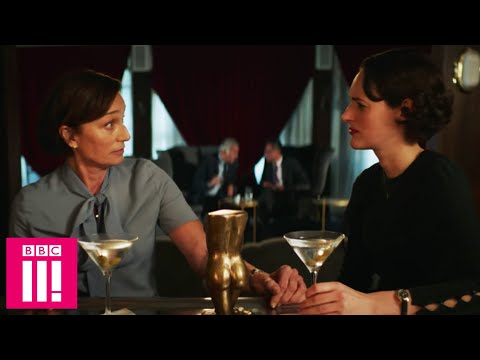
There’s a episode in season two of “Fleabag” when a character played by Kristen Scott Thomas tells Fleabag, Phoebe Waller-Bridge, that “menopause is the most wonderful thing in the world, and your entire pelvic floor crumbles and you get barking hot and no one cares, but then you’re free.” I sure hope that’s true for me one day.
But in the meantime, I’m glad Cog can be part of the conversation. I hope event attendees will learn something – maybe even feel a little less bewildered and alone. If you’re in the Boston area, I hope we’ll see you Tuesday evening.
Follow Cog on Facebook and Instagram. And sign up for our weekly newsletter.