Support WBUR
Commentary
'Celtics City' shows Boston at its best and its worst. Its most loving and hateful
If you thought HBO's new series “Celtics City” would be little more than a vainglorious, self-congratulatory parade for the defending NBA champions and the city of Boston, sit yourself down on the couch, press “play” and prepare to stand corrected.
The documentary, whose executive producers include ultimate Boston superfan and media personality Bill Simmons and soon-to-be-former Celtics owner Wyc Grousbeck, use the backdrop of the Celtics’ illustrious history as a vehicle to tell not just the Celtics’ tale, but the city’s.
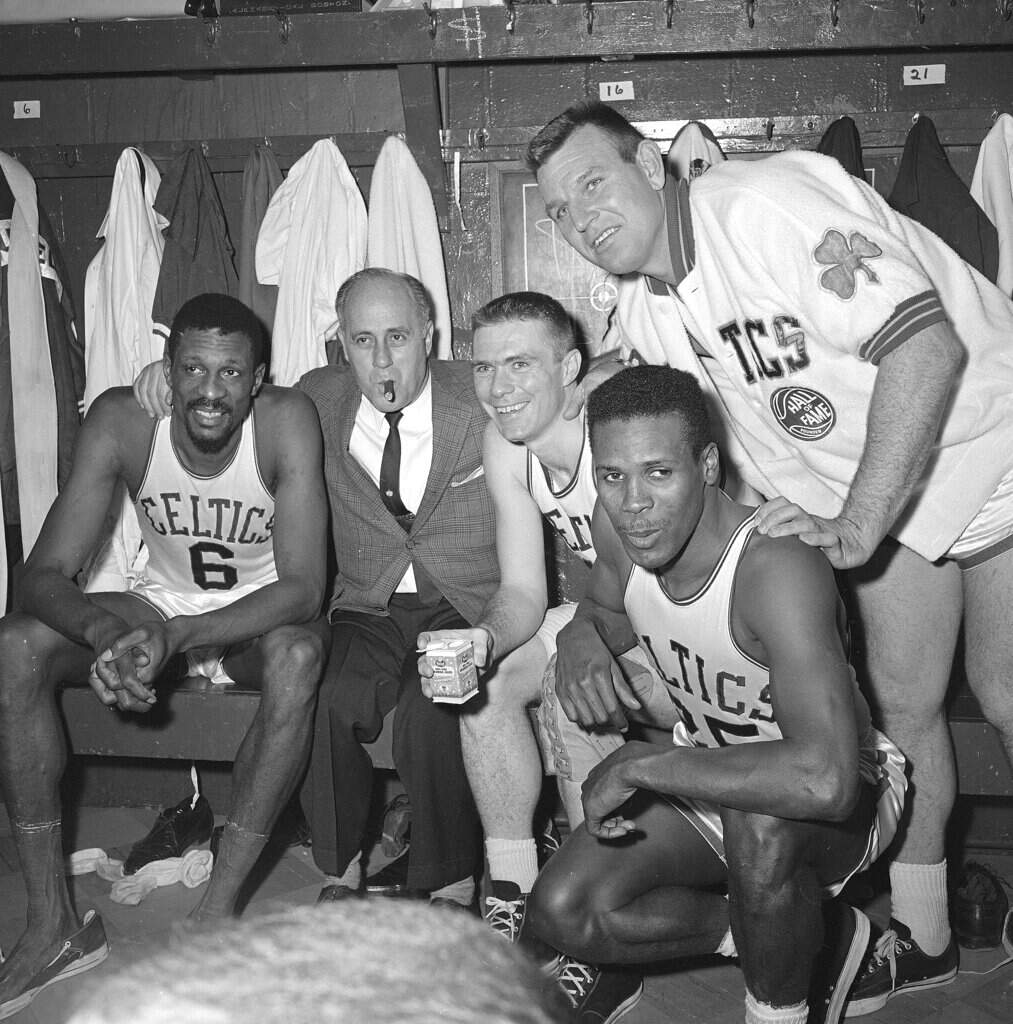
Sure, there’s plenty of great basketball action both for diehards and younger crowds (who can’t recite every player from the early days by rote), plus a wealth of content from surviving Celtics and departed voices like coach Red Auerbach and the great Bill Russell. After all, what’s a Celtics documentary without basketball drama?
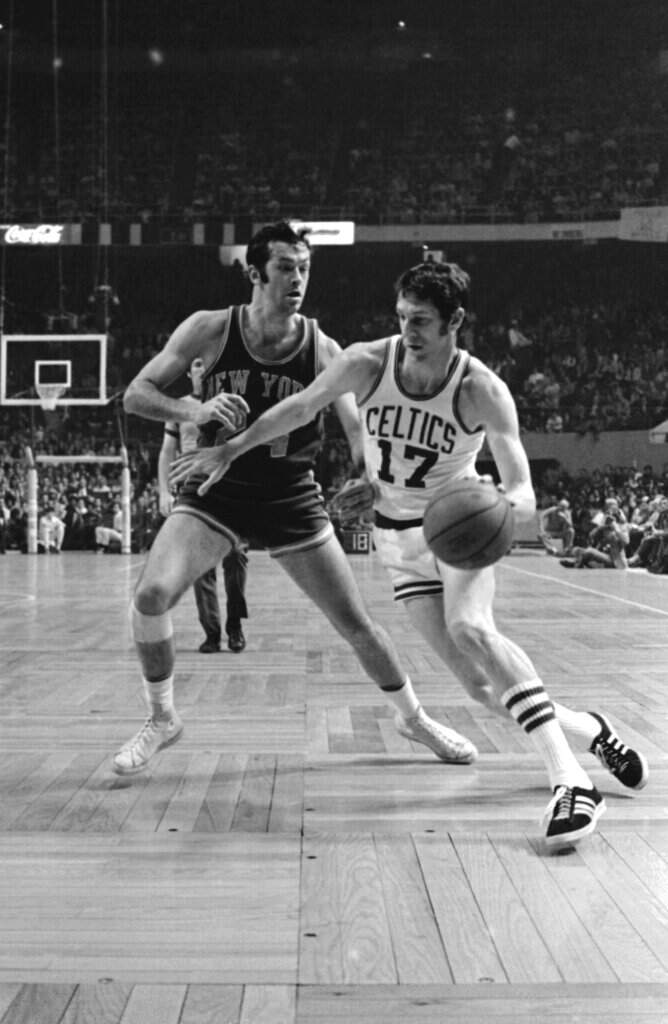
The fan in me couldn’t help gripping the couch a little tighter in the moments leading up to Johnny Havlicek’s famous steal in the 1965 Eastern Conference Finals or during the Celtics’ epic triple-overtime battle against Phoenix in the 1976 NBA Finals—considered by some to be “the greatest game ever played.”
But “Celtics City,” a nine-part series that will conclude April 28, isn’t just a constant refrain of “We Are The Champions” — though the steady stream of titles remains key to the story.
It’s a mirror: one that shows Boston at its best and worst. Its most loving and hateful. Its most joyous and most tragic.
On one hand, you have a basketball team led by a genius in Red Auerbach that repeatedly goes to war with everything in its path — the fledgling NBA, racism, even its own city — and wins seemingly every time.
Auerbach’s progressive, laser-focused view on team-building led him to make Chuck Cooper the first Black player ever drafted into the NBA, move heaven and earth to acquire Russell a few years later, start the first all-Black starting five in NBA history, and make Russell the first Black head coach in NBA history when no one else would have done so.
Why? Because Auerbach simply wanted to win, and he wasn’t going to let something as silly as systemic racism get in the way of that.
On the other side of the equation lies Boston: a city that loved the championships the Celtics brought home, but failed to fully embrace the team and Black stars like Russell while later throwing itself wholeheartedly behind characters like Larry Bird, whose unspoken status as the NBA’s “Great White Hope” is prominently dissected.
As Russell’s profile as an outspoken Civil Rights advocate exploded in the 1960s and the racist abuse he and his Black teammates faced within the city mounted, he even famously said, “I don’t play for Boston. I play for the Celtics.”
(That proclamation became true not long after with Auerbach even replacing the word “Boston” with “Celtics” on the front of the team’s jerseys, a change that remains today.)
Rather than trying to keep sports and politics separate as many would prefer, "Celtics City" does its best to call those issues on the floor and make Boston face them.
As Russell’s Celtics continued to win titles, including a stunning eight in a row from 1959-1966, the show juxtaposes their success against the cold reality of segregation, racism, and the backlash to the Civil Rights Movement, including the assassinations of icons like Medgar Evers and Martin Luther King Jr.
Later, the post-Russell championship squads of 1974 and 1976 (which included stars like Jayson Tatum’s St. Louis idol Jo Jo White) brought home titles amid Boston’s race riots around busing and the 1976 assault of Ted Landsmark at City Hall Plaza—a site where thousands would gather to celebrate Celtics titles.
Contrast this uncomfortable honesty with our current moment when a feature about Jackie Robinson, who served as an Army lieutenant before breaking baseball’s color barrier in 1947, can be removed (however briefly) from the Department of Defense’s website as part of an ongoing purge of references to “DEI.”
Can we be the best versions of ourselves when we actively choose not to confront our flaws? Aren’t we more doomed to repeat history when we refuse to learn from it?
Rather than trying to keep sports and politics separate as many would prefer, “Celtics City” does its best to call those issues on the floor and make Boston face them.
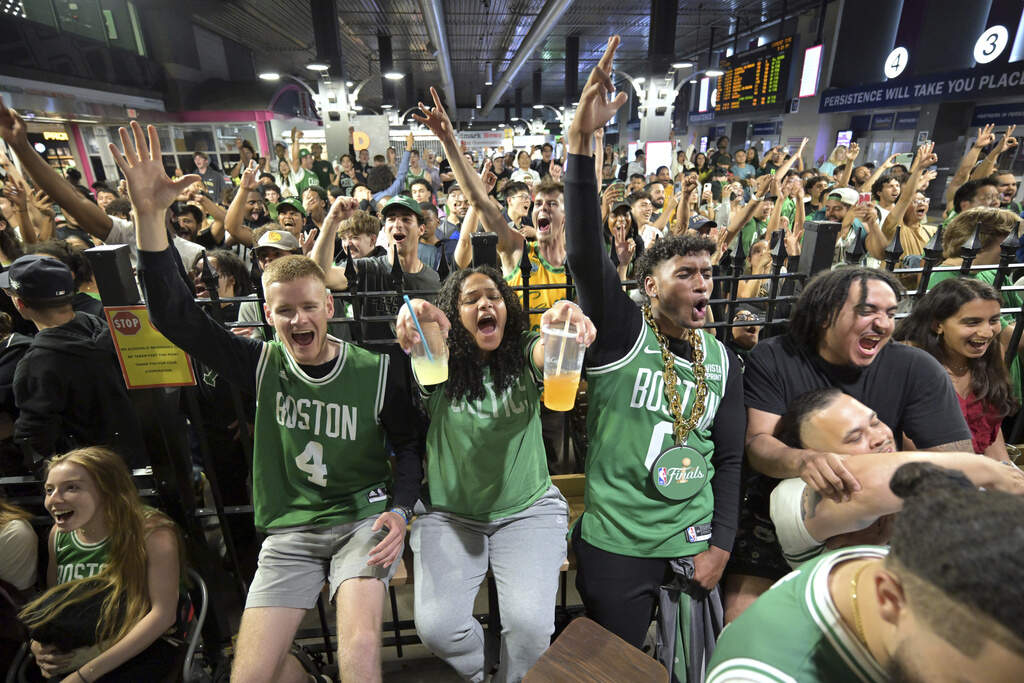
In doing so, it positions the Celtics — the team Boston fans used to shun because it had “too many Blacks” on it and played the sport once derisively called “African handball,” according to the show’s vast team of guest experts — as the team that represents its city better than any other pro sports team in town.
The Celtics are Boston — all of it together. The Black. The white. The love and hate. The rich and working class. The North End and Roxbury. The dominant yet complicated past and the bright future.
The 18 banners hanging from the TD Garden rafters feel that much more special when you embrace all it took for them to exist and everything they represent, not just the parts that make us feel good. As someone who didn’t grow up here, I can honestly say that appreciating the Celtics’ championship history in its entirety, failures included, makes me more of a fan than ever.
And as the torch of the franchise’s leadership passes from the likes of Russell all the way down to Jayson Tatum and Jaylen Brown, the team continues to re-invent what’s possible both on and off the court — and show us a better way forward.
Follow Cog on Facebook and Instagram. And sign up for our newsletter, sent on Sundays. We share stories that remind you we're all part of something bigger.