Support WBUR
Commentary
In April 1775, Isaiah Thomas snuck his printing press out of Boston. The rest is history
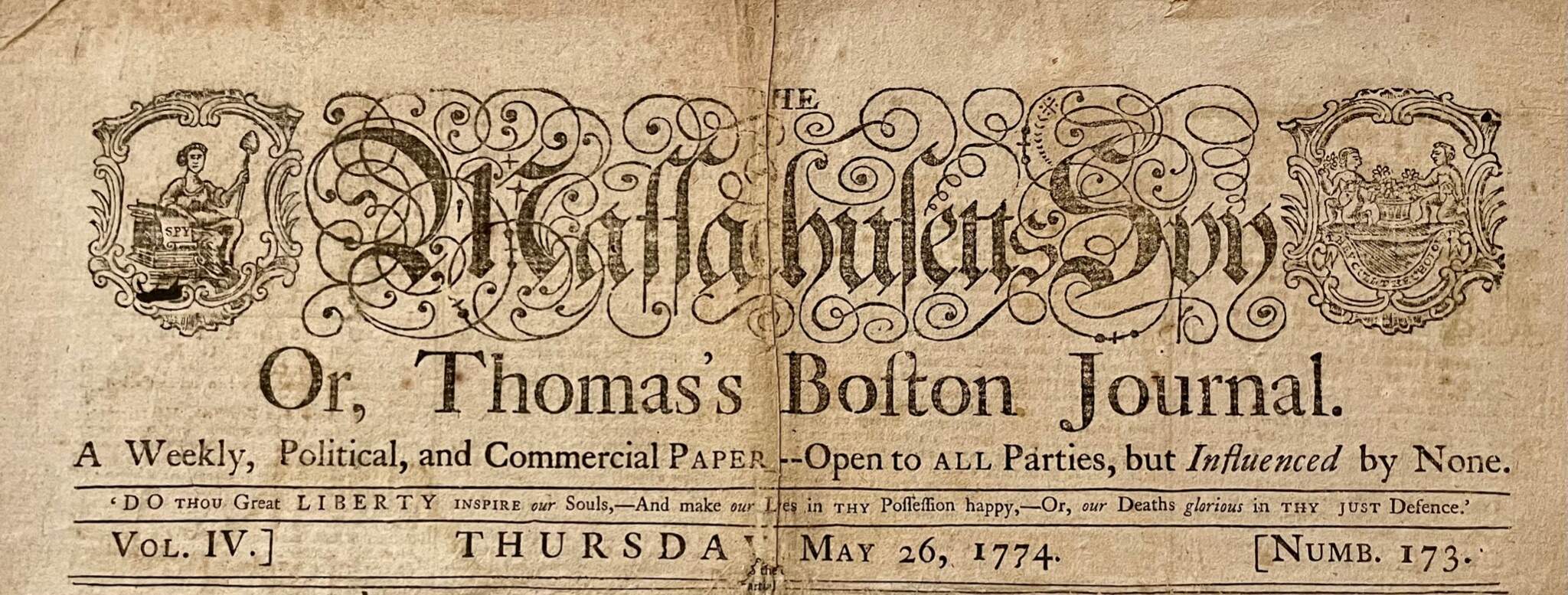
On April 19, our country will celebrate the 250th anniversary of the Battles of Lexington and Concord. As the two towns debate the true birthplace of the Revolutionary War, we might redirect our gaze to another significant event in American history that took place three days earlier — and almost no one knows about it. It also happened in Massachusetts and led to the creation of one of America’s most prized institutions.
The tale centers around Isaiah Thomas, a revolutionary patriot and printer of the radical Boston newspaper, The Massachusetts Spy. The first issue of the newspaper was published in Boston on March 7, 1771. At the time, Boston was the epicenter of revolutionary fervor, and the paper was its voice. The Massachusetts Spy quickly became the most influential channel for spreading revolutionary news and opinion in New England.
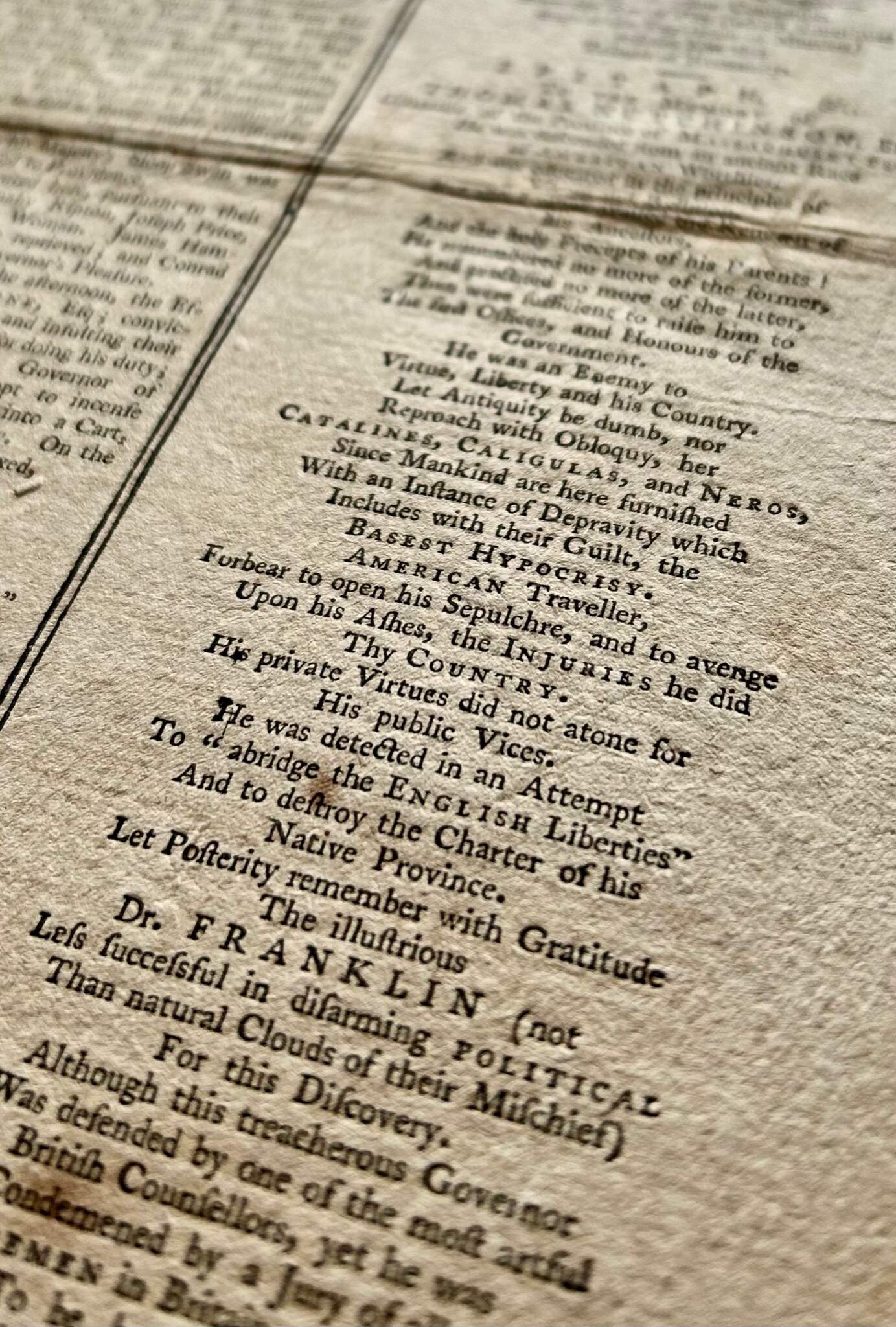
As you might imagine, this did not sit well with the British authorities, who were loyal to the king. They first tried to offer Thomas honors and awards in the hopes it would soften his criticism, but he made clear he could not be bought. Then they tried to shut him down by having his creditors immediately call-in the debt he owed, but his friends quickly came to his aid to pay it off and help him avoid foreclosure.
When Thomas printed an essay that referred to Lieutenant Governor Andrew Oliver as “a perjured traitor” and asserted that Governor Thomas Hutchinson “was not the legal governor,” that was enough for Hutchinson. He summoned Thomas to appear before the Governor’s Council three times. Each time, Thomas refused to appear. Hutchinson then had the Council vote to refer the matter to the Attorney General of the Province of Massachusetts Bay (who reported to the Crown) for prosecution, but no indictment ever came.
By April of 1775, John Hancock (the Braintree native and founding father) advised Thomas to move his press out of Boston to “some country town where it would be safe and be available to do the printing.”
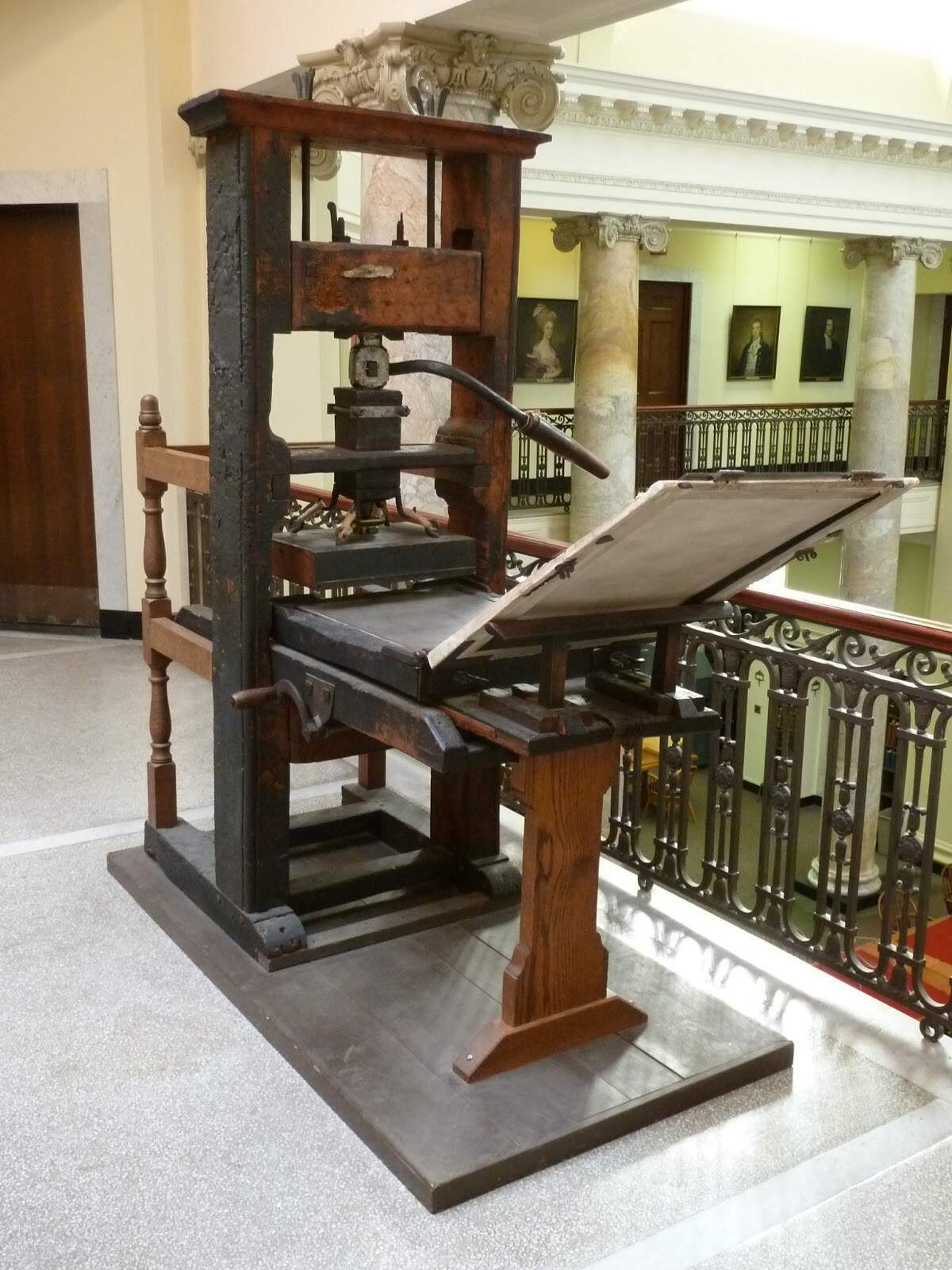
On the evening of April 16, 1775, under the cover of darkness, Thomas disassembled his printing press and had it secretly ferried across Boston Harbor to Charlestown, where his friend Timothy Bigelow took it by horse-pulled wagon to the basement of his home in Worcester.
Three days later, on April 19, 1775, the battles of Lexington and Concord — “the shot heard round the world” — marked the start of the Revolutionary War. By then, the printing press was out of harm’s way, safe in the basement of Bigelow’s home. Not so for Thomas and Bigelow. Thomas went to help his friend Paul Revere spread the word that the British were coming, while Bigelow (who later became a Revolutionary War hero) led a regiment of Worcester Minuteman in a march to Cambridge to answer the call to arms.
Thomas released the first issue of his newspaper from Worcester on May 3, 1775 — in which he reported on the events he witnessed with his own eyes in Lexington and Concord. These were some of the most important details, from the colonial perspective, of the British actions and the bravery of local militias. It included a call to action to the people of Massachusetts to fight for their rights, and helped to shape public opinion in favor of the patriot cause.
Four months after that, Benjamin Franklin appointed Thomas the postmaster for Worcester, which was a critical position because it oversaw the flow of letters, documents and newspapers, which was the main way that information spread at the time.
His appointment proved fortuitous for Thomas, because it gave him the opportunity to intercept a “hurrying post rider” who was carrying the Declaration of Independence to Boston. Thomas briefly interrupted that July 14, 1776 trip. He took the document to the porch of the meeting house in Worcester where he performed the first public reading of our Declaration of Independence to a gathering crowd. He then sent the rider to Boston where it was read to the public four days later.
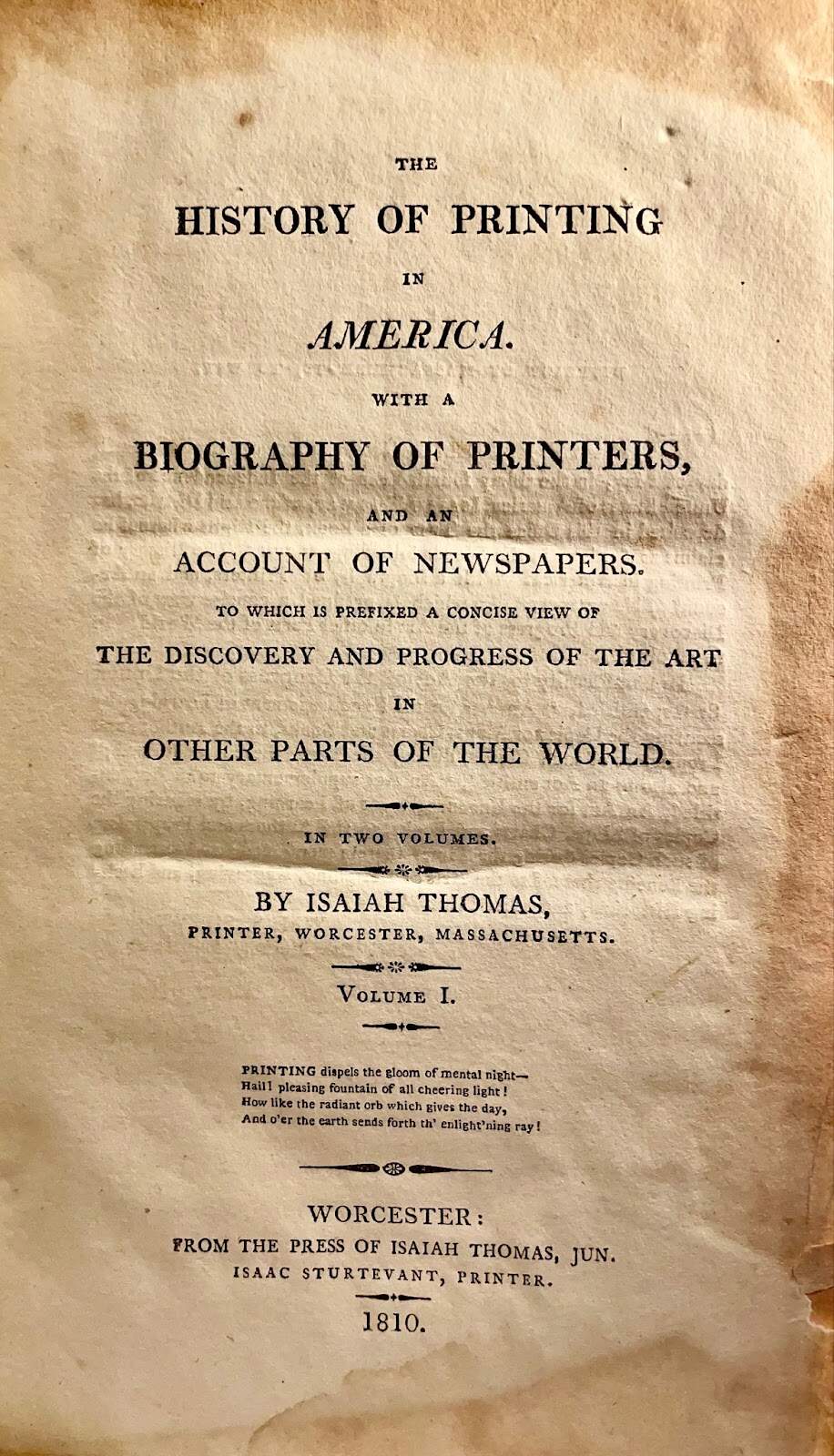
Thomas remained in Worcester after the Revolution, where his business prospered. In 1810, he wrote a book about the history of printing in America, that remains one of the most authoritative sources on the history of this cherished art. While researching the book, Thomas collected thousands of books, pamphlets, newspapers, and other documents. What would he do with all of this material?
He decided he would find a way to preserve these items for future generations. And we are the fortunate beneficiaries. In 1812, he established a society to collect and preserve the documentary materials about America’s history: the American Antiquarian Society. His goal was to “enlarge the sphere of human knowledge, aid in the progress of science, to perpetuate the history of moral and political events, and to improve and instruct posterity.”
The Society remains in Worcester to this day. It is a remarkable institution that holds the world's largest repository of printed material on early America, including an unprecedented collection of books, pamphlets, broadsides, newspapers, periodicals, children's literature, music and graphic arts material. It could not be more relevant today. At a time in American society when questions of authenticity seem to permeate almost every phase of public life, it is comforting to know there is a place that will forever hold and protect American originals.
The Society’s collection has grown to include more than 4 million items, but one item might be a little more special than the rest: the original printing press that Isaiah Thomas snuck out of Boston. It’s prominently displayed in the main hall for all visitors to see.
The events marking the 250th anniversary in Lexington and Concord will no doubt be better attended, but this anniversary is also highly deserving of our celebration.
On April 12, the American Antiquarian Society will sponsor a free community event commemorating the 250th Anniversary of Isaiah Thomas’ printing press coming to Worcester. The author of this essay, Doug Brown, is a collector of rare books on early America. His items relating to Isaiah Thomas, pictured in this article, will be on display at the Grolier Club in New York City as part of its New Members Collect exhibition.
Follow Cog on Facebook and Instagram. And sign up for our newsletter, sent on Sundays. We share stories that remind you we're all part of something bigger.