Support WBUR
Commentary
'Gatsby' is 100 years old, and Fitzgerald’s tale is still America’s story
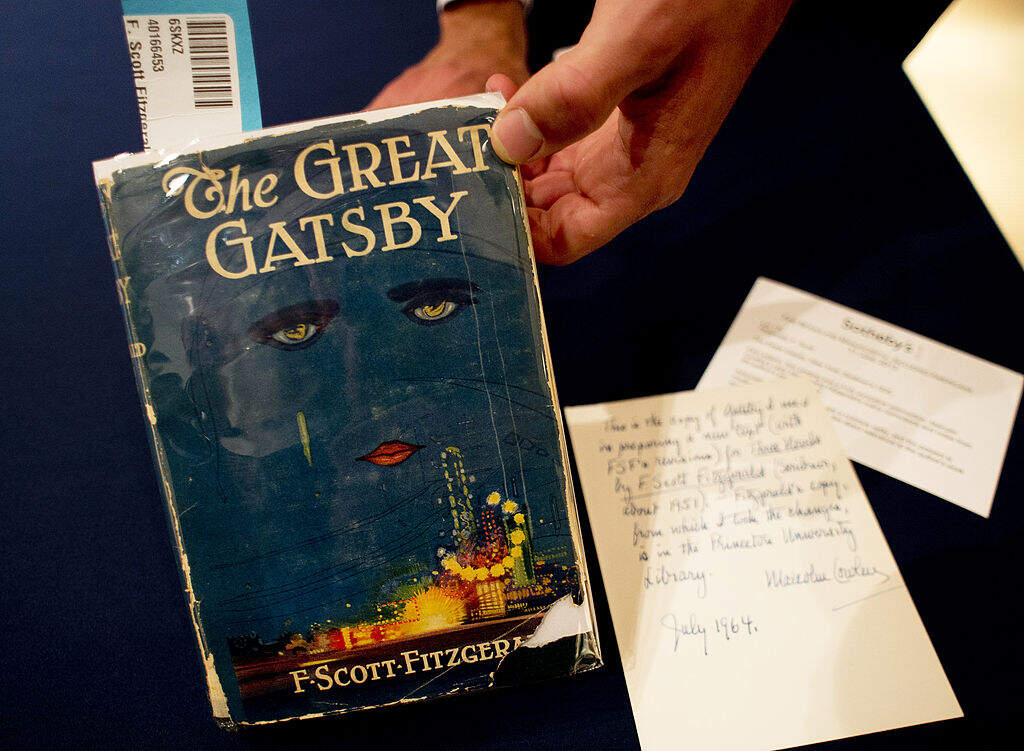
The first review of “The Great Gatsby,” published a century ago to the day, was not quite a rave. “F. Scott Fitzgerald’s Latest a Dud” was the headline run by The New York World. A second reviewer accused the author of “simply puttering around.” Fitzgerald, who expected the book to be a smash, found himself smashed instead.
Fortunately, critics don’t decide whether a book will endure. Readers do. The reason “Gatsby” has endured as a (if not the) Great American Novel is because it continues to articulate our national aspirations and anxieties a century after its debut.
I say this as a once reluctant fan. When I first read the book—assigned reading, high school English—it felt hokey: timeworn plot, flowery prose, rank antisemitism.
Only later, when I read the book as an aspiring writer, could I see the magnitude of Fitzgerald’s achievement. I had never encountered a writer, for instance, who described music with such astonishing precision.
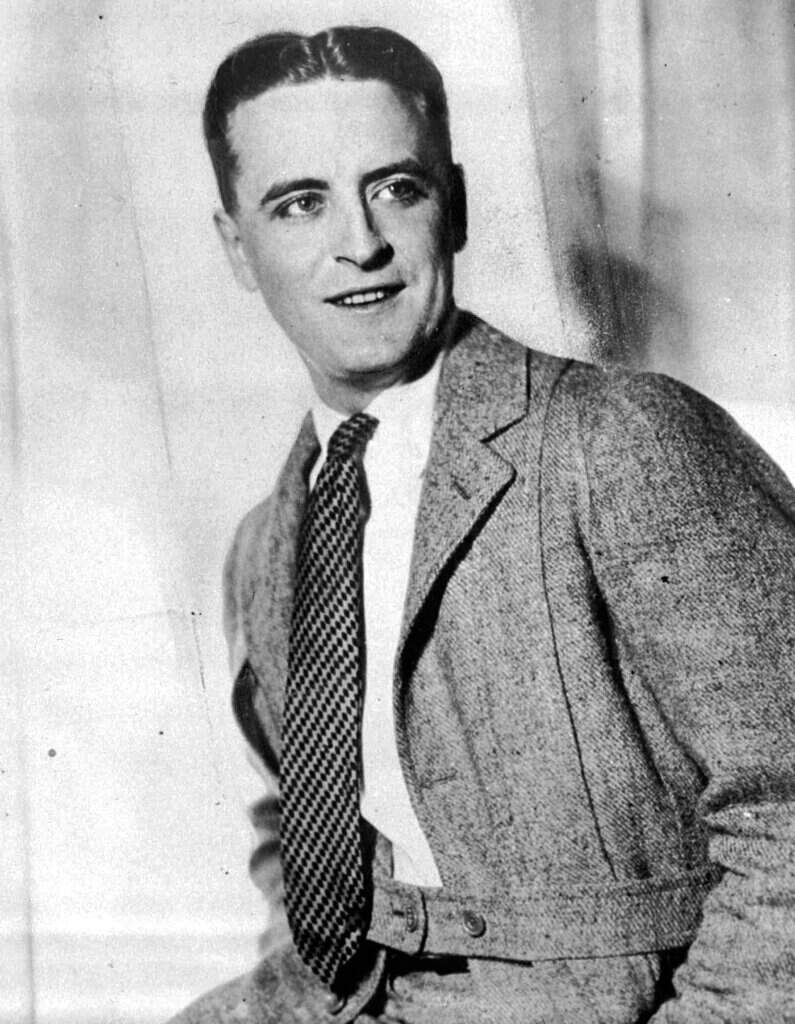
“All night the saxophones wailed the hopeless comment of the ‘Beale Street Blues’ while a hundred pairs of golden and silver slippers shuffled the shining dust,” Fitzgerald wrote. “At the grey tea hour there were always rooms that throbbed incessantly with this low sweet fever, while fresh faces drifted here and there like rose petals blown by the sad horns around the floor.” Elsewhere, he conjured “the stiff, tinny drip of the banjoes on the lawn.”
The stiff, tinny drip of the banjoes?
He was just as deft with people. Here’s how Nick Carraway, the novel’s gimlet-eyed narrator, recounts his first meeting with his fabulously wealthy neighbor, Gatsby:
He smiled understandingly—much more than understandingly. It was one of those rare smiles with a quality of eternal reassurance in it, that you may come across four or five times in life. It faced—or seemed to face—the whole eternal world for an instant, and then concentrated on you with an irresistible prejudice in your favor. It understood you just as far as you wanted to be understood, believed in you as you would like to believe in yourself, and assured you that it had precisely the impression of you that, at your best, you hoped to convey. Precisely at that point it vanished—and I was looking at an elegant young rough-neck, a year or two over thirty, whose elaborate formality of speech just missed being absurd.
It struck me as astonishing that Fitzgerald could capture so much—Gatsby’s magnetism and his fraudulence—in a single gesture.
What redeemed Gatsby, for me at least, was his “extraordinary gift for hope,” which is the engine of the book. As a young man, Gatsby falls in love with a young debutante named Daisy, but lacks the social status to marry her.
Gatsby becomes a war hero, makes a fortune in various legally dubious pursuits, and buys a mansion near Daisy, hoping to reclaim her. He’s the embodiment of the American drive for reinvention, the lovely delusion he can erase the poverty of his upbringing by marrying a girl so rich even her voice is “full of money.”
The problem, of course, is that Daisy has married another, an abusive boor named Tom Buchanan who was born into extraordinary wealth. When he’s not busy breaking his mistress’ nose, Tom reads books devoted to white supremacy. (“Civilization’s going to pieces,” he explains. “It’s up to us who are the dominant race to watch out or these other races will have control of things.”)
It’s impossible to encounter Tom’s insecure swaggering without an eerie sense of familiarity. “Two shining, arrogant eyes had established dominance over his face and gave him the appearance of always leaning aggressively forward,” we are told. The “paternal contempt” in his voice sends the following message, according to Nick: Now, don’t think my opinion on these matters is final just because I’m stronger and more of a man than you are.
Sound like anyone you might know?
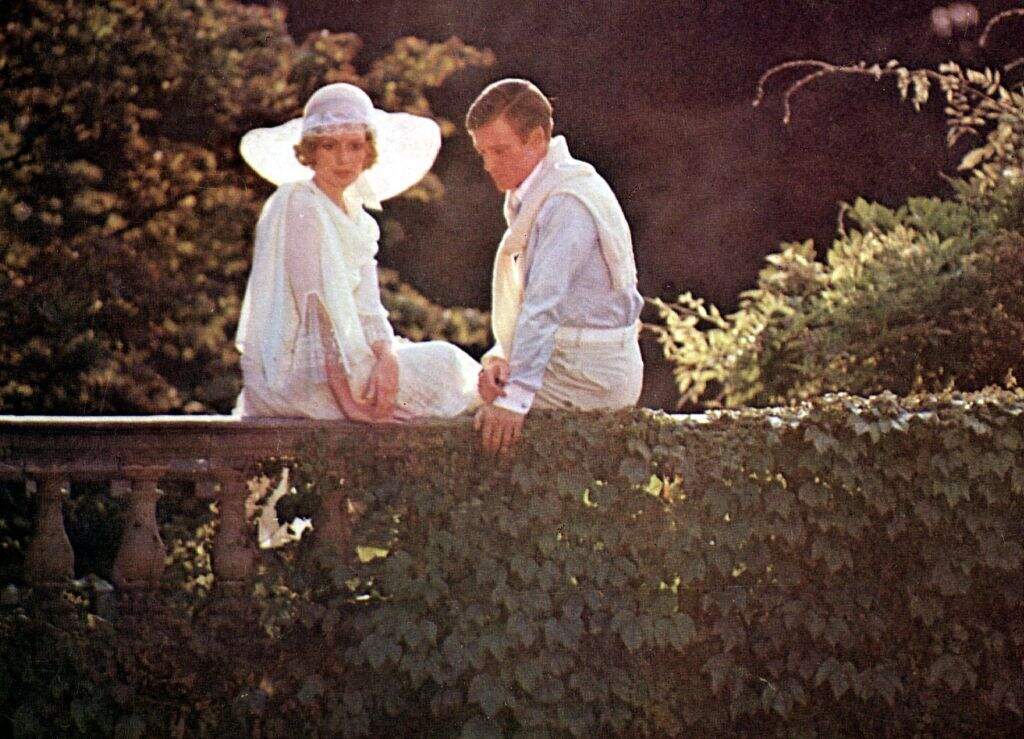
For all the glamour of the gilded parties Gatsby throws to dazzle Daisy, Fitzgerald’s essential subject is the cruelty of America’s class system, the manner in which fate is handed out at birth, “the hot struggle of the poor” as he puts it, set against the decadent misery of the rich. In this sense, “Gatsby” is a forerunner to our current obsession with shows such as “White Lotus” and “Succession.”
What sets the novel apart from such dramas is our hero’s unremitting hope, what Fitzgerald calls “the colossal vitality of his illusion.” He honestly believes true love will defeat social standing, that he can wrest Daisy away from Tom.
Nick tries to caution him, of course: “‘I wouldn’t ask too much of her,’ I ventured. ‘You can’t repeat the past.’”
Gatsby’s reply is one for the ages:
“‘Can’t repeat the past?’ he cried incredulously. ‘Why of course you can!’”
It’s a doomed nostalgia that still plagues our national spirit.
Because, of course, Daisy doesn’t leave her wretched bully of a husband. Instead, she mistakenly runs over a woman, while driving Gatsby’s car. Gatsby gallantly takes the blame and winds up murdered, thanks to Tom’s treachery.
Acting as the moral arbiter of the story, Nick Carraway delivers his verdict with a scathing clarity:
I couldn’t forgive [Tom] or like him, but I saw that what he had done was, to him, entirely justified. It was all very careless and confused. They were careless people, Tom and Daisy—they smashed up things and creatures and then retreated back into their money or their vast carelessness, or whatever it was that kept them together, and let other people clean up the mess they had made.
I’ve thought about this passage a hundred times over the past eight years, and a dozen more over the past two months, as our country has been ravaged by forces impervious to accountability and incapable of empathy.
A hundred years ago, Fitzgerald saw the dire patterns we are living through today. This is why “Gatsby” still matters.
Most critics hail the novel’s dour final pronouncement: “So we beat on, boats against the current, borne back ceaselessly into the past.” I prefer its opening sentences, a quietly stubborn plea for human decency, for the moral imagination to “remember that all the people in this world haven't had the advantages that you've had.”
You tell ‘em, F. Scott.
Follow Cog on Facebook and Instagram. And sign up for our newsletter, sent on Sundays. We share stories that remind you we're all part of something bigger.