Support WBUR
Commentary
When the snowbirds return
Throughout the winter months, that in New England extend well into spring, Florida beckons. With come-hither advertisements, photos of glorious sunsets on the beach and the promise of endless 80-degree weather, even the hardiest among us may have been tempted to head south.
For many years, in my family, muscling through New England winters was a point of pride. We didn’t touch the heat until November, and shoveled the driveway like it was a rite of passage. Until one day my husband announced that we should “break the back of winter.” His daughter had recently exchanged snow boots for flip-flops and moved to Sanibel Island; that’s what happens when a woman falls in love with a boat captain. So we followed — first with annual pilgrimages during our son’s school vacation week. Later, as empty-nesters, we found ourselves joining the legions of self-appointed snowbirds, as time and work allowed.
We appreciated the relief from the bone-chilling northeast winds and the freedom from the obligation to shovel the driveway after a blizzard. We found in Florida there is nothing more pleasant than our long daily walks with our dog, Teddy, and nothing more serene than watching a moonrise at twilight when the palm trees glide like shadow puppets in the gentle breezes.

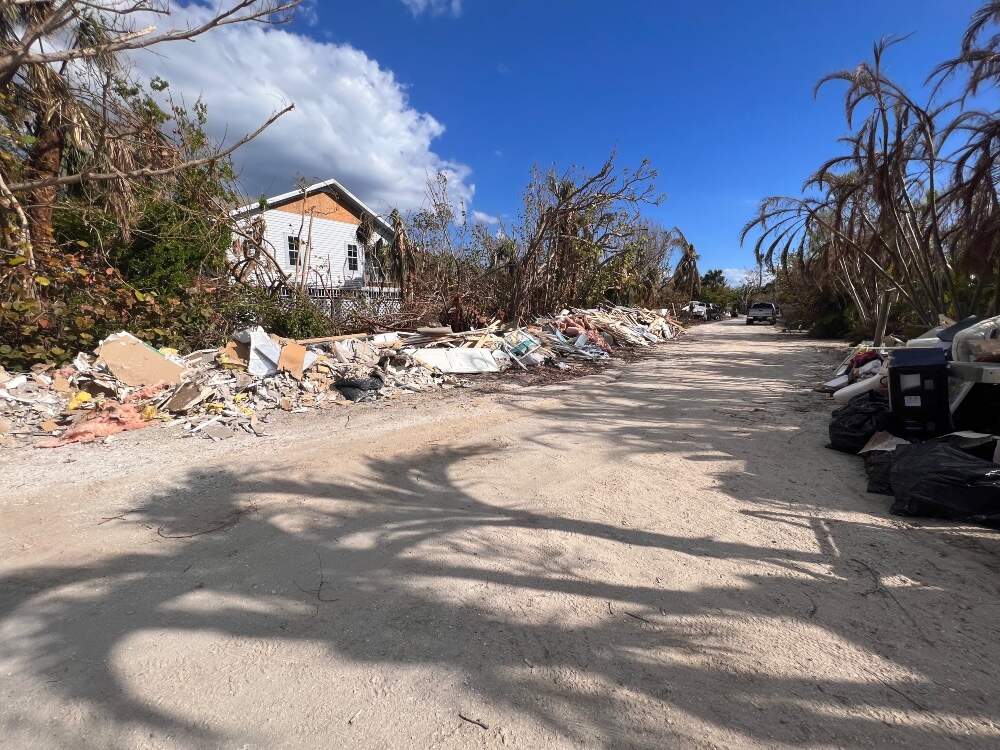
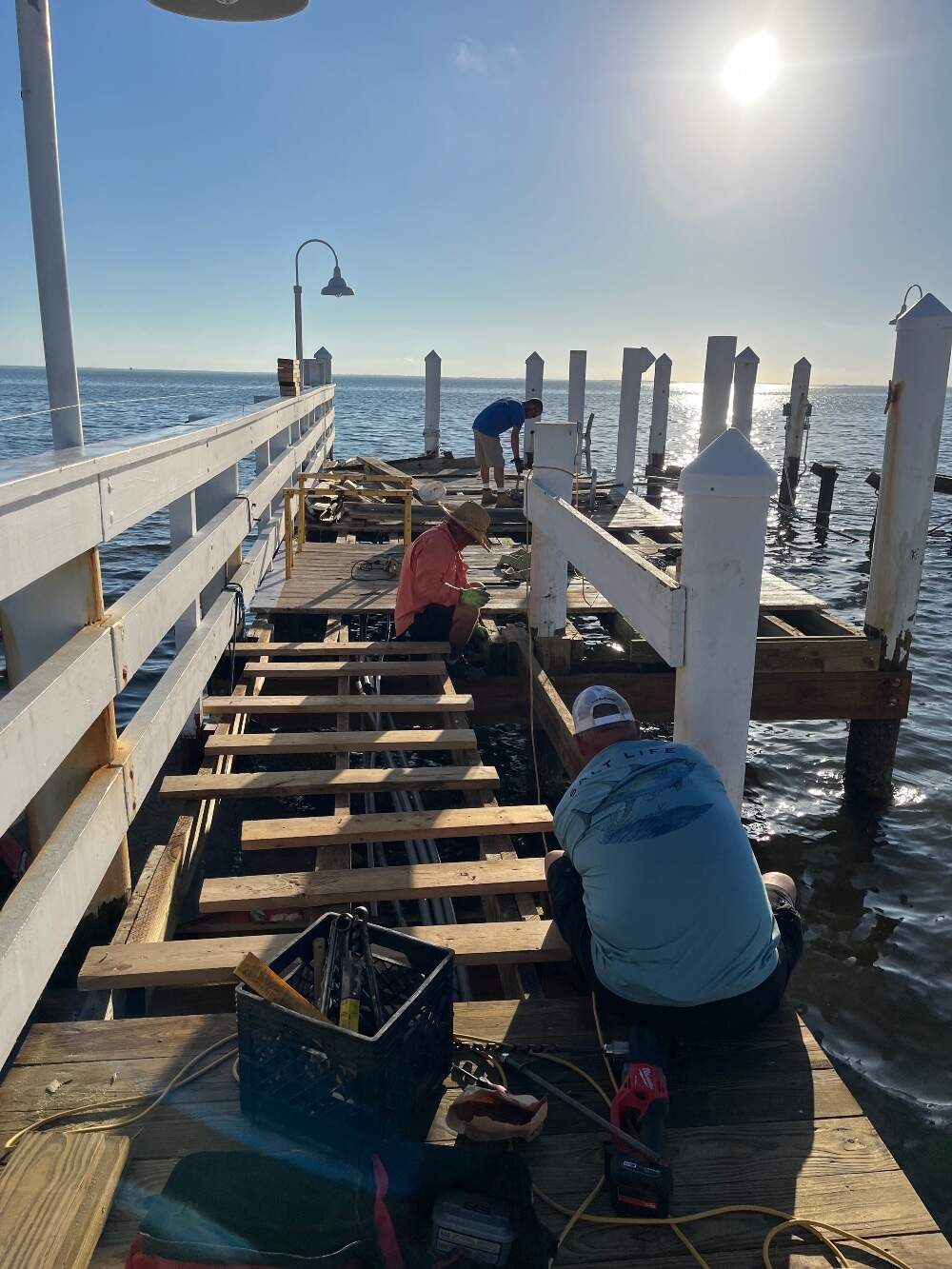
But as beautiful as mother nature can be, I learned it is equally fearsome. Two and a half years ago, in 2022, Hurricane Ian flooded our winter nest. Every piece of furniture and stitch of clothing ended up on the street for trash. Mold crept up the walls, forcing the drywall to be stripped down to the studs. For my stepdaughter and son-in-law on Captiva Island, the loss was great. Their entire business, Captiva Cruises, was shut down. Boat captains and tour guides became carpenters and welders. Instead of sailing through Pine Island Sound to the islands of Useppa, Cabbage Key and Gasparilla, watching for dolphins while narrating the history of the native Caloosa tribe, deckhands spent months rebuilding the nearly destroyed Lady Chadwick, the company’s 120-passenger boat.
Today, they're back in business, a testament to hard work, strong wills and resilient spirits. Tourists — the lifeblood of business — have been slowly coming back to the islands of Sanibel and Captiva, both of which were hit again this past year with two successive hurricanes.
Wasn’t it just a few years ago when snowbirds thought of major hurricanes as relatively rare events? When a big one hit, you could hear the old timers say, “You won’t see another one like that for 100 years.” That was before names like Ian, Milton and Helene entered our collective conscious.
As a long-time volunteer for the American Red Cross, I have learned firsthand how climate change is causing weather-related disasters to occur with greater frequency and intensity. Scientific models can predict what parts of the country are likely to sustain severe and repeated disasters. In those areas, the Red Cross is now partnering with local nonprofits to help communities better prepare for future disasters, which are no longer rare. They are common and inevitable. In addition to the episodic infusion of volunteers who help set up shelters and distribute food in the immediate aftermath of a disaster, the Red Cross offers a more enduring model of support to these communities. The long haul of recovery after a disaster extends far beyond the 24-hour news cycle, when coverage moves on to the next breaking story.
Today, in Southwest Florida, after three hurricanes in two years, talking about the weather is not idle chit-chat. From Sarasota through Fort Myers to Naples, people ask whether they might be safer someplace else. “Should we sell that condo?” asked a gentleman over coffee in the park.
A better question for anyone returning from a warm weather escape could be, “What lessons should we be taking home with us?”
As for me, I have come to know that we can’t run away from increasingly frequent weather-related disasters. Much as we gain from nature — its warmth, its serenity, its beauty — it is our turn to give back by honoring the people who live and work year-round in coastal communities. When we are gone, they are rebuilding with materials more resilient and structures higher and stronger. They are pushing for changes that can preserve and protect communities.
There are reasons for hope in our own New England history. In the mid-20th century, our beloved Cape Cod was threatened by weather, increasing development and pollution. It was no small feat for a young politician named John F. Kennedy to galvanize support to preserve the Outer Cape with legislation designating this area the Cape Cod National Seashore
For optimism, I look to my stepdaughter, who has made Florida her home for nearly 25 years. Despite the challenges with their Captiva business, she says that she and her husband are “rich in love.” She believes that visitors will return in abundance, and the cruises, over time, again will thrive.
After all, Sanibel and Captiva, where Anne Morrow Lindbergh wrote "Gift from the Sea", are much like the Outer Cape: a nature paradise, a place where in Lindbergh’s words, “we feel stretched… expanded… filled with stars up to the brim.”
Follow Cog on Facebook and Instagram. And sign up for our newsletter, sent on Sundays. We share stories that remind you we're all part of something bigger.