Support WBUR
Commentary
I'm running the Boston Marathon for my mom
Editor's note: This essay contains references to suicide.
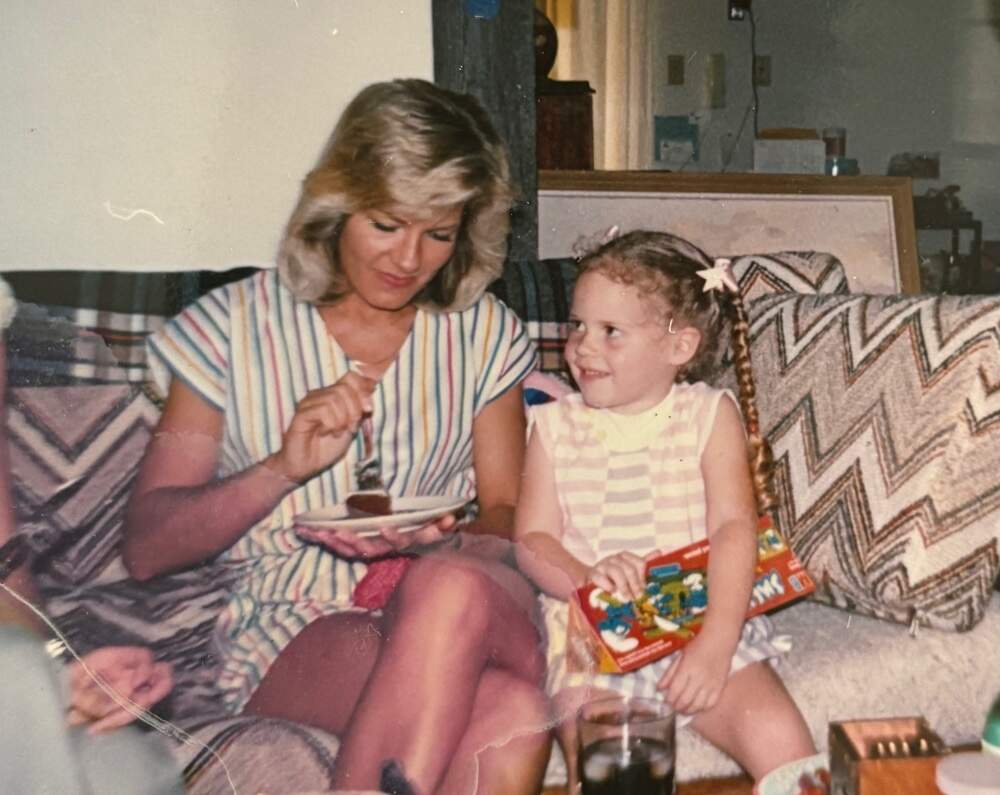
On July 4, 2022, I lost my mother to suicide. The night felt endless — filled with unthinkable police conversations and a grief so consuming I could barely breathe. As morning broke, I drove alone to the nearby lighthouse, walked out onto the jetty under a dark sky, and watched the sun rise. The sky was now golden, and the stark silence was softened by breaking waves and singing seabirds. Somehow, the world hadn’t stopped.
That sunrise marked the beginning of a new kind of journey — one I never expected to take. Two years later, I am training for the Boston Marathon. I’ll run in honor of my mother and for the American Foundation for Suicide Prevention (AFSP).
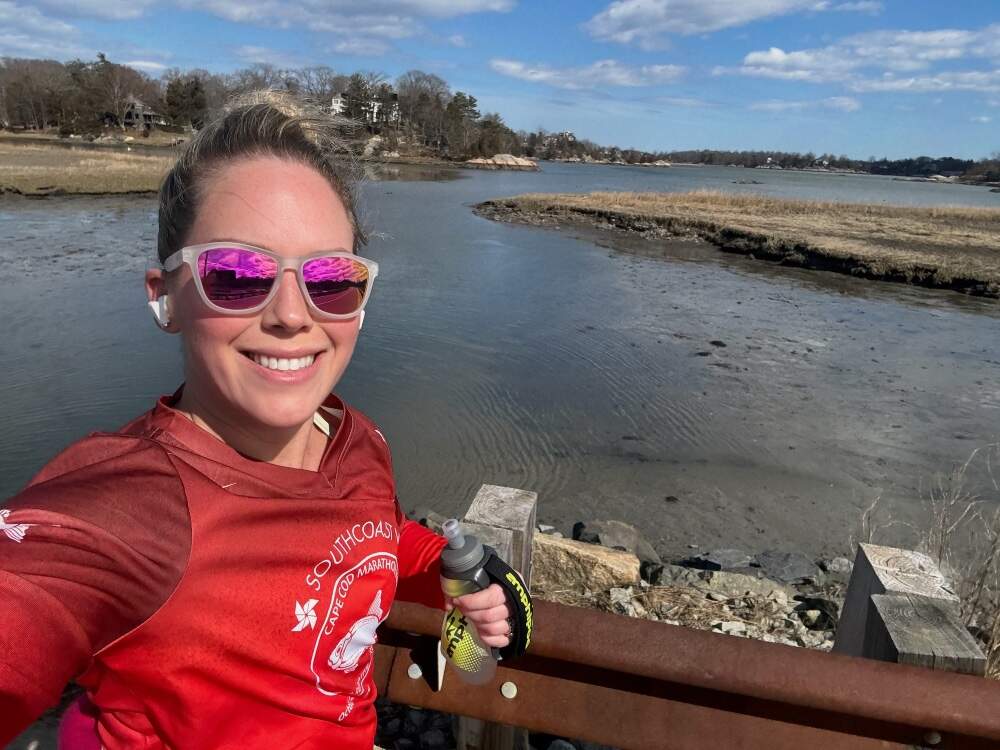
I wasn’t a marathoner. In the early days of my grief, I started running short distances, barely able to make it a full mile without stopping. But it gave me something I needed. I could be alone, in the salt air, and finally start to process my thoughts. I would feel close to my mom and could even imagine what she would say back to me. Over time, I ran farther and farther.
For me, the marathon is about more than distance. It’s about healing. It’s about showing up as the rawest, truest version of yourself — and trusting that the strength to keep going has been inside you all along.
Suicide remains one of the leading causes of death in the United States, yet — in my experience — we barely talk about it. When we do, it’s often in whispers, clouded by stigma. Many people fear that speaking about suicide might somehow encourage it. But the opposite is true: talking about suicide can help prevent it. I know this because I spent most of my life navigating mental health crises with my mom.
I was 10 years old the first time I disrupted one of my mother’s suicide attempts. I was the same age when I first called a crisis hotline, seeking guidance as a child of a single mother in a new city who urgently needed help. We had just relocated from Dallas to Seattle after a blink-and-you-might-miss-it stint in Nashville.
When depression set in, my mother would seek treatment, but once she began to heal, we would set out on the move again, relocating cities, changing schools. She believed she was protecting us both from the stigma that might follow her in a place where her struggles had become known. So off we would go in a U-Haul.
This, for me, is what silence around mental health looked like: a life uprooted by shame.
In some ways, she made it feel like an adventure. We called ourselves “the Golden Girls”: My mom and I were both blonde, and our Golden Retriever, Tobie, dutifully took her place between us in the truck. Mom would soften the sting of being uprooted again — and saying goodbye to my friends — by imagining out loud what we wanted to explore in our new city. We would often set out without a firm plan, starting over in another town, city or school district. I was new more often than not, and no one ever knew what we were managing.
This, for me, is what silence around mental health looked like: a life uprooted by shame. A child and single mom left to feel that they must navigate crisis after crisis, alone.
Now Massachusetts — the state where I was born and to which I returned the moment I turned 18 — is home. While it has made progress in mental health policy, there’s still a long way to go. The state has strengthened crisis intervention efforts and expanded services in schools, but many still struggle to access care when they need it most.
Mental health workers face high burnout, leading to workforce shortages and limited access to quality, community-based care. People suffering from acute mental health events often end up in emergency rooms, which don’t support long-term treatment. And stigma keeps too many people silent, afraid of how they’ll be perceived or the reputational harm they might face. Suicide prevention isn’t just about crisis hotlines, it’s about creating a culture where people feel safe speaking up before they reach a breaking point.
For me, there is no more poignant place to run 26.2 miles, or to advocate for the support and resources our community needs, than in Boston. This is a city built on resilience; a city that knows how to push forward in the face of heartbreak and hardship. But resilience is not just about endurance. It’s about how we show up for one another beyond the finish line.
Running has become my form of survival. It’s a space where I can feel my mother’s presence, where I can process my grief step by step. But more than anything, it has taught me that resilience isn’t about avoiding pain — it’s about moving through it.
There’s a moment in every long run when exhaustion sets in, when your body screams to stop. But you push forward. Not because it’s easy, but because you’ve trained yourself to keep going. Grief is the same way. You don’t ever “get over” it. You learn to carry it, and you keep moving.
Running has taught me something else, too: For the first time in my 42 years, I am owning my own life’s narrative. For decades, I carried my mother’s story, my childhood experiences and my grief without ever truly showing up as my full self. Stigma stripped me of that ability. It made me feel that parts of my story were too much, that being fully vulnerable might make people uncomfortable, that speaking my truth might push people away.
Training for the marathon, and doing it in support of suicide prevention, has pushed me to speak out more openly. Talking about why I’m running has become a way to honor my mom, embrace my true self and use my story for something good. I was never great at vulnerability — not because I didn’t want to be, but because I lacked decades of practice. Now, I am practicing — awkwardly, but wholeheartedly. I am showing up as myself, history and all.
And in doing so, I am finding that when we tell the truth about who we are, we are embraced, accepted, and loved — not despite our struggles, but because of them. We can carry all of it, and keep moving.
If you or someone you know is experiencing suicidal ideation, please call the Suicide & Crisis Lifeline at 988 or text HOME to 741741.
Follow Cog on Facebook and Instagram. And sign up for our newsletter, sent on Sundays. We share stories that remind you we're all part of something bigger.