Support WBUR
Commentary
I was once just Mom. Now I'm Nani, too
“Did Nanny do this for you?” Emma asks.
Her dark brown hair is splayed against the white pillowcase. It looks matted with wear, days without a shower or shampoo or a hairbrush, but the strands still look silky somehow, attractively disarrayed.
We are snuggled in her bed, not a place I’m usually invited, under a sheet and a blanket. We are both staring at the tiny, sleeping human cradled between our warm bodies, three-day old baby L (my daughter asked me not to use her full name).
“What do you mean?” I say.
“Did your mom come and help when Maya was born? When I was born?” she asks, stroking the baby’s head.
I don’t answer her immediately. My throat is constricted — like someone has come out of the dark and wrapped their hands around my neck. I worry if I open my mouth a wail of grief might erupt. So, I stay silent, stroking L’s generous dark brown hair. I take a deep breath. And then another.
I can simply say, “No,” but I know that won’t be enough of an answer. Emma is looking at me now, knowing she touched a nerve but unsure what to do next.
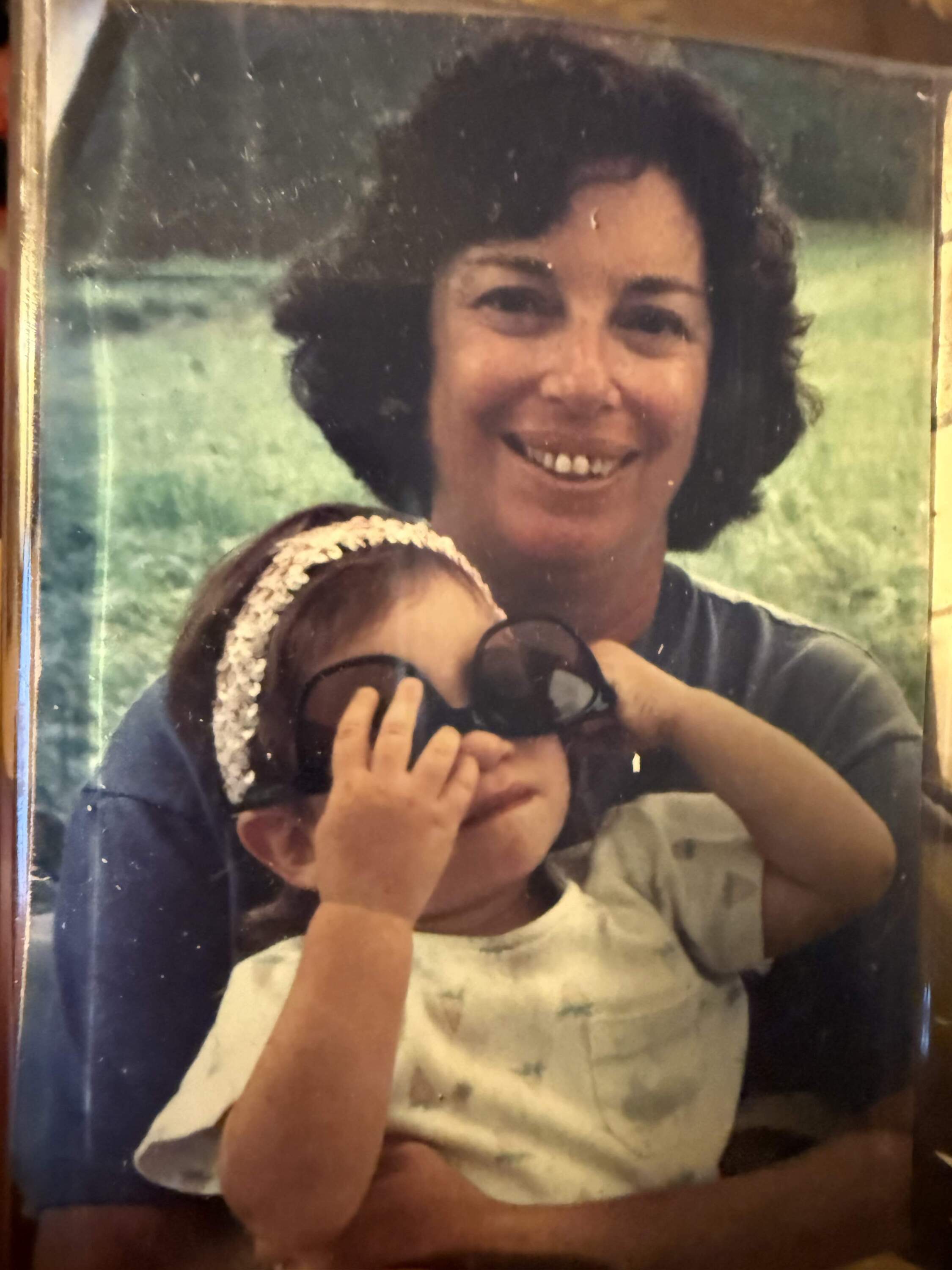
Eventually, I explain to her that my mom was sick — at the beginning of her breast cancer — when her big sister, my eldest, Maya, was born. “And, with you …” my voice trails off.
I look into Emma’s huge brown eyes, the ones that have always asked the hard questions, the ones that want nothing but the truth.
“She was slowly dying the whole time I was pregnant with you. She sent gifts for you. So many gifts,” I explain. “And she met you several times but … no … she wasn’t able to come help me.”
“That must have been so hard,” Emma says, stroking baby L’s head. “I can’t imagine doing this without you here.”
And that’s it — my breaking point. I shift my body away from Emma, away from the baby as my shoulders shake and I try to swallow my grief. Save it, I tell myself. Later, I tell myself. Not now, not in this moment.
I have never felt so appreciated by my daughter, so seen by her.
I want to tell her how grateful I am to be here, how it could have so easily gone another way. I could never have imagined this moment when I was battling stage 3 non-Hodgkin's lymphoma 15 years ago.
To your child, you are always a mother. And sometimes, you also get to be a person.
Motherhood is full of heartbreak and struggle — to talk to your child, to get through to her, and let her know that I’m here, I’m here. How often that effort goes unnoticed, is taken for granted.
But here’s Emma, three days after birthing this perfect, tiny human, telling me she is grateful I am here. I want to tell her how grateful I am to be here, how it could have so easily gone another way. I could never have imagined this moment when I was battling stage 3 non-Hodgkin's lymphoma 15 years ago.
I am here. I am here.
“I know,” she says. “And I am so grateful.”
I don’t realize that I have said these words out loud, but I’m glad. Glad it was spoken. Glad for its truth.
I am here.
It’s barely 5 a.m. when Emma knocks on the door of the guest bedroom — the baby wrapped in her arms — and asks if I can take over. She is bleary-eyed. She and her husband have been up for hours.
For a moment, I’m sure I’m dreaming, and then I remember: I’m on morning duty, from 5 a.m. until 7:30 a.m.
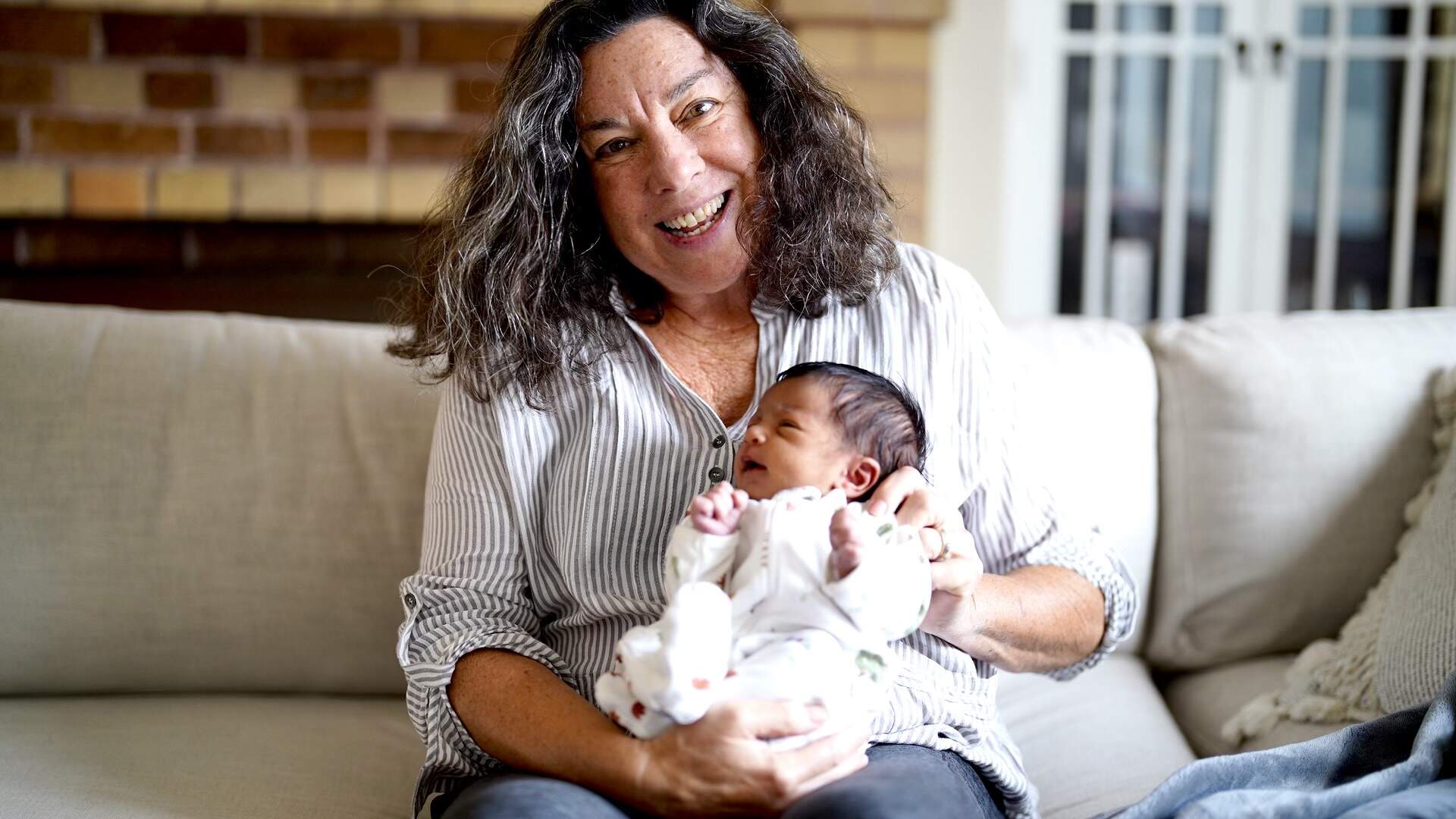
I wash my face, sip cold water and take the milk-drunk baby into my arms. We sit on the couch in the living room so Emma and her husband can sleep. I hold my granddaughter, rocking her gently in my arms, and watch the darkness morph into pink light, and then purple rays appear above the Eucalyptus trees in Golden Gate Park, across the street.
She is the tiniest thing I’ve ever held, just over 6 pounds. I talk to L. I tell her everything. There are so many family stories.
She sleeps through most of it, but every now and then she opens her eyes and looks straight into my soul. More. Tell me more, Nani.
I introduce her to my parents, Nanny and Pop Pop. I tell her how much they would have loved to meet her. I tell her truths I haven’t said out loud before. Ever. I tell her about family legacies: the good (you will love to eat) and the bad (you must keep things in balance or anxiety will rule). I tell her about John, her grandpa who will arrive in a day, and all about her Auntie Maya, who she hasn’t met yet.
She sleeps through most of it, but every now and then she opens her eyes and looks straight into my soul. More. Tell me more, Nani. (I will be called Nani, the Hindi word for mother of the mother.)
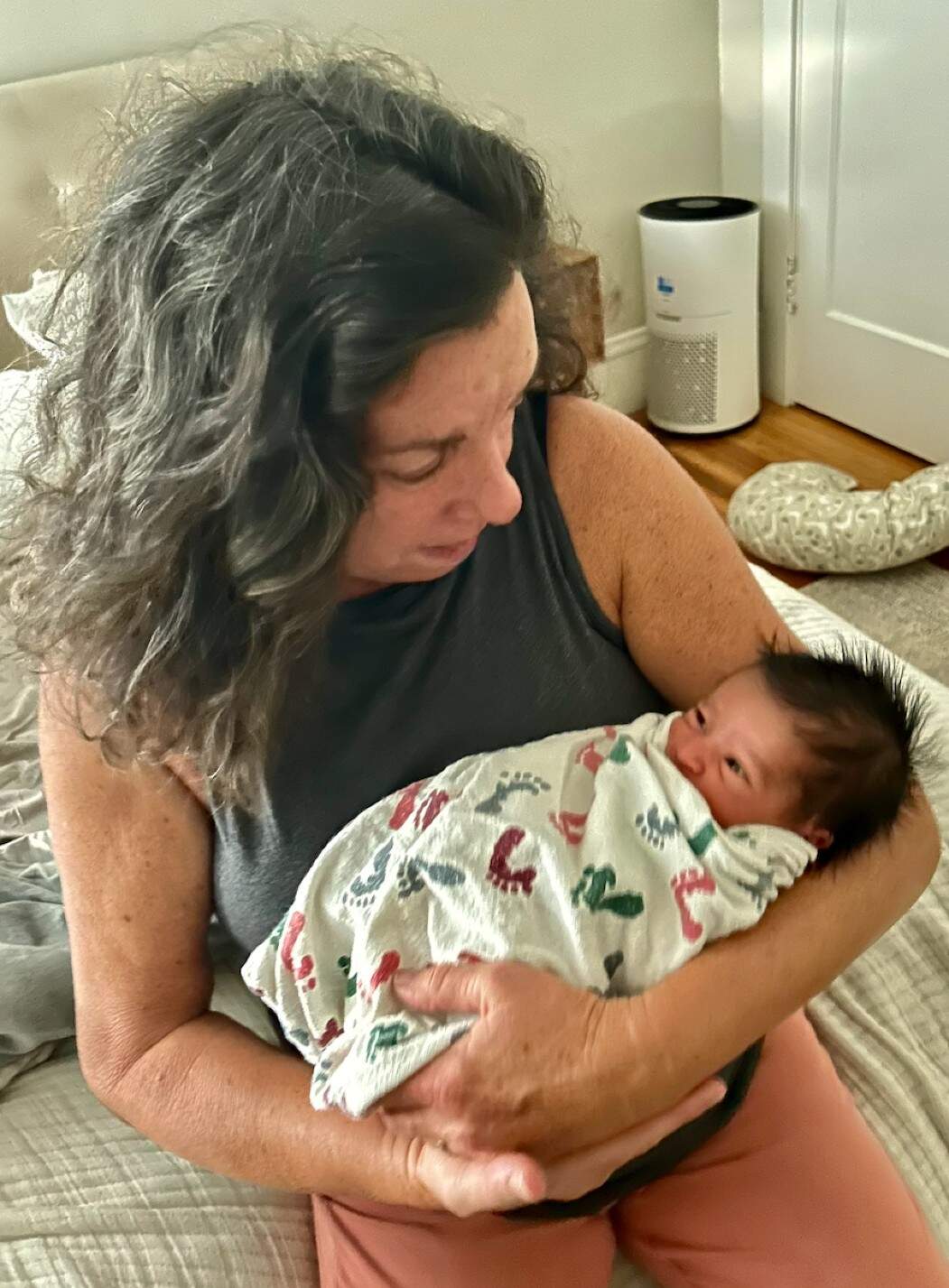
When she begins to squirm or fuss, we walk through the living room and into the kitchen, from one corner to the other, like sleepwalkers. I feel the weight of the world as I tell her my truths.
I talk about the wars. The antisemitism. The misogyny. How some hate anyone with dark skin. With her round face and dark coloring, L looks like her Indian father. I search her face for signs of my daughter. Of me. Of Maya. Of John. Of everyone who came before her. Are those Emma’s eyes? Is her pink curl of a mouth familiar?
I see a beautiful dark-skinned girl who is inheriting a world full of trouble. But holding her, in the room slowly filling with morning light, I feel something I’m not sure how to put into words. It’s a tugging at my heart, a feeling that might be … hope. This child makes me believe in the future. In beauty.
So, I tell her that I’ll stick around to help her make this a better world. I will fight for what I believe in. I will teach her to bake. I will teach her to be kind. I will show her what love looks like. As I tell her all this, the sun turns a pale yellow, rising above the park. L feels heavier. Somehow my story has put her to sleep.
When the clock says 7:30 a.m., I wake Emma and put L at her breast.
For 10 days, I am mother/grandmother of the year. Emma, who lives in one of the most sophisticated food cities in the country, doesn’t want me to cook fancy soups, stir fries or pasta sauces. She wants everything from her childhood. The top 10 hit list.
Would I braise a brisket? Can I bake banana bread? Potato leek soup? Macaroni and cheese? Spaghetti and meatballs?
Yes. Yes. Yes.
Her freezer is packed so tightly that a single ice cube can’t find a home. We buy a small chest freezer and hide it in the dining room behind a folding screen. All my love and all the years and all the foods that brought her to this moment are in that freezer, ready to sustain her over the next few months after I go back home, across the country.
But, for now, I am here.
Follow Cog on Facebook and Instagram. And sign up for our newsletter, sent on Sundays. We share stories that remind you we're all part of something bigger.