Support WBUR
Essay
The forgotten meaning of 'America the Beautiful'
"O beautiful for heroes proved/In liberating strife ..."
These words from the popular anthem, “America the Beautiful,” honor the soldiers who gave their lives in the American Revolution and the Civil War.
As we begin the year-long countdown to the 250th anniversary of the Declaration of Independence, many Americans will no doubt sing it with pride, as have Elvis Presley, Barbra Streisand, John Denver, Whitney Houston and Jennifer Lopez. Music legend Ray Charles, among others, sought to make it our national anthem, so far unsuccessfully. Yet few understand the meaning of its lyrics or the events that inspired its metaphors.
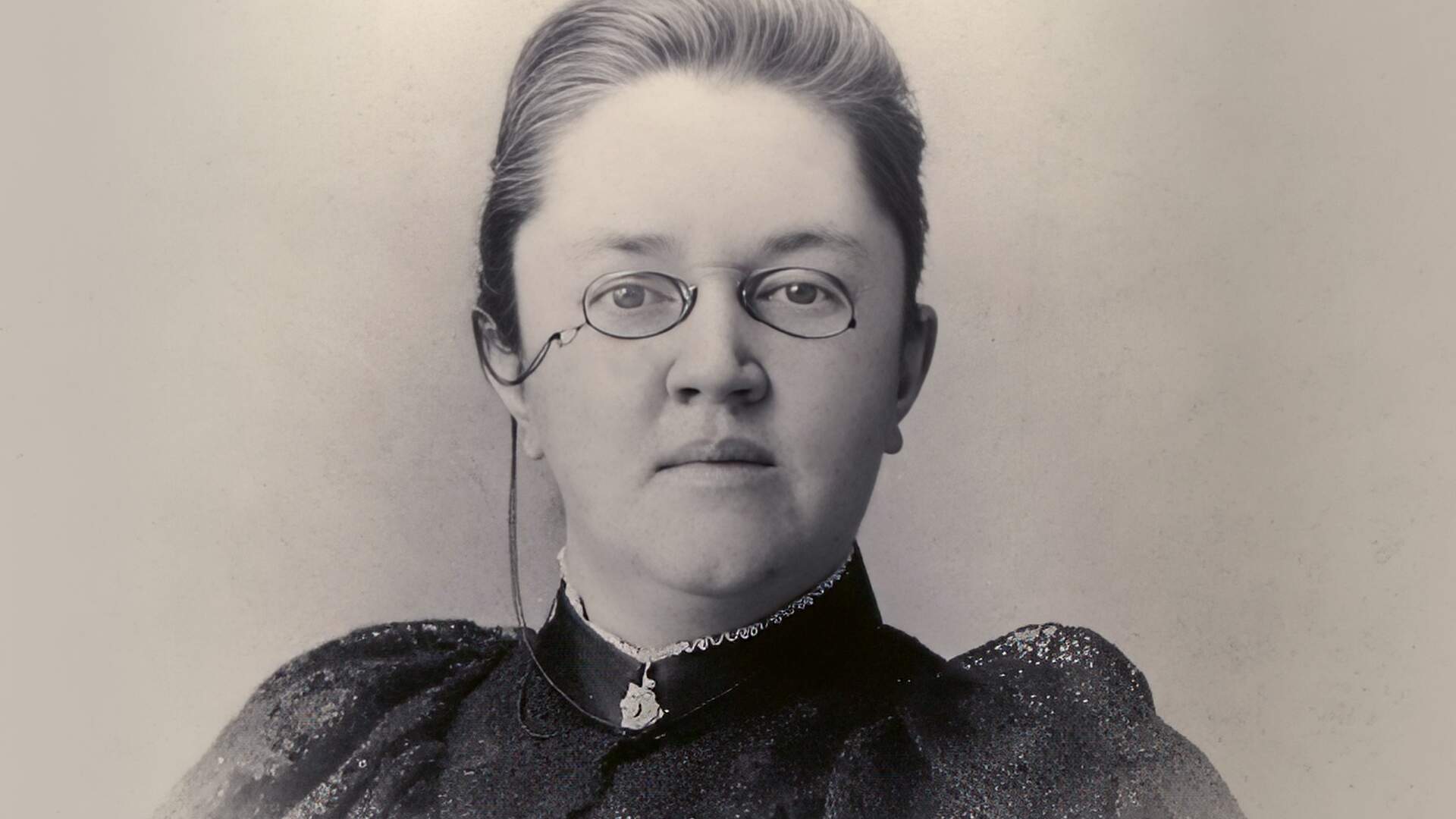
“America the Beautiful” was written by Katharine Lee Bates, a Massachusetts-born poet, scholar and social justice advocate. She wrote the song first as a poem (that was quickly put to music) while visiting Colorado’s Pike’s Peak in 1893. The official melody was written by Samuel Augustus Ward, originally as a hymn. Awestruck by the “purple mountain majesties” to the west and the "amber waves of grain” far below on the eastern plains, Bates wanted to celebrate the nation’s natural beauty. But “America the Beautiful” is as much critique as celebration, and remarkably relevant to our own times.
In June, the Boston Pops paid tribute to the song at Symphony Hall as part of the celebration honoring Keith Lockhart’s 30 years as conductor. They played an adaptation from a new documentary film that reveals hidden meanings embedded in the song. (Full disclosure: I am the director of that documentary, “From Sea to Shining Sea: Katharine Lee Bates and the Story of America the Beautiful.”) The Pops will perform the piece again on July 4 on the Esplanade and on August 22 at Tanglewood.
I have always been drawn to “America the Beautiful,” but never fully realized how misunderstood the song was until I read Boston author Melinda Ponder’s biography of Bates, “From Sea to Shining Sea.” I felt that Bates’ life was an exemplary case of true patriotism and the song reflected her values. As a filmmaker, I was drawn to its surprising qualities and current relevance. While the first verse celebrates America’s beauty, the other three ask us to fully honor the values that we claim to hold.
Bates was born in 1859 in Falmouth, Mass. on Cape Cod. Her first memory was the 1865 assassination of Abraham Lincoln — she wrote about how, even as a child, she admired his efforts to end slavery. She studied at Wellesley College, graduating in 1880, and taught literature there for four decades, living for most of them with her beloved partner and fellow professor, Katharine Coman. While a student, she told a friend that “if I could write a poem people remembered after I died, I’d consider my life worth living.”
O beautiful for spacious skies,
For amber waves of grain,
For purple mountain majesties
Above the fruited plain!
America! America!
God shed His grace on thee
And crown thy good with brotherhood
From sea to shining sea!
O beautiful for pilgrim feet,
Whose stern, impassioned stress
A thoroughfare for freedom beat
Across the wilderness!
America! America!
God mend thine every flaw,
Confirm thy soul in self-control,
Thy liberty in law!
O beautiful for heroes proved
In liberating strife,
Who more than self their country loved,
And mercy more than life!
America! America!
May God thy gold refine
Till all success be nobleness,
And every gain divine!
O beautiful for patriot dream
That sees beyond the years
Thine alabaster cities gleam
Undimmed by human tears!
America! America!
God shed His grace on thee,
And crown thy good with brotherhood
From sea to shining sea!
Wellesley, one of the first women’s colleges in the U.S., encouraged students and faculty alike to be “reformers,” to challenge America’s flaws. In addition to their teaching duties, Bates and her female colleagues opened Denison Settlement House in Boston in 1892, which supported immigrant women and helped them organize for labor rights. They also advocated for the full equality of women, African Americans, Native Americans and other minorities, justice for workers, a welcoming attitude toward immigrants and world peace.
Bates shared her political concerns, metaphorically, in her poem.
Bates revised her poem over the years, based on her experiences. Her words “America! America!/God mend thine every flaw/Confirm thy soul in self-control,” (added in 1904), were an expression of her dismay over what she considered to be American imperialism in the Spanish-American War. She joined the Boston-based Anti-Imperialist League and wrote articles for the New York Times from Spain, documenting the tragic effects of the war on its people.
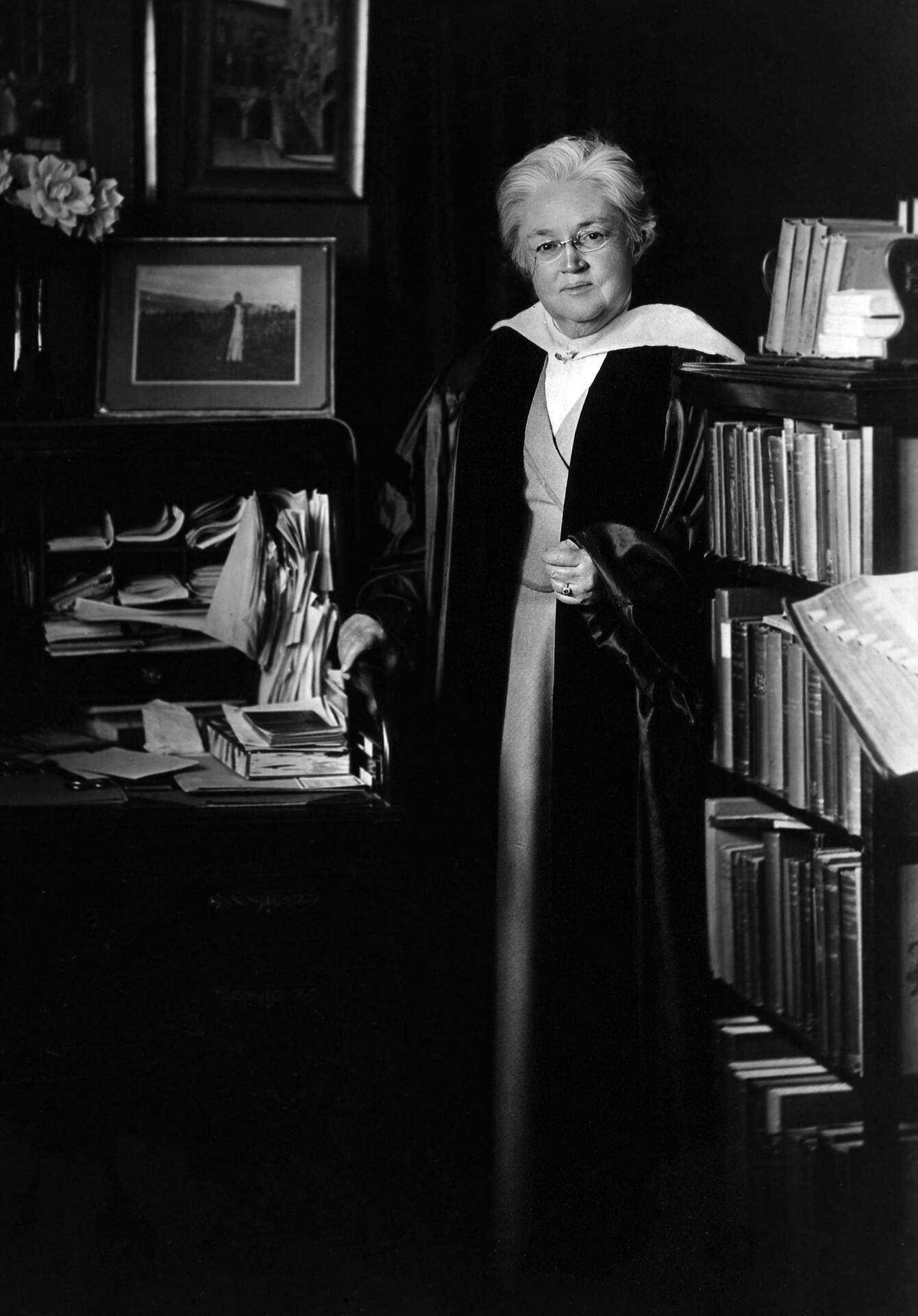
Bates died in 1929. She lived to see women win the right to vote in 1920. She learned that hundreds of American soldiers from New England sang “America the Beautiful” at the end of World War I. And in her final speech, in 1928 at Boston’s Mechanics Hall, she told an enormous crowd they should think of the whole world as one community, united in brotherhood, “from sea to shining sea.”
Bates would likely applaud the new American-born Pope, Leo XIV, who took his name from the pope of her own era. That Pope, Leo XIII, issued Rerum Novarum, an 1891 Papal Encyclical supporting universal rights to living wages, humane working hours, elimination of child labor, and the right to unionize.
Yet there is little doubt that Bates would be dismayed by today’s America. Though her song was performed at President Trump’s inaugural by Carrie Underwood, Trump's praise of President McKinley, and his designs on Greenland, Panama and even Canada, would have appalled her, just as McKinley’s Spanish-American War conquests did.
She would mourn the scornful attitude toward immigrants coming now from the White House, the cutting of vital services to the poor and hungry, and the worship of conspicuous wealth. “America! America!/May God thy gold refine,” she wrote of Gilded Age inequality. Her first draft also included the words “till selfish gain no longer stain the banner of the free,” words she later moderated.
Katharine Lee Bates would be tempered in her pride by the knowledge that most of the words in her four verses are now all but forgotten, and the flaws she addressed in her deeply patriotic hymn have yet to be corrected. As we approach the 250th anniversary of the United States, let us commit ourselves to the unfinished work “America the Beautiful” so eloquently asks of us.
John de Graaf, a veteran producer at PBS, is the director of a documentary about Katharine Lee Bates currently screening at film festivals and distributed by Bullfrog Films.
Follow Cog on Facebook and Instagram. And sign up for our newsletter, sent on Sundays. We share stories that remind you we're all part of something bigger.