Support WBUR
Essay
There are so many ways to make a family
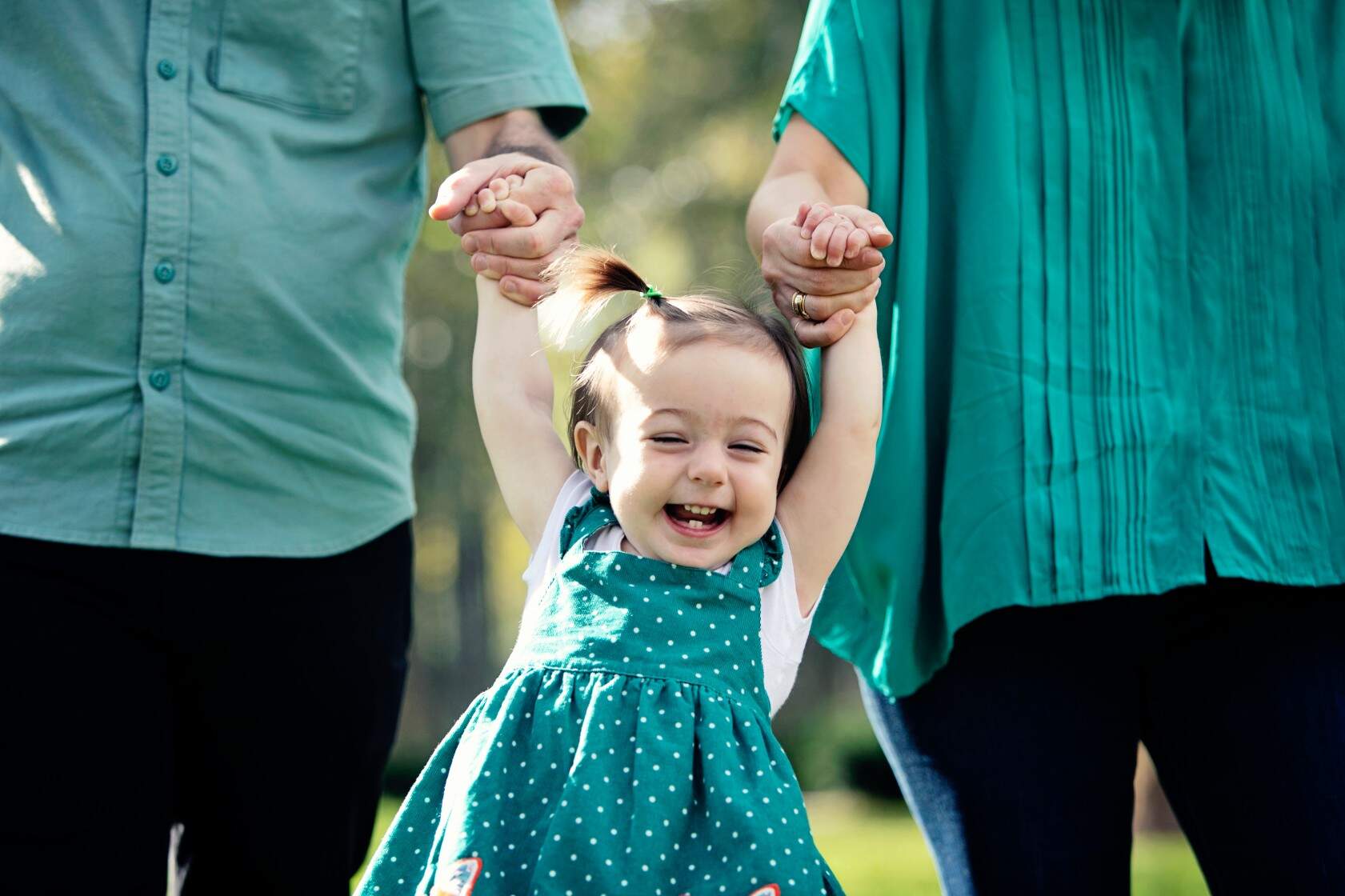
The first time I sat my daughter Clementine on my lap to read Cory Silverberg’s book, “What Makes A Baby,” I held my breath. “This is an egg,” I said, trying to hide any emotion in my voice, as I pointed at the blue circle surrounded by pink squiggly lines. Her chubby little finger traced the shape. “Not all bodies have eggs in them,” I continued. “Some do, and some do not.”
Silverberg’s book shows families in all different shapes and formulations. The illustrations of people are androgynous and every color of the rainbow: pink, blue, yellow, purple and orange. Some of the figures have scribbles of tiny eggs in their bodies and some have sperm. And some have nothing. All appear to be smiling; no feelings of loss or grief apparent on any of their faces.
At one year old, I knew Clementine probably wouldn’t remember me reading her that book, or any of the countless others I bought. I felt lucky. I could stumble. I could tear up as the sperm and the egg “swirl together in a special kind of dance.” I could wonder what kinds of questions she might ask me at 5 and 8 and 12 and how I might respond. This was my practice run at getting her origin story right.
I spent most of my life uncertain about whether I wanted to have a child. The story I heard my whole life was that my great-grandmother and grandmother had abandoned their children. I feared there was a curse, a flaw in my genetic code, that would cause me to abandon my kid, too. I believed it was better to not have a baby than to have one just to inevitably mess it up out of neglect or disregard or something else altogether. In fact, I was so unsure about motherhood that I married a man who didn’t want a child, figuring his desire to not be a dad would end my oscillation once and for all.
I feared there was a curse, a flaw in my genetic code, that would cause me to abandon my kid, too.
It was only later that I wondered: What if those stories I’d been told about the women in my family weren’t true? What if the family mythologies that shaped so many of my choices around motherhood turned out to be conjecture or misunderstandings? I wrote a whole book about my quest to unravel our family lore and discover once and for all whether the women in my family actually abandoned their kids. By digging through census, marriage and divorce records, I realized that there was more to the story of my matrilineal line. Interviewing doctors and geneticists about how trauma is passed down from one generation to the next also helped me to pinpoint that there isn’t one gene for maternal abandonment.
The legacy of my great-grandmother and grandmother could tell me nothing about my own. Even if I wouldn’t be a perfect mom, maybe I could be a good one. Or at least a good enough one.
In the meantime, my husband was exhausted by my questioning. Not only did he not want to have a child, he didn’t want to hear me talk about how I might someday want a baby. He eventually left me – and a year and a half after my divorce, I met someone new.
Rob had also recently gotten out of a marriage. By the time we were ready to try to have a family, I was 41. I’d frozen my eggs when I was 35, but once thawed, we learned none of them were viable. We then tried two rounds of in vitro fertilization, but that didn’t work either. Our doctor told us that my best chance at becoming a mom was to use a donor egg.
The news devastated me.
I feared that by using donor eggs I would be cut from my child’s life, not only now, but for generations to come. A donor’s — a stranger’s — genetic code would be the building blocks of our baby, determining unknowable things about her.
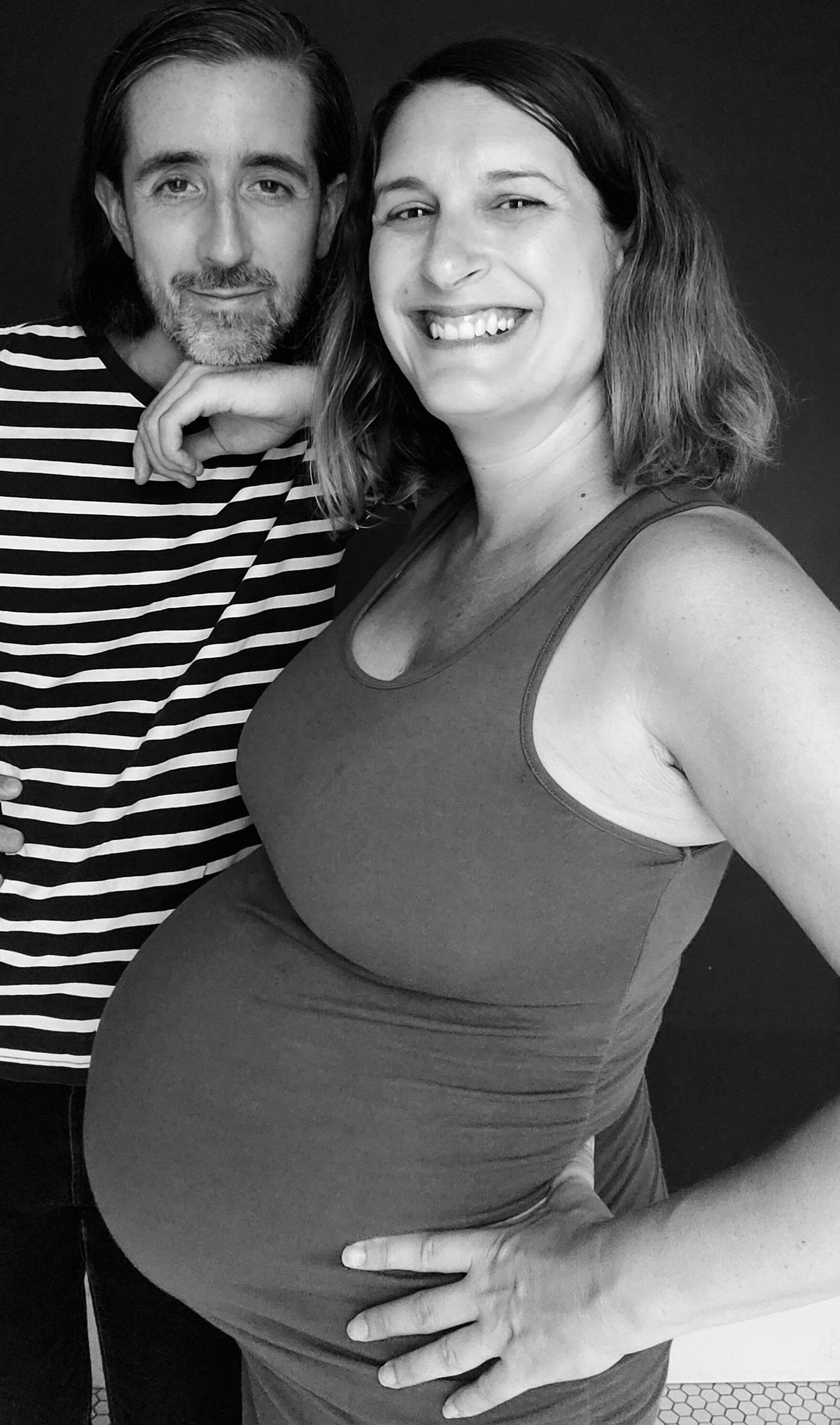
Now that I finally knew I wanted a child, I wanted to share every part of myself down to the cells that could only be seen under a microscope. I was worried there would be a lingering, lifelong wedge between my daughter and me because we wouldn’t share the same 23 chromosomes. Instead of my smile, I’d see the donor’s. Instead of my mom’s hands, I’d see something unrecognizable.
This “shadow mother,” as I came to think of the egg donor, haunted me. I projected far into the future, certain that my angry teenager would someday break my heart when she screamed, “You’re not even my real mom.”
Before moving forward with a donor egg, Rob and I signed a contract that required us to meet with a psychologist. Sitting in those chairs across from the doctor with the notebook, we vowed to be open with our child about how she came to be. Countless studies have shown that donor-conceived children, like adoptees, fare better when they are told the truth early, and honestly.
This meant I always knew there was a deadline — I had nine months to figure out how I’d talk to our baby about her origin story. And it’d be approximately one year before she’d be ready to hear the earliest version of the narrative.
There’d been so many secrets and misunderstandings in my family — it felt critical to me that we communicate clearly with our daughter about her background. It was never a question of if we would share her story with her, but how, and by how I mean: How would I explain it to her without crying or showing any signs of shame? If I felt shame, I knew she would too. If I felt there was something wrong with me, maybe she’d also carry that feeling in her heart.
Over the years, the conversations Clementine and I have had about where babies come from has changed. She’s become more curious, fact-checking stories she’s learned from friends at school or on the playground. Sometimes she stuffs a doll in her shirt and announces she’s pregnant. How the baby got there is anyone’s guess, but it’s clear she wonders about the “birds and the bees.”
It helps that we now know many more women and families who have used donor eggs so I can talk to friends and acquaintances about how they handle these conversations with their children. There are also Facebook groups and Reddit threads where donor egg recipients share resources and ask questions.
I’ve changed too. Prior to giving birth, I told myself that I didn’t want anyone to notice that my kid didn’t resemble me, because I worried they’d question my legitimacy as a mother. Yet my fears never came to fruition. In fact, it’s just the opposite. Now I can’t help but smile when someone at a party or walking down the street says, “She’s your mini me! She looks exactly like you.” I know I’m in our daughter’s facial expressions and in the intonations of her voice. Sometimes she even looks into my eyes and says, “Mom, we look like twins,” and I take it to mean she feels so close to me, as I do her. No egg tinier than a grain of sand could change that.
Through the years we’ve continued to read “What Makes A Baby.” “Inside the egg are so many stories all about the body the egg came from,” I say aloud.
“Egg,” she says. And then pointing at the tadpole on the next page, “perm.”
When Clementine recently asked to take the book to preschool, I felt obliged to tell her teacher that she might yell “perm” excitedly when she saw the wriggling sperm during story time.
“We did in vitro fertilization,” I managed to blurt out, and the teacher waved me away unfazed. So did half the neighborhood, I imagined her thinking to herself. I didn’t go into the other part of the story that I repeated to Clementine like a nursery rhyme at this point: there was a nice lady who gave us an egg …
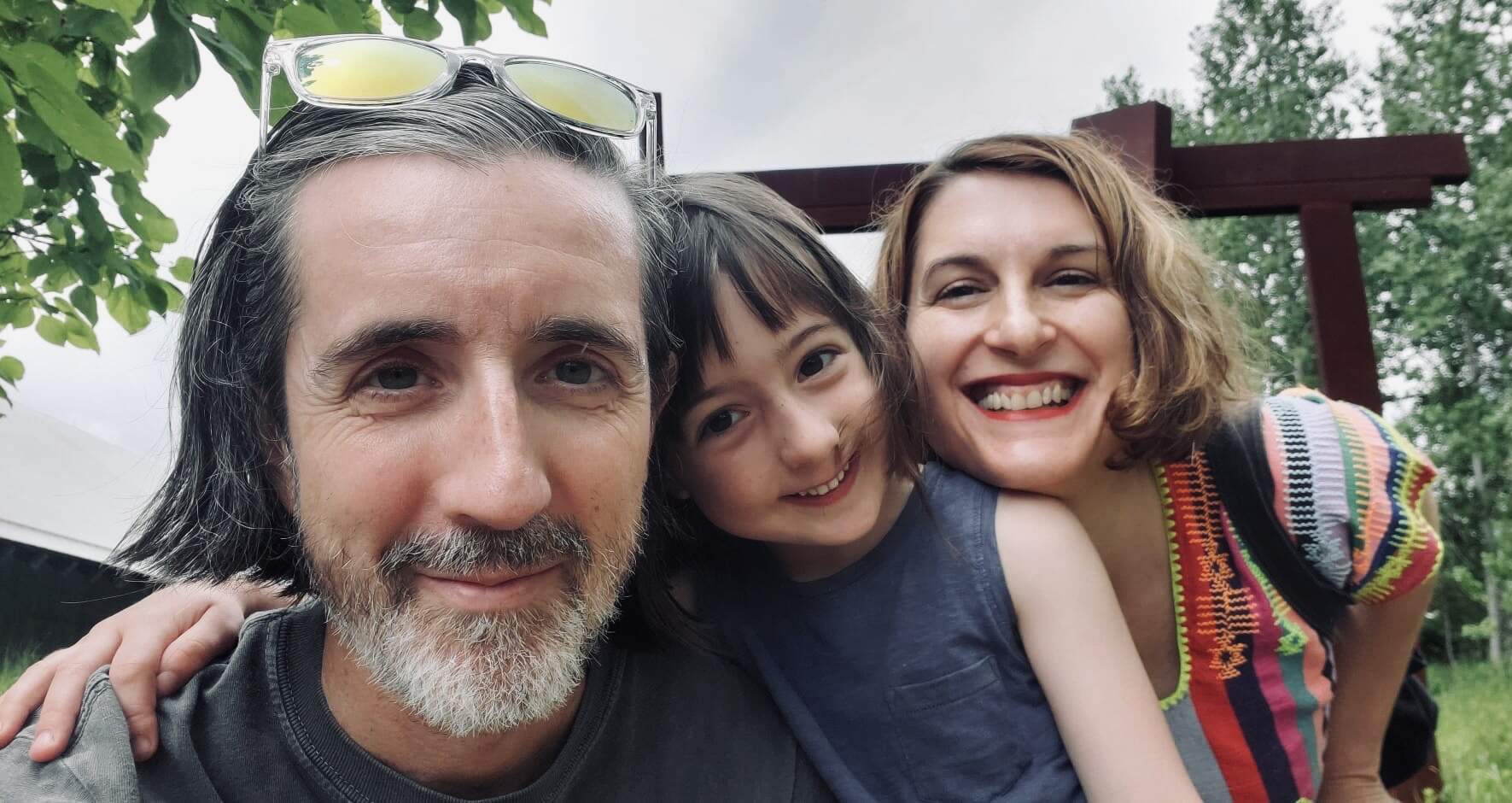
My daughter will be five in a few months. She’s off to kindergarten in the fall. If you ask, she’ll tell you about the lady with the extra eggs she was nice enough to share, and the doctor who helped make it all happen.
There are so many ways to make a family. Clementine has cousins who were conceived via donor sperm. We have friends who adopted their kids and others who used a surrogate. I’m continuing to learn as I go. Seeing how little Clementine seems to care about the precise mechanics behind her conception has given me a sense of freedom.
Today I understand something deep in my heart that I only understood intellectually before: family isn’t biology or genetics. It’s devotion. It’s showing up. It’s caretaking. And the stories we tell ourselves (about ourselves and others) are super important too.
Motherhood has taught me so many things, but the one thing that stands out is that all of life is uncertain. I’m more comfortable with the knowledge that there is no right answer. I could have all the conversations in the world with Clementine and she still might yell, “You’re not my real mom,” someday. There is no guarding against all the things that may come. All I can do is share our story, with her and with others, and hope that she knows that she is loved and always will be.
The audio version of this piece was produced by Cloe Axelson with help from Tania Ralli. It was mixed by Michael Garth.
Follow Cog on Facebook and Instagram. And sign up for our newsletter, sent on Sundays. We share stories that remind you we're all part of something bigger.