Support WBUR
Opinion
Pete Hegseth's one-dimensional view of combat readiness
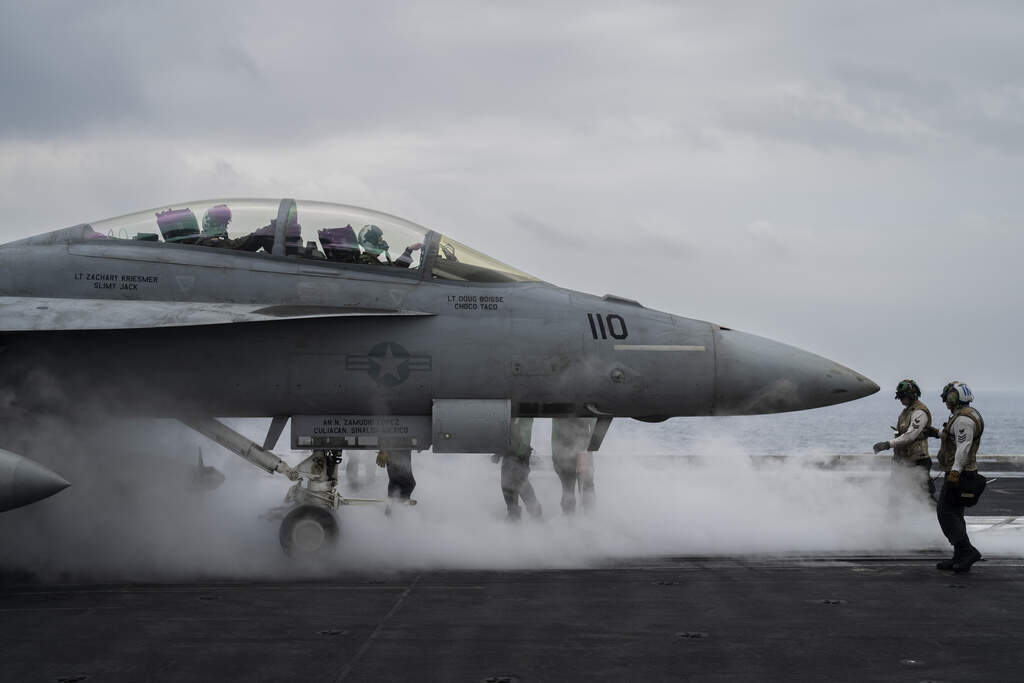
Last week, when Secretary of Defense (SECDEF) Pete Hegseth implied to a room full of flag officers that military standards had been lowered to facilitate women serving in combat, he wasn’t speaking to me, but he was speaking about me. I served on the Navy’s first combatant ship to have women permanently assigned, and all of us on the USS Dwight D. Eisenhower (called the “IKE” by her crew) were completely qualified for our jobs. No combat standards were lowered for women, and it’s misleading and ignorant of Hegseth to say so.
Unequal fitness standards were a major theme of Hegseth’s speech, but fitness standards are not the best indicator of combat readiness. When I showed up for a midwatch (the watch period from midnight to 0400 hours), the officer I relieved didn’t care how fast I could run — he cared that I could quickly understand the turnover details and drive the ship safely for the next four hours. The punishing operating tempo of a ship at sea allows no time for musing about how many push-ups one’s shipmate can do in two minutes (although I regularly pumped out 68, earning an outstanding rating and besting most men in my division).
In the Navy, there is a big difference between the Physical Readiness Test (PRT), which we all took twice a year, and combat qualifications, which are specific to combat jobs and matter a lot more. The PRT measures cardio fitness and muscular endurance and is not considered difficult by most sailors. The minimums required to pass this test vary by gender and age, and always have. None of them has anything to do with combat readiness on a warship.
Combat readiness comes down to knowing how to get the job done. The male and female sailors who worked for me on the IKE were experienced electricians who managed the power distribution system, maintained the flight deck lighting and repaired everything on board that ran on electricity. They literally kept the lights on.
My chief electrician’s mate (the senior enlisted sailor in my division) was an older, doughy guy who shunned exercise but could fix anything (and, even more importantly, could teach anyone to fix anything). I would not have traded him for a lithe sprinter with bulging biceps.
But Pete Hegseth would. In his remarks, he bemoaned the unappealing sight of “fat troops” and “fat generals.” “It’s a bad look,” he said. Perhaps. But you know what’s a worse look? Prioritizing superficial appearance over actual competence.
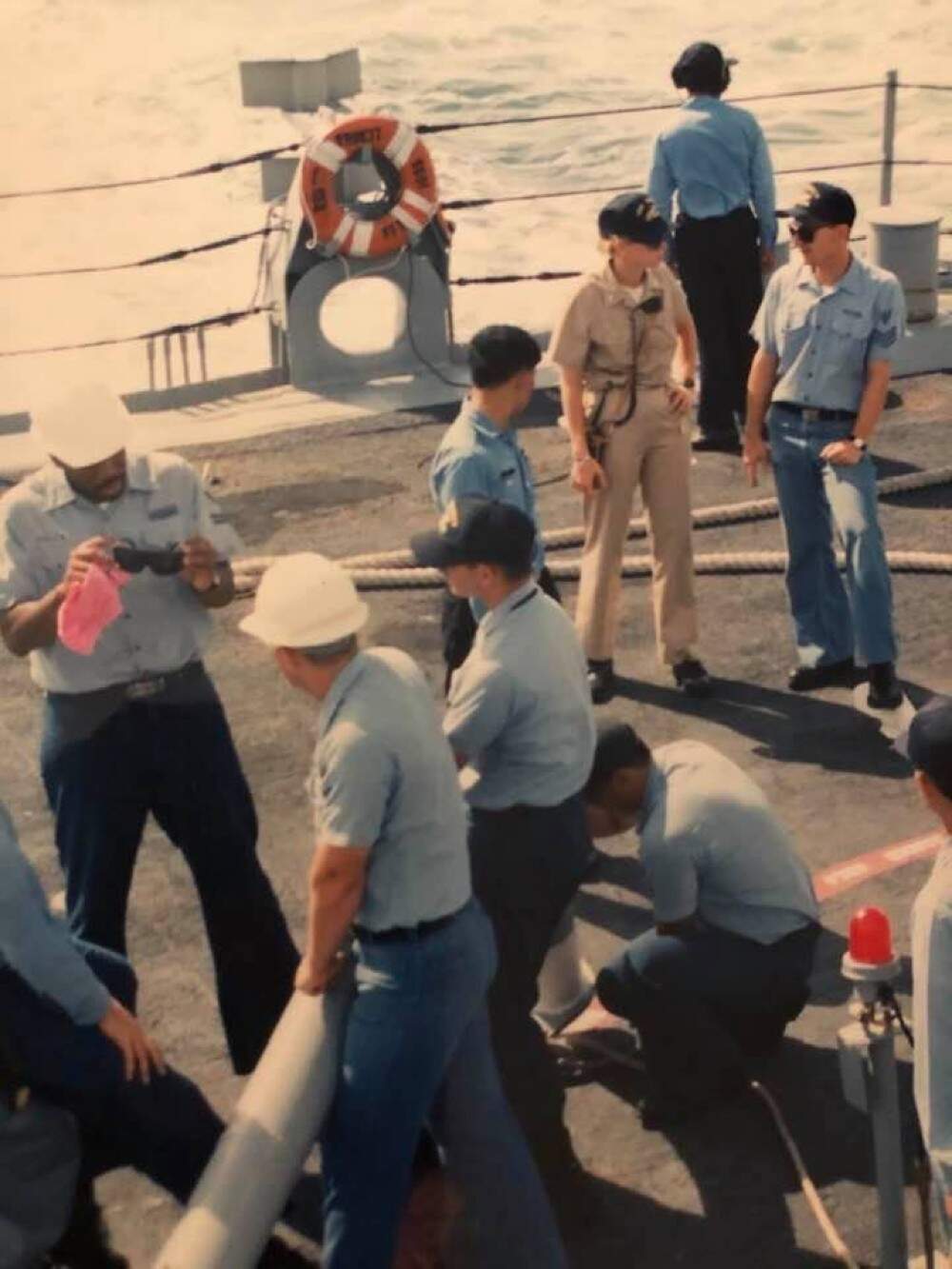
The most important qualification I held — the sought-after professional milestone of junior officers on Navy ships — was the surface warfare officer (SWO) qualification. To earn this, I spent more than a year becoming an expert in weapons systems, engineering, operations and navigation. I qualified as officer of the deck underway (the person responsible for the safe navigation and operation of the ship while it’s at sea) and spent hours on the bridge during countless complicated naval exercises and uneventful midwatches. Eventually, I passed rigorous board and practical examinations — all of which held men and women to the same standard.
Other specialties in the Navy have equivalents of the SWO qualification: pilots earn their wings at Naval Flight School, elite submariners earn the coveted submarine warfare insignia (AKA dolphins). These badges represent real combat standards, and they are gender neutral. Earning them requires demonstrating skills that have nothing to do with fitness, like critical thinking. Judgement. Patience. Leadership. Discipline.
I laughed out loud when the SECDEF said “At my direction, every warrior across our joint force is required to do [physical training] every duty day … and we’re not talking, like, hot yoga and stretching, real hard PT and as — either as a unit or as an individual.” This statement should be superimposed over one of those memes that says, “Tell me you’ve never been on a Navy ship without telling me you’ve never been on a Navy ship.” He might be surprised to learn our fleet doesn’t include CrossFit boxes.
My first ship was the USS Truett, a Knox-class frigate with a complement of more than 200 personnel. In 1993, our “gym” was a single exercise bike in the empty helicopter hangar. That hangar was also where we stored our garbage while at sea. I suppose our commanding officer could have worked out a 24-hour schedule and ordered each of us onto the bike for six minutes of “hard PT” surrounded by rotting garbage baking under the hot Caribbean sun. But he didn’t. I guess he was too woke, ahead of his time.
The SECDEF has personal experience as a junior infantry officer. That’s an important job for sure, and one that demands a higher level of physical conditioning than my job did. But, like the blind men who touched an elephant and thought the one part they felt represented the whole, he does not see the big picture.
In Hegseth’s fantasy military, every war is a ground war, and every ground war is won by the team that does the most pull-ups. His one-dimensional view of the military gives him a one-dimensional view of combat readiness. But in the real world, “lethality” (to borrow a word he loves) requires more than big muscles and a smooth jawline. The sailors I served with on the Truett and the IKE were trained professionals: They met the highest combat standards and were fully qualified to do their jobs. I wish I could say the same for the Secretary of Defense.